

Roborock QV 35A Review: Powerful Budget Robot Vacuum or Compromise on Features?
Aaron Cooper
Review: Roborock QV 35A
Quick Take: A powerful mid-range hybrid that brings flagship-level 8,000Pa suction and automated mopping to a more accessible price point.
Best For: Pet owners with mixed flooring who want a self-emptying and self-washing experience without spending four figures.
Keep in Mind: While it scrubs floors effectively, it lacks hot-air drying and struggles with small obstacle avoidance, particularly thin floor cables.
1. Introduction
The Roborock QV 35A sits in that sweet spot between “entry-level” and “flagship-lite.” It promises 8,000Pa suction, dual spinning mop pads, auto mop lifting, LiDAR mapping, and a fully automated dock—without the premium price tag.
But here’s the real question: does it actually clean well in real homes with pets, mixed floors, muddy paw prints, and random toys on the ground? Or are you giving up too much to save money?
In this review, we’ll break down what the QV 35A does brilliantly—and where it clearly compromises.
2. Roborock QV 35A Overview: Key Features and Core Specifications
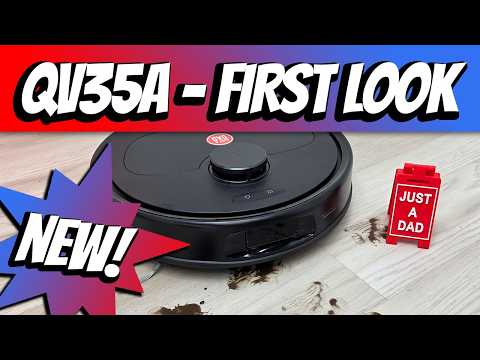
2.1 8000Pa HyperForce Suction and Dual Anti-Tangle Brush System
If you’ve ever vacuumed long hair off carpet only to spend 10 minutes cutting it off the brush roller… you know the pain.
The QV 35A is powered by 8,000Pa HyperForce suction, which places it well above many older midrange models. On paper, that number sounds impressive—but what matters is how it translates into daily cleaning.
Underneath, it uses an all-rubber floating main brush paired with a Zero-Tangle arc side brush. The rubber roller adapts slightly to uneven surfaces and avoids bristle clogging, which is especially helpful in homes with shedding pets. In video demonstrations, long hair pickup was strong, though not always 100% perfect. Some wrap can still occur over time—but significantly less than traditional bristle designs.
Bottom line? Strong suction. Thoughtful anti-tangle design. Not magic—but very practical for real-world pet homes.
2.2 Dual Spinning Mop Pads with 10mm Auto-Lift for Carpet Protection
Dragging a damp cloth across your hardwood is one thing. Actually scrubbing sticky messes? That’s another.
The QV 35A uses dual spinning mop pads rotating at 200 RPM, designed to mimic a hand-scrubbing motion rather than passive wiping. It offers 30 adjustable water flow levels, which you can fine-tune from barely damp to heavily saturated—especially useful for muddy paw prints.
It also features automatic 10mm mop lifting when carpet is detected via ultrasonic sensors. In practice, when the robot transitions onto carpet, the pads lift and suction increases. This prevents damp rugs during hybrid cleaning cycles.
- Coverage is rated at approximately 330 m² per tank fill.
- 10mm auto-lift protects medium-pile carpets.
- 30-level water flow control for customized mopping.
2.3 PreciSense LiDAR and Reactive Tech Obstacle Avoidance
Navigation can make or break a robot vacuum.
The QV 35A uses PreciSense LiDAR—think of it as a spinning laser radar system that scans 360° and builds a 3D map of your home. It supports multi-floor mapping for up to four levels and performs quick mapping significantly faster than mapping during cleaning.
In testing footage, it followed a perimeter-first pattern, then cleaned in straight lines—efficient and systematic.
Obstacle avoidance is handled by Reactive Tech optical sensors. Importantly, this model does not include a front-facing RGB AI camera. That means no object photo identification or advanced AI labeling.
In real-world demos, it avoided medium-sized toys and larger objects surprisingly well. However, cables remain a known weakness. If you leave phone chargers or thin cords scattered around, expect occasional trouble.
Privacy-focused users may appreciate the camera-free design. But in clutter-heavy homes, you’ll need to pre-pickup small items.
2.4 All-in-One Multifunctional Dock: Auto Empty, Mop Washing and Cold Air Drying
This is where life gets easier.
The QV 35A comes with an All-in-One Multifunctional Dock that automatically empties the dustbin, washes mop pads with cold water, refills the onboard tank, and dries the pads with room-temperature air.
Dust bag replacement is typically required about every two months depending on usage. Mop pads are washed at the dock, then dried for roughly 6–8 hours using cold air.
Pros
- Hands-free dust emptying (up to 7 weeks).
- Automatic tank refilling.
- Detachable dock base for easy maintenance.
Cons
- No hot water washing for mops.
- Cold air drying takes 6-8 hours.
3. Real-World Cleaning Performance: What It Does Well (and Where It Struggles)
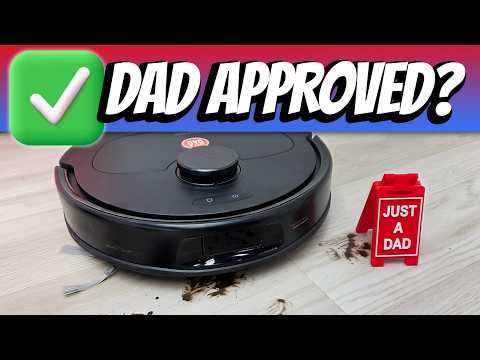
3.1 Vacuum Tests: Rice, Chips, Long Hair and Carpet Performance
Specs are one thing. Crushed chips on tile are another.
In hard floor tests, the QV 35A cleared rice, crumbs, and dry debris in a single pass, leaving surfaces visibly clean. The side brush guided debris inward effectively, and the suction did the rest.
On carpet, performance was solid—but required two passes for complete pickup. This matches multiple test demonstrations showing near-total removal after a second run. Deep carpet extraction is good for surface debris but not equivalent to an upright deep-clean machine.
For daily maintenance vacuuming? Very reliable. For deep carpet revival? Manage expectations.
3.2 Mopping Tests: Muddy Paw Prints, Syrup and Stain Removal
Sticky messes separate average robots from serious scrubbers.
In demonstrations with dried coffee, chocolate protein shake, and maple syrup, the spinning mop pads performed impressively. The scrubbing motion combined with onboard water delivery helped lift residues effectively.
However, slight smearing was observed in heavier soil tests. Because the robot does not include a dirt detection sensor, it won’t automatically return for a third pass after washing its pads.
3.3 Obstacle Avoidance and Edge Cleaning Limitations
Here’s where expectations need to be realistic.
The Reactive Tech system performed surprisingly well with medium-sized obstacles like toys and containers. In some demos, it even outperformed more expensive models in specific avoidance scenarios.
4. Roborock QV 35A vs Other Roborock Models: Is It the Smart Buy?
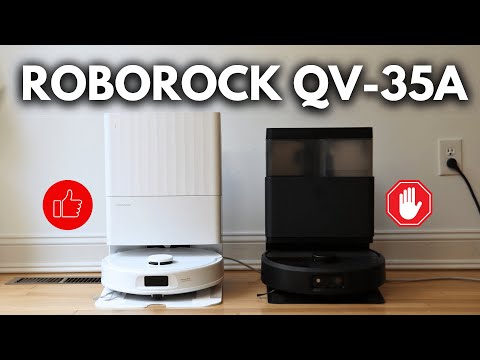
4.1 QV 35A vs Qrevo S: Suction Power vs Hot Air Drying
Both models have been seen around $459.99 on sale, which makes this comparison critical.
| Feature | QV 35A | Qrevo S |
|---|---|---|
| Suction Power | 8,000 Pa | 7,000 Pa |
| Mop Drying | Cool Air (6–8 hrs) | Hot Air (2–3 hrs) |
| Brush System | Updated Anti-Tangle | Standard Rubber |
| Price (Sale) | $459.99 | $459.99 |
Real-world testing suggests minimal practical difference in suction between 7,000Pa and 8,000Pa. However, the QV 35A’s anti-tangle improvements may benefit pet owners more.
4.2 QV 35A vs QV 35S and S-Series: What Premium Models Add
Moving up to the QV 35S increases suction to 10,000Pa and runtime to 200 minutes. On paper, that’s a 25% suction increase. However, long-term comparisons report the difference as barely noticeable in everyday cleaning.
S-series flagships add:
- AI RGB front cameras
- Reactive AI 3D obstacle recognition
- Hot water mop washing
- Hot air drying
- Extendable mop/brush tech
4.3 Price-to-Performance: When the QV 35A Is Worth It
Pricing determines everything. At around $459.99 on sale, it competes directly with models offering hot air drying. Some reviewers suggest it becomes especially compelling if priced under $400.
What you’re getting
- 8,000Pa suction
- Dual spinning mop pads
- 10mm auto mop lift
- Full multifunction dock
What you’re not getting
- Hot water wash
- Hot air drying
- AI camera navigation
- Extendable edge mops
5. App Experience and Smart Home Integration
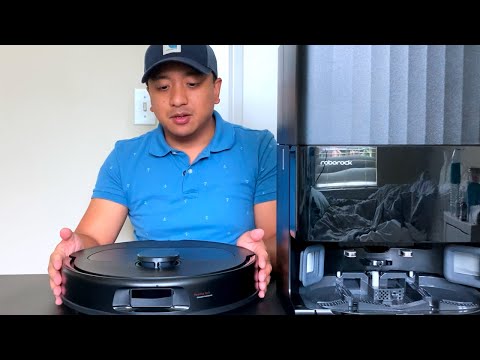
5.1 Mapping Accuracy, Room Editing and No-Go Zones
A robot vacuum is only as smart as the map it builds.
The Roborock QV 35A uses PreciSense® LiDAR navigation to scan 360° and create detailed floor maps in real time. In quick mapping mode, it moves through your home without cleaning, building a layout significantly faster than mapping during a full vacuum cycle. It also supports multi-floor mapping for up to four levels—ideal if you have an upstairs, basement, or split-level layout.
Inside the app, you can divide rooms, merge them, rename them (kitchen, hallway, nursery), and even manually adjust partitions. If the robot mislabels an open-plan space, you can redraw the boundary in seconds. It also supports furniture editing and surface type editing, so you can mark carpeted zones or define floor direction for more precise mopping patterns.
The result? A map that feels less like a static blueprint and more like a customizable cleaning control center.
5.2 Custom Cleaning Routines, Carpet Boost and Water Control
Here’s where the QV 35A starts to feel surprisingly premium.
Inside the app, you can customize suction power, water flow (from 0 to 30), cleaning count (single or double pass), and route pattern. If you’re dealing with muddy paw prints, increasing water flow toward level 30 noticeably improves scrubbing performance. For light daily cleaning, dialing it down conserves water and drying time.
- Mop Lifting: The robot automatically lifts its mop pads 10mm when detecting carpet.
- Carpet Boost: Automatically increases suction on rugs for deeper cleaning.
- Vacuum First: Option to clean carpets before starting any mopping cycle to keep pads dry.
Want the kitchen cleaned twice after dinner but the living room only vacuumed? Create a routine. You can stack tasks: vacuum and mop the whole house, then return to the kitchen for an extra mopping cycle. For pet owners, there’s even a pet area deep cleaning setting that increases attention around marked pet zones.
It doesn’t just clean. It adapts.
5.3 Alexa, Google Assistant, Siri Shortcuts and Wi-Fi Limits
If you live in a voice-controlled home, compatibility matters.
The QV 35A supports Alexa, Google Assistant, and Siri Shortcuts. Setup is handled through the Roborock app, where you can link your account to the respective smart ecosystem. Voice commands focus primarily on starting, stopping, pausing, or sending the robot back to the dock. Siri Shortcuts allow custom phrases like “Clean the basement” or “Return to dock,” which can also be integrated into Apple Home scenes.
Voice control won’t replace deep app customization—but it’s incredibly convenient when your hands are full or you’re heading out the door.
6. Maintenance, Reliability and Long-Term Costs
6.1 Dust Bags, Filters and Mop Pad Care
Automation reduces daily chores—but it doesn’t eliminate maintenance.
| Component | Maintenance Frequency |
|---|---|
| Dust Bag | Replace every 2 months (approx.) |
| Onboard Filter | Wash every 2–3 weeks |
| Mop Pads | Auto-washed & Cold-air dried (6-8 hours) |
The dock uses a disposable dust bag that typically needs replacement about every two months, depending on usage and pet hair volume as reported in testing demonstrations. Heavy shedders may fill it faster.
The onboard filter is washable and should be cleaned roughly every 2–3 weeks to maintain airflow. The app includes maintenance reminders for filters and sensors. When alerts appear, a quick rinse (followed by full drying) resets the timer and keeps suction performance consistent.
Mop pads are automatically washed after cleaning cycles and then dried with cold air. Because this model uses room-temperature air, drying takes several hours—commonly set between 6 to 8 hours in dock settings. It’s quieter than heated systems, but slower.
Consumables like mop cloths and side brushes are widely available, and the dock’s detachable base tray makes periodic deep cleaning easier than fixed-tray systems.
6.2 Dirty Water Tank Cleaning and Odor Prevention
Here’s the part nobody talks about—but everyone eventually smells.
After mop washing, dirty water collects in a separate tank inside the dock. If left sitting too long, stagnant water can develop odor. The fix is simple: empty the dirty water tank regularly, rinse it thoroughly, and allow it to dry before reinserting.
Cold-water washing means there’s no heat-based sanitation cycle. So hygiene relies more on consistent tank maintenance. It’s not difficult—but it does require discipline.
6.3 Reported Reliability Concerns and Support Experience
Robot vacuums are complex machines—motors, pumps, sensors, and water systems working together daily.
There have been isolated reports of dock leakage issues in related Roborock models, particularly involving mop washing systems as described in customer accounts. However, the provided sources do not confirm widespread QV 35A-specific failures.
Customer support experiences appear mixed in anecdotal accounts, with some users reporting delayed responses and full-unit return requirements for repairs. Official support channels include 24/7 helplines and email assistance.
There’s no verified pattern of systemic QV 35A failures in the provided data—but like any automated appliance, long-term durability depends on proper maintenance and usage conditions.
7. Who Should Buy the Roborock QV 35A (and Who Should Skip It)?
Pros
- Strong 8,000Pa suction for pet hair
- Dual spinning mops with 10mm lift
- Full multifunction dock at midrange price
- Excellent LiDAR navigation and mapping
Cons
- Struggles with thin cable avoidance
- No hot water wash or hot air dry
- No extendable mop for deep corners
- Only supports 2.4GHz Wi-Fi
7.1 Best for Pet Owners with Mostly Hard Floors and Moderate Clutter
If you have shedding pets and mostly hard flooring, this robot feels purpose-built.
The combination of dual anti-tangle brush design and 8,000Pa suction handles daily fur accumulation effectively. Hard floor vacuum performance is strong in single passes, and the dual spinning mops do a genuinely good job maintaining cleanliness—especially with adjustable water levels.
The 10mm auto-lift protects rugs during hybrid cycles, so you don’t have to manually switch modes between vacuuming and mopping. The all-in-one dock reduces daily effort to near zero: it empties dust, washes mops, refills water.
7.2 Not Ideal for Cable-Heavy Homes or Edge-Obsessed Cleaners
If your floors are covered in charging cables, thin cords, and small scattered items, pause.
Testing footage clearly showed it struggling with cable avoidance. Thin cords remain a weak spot. You’ll need to pick up before cleaning.
If you demand spotless corners and aggressive edge scrubbing, the lack of extendable mop pads limits precision. Corners are acceptable—not surgical.
Homes dominated by thick, high-pile carpet may also find suction adequate but not transformative. It performs well on surface debris but isn’t designed to replace deep carpet extraction.
8. Conclusion
The Roborock QV 35A represents a clear shift in the robot vacuum market: you no longer need flagship pricing to get serious automation.
It combines 8,000Pa suction, dual spinning mop pads with 10mm lift, LiDAR navigation, and a full multifunction dock—all at a midrange price. It omits hot water washing, hot air drying, AI camera navigation, and extendable mop arms. But for many households, those omissions won’t materially change daily results.
If you want powerful, automated cleaning without entering four-digit territory, the QV 35A hits a practical sweet spot.
9. FAQ
Q: Does the Roborock QV 35A work on thick carpet?
A: It performs well on low to medium-pile carpet, especially with carpet boost enabled. However, testing shows it may require two passes for complete debris removal, and it is primarily optimized for surface-level maintenance rather than deep extraction.
Q: Does it avoid cables reliably?
A: No. Demonstrations showed that thin floor cables are a weak point. While it avoids medium-sized objects effectively, exposed cords should be picked up before cleaning.
Q: How often do you replace the dust bag?
A: Typically about every two months, depending on pet hair volume and cleaning frequency. Heavy shedding households may need more frequent replacements.
Q: Does it support 5GHz Wi-Fi?
A: No. It only supports 2.4GHz Wi-Fi networks. You may need to enable 2.4GHz during setup if your router defaults to 5GHz.
Q: How long does mop drying take?
A: The dock uses cold air drying, which generally takes several hours—commonly configured between 6 to 8 hours—longer than hot-air systems found in premium models.