
Best Robot Mowers for Complex Lawns with Multiple Zones: Smart Mapping, RTK & AI Navigation Guide
Aaron Cooper1. Introduction
If your lawn looks more like a puzzle than a rectangle—front yard here, narrow side strip there, a sloped backyard dotted with trees—you already know the pain. Traditional mowing turns into a weekend marathon of pushing, trimming, and backtracking. And just when you’re done? It grows back.
That’s exactly where modern robot mowers step in. Today’s models don’t just “cut grass”—they map, navigate, and manage multiple zones automatically. With smart navigation, app-based control, and terrain-aware driving, they transform chaotic lawns into hands-free systems. The real question isn’t if you should automate—it’s which technology and model can actually handle your specific layout.
2. Best Robot Mowers for Complex Lawns with Multiple Zones (Top Models Compared)

2.1 Segway Navimow vs Mammotion LUBA vs Husqvarna: Core Differences
Not all robot mowers think the same—and on a complex lawn, how they “think” matters more than how they cut.
Segway Navimow takes a modern, software-first approach. It combines GPS with VSLAM (Visual Simultaneous Localization and Mapping—basically, the mower “sees” your yard like a robot vacuum and builds a visual map). The result? Clean, app-driven setup without boundary wires. You draw zones on your phone, tweak them anytime, and let it run. It’s the closest thing to “set it and forget it.”
Mammotion LUBA goes a different route: raw precision and power. It uses RTK GPS (a corrected satellite system that narrows positioning down to centimeters) combined with AI vision. This means extremely accurate paths and better handling of complex layouts—but with slightly more setup effort.
Husqvarna, the veteran, sticks to a wire-based system. It’s reliable, proven, and stable—but far less flexible. Every zone change means physical adjustments. On a constantly evolving yard, that’s a headache.
In short:
- Navimow = simplicity and smart software
- LUBA = precision and power
- Husqvarna = reliability, but less flexibility
2.2 Multi-Zone Capability: Which Mower Handles the Most Complex Layouts?
Here’s where things get real. Because “multi-zone” isn’t just a feature—it’s the difference between a mower that works… and one that quietly misses half your yard.
Imagine this: front yard, backyard, a narrow strip along the driveway, and a small patch behind the shed. That’s already four zones. Now add pathways, obstacles, and different mowing schedules. Suddenly, basic systems fall apart.
You can assign different schedules, routes, and priorities to each section. It’s granular control at a level traditional systems simply can’t match.
Segway Navimow approaches this differently. Instead of raw zone numbers, it focuses on flexibility. Its app lets you draw, adjust, and connect zones visually. Need to tweak a boundary or add a new section? Done in seconds—no digging, no rewiring.
Husqvarna’s wire-based zones? They work—but they’re rigid. Every new zone means more installation work, and adjusting layouts isn’t exactly a quick Sunday task.
Best For
- Navimow: If your yard is constantly evolving (App flexibility)
- LUBA: If your layout is complex and fixed (High zone capacity)
- Husqvarna: If you want "set once, forget forever" (Stability)
The key takeaway: the more fragmented your lawn is, the more you’ll appreciate software-driven zone control.
2.3 Slope Handling and Terrain Performance in Real Yards
Flat lawns are easy. Real lawns? Not so much.
Slopes, uneven patches, wet grass, tree roots—this is where many robot mowers quietly fail. They slip, get stuck, or simply avoid the hardest areas altogether.
Mammotion LUBA is built for exactly this scenario. With all-wheel drive and aggressive tire design, it handles slopes up to 80%, making it one of the strongest performers for hilly or rugged terrain. Think of it less like a lawn gadget and more like a tiny off-road vehicle.
Segway Navimow and Husqvarna models typically handle around 50% slopes, which is perfectly fine for most suburban yards. They climb well, recover when stuck, and maintain stable mowing patterns—but they’re not designed for extreme inclines.
- AWD systems = better grip on wet or uneven ground
- Tire design = less slipping, more consistent cuts
- Smart navigation = fewer “panic stops” when terrain changes
In real-world use, this translates to one simple feeling: Either you trust the mower to handle your yard… or you keep checking on it.
If your lawn has serious elevation changes, LUBA’s extra power isn’t a luxury—it’s peace of mind.
2.4 Real-World Performance: Ease of Use vs Raw Power
Specs look great on paper. But what actually happens after week three, when the novelty wears off?
That’s where real-world performance tells the truth.
Segway Navimow consistently stands out for usability. Setup is fast, the app is intuitive, and adjusting zones feels effortless. According to hands-on evaluations, it’s one of the easiest systems to get running—and keep running—without constant tweaking. You spend less time managing the mower and more time ignoring it. That’s the goal.
Mammotion LUBA, on the other hand, dominates in performance. It handles rough terrain, complex layouts, and obstacles with confidence. In comparative testing, it consistently ranks among the best for navigation and terrain handling. But that power comes with slightly more setup complexity.
Husqvarna? It’s the reliable veteran. It rarely surprises you—but it also doesn’t adapt as quickly to complex, multi-zone environments.
| Requirement | Recommended Model |
|---|---|
| Effortless setup and control | Segway Navimow |
| Brute force for challenging terrain | Mammotion LUBA |
| Proven reliability over flexibility | Husqvarna |
At the end of the day, the “best” mower isn’t the most powerful—it’s the one that disappears into your routine.
Because the real luxury isn’t a perfectly cut lawn. It’s never thinking about it again.
3. Key Technologies Behind Multi-Zone Robot Mowers (What Actually Matters)

3.1 RTK GPS: Precision Mapping for Large Open Lawns
If you’ve ever seen a robot mower move in perfectly straight, satisfying lines—almost like a freshly vacuumed carpet—that’s RTK GPS at work.
RTK (Real-Time Kinematic) isn’t your typical GPS. Instead of being off by a few feet, it corrects its position in real time using a base station, delivering centimeter-level positioning accuracy. In practice, that means your mower knows exactly where it is, where it’s been, and where it still needs to go.
For large, open lawns, this is a game changer. You get clean, systematic mowing patterns with minimal overlap—no random wandering, no missed strips.
So while RTK is unbeatable for wide, open spaces, it’s not a one-size-fits-all solution. Think of it like a GPS in your car—it’s brilliant on highways, but less reliable in tunnels.
Still, for large properties with clear skies? It’s as close to perfection as robot mowing gets.
3.2 LiDAR and AI Vision: Navigating Obstacles and Irregular Layouts
Now imagine the opposite of an open lawn: trees everywhere, garden beds, furniture, kids’ toys, maybe even a dog running across the yard.
This is where LiDAR and AI vision shine.
LiDAR (Light Detection and Ranging) works like radar—but with lasers. It scans the environment in real time, building a detailed 3D map of your yard. Meanwhile, AI vision uses cameras to recognize objects—like distinguishing a flower bed from grass, or avoiding a forgotten soccer ball.
Together, they give the mower something close to “awareness.” The benefits are immediate:
- Better obstacle detection (less bumping, fewer interruptions)
- Reliable navigation in shaded areas where GPS struggles
- Smarter decisions in dynamic environments
In testing scenarios, systems using LiDAR or vision-based navigation consistently perform better in complex, irregular layouts—especially where GPS alone would fail. But they’re not perfect. Vision systems depend on lighting. No light = no vision. That’s why some models struggle at night.
3.3 Sensor Fusion: Why the Best Mowers Combine Multiple Systems
Here’s the truth: no single technology is perfect. RTK struggles under trees. Vision struggles in low light. LiDAR can be affected by weather.
So what do the best robot mowers do? They combine everything.
This is called sensor fusion—a system where RTK, LiDAR, and AI vision work together, constantly switching based on conditions.
- Open sky? RTK takes over for precision lines.
- Under trees? LiDAR handles navigation.
- Obstacles nearby? AI vision steps in.
It’s like having multiple navigation brains that collaborate in real time. For complex, multi-zone lawns, this isn’t just a bonus feature. It’s the difference between automation that works… and automation that quietly falls apart the moment your yard gets complicated.
3.4 App-Based Multi-Zone Control and Smart Scheduling
Let’s be honest—the real magic doesn’t happen on the lawn. It happens in the app. Because no matter how advanced the hardware is, if controlling it feels like a chore, you’ve just traded one problem for another.
Modern robot mowers turn your phone into a command center:
- Draw zones with your finger
- Set different schedules for each area
- Create no-go zones around gardens or patios
- Monitor progress in real time
With systems like Navimow, you can literally sit on your couch, adjust your lawn layout, and watch the mower adapt instantly. No tools. No wires. No frustration.
4. How to Choose the Right Robot Mower for Your Complex Lawn
4.1 Match Lawn Size, Zones, and Layout Complexity
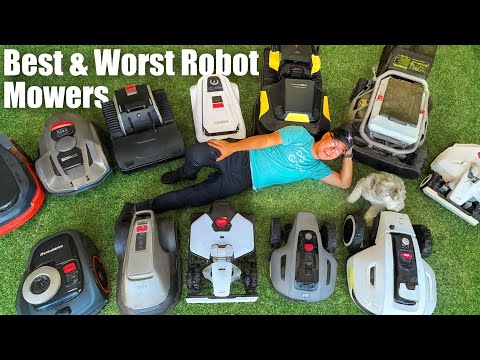
Before you even look at brands or features, take a hard look at your yard. Not just the size—but the shape. Because a 2-acre flat rectangle is easy. A half-acre split into five awkward zones with narrow passages? That’s where things get messy.
Here’s the reality: the more fragmented your lawn is, the more you need advanced mapping and flexible zone control. App-based systems let you draw boundaries, connect zones, and adjust layouts without digging wires. That’s a massive upgrade when your yard evolves seasonally.
And don’t underestimate scale. Larger lawns demand higher coverage capacity and smarter routing. Without it, the mower spends more time recharging than cutting.
"When your mower actually understands your layout, everything changes. No more patchy sections... Just a lawn that quietly takes care of itself."
4.2 Wire-Free vs Boundary Wire Installation: Which Is Better?
Let’s talk about one of the biggest decision points—and honestly, one of the most frustrating if you choose wrong.
Boundary wires used to be the standard. You physically install a wire around your lawn, defining exactly where the mower can go. It works. It’s reliable. But it’s also… a commitment.
Now compare that to wire-free systems. With RTK, LiDAR, or vision-based mapping, you simply open an app, draw your lawn, and you’re done. Want to add a new zone? Tap. Want to adjust a boundary? Drag. It’s the difference between editing a photo and rewiring your house.
Wire-Free Systems
- Flexible app-based boundaries
- Easy to update for landscaping changes
- No physical digging required
Boundary Wire Systems
- Stable but extremely rigid
- Time-consuming initial installation
- Prone to physical wire breaks
For complex, multi-zone lawns, flexibility wins almost every time. Especially when your layout isn’t static.
4.3 Battery Life, Runtime, and Charging Efficiency
Here’s something most people underestimate—until it becomes painfully obvious. If your mower can’t stay out long enough to finish the job, everything slows down.
Large or multi-zone lawns demand serious runtime. Otherwise, the mower cuts a section, runs out of battery, crawls back to charge, and repeats. Over and over. What should take a few hours stretches into an all-day cycle.
- Automatic docking and resume functions are essential.
- Higher-capacity batteries lead to fewer interruptions.
- Efficient routing ensures faster overall coverage.
In real-world use, that translates to something you’ll actually notice: your lawn gets done without you thinking about it. Because the moment you start checking the app to see if it finished… the magic is gone.
4.4 Cost vs Performance: What’s Actually Worth Paying For?
Let’s be real—robot mowers aren’t cheap. And when you see price tags climbing into the thousands, it’s fair to ask: is it actually worth it?
Short answer: sometimes yes, sometimes absolutely not. If you have a simple, flat lawn, paying for advanced navigation or AWD is overkill. But on a complex lawn? That’s where premium features stop being “nice-to-have” and become essential.
| Premium Feature | Value for Complex Lawns |
|---|---|
| RTK / Advanced Navigation | Cleaner coverage, fewer missed zones |
| AWD & Strong Traction | No getting stuck on slopes |
| AI Vision / LiDAR | Fewer collisions, better obstacle handling |
| App-based Multi-zone Control | Actual automation, not babysitting |
The biggest mistake people make is buying based on price alone. Cheap models often struggle with complex layouts, which means more manual intervention—exactly what you were trying to avoid.
5. Best Robot Mower by Lawn Scenario (Practical Recommendations)
5.1 Disconnected Front & Backyard: Multi-Zone Navigation Tips
This is one of the most common—and frustrating—layouts. Your front yard looks great. Your backyard? Completely ignored unless you manually move the mower.
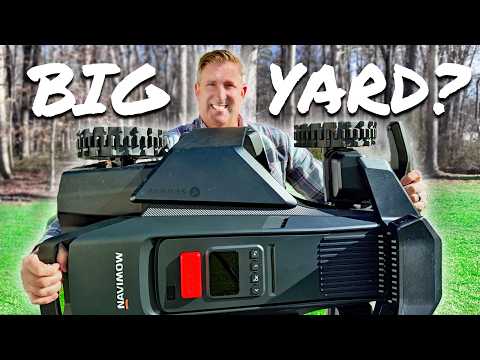
The solution comes down to how well a mower handles zone linking. Modern systems allow you to create virtual channels—basically invisible pathways that connect separate zones. The mower can travel between them automatically, just like a robot vacuum moving between rooms.
If your property is split, prioritize:
- Strong multi-zone mapping
- Autonomous navigation between zones
- Reliable positioning (RTK or sensor fusion)
When it works, it feels effortless. One system. One schedule. Every part of your lawn handled. When it doesn’t? You’re carrying a robot across your yard like it’s 2005 again.
5.2 Narrow Paths and Tight Passages: Precision Matters
Narrow side yards and tight corridors are where weaker systems fall apart. Precision matters more than power here. In these scenarios, centimeter-level positioning and accurate path planning make all the difference.
RTK-based systems excel because they maintain straight, controlled lines without drifting. Sensor fusion systems go even further, adapting in real time when space gets tight.
- Avoid basic or random navigation systems for tight areas.
- Look for high-precision mapping (RTK or advanced vision).
- Prioritize consistent path planning over raw speed.
5.3 Heavy Tree Coverage or Poor GPS Signal: What to Choose
If your yard is full of trees, fences, or tall structures, here’s the uncomfortable truth: RTK alone might struggle. Satellite-based systems rely on clear sky visibility. Dense tree cover can weaken signals, causing navigation errors.
This is where LiDAR and AI vision step in. Unlike GPS, these systems don’t care about satellites. They “see” and map the environment in real time. If your yard feels like a forest, don’t rely on satellites alone. You need a mower that can think locally—not just globally.
5.4 Hilly or Uneven Terrain: Go for AWD and Strong Traction
Slopes change everything. What looks manageable on paper quickly turns into slipping wheels and half-finished jobs. This is where drivetrain design becomes critical.
All-wheel drive systems, like those found in models such as Mammotion LUBA, are built for exactly this. In fact, industry comparisons show slope handling up to 80% on AWD models—significantly higher than typical systems.
Ideal for Hills
- All-Wheel Drive (AWD)
- Aggressive tire treads
- Higher chassis weight for stability
Avoid for Slopes
- Standard 2WD designs
- Lightweight models with low traction
- Basic random-path navigation
Because the last thing you want is a mower that treats half your yard like a no-go zone.
6. Conclusion
Choosing the best robot mower for a complex, multi-zone lawn isn’t about picking the most expensive model—it’s about matching technology to your reality.
If your yard is fragmented, prioritize multi-zone control and flexible app-based mapping. If you’re dealing with slopes, traction and AWD matter more than anything else. And if your lawn is shaded or obstructed, navigation technology—RTK, LiDAR, or sensor fusion—becomes the deciding factor.
"The biggest shift here isn’t just automation. It’s reliability. A mower that works with your lawn instead of fighting it."
Get that right, and something surprising happens: You stop thinking about mowing altogether. And honestly? That’s the whole point.
FAQ
Q: How do robot mowers navigate between disconnected lawn zones?
A: High-end models use virtual channels or paths defined in the app. By using RTK GPS or LiDAR mapping, the mower can autonomously travel across non-grass areas like driveways or paths to reach a separate mowing zone without manual assistance.
Q: Does RTK GPS work in yards with heavy tree coverage?
A: RTK GPS requires a clear line of sight to satellites for centimeter-level precision. In heavily shaded areas, signal degradation can occur. For such yards, we recommend models featuring sensor fusion, which combines GPS with LiDAR or AI vision to maintain navigation.
Q: What is the maximum slope a robot mower can handle?
A: Performance varies by drivetrain. Standard models typically manage inclines up to 50%, whereas specialized all-wheel-drive (AWD) models like the Mammotion LUBA can handle slopes up to 80% due to superior traction and motor power on rugged terrain.
Q: Is a wire-free installation better for complex layouts?
A: Yes, wire-free systems offer significantly more flexibility. Instead of physically burying cables, users can draw and adjust multiple zones via a smartphone app. This makes it much easier to modify the mowing area if your landscaping changes seasonally.
Q: Do these mowers require constant internet connectivity?
A: While most mowers use Wi-Fi or 4G for app updates and remote monitoring, their core navigation systems (RTK or LiDAR) function locally. However, a stable signal is often required for the initial cloud-based mapping and real-time status alerts.