
Husqvarna Automower 430X vs. 450X: Which Should You Buy for Your Lawn Size, Budget, and Needs?
Aaron Cooper1. Introduction
Robotic lawn mowers aren’t just a gadget anymore—they’re a lifestyle upgrade. If you’ve ever spent a hot Saturday pushing a mower back and forth, only to watch the grass grow again a few days later, you already understand the appeal: set it, forget it, and reclaim your weekends.
That’s exactly why the Husqvarna Automower 430X and 450X are so often compared. On paper, they look nearly identical. In reality? The differences come down to what actually matters in daily life—lawn size, runtime, navigation intelligence, and how much babysitting you’re willing to tolerate.
This guide breaks it all down—no fluff, no guesswork—so you can confidently choose the right model for your yard.
2. Husqvarna Automower 430X vs. 450X: Key Differences at a Glance
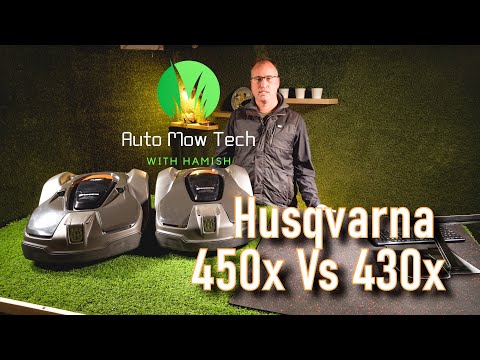
Before diving into real-world scenarios, let’s zoom out. These two models share the same DNA—but the 450X is clearly built for bigger, more demanding lawns.
2.1 Lawn Size Capacity and Coverage: 3,200 m² vs 5,000 m²
Let’s start with the deal-breaker: how much lawn each machine can realistically handle.
- 430X: Up to 3,200 m²
- 450X: Up to 5,000 m²
That’s a 1,800 m² difference—and it’s not just a number on paper. It’s the difference between “comfortably keeping up” and “constantly playing catch-up.”
The 450X, on the other hand, gives you breathing room. It’s designed to handle significantly larger spaces without constantly racing against the clock.
Independent comparisons consistently highlight this 1,800 m² larger coverage capacity as the single biggest separator between the two models—and for good reason.
Bottom line: Under ~3,000 m²? The 430X feels right at home. Pushing beyond that? The 450X stops feeling like a luxury and starts feeling necessary.
2.2 Mowing Efficiency and Runtime: Speed vs Endurance
Now imagine this: your mower heads out, cuts for a while… then disappears back to charge. Again. And again. And again.
That cycle is where the 430X and 450X really diverge.
| Metric | 430X | 450X |
|---|---|---|
| Mowing Efficiency | 133 m²/h | 208 m²/h |
| Runtime per Charge | ~145 minutes | ~270 minutes |
The 450X doesn’t just run longer—it covers significantly more ground per hour. In fact, data shows it delivers about 56% higher mowing efficiency, which directly translates into fewer interruptions and faster overall coverage.
What does that feel like in real life?
- The 430X works in shorter bursts. Perfectly fine for medium lawns—but you’ll notice more frequent docking cycles.
- The 450X just keeps going. It disappears into your yard and stays there, quietly chewing through large sections before needing a break.
Less charging. More mowing. Less waiting.
2.3 Obstacle Detection: Basic Sensors vs Ultrasonic Intelligence
Here’s something most buyers underestimate—until they hear that first thud.
The 430X relies on traditional bump sensors. It moves, hits an object (a tree, chair, or garden edge), then redirects. It works. It’s proven. But it’s reactive.
The 450X adds ultrasonic sensors—think of them like invisible feelers that “see” obstacles before contact.
In practical terms:
- Fewer collisions
- Smoother navigation around trees and edges
- Less long-term wear on the machine
If your lawn is wide open, you may never care. But if you’ve got trees, flower beds, or scattered garden furniture? This upgrade quietly transforms the experience.
2.4 Price Difference and Value Proposition
Let’s talk money—because this is where most decisions get stuck.
- 430X: €3,479
- 450X: €4,799
- Difference: €1,320
At first glance, that’s a big jump. Enough to make anyone hesitate. But here’s the twist: when you look at what you’re actually getting—more coverage, longer runtime, faster mowing—the 450X often ends up delivering better value per square meter.
430X Strategy
- Smart, budget-conscious pick for medium lawns.
- Reliable performance without overpaying.
450X Strategy
- The “buy once, relax forever” option.
- Ideal for large or complex properties.
If you’re already stretching the limits of the 430X, that €1,320 difference can quickly turn into something else: more cycles, more intervention, and more time spent managing your mower.
3. Which Model Fits Your Lawn? Real-World Use Case Guide

Specs are one thing. Real life is another.
Because your lawn isn’t a perfect rectangle. It has awkward corners, narrow passages, trees, maybe even disconnected sections. And that’s where choosing the wrong model starts to feel… frustrating.
3.1 Medium Lawns (2,200–3,200 m²): When the 430X Is Enough
If your lawn sits comfortably within this range, the 430X hits a sweet spot. It’s powerful enough to maintain a consistent cut, and its coverage capacity aligns well with what it’s designed to handle. You’ll still get that “always freshly cut” look—without overpaying for capacity you don’t need.
The only catch? Layout complexity. If your yard is relatively open or only mildly segmented, the 430X handles it just fine. But if you’re starting to deal with multiple zones or tricky navigation paths, you may begin to notice its limits.
3.2 Large or Complex Lawns (3,200–5,000 m²): Why the 450X Stands Out
Now let’s step into bigger territory. Once your lawn crosses that 3,200 m² threshold, things change fast. More ground to cover. More obstacles. More chances for inefficiency.
This is exactly where the 450X shines. First, it simply has the capacity. No stretching, no overworking—it’s built for this scale. Second, it supports up to three guide wires, which are essentially pathways that help the mower navigate to distant or separated areas of your lawn.
3.3 Complex Layouts, Obstacles, and Multi-Zone Lawns
A lawn with trees scattered throughout, narrow passages, or separate zones connected by paths is fundamentally different from an open lawn of the same size.
450X Performance in Chaos
- Ultrasonic sensors for smooth obstacle approach.
- Three guide wires to reduce "searching" time.
- Higher efficiency for regular zone maintenance.
430X Challenges
- Spends more time navigating and less time cutting in complex areas.
- Fewer guide wires can lead to aimless wandering in large zones.
3.4 Budget vs Long-Term Convenience: Is the 450X Worth It?
Let’s be honest—the 450X is expensive. But here’s the better question: how much is your time worth?
If your lawn is pushing the upper limits of the 430X, you’re signing up for more mowing cycles per day and more charging interruptions. It’ll still work. But it won’t feel effortless.
The best robotic mower isn’t the most powerful one. It’s the one you never have to think about.
Q: Is the 450X worth it?
A: Yes, if your lawn is large, complex, or growing. No, if your lawn is well within the 430X’s comfort zone.
4. Technical Differences That Actually Matter in Daily Use
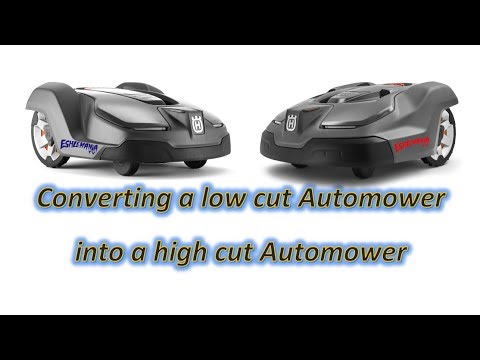
On paper, specs are easy to skim. But in real life? These differences show up in how often your mower interrupts itself… how long it wanders… and whether you ever have to step in.
Let’s break down what actually changes your day-to-day experience.
4.1 Battery Capacity and Charging Cycles Explained
Here’s a scenario you’ll quickly recognize: the mower heads out, gets into a rhythm… then suddenly stops and returns to charge. Again.
With the 430X, that’s part of the routine. Its runtime sits around 145 minutes, which means more frequent charging cycles throughout the day.
The 450X stretches that dramatically, running for about 270 minutes per cycle. That’s not just “longer”—it fundamentally changes how the mower behaves. Instead of constantly dipping in and out of work, it stays out longer, covering larger sections in one go.
And you feel it.
- Fewer interruptions
- More consistent coverage
- Less “start-stop” noise throughout the day
Over time, this also reduces how often the mower needs to navigate back to the dock—something that sounds minor until you realize how much time is lost just searching for home.
4.2 Guide Wires and Navigation: Why They Matter More Than You Think
Most people ignore guide wires… until their mower starts getting “lost.”
Think of guide wires like invisible highways that lead your mower to different parts of your yard and back to its charging station. Without them, the mower relies more on random movement and boundary tracking—which takes time.
| Model | Guide Wire Support |
|---|---|
| 430X | Up to 2 guide wires |
| 450X | Up to 3 guide wires |
That extra guide wire sounds small—but in complex lawns, it’s a game-changer.
In multi-zone setups, the mower doesn’t just need to cut—it needs to find where to cut. With three guide wires, the 450X can split your yard into more efficiently reachable zones, reducing the time spent wandering.
The result?
- Faster access to distant areas
- Shorter return paths to the dock
- More actual mowing, less “searching”
In long-term use, even a few extra minutes of search time per cycle adds up to hours of wasted operation. The 450X quietly eliminates that inefficiency.
4.3 Installation Complexity: Boundary Wire vs EPOS (Wire-Free Option)
Now let’s talk setup—because this is where many people hesitate.
Traditionally, both models rely on a boundary wire system. That means physically laying a wire around your lawn to define where the mower should and shouldn’t go. It works reliably—but yes, it’s a bit of upfront effort.
The alternative? Husqvarna’s EPOS system.
Instead of wires, EPOS uses satellite-based positioning to create virtual boundaries. No digging. No cables. Just map your lawn digitally and adjust zones from your phone.
Sounds perfect, right?
So the decision becomes:
- Want the most flexible, future-proof setup? EPOS is incredibly convenient.
- Want to minimize upfront cost? Boundary wire still gets the job done reliably.
Either way, both the 430X and 450X support modern setup options—you’re not locked into one path.
4.4 Smart Features and App Control: Mostly Identical Experience
Here’s the surprising part: despite all their performance differences, both models feel almost identical when it comes to smart features.
Through the Automower® Connect app, you get:
- Remote control and scheduling
- GPS tracking
- Zone management and temporary no-go areas
- Integration with Alexa and Google Home
In daily use, this means you can adjust your mowing schedule while sitting on your couch—or even while you’re away from home.
So if you’re hoping the 450X has a dramatically “smarter” app experience… it doesn’t.
And honestly, that’s a good thing.
Because it means your decision should come down to lawn size, runtime, and navigation—not software.
5. Ownership Experience: Maintenance, Limitations, and What to Expect

Let’s be real for a second.
No robotic mower is completely hands-off. The dream is close—but there are still a few realities you’ll want to understand before buying.
The good news? Most of them are small. The better news? They’re predictable.
5.1 Routine Maintenance: Blades, Cleaning, and Upkeep
If you’re expecting zero maintenance, let’s reset that expectation—gently.
Both the 430X and 450X use small, razor-style blades mounted on a rotating disc. Instead of hacking grass like traditional mowers, they slice it cleanly.
That’s why your lawn looks so consistently neat.
But those blades don’t last forever. Based on typical usage patterns, they need to be replaced regularly to maintain a clean cut. The process is simple—but it’s something you’ll do multiple times per season.
The upside: no oil changes, no fuel, no heavy servicing. It’s light work—but it’s not zero work.
5.2 Common Limitations: Edges, Thick Grass, and Random Patterns
Here’s where expectations matter most.
Expectations
- Consistently neat lawn height
- Silent operation while you sleep
- Autonomous maintenance mowing
Realities
- Edges need manual trimming
- Random patterns (no stripes)
- Struggles with overgrown recovery
First—edges. Robotic mowers don’t trim perfectly along borders. You’ll likely end up with a small strip of grass along edges that needs occasional touch-up with a string trimmer.
Second—cutting pattern. These mowers don’t mow in straight lines. They use a randomized pattern, gradually covering the entire lawn over time. At first, it can look… chaotic. But once your lawn stabilizes at a consistent height, those patterns disappear visually.
Third—thick or overgrown grass. If your lawn gets too long or dense, even a high-end model can struggle temporarily. These machines are designed for maintenance mowing, not heavy recovery jobs.
So the rule is simple: keep it running regularly, and it performs beautifully. Ignore it for weeks? You’ll notice the limits.
5.3 Installation and Setup Costs to Consider
This is the part many buyers underestimate. The mower price isn’t always the full price.
If you go with a traditional setup, you may need:
- Boundary wire installation (DIY or professional)
- Time to map out zones properly
If you go wire-free with EPOS, you’re adding a premium upgrade—one that can cost over a thousand euros based on available pricing references.
Neither is wrong. But both affect your total cost.
And here’s the key insight:
- The 430X saves money upfront—but setup costs still apply
- The 450X costs more—but if you’re already investing in a complex installation, the added performance often makes more sense long-term
6. Conclusion: 430X or 450X—The Right Choice for Your Lawn
So—430X or 450X?
It really comes down to one simple question: how hard do you want your mower to work?
If your lawn sits comfortably under 3,200 m² and isn’t overly complex, the 430X delivers exactly what you need. It’s reliable, capable, and significantly easier on your budget. Set it up, let it run, and you’ll still reclaim your weekends.
But if your lawn is larger, more segmented, or filled with obstacles, the 450X starts to feel less like an upgrade—and more like the correct tool for the job. Longer runtime, faster coverage, and smarter navigation mean less intervention and a smoother experience overall.
In the end, the best choice isn’t about specs. It’s about how often you want to think about your lawn.
FAQ
Q: What is the main difference in coverage between the 430X and 450X?
A: The primary difference is capacity; the 430X is designed for lawns up to 3,200 m², while the 450X handles much larger areas up to 5,000 m². This makes the 450X more suitable for expansive or complex properties requiring higher daily efficiency.
Q: How do the sensors differ on the Husqvarna 450X?
A: Unlike the 430X which uses reactive bump sensors, the 450X features ultrasonic sensors. These allow the mower to detect obstacles from a distance and slow down before contact, resulting in smoother navigation and less physical impact on garden furniture.
Q: Can both models operate without boundary wires?
A: Yes, both the 430X and 450X support Husqvarna’s EPOS technology. However, this requires the purchase of an additional plugin kit and reference station, allowing for virtual boundaries via satellite positioning instead of traditional physical buried wires.
Q: Why does the 450X have three guide wires?
A: The third guide wire in the 450X is crucial for complex or multi-zone lawns. It provides an additional "highway" for the mower to find its way back to the charging station or reach remote areas, significantly reducing search time and increasing overall mowing efficiency.
Q: Is the maintenance different for these two models?
A: Maintenance requirements are nearly identical. Both require regular blade replacements to ensure a clean cut, periodic cleaning of the cutting deck, and keeping the wheels free of debris. Neither requires oil or fuel, making them lower maintenance than traditional gas mowers.