
Mammotion LUBA 2 AWD Review: Specs, Features & Aggregated Sentiment (Real Pros, Cons & Performance Insights)
Aaron Cooper1. Introduction: Is the Mammotion LUBA 2 AWD the Ultimate Wire-Free Robot Mower?
If you’ve ever spent a Saturday wrestling with a loud mower, sweating through uneven terrain, or dragging boundary wires around your yard, you already know the problem: lawn care eats time. A lot of it.
That’s exactly why wire-free robotic mowers like the Mammotion LUBA 2 AWD are getting so much attention. No perimeter cables. No constant supervision. Just a machine that maps, navigates, and quietly trims your lawn while you do literally anything else.
In this review, we’re breaking down everything that actually matters—real specs, core tech, performance on slopes and complex yards, and what multiple expert reviews consistently agree on (both good and bad). Because at this price point, this isn’t just a gadget—it’s a serious investment.
2. Mammotion LUBA 2 AWD Specs & Core Technologies Explained
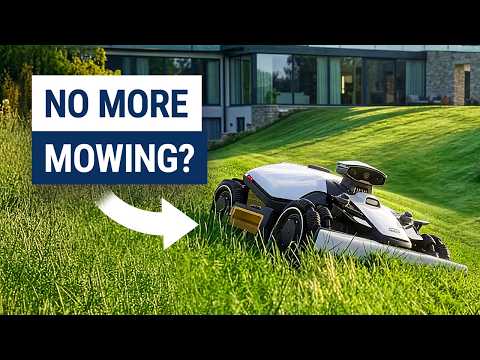
2.1 Coverage, Battery, and Cutting System: What the Numbers Mean in Practice
On paper, the Mammotion LUBA 2 AWD looks like a powerhouse. But what do those numbers actually feel like when it’s working on your lawn?
Let’s start with coverage. The lineup spans from smaller properties all the way up to massive lawns, ranging roughly from 1,000m² to 10,000m². That means whether you’ve got a modest yard or something closer to a small field, there’s a version that fits—without forcing you to overspend on capacity you’ll never use.
| Feature | Specification |
|---|---|
| Runtime | 180 minutes per charge |
| Recharge Time | 150 minutes |
| Cutting Deck | Under 400mm (approx. 16 inches) |
| Coverage Range | 1,000m² - 10,000m² (model dependent) |
Battery-wise, you’re looking at about 180 minutes of runtime per charge, followed by a 150-minute recharge. In real life, that translates to long, uninterrupted mowing sessions—but not always finishing everything in one go for larger or more complex lawns. And that’s normal. This mower is designed to think in cycles, not one-and-done passes.
The cutting system is equally practical. With a deck just under 400mm (about 16 inches), it covers ground efficiently while still navigating tight areas. Underneath, dual cutting discs with multiple blades trim rather than tear grass, which helps maintain a healthier lawn over time.
2.2 RTK GPS + AI Vision: How Wire-Free Navigation Actually Works
Here’s where things get interesting—and where most traditional robot mowers fall apart.
Old-school robotic mowers rely on boundary wires. You physically install them around your yard, and the mower blindly follows that invisible fence. It works… until it doesn’t. Break a wire, and suddenly your entire system is down.
The LUBA 2 AWD skips all of that by using a fusion of RTK GPS and AI vision.
- RTK (Real-Time Kinematic) GPS: Ultra-precise satellite positioning that knows position down to centimeters.
- Binocular Vision System: Provides depth perception to navigate under trees or near buildings.
- Layered Obstacle Detection: Combines ultrasonic sensors and a physical bumper.
RTK (Real-Time Kinematic) GPS is essentially ultra-precise satellite positioning. Instead of knowing roughly where it is (like your phone), it knows its position down to centimeters. That’s how it can mow in clean, straight lines instead of random zigzags.
But GPS alone struggles under trees or near buildings. That’s where the binocular vision system kicks in—think of it like giving the mower depth perception. It can “see” obstacles, adjust in real time, and maintain smooth navigation even when satellite signals aren’t perfect.
This combination is why many reviewers describe the system as “flabbergastingly good GPS-guided precision”—because it doesn’t just stay inside boundaries. It actively understands the space.
Add in ultrasonic sensors and a physical bumper, and you get layered obstacle detection. It slows down before hitting things, avoids them when possible, and adapts based on your settings.
No wires. No guesswork. Just mapped intelligence.
2.3 AWD, Slope Handling, and Multi-Zone Mapping Capabilities
Now let’s talk about the part most robot mowers struggle with: real-world lawns.
Not the flat, perfect ones. The messy ones. Slopes, dips, rough patches, multiple sections—basically, the kind of yard that makes you dread mowing.
This is where the LUBA 2 AWD earns its name.
The all-wheel-drive system isn’t just a spec—it’s the reason it can handle steep inclines and uneven terrain without slipping or getting stuck. According to aggregated specs and reviews, it can tackle slopes up to 80% (around 38°), which puts it in a completely different league than most robot mowers.
And it’s not just about climbing. The suspension and wheel design help it stay stable over bumpy ground, gravelly patches, and even semi-rural terrain. Instead of bouncing around or digging into the lawn, it maintains traction and control.
Then there’s multi-zone mapping. If your yard isn’t one simple rectangle—maybe you’ve got a front lawn, backyard, side strip, or separated sections—the LUBA 2 can map them individually. You can:
- Create multiple zones: Define specific areas of your property.
- Set different schedules: Customize when and how often each zone is mown.
- Build “channels”: Establish paths so the mower travels between separated areas.
This is huge. Because instead of forcing your yard to fit the mower, the mower adapts to your yard.
The result? A system that doesn’t just mow—it manages your entire lawn layout intelligently. And once it’s dialed in, the experience is simple:
It just goes.
Check Price on Amazon4. Setup, App Experience, and Day-to-Day Usability
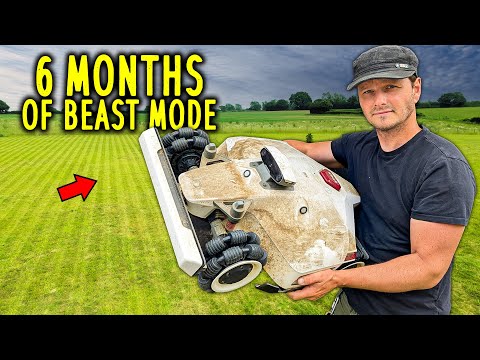
4.1 Installation & Mapping: Easier Than Wires, But Not Plug-and-Play
Let’s be honest—“wire-free” sounds like instant gratification. Open the box, press a button, done. That’s not quite reality here.
Yes, you’re skipping the back-breaking process of burying perimeter wires (and your knees will thank you). But in exchange, you’re stepping into a more technical setup process.
Most setups take under an hour physically, but placement matters. A poorly positioned RTK station can lead to inconsistent performance later.
Then comes mapping. Instead of laying wires, you “drive” the mower around your lawn using your phone, tracing boundaries like a remote-control car. It’s intuitive—but also time-consuming if your yard is complex.
And here’s the part most people underestimate: optimization.
You’ll likely remap zones, tweak channels, and refine edges over time. Especially if your yard has multiple sections, slopes, or narrow pathways.
Pros
- No back-breaking perimeter wire burial
- Fully customized maps for precision navigation
- No physical restrictions once dialed in
Cons
- Demands significant patience upfront
- RTK station placement is critical and sensitive
- Time-consuming mapping for complex yards
4.2 App Control, Firmware Updates, and Connectivity Challenges
This is where the experience gets… a little mixed.
On one hand, the app is incredibly powerful. You can control everything—zone management, mowing schedules, cutting patterns, height adjustments, even remote driving with a live camera view. It turns your mower into something closer to a smart home device than a traditional lawn tool.
- Set different schedules for front and backyards
- Pause sessions with one tap for guests
- Adjust cutting height remotely via app
- Real-time monitoring through live camera view
But here’s the catch: that flexibility comes with friction.
Connectivity can also be a pain point. Some users report initial struggles getting the mower connected to Wi-Fi, especially before firmware updates. In fact, several real-world setups only worked smoothly after installing updates that stabilized the system.
And those updates? They’re not optional. They’re essential. Firmware improvements actively refine navigation, fix bugs, and improve mapping logic over time.
4.3 Maintenance, Blade Wear, and Daily Operation Reality
Here’s the truth most marketing pages won’t tell you: robot mowers don’t eliminate lawn care—they transform it.
Instead of one long, exhausting mowing session every week, you get frequent, light trims that keep your lawn constantly tidy. It’s a completely different rhythm.
The LUBA 2 AWD uses small, replaceable blades on dual cutting discs. They deliver clean, consistent cuts—but they do wear down, especially if your yard has debris like sticks or rough patches. Swapping them out is simple and relatively inexpensive, but it’s something you’ll do regularly.
And yes—edges.
Even with smart mapping and repeated edge passes, you’ll still need occasional manual trimming along borders, fences, and tight corners. It’s not a flaw unique to this mower—it’s just the reality of robotic cutting systems.
There are also a few practical quirks. For example, placing the charging station directly on grass can lead to wear in that area over time. Some users solve this by moving the base to a patio or hard surface.
But here’s the bigger picture: You’re trading effort for consistency. No more loud weekend mowing sessions. No more overgrown grass panic. Just a lawn that’s always… done. Quietly. Automatically. Daily.
5. Aggregated Sentiment: What Reviewers Love (and Complain About)

5.1 Common Praise: Precision, Power, and Premium Build Quality
When you zoom out and look across dozens of reviews, a clear pattern emerges—and it starts with one word: precision.
This mower doesn’t wander aimlessly like older robot mowers. It cuts in clean, straight, almost satisfying lines. The kind that make your lawn look professionally maintained, even if you haven’t touched a mower in weeks. Multiple expert sources describe its performance as “inch-perfect precision”, and that’s not an exaggeration—it’s the defining experience.
Then there’s terrain handling.
Slopes, bumps, uneven ground—this is where most robot mowers struggle or outright fail. The AWD system here changes that completely. Reviews consistently highlight how confidently it climbs, turns, and maintains traction even on difficult terrain.
- Extremely quiet operation: You can barely hear it working.
- Reliable long-term performance: Proven across months of real-world use.
- Smart features: Robust multi-zone scheduling and remote monitoring.
Put it all together, and the sentiment is clear: this is one of the most capable robot mowers currently available—especially for challenging lawns.
5.2 Recurring Complaints: App Friction, Price, and Edge Cases
Now for the part that actually matters if you’re considering buying this: the downsides.
Let’s start with the obvious one—price.
Then there’s the app. While powerful, it’s not the smoothest experience out of the box. Common complaints include:
- A steep learning curve for new users navigating dense menus.
- Occasional connectivity issues during the initial setup phase.
- Heavy dependency on firmware updates for system stability.
And finally, edge performance. Even with advanced mapping, the mower doesn’t always cut perfectly up to boundaries. You’ll still need a trimmer for finishing touches. For perfectionists, that can feel like a letdown.
5.3 Who Should (and Shouldn’t) Buy the LUBA 2 AWD
So… who is this actually for?
Ideal For
- Sloped or uneven terrain requiring AWD
- Large lawn areas or multi-zone properties
- Homeowners valuing time and full automation
Not Recommended For
- Tight budgets or simple/small flat lawns
- Users seeking a 100% plug-and-play experience
- Small yards where AWD is overkill
The Mammotion LUBA 2 AWD isn’t trying to be for everyone. It’s built for difficult lawns—and the people who are tired of dealing with them.
6. Conclusion: Is the Mammotion LUBA 2 AWD Worth It?
The Mammotion LUBA 2 AWD doesn’t just replace mowing—it changes how lawn care fits into your life.
If your yard is complex, sloped, or spread across multiple zones, this machine delivers where most robot mowers fall short. The combination of AWD traction, wire-free RTK navigation, and precise cutting creates a system that feels genuinely hands-off once it’s set up properly.
But that convenience comes at a cost—both financially and in upfront effort. The app has a learning curve, setup takes time, and edge trimming doesn’t disappear entirely.
FAQ
Q: Does the LUBA 2 AWD require a perimeter wire?
A: No, it uses a fusion of RTK-GPS and binocular AI vision to navigate, eliminating the need for physical boundary wires. Users map the lawn by driving the mower via a smartphone app to set virtual boundaries.
Q: What is the maximum slope the LUBA 2 AWD can handle?
A: Based on technical specifications and performance data, the all-wheel-drive system allows it to tackle inclines of up to 80% (approximately 38 degrees), making it one of the most capable mowers for hilly terrain.
Q: How does the mower handle obstacles?
A: The mower employs a multi-layered safety system including binocular vision for depth perception, ultrasonic sensors for object detection, and a physical bumper to navigate around obstacles safely and intelligently.
Q: Does it still require manual edge trimming?
A: While the LUBA 2 features advanced edge-cutting modes, aggregated owner sentiment suggests that manual trimming may still be required around tight corners, fences, or vertical walls to achieve a perfectly finished look.
Q: What happens if the GPS signal is lost under trees?
A: The integrated AI vision system acts as a secondary navigation layer, allowing the mower to maintain its position and continue operation even when satellite signals are temporarily obstructed by foliage or buildings.