
Robot Lawn Mower Buying Guide: How to Choose the Best Robot Lawn Mower for Your Yard
Aaron CooperReview: Robot Lawn Mower Buying Guide: How to Choose the Best Robot Lawn Mower for Your Yard
Quick Take: A comprehensive guide to selecting a robot mower based on yard size, navigation technology (RTK vs. LiDAR), and slope handling capabilities.
Best For: Homeowners looking to automate lawn maintenance across various property sizes and terrains.
Keep in Mind: While these machines eliminate weekly mowing, they still require periodic blade changes and manual string trimming for edges.
1. Introduction
If you’ve typed “Robot Lawn Mower” into Google, you’re probably asking the same question everyone does: Can this thing really replace my weekend mowing routine?
The short answer? Yes—but only if you choose the right one for your yard.
Modern robot mowers are no longer random bumper cars with wires in the ground. Today’s models use RTK (centimeter-level satellite positioning), AI vision cameras, or even LiDAR (laser-based 3D mapping) to mow in clean, systematic lines. They differ dramatically in lawn capacity, slope handling, obstacle avoidance, setup complexity, and smart app control.
In this guide, you’ll learn which models fit small vs. multi-acre lawns, how navigation tech actually works in real yards (not marketing demos), and what to expect from slopes, edges, pets, and long-term ownership.
2. Best Robot Lawn Mower Models by Lawn Size and Budget

Before obsessing over specs, start with one simple filter: How big is your lawn?
Robot mowers are engineered around coverage limits and battery runtime. Buy too small, and it runs all day. Buy too large, and you overspend. Here’s how the landscape breaks down.
2.1 Small Lawns (Under 0.3–0.5 Acre): Affordable and Easy-to-Use Options
If your yard is compact and well-defined, this is the sweet spot for robot mowing. These models are quieter, easier to set up, and far more budget-friendly.
| Model | Coverage | Cutting Time | Sound Level |
|---|---|---|---|
| Eufy E18 | 0.3 acre | 110 minutes | 56 dB |
| Gardena Sileno City | 0.06 acre | 65 minutes | 57 dB |
| Worx Landroid WR167 | 1/8 acre | — | — |
| Worx Landroid WR147 | 1/4 acre | — | — |
| Worx Landroid WR155 | 1/2 acre | — | — |
| Navimow i105 | ~1/8 acre | 60 minutes | — |
The Eufy E18 stands out for simplicity. It maps your yard, supports scheduling, and runs at just 56 decibels—quieter than most conversations. You can run it early morning without waking the neighborhood.
The Worx Landroid lineup scales nicely from 1/8 to 1/2 acre, making it easy to match your yard size without overpaying. For straightforward lawns, it’s a practical entry point.
And if you want RTK precision in a smaller yard, the Navimow i105 offers about 60 minutes of mowing per charge with fast recharge cycles.
2.2 Medium Lawns (0.5–1 Acre): Smarter Navigation and Better Terrain Handling
Now we’re in more demanding territory. Larger batteries. Smarter navigation. Better traction.
| Model | Coverage | Cutting Time | Slope Capability |
|---|---|---|---|
| Husqvarna 435X AWD | 0.9 acre | 100 minutes | 35° |
| Greenworks Optimow 50H | 0.5 acre | 150 minutes | — |
| Ecovacs Goat A3000 | 0.75 acre | 118 minutes | 50% (27°) |
| Navimow X330 | Medium-large | 160 minutes | — |
If you have hills, the Husqvarna 435X AWD is purpose-built for it. It handles slopes up to 35 degrees, making it one of the most capable residential options for uneven terrain. That all-wheel-drive system isn’t marketing fluff—it’s the difference between steady traction and endless wheel spinning.
The Ecovacs Goat A3000 is interesting because it skips RTK antennas entirely and uses dual LiDAR sensors for mapping and obstacle avoidance. It can mow up to 0.75 acres and runs for 118 minutes per charge, with coverage speeds that independent testing found to be significantly faster than most mid-tier models.
Value shoppers often land on the Greenworks Optimow 50H, which covers up to half an acre and runs up to 150 minutes—but note that it relies on cellular connectivity and requires a subscription after two years.
If your yard is open with minimal tree canopy, stepping into RTK models like the Navimow X-series gives you straight-line striping and highly efficient coverage patterns.
At this tier, navigation tech matters more than brand.
2.3 Large Lawns (1–2.5+ Acres): High-End RTK and Long Runtime Models
Once you cross the one-acre mark, you’re no longer shopping for convenience—you’re shopping for endurance.
The standout here is the Segway Navimow X390. According to lab testing and field reviews, it can cover up to 2.5 acres in a day with a 240-minute cutting time per charge. It also includes 4G connectivity for five years and uses RTK positioning for centimeter-level accuracy.
240 minutes of runtime changes everything. Instead of constant recharging cycles, it clears massive zones efficiently and docks less frequently. If you’ve been pushing a gas mower across multiple acres every weekend, that’s transformative.
On the Mammotion side, the LUBA 3 AWD introduces a “Tri-Fusion Positioning System” and all-wheel-drive traction aimed at complex, uneven terrain. For sloped multi-acre properties, AWD becomes less of a luxury and more of a requirement.
Premium models cost more. No way around it. But when you calculate the time saved over seasons—not just weeks—the math becomes easier to justify.
3. RTK vs Vision vs LiDAR vs Boundary Wire: Which Navigation System Fits Your Yard?

Choosing the wrong navigation system is the fastest way to regret your purchase. Let’s break it down in plain English.
3.1 RTK-GPS: Centimeter Accuracy for Open, Large Yards
RTK (Real-Time Kinematic) GPS is essentially GPS on steroids.
A base station sits in your yard and corrects satellite positioning errors in real time, giving the mower 1–3 cm positioning accuracy. That’s how models like the Navimow X-series mow in straight, efficient lines instead of wandering randomly.
- You map your lawn using the app by guiding the mower around the perimeter.
- After that, it operates inside invisible virtual boundaries.
Best for: 0.5 to 2+ acre lawns with open sky.
When RTK works, it’s beautiful. Clean stripes. Efficient coverage. Minimal overlap. When signals are weak, frustration creeps in.
3.2 Vision-Only Systems: Flexible Setup but Lighting Limitations
Vision systems rely on AI-powered cameras to recognize grass edges, obstacles, and boundaries—no satellites required.
Setup is typically faster. No antenna. No perimeter wire. Just mapping via the app.
Another trade-off: automatic mapping can misidentify bare patches or complex borders, requiring manual correction afterward.
3.3 LiDAR Navigation: The Most Reliable Option for Tree-Covered or Complex Yards
LiDAR (Light Detection and Ranging) uses a spinning 3D laser sensor to map the yard in real time.
Think of it as the mower “seeing” in three dimensions, independent of satellites and independent of daylight. In comparative field testing, LiDAR-based systems like the Ecovacs Goat A3000 were described as “miles ahead” in positioning reliability, especially in areas where GPS struggled.
- Combines structured mowing patterns of RTK with the freedom of wire-free models.
- Can mow at night and under heavy tree canopy.
If your property has 50% tree coverage, irregular layouts, or complex landscaping, LiDAR is arguably the most future-proof navigation choice right now.
3.4 Boundary Wire Systems: Reliable but Labor-Intensive
This is the old-school method where you physically bury a wire around your lawn’s perimeter.
Pros
- Immune to GPS issues
- Reliable once installed
Cons
- 4–8 hours of installation labor is typical
- Layout changes require re-digging
- Many use less efficient random patterns
Boundary wire systems still work well for small, simple lawns under 0.5 acres. But most homeowners today prefer virtual boundaries to avoid digging.
4. Real-World Performance: Slopes, Obstacles, Edges, and Lawn Quality

Specs are one thing. Real grass is another. Here’s what actually matters once the mower hits your yard.
4.1 Handling Hills and Rough Terrain: AWD vs 2WD
Slopes expose weaknesses instantly.
- Husqvarna 435X AWD: Handles inclines up to 35 degrees.
- Sunseeker Elite X7: Rated up to 70% (35°).
- Mowrator S1 4WD: Can climb 75% (37°) grades.
- LUBA mini AWD: Claims capability up to 80% slopes.
Two-wheel-drive models can handle modest slopes, but on wet grass or loose soil, they may dig ruts. Independent stress tests repeatedly show AWD systems dramatically reduce turf damage during turns and hill climbs.
4.2 Obstacle and Pet Detection: AI Vision in Action
Modern robot mowers use AI vision to detect toys, pets, and debris.
Navimow’s VisionFence™ system reportedly detects objects as small as 0.4 inches (1 cm). Advanced models identify animals within milliseconds and maintain a safe distance.
4.3 Edge Cutting, Striping, and Turf Wear Over Time
Here’s the honest truth most ads skip: Robot mowers do not eliminate edging.
Because blades sit inset from the wheels, you’ll typically see a 3–6 inch uncut strip along walls and fences. The Ecovacs Goat A3000 leaves roughly a 3-inch gap, while larger-bodied models may leave more.
The key expectation shift: robot mowers maintain lawns beautifully through frequent light trimming. They are not designed to mulch heavy debris or rescue overgrown fields. But when matched correctly to your yard? They don’t just mow. They maintain.
And that’s the difference between another weekend chore—and watching your lawn quietly take care of itself.
5. Setup and Installation: How Much Work Is Really Involved?
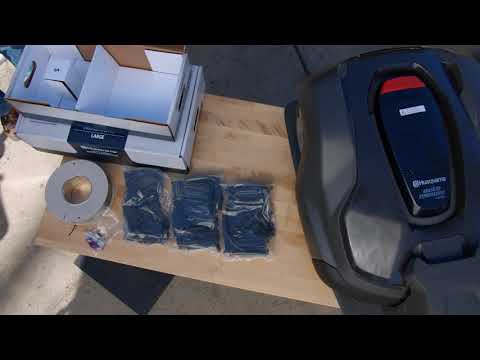
This is where expectations collide with reality.
Some robot lawn mowers are nearly plug‑and‑play. Others require an afternoon of kneeling in the grass with stakes and wire. The right choice depends less on brand—and more on how much physical setup you’re willing to tolerate up front.
Let’s break down what installation actually looks like.
5.1 Boundary Wire Installation: Time and Physical Labor
If you choose a traditional boundary‑wire mower, be prepared for hands‑on work.
Installation typically involves laying a perimeter wire around your lawn, plus guide wires to help the mower return to its charging station. For an average yard, expect roughly 4–8 hours of setup time. You’ll need basic tools—pliers, a mallet, and a small garden shovel—and you’ll be staking wire every few feet to secure it.
Here’s the hidden frustration: if you later redesign a flower bed or expand a patio, you’re re‑digging. Wire systems are reliable once installed—but they’re not flexible.
Professional installation is available for some brands, which can save your knees (and your Saturday), but adds to total cost.
If you love “set it and forget it” simplicity, wires may feel like an outdated tradeoff.
5.2 RTK Setup: Base Stations, Antennas, and Mapping via App
RTK systems eliminate buried wires—but replace them with a base station and antenna.
The antenna must have a clear view of the sky. That’s non‑negotiable. In open yards, you can mount it on a pole near the lawn. In more complex properties, some users end up roof‑mounting the antenna to improve satellite visibility.
Initial setup involves:
- Installing the RTK base station
- Positioning the antenna with clear sky exposure
- Driving the mower around your lawn perimeter using the smartphone app
Mapping typically takes 30 minutes to a couple of hours depending on yard complexity. Once complete, you get virtual boundaries that can be edited instantly in the app—no digging required.
Pros
- No physical digging or wire burying required
- Instant virtual boundary editing via app
- High precision in open areas
Cons
- Requires clear line-of-sight to satellites
- Dense tree canopy causes signal reflections
- Antenna placement can be technically demanding
5.3 Wire-Free Vision and LiDAR: Fastest Path to First Mow
If your goal is “unbox and mow today,” vision‑ or LiDAR‑based systems are the easiest.
Models like the Eufy E18 don’t require perimeter wires. You position the charging dock, connect through the app, map the yard, and you’re ready. No antenna poles. No trenches. No roof climbing.
LiDAR systems like the Ecovacs Goat A3000 go a step further by combining app‑based mapping with laser positioning. Comparative testing shows they allow manual boundary mapping like RTK models—but without worrying about satellite visibility.
You still need to:
- Place the charging dock on level ground
- Ensure good Wi‑Fi signal at the dock
- Fine‑tune boundaries and no‑go zones in the app
But physically? It’s dramatically simpler.
If you value speed and minimal hardware installation, wire‑free LiDAR and vision systems offer the smoothest onboarding experience. For many homeowners, that alone justifies choosing newer navigation tech.
6. Connectivity, Security, and Long-Term Ownership Costs
Buying the mower is only part of the story.
The real question is: What does living with it look like for the next five years?
6.1 App Control, Scheduling, and Smart Features
Nearly all modern robot mowers rely heavily on companion apps. That’s where you set schedules, edit zones, adjust cutting height, and monitor progress.
Husqvarna’s Automower Connect app allows scheduling, weather adjustments, and smart home integration. Some models even support voice control via Alexa or Google Assistant.
Navimow’s app enables real‑time map editing, no‑go zones, and multi‑zone management. You can create channels between separate lawn areas and adjust zone‑specific settings.
Mammotion models similarly offer zone control and detailed map customization.
Here’s what matters in real life:
- Can you set different mowing times for different zones?
- Does it resume automatically after charging?
- Are firmware updates pushed regularly?
Manufacturers continue improving firmware. For example, a recent firmware update for Husqvarna’s EPOS models specifically improved rain performance and reliability.
Strong software support makes ownership smoother. Weak apps make even good hardware frustrating.
6.2 4G, LTE Modules, and Anti-Theft Tracking
Connectivity varies widely by model.
| Model | Connectivity Feature | Cost Structure |
|---|---|---|
| Segway Navimow X390 | Built-in 4G LTE | Included for 5 years |
| Greenworks Optimow 50H | Cellular Connectivity | Subscription after 2 years |
| Mammotion Models | Optional LTE Module | Optional add-on / Subscription |
Why does this matter?
If your mower gets stuck at the far edge of your yard and your Wi‑Fi doesn’t reach, you won’t get alerts without cellular connectivity. LTE also improves theft tracking and remote diagnostics.
However, subscriptions add to total ownership cost. Over five years, even modest annual fees add up.
- Is LTE included?
- Is it optional?
- Does it require a subscription after a trial period?
6.3 Blades, Batteries, and Multi-Year Maintenance Reality
Here’s the unglamorous truth: robot mowers require ongoing light maintenance.
Blades:
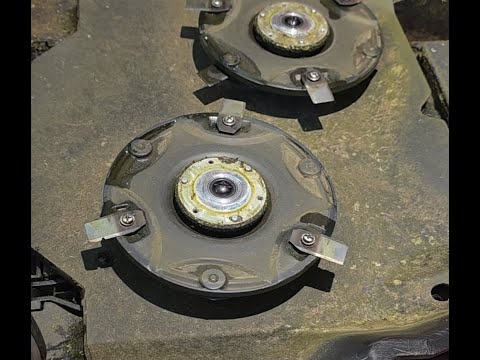
Most manufacturers recommend replacing blades every 4–8 weeks during peak growing season, depending on usage and lawn conditions. Some premium blade types last longer, but dull blades reduce cut quality quickly.
Battery lifespan:
Lithium‑ion batteries typically last around 5–7 years, delivering roughly 500–800 charge cycles under normal conditions. Terrain, usage frequency, and temperature all influence degradation.
Long‑term users report gradual runtime reduction after several seasons. In some multi‑year cases, battery degradation requires remapping or more frequent recharge cycles to maintain even coverage.
- Inspect and replace blades
- Clean deck and sensors
- Possibly update firmware
- Remap zones if landscaping changed
Robot mowers remove weekly mowing. They don’t remove ownership responsibility entirely.
7. Conclusion: Choosing the Right Robot Lawn Mower for Your Property
Choosing the best robot lawn mower isn’t about chasing the most expensive model. It’s about matching technology to your yard.
| Yard Factor | Recommended Feature/Model |
|---|---|
| Under 0.5 Acre | Eufy E18 or Entry RTK units |
| 0.5 to 1.0 Acre | Strong navigation (RTK/LiDAR) & AWD |
| Multi-acre Properties | Navimow X390 (Endurance models) |
| Steep Slopes | All-Wheel Drive (AWD) |
| Dense Tree Canopy | LiDAR or Vision Systems |
Finally, reset expectations: robot mowers excel at frequent maintenance cuts, not heavy debris clearing. They won’t replace a string trimmer entirely. But they will replace pushing a gas mower every weekend.
Because the best lawn upgrade isn’t sharper stripes. It’s getting your Saturdays back.
FAQ
Q: Which navigation system is best for a yard with many trees?
A: LiDAR or AI-vision systems are generally better for tree-covered yards, as RTK-GPS systems require a clear, unobstructed line of sight to satellites to maintain centimeter-level accuracy.
Q: Can robot lawn mowers handle steep hills?
A: Yes, but you should look for All-Wheel Drive (AWD) models. High-end units like the Husqvarna 435X AWD or Mowrator S1 can handle slopes between 35 and 37 degrees.
Q: Will a robot mower completely eliminate the need for a string trimmer?
A: No. Because the cutting blades are typically inset from the wheels for safety, most mowers leave a 3-6 inch strip of uncut grass along fences and walls that requires manual trimming.