
Segway Navimow i105N Analysis: Is Vision-RTK Reliable in Real-World Lawns?
Aaron Cooper1. Introduction
Robot lawn mowers are quietly going through the same revolution robot vacuums did a few years ago—ditching boundary wires and finally becoming “set-it-and-forget-it” machines. The Segway Navimow i105N sits right at the center of that shift, promising wire-free mowing powered by a hybrid Vision-RTK navigation system.
But here’s the real question homeowners care about: does that fancy tech actually hold up when your yard isn’t perfect? Think trees, patchy GPS signal, random toys on the grass, and awkward corners.
2. How Vision-RTK Works on the Segway Navimow i105N
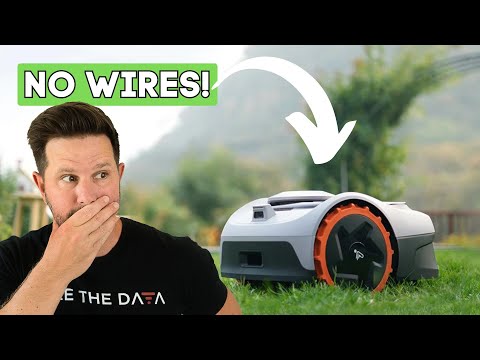
2.1 RTK + Camera: A Hybrid Navigation System Explained
At its core, the Segway Navimow i105N doesn’t rely on just one “brain”—it uses two. And understanding this is the key to understanding both its strengths and its limitations.
First, there’s RTK (Real-Time Kinematics). Think of it as ultra-precise GPS. While your phone might know you’re somewhere in your backyard, RTK narrows that down to exact positioning—down to what’s often described as centimeter-level positioning accuracy. That’s what allows the mower to cut in clean, structured lines instead of bouncing around randomly like older models.
That’s where the camera comes in.
If RTK is the “map,” the camera is the “eyes.” It scans the lawn in real time, recognizes objects, and helps the mower understand its surroundings. More importantly, it acts as a fallback system—when GPS gets shaky, the mower leans on visual cues to keep moving.
In practice, this dual-system design is more like having a co-pilot—not a replacement. When both systems are working together, navigation feels smooth and almost effortless.
2.2 Wire-Free Mapping and Boundary Creation in Practice
If you’ve ever looked into older robotic mowers, you probably remember the dealbreaker: burying a perimeter wire around your entire yard. It’s tedious, fragile, and honestly… a weekend killer.
The Navimow i105N skips all of that.
Instead, setup feels more like playing with a remote-control car. You guide the mower around your lawn using your phone, and it builds a virtual boundary in real time. Zones, pathways, no-go areas—it’s all done digitally inside the app.
- Adjust boundaries without digging anything up
- Create multiple zones for front and back yards
- Add pathways between separated lawn sections
In practical terms, this means your lawn setup can evolve. New flower bed? No problem. Rearranging landscaping? Just redraw the map.
2.3 What “Centimeter-Level Accuracy” Really Means for Your Lawn
“Centimeter-level accuracy” sounds impressive—and it is—but what does it actually look like when the mower is out there doing its job?
In ideal conditions (think open lawn, clear sky), it translates to:
- Straight, parallel mowing lines
- Clean zone transitions
- Minimal overlap or missed patches
But here’s the reality check: that level of precision is conditional. There are no widely available real-world benchmarks showing exactly how accuracy holds up under stress—like partial GPS loss or dense tree cover.
Expected Performance
- Satisfying, striped-lawn look
- Futuristic, hands-off operation
Environmental Realities
- Lines may drift slightly under cover
- Small strips of grass can be missed
- Inconsistent edges in corners
3. Real-World Reliability: Where Vision-RTK Works—and Where It Struggles

3.1 Open Lawns vs. Tree Cover: The Biggest Reliability Factor
If there’s one factor that will make or break your experience with the Navimow i105N, it’s this: how much sky your lawn can “see.”
| Lawn Condition | Reliability | What You’ll Notice |
|---|---|---|
| Open sky, minimal obstacles | Excellent | Clean lines, uninterrupted mowing |
| Light tree coverage | Good | Occasional corrections, minor slowdowns |
| Dense trees / obstructed sky | Poor | Stops, navigation hesitation |
This isn’t a software bug—it’s a structural limitation of satellite-based navigation. And it’s why two people can buy the same mower and have completely different experiences.
3.2 Obstacle Handling and Navigation in Complex Yards
Now let’s talk about the everyday chaos of a real yard—kids’ toys, garden furniture, random objects that never stay where you left them. This is where the camera system earns its keep.
- Detect objects in its path
- Slow down and reroute smoothly
- Avoid leaving large uncut gaps around obstacles
Picture this: a soccer ball left in the yard. Instead of pushing it across the lawn or getting stuck, the mower simply curves around it and continues its path. No drama. However, while obstacle avoidance feels reliable in general use, it’s best described as “smart, but not perfect.”
3.3 Signal Loss, Recovery, and Real-World Edge Cases
What happens when the signal drops? In theory, the mower switches to its vision system and keeps going. In mild cases—like brief signal dips—it continues navigating using its visual map until RTK reconnects.
A helpful way to think about it:
- Short signal interruptions → usually handled smoothly
- Prolonged obstruction → expect interruptions
So if your lawn has consistent sky visibility, you’ll likely never think about this. But if your yard is surrounded by trees or structures, this becomes part of your day-to-day experience.
4. Mowing Performance vs Navigation Precision: The Hidden Trade-Off
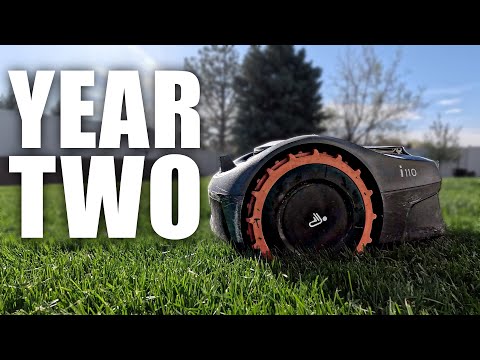
4.1 Why Accurate Navigation Doesn’t Guarantee Perfect Cuts
Here’s the surprising part: even when the Navimow i105N knows exactly where it is, it doesn’t always translate into a perfectly cut lawn.
That sounds counterintuitive, right? If positioning is precise, shouldn’t the mowing be flawless?
Not quite.
In real-world feedback, the mower’s positioning is often described as highly accurate—almost “locked in.” But when you actually look at the grass afterward, small imperfections show up. Slightly uneven lines. Tiny strips that were missed. Patterns that don’t look as clean as you’d expect from something guided by satellite precision.
You might walk outside expecting golf-course stripes… and instead see something that looks 95% done.
And that last 5%? That’s where the frustration creeps in.
The good news is that over multiple passes, these inconsistencies tend to even out. The bad news? If you’re chasing perfection, you’ll still find yourself doing occasional touch-ups.
4.2 Corners, Edges, and the Reality of Robotic Lawn Limits
Let’s talk about the spots every robot mower struggles with—and yes, the i105N is no exception.
Corners. Edges. Tight angles.
These are the places where expectations and reality tend to clash.
Even with precise navigation, robotic mowers can’t hug edges perfectly. The blade is centered under the machine, which means it physically can’t reach all the way to the boundary. So what happens?
You get that thin strip of grass left behind along fences, walls, and flower beds.
So what does real ownership look like?
- You let the mower handle 90–95% of the lawn
- You spend 10–15 minutes every week or two cleaning up edges with a trimmer
It’s not zero work. But it’s dramatically less work.
If you’re expecting a completely hands-off, edge-to-edge finish… that’s not where the industry is yet. But if you’re happy trading perfection for time saved? This still feels like a massive upgrade.
4.3 Battery Life, Coverage, and Daily Operation Experience
Now let’s shift from “how well it cuts” to “how it fits into your daily life.”
Because this is where the Navimow i105N starts to feel less like a gadget—and more like a routine.
With a runtime of about 60 minutes per charge, it’s clearly designed for smaller lawns. If your yard is near its upper coverage limit, don’t expect it to finish everything in one go.
Instead, it works in cycles:
- Mow for a while
- Return to the dock automatically
- Recharge
- Resume exactly where it left off
Over time, something interesting happens: your lawn never looks freshly cut—but it also never looks overgrown. It just stays consistently “done.”
Pros
- Effortless consistency
- No more weekend mowing sessions
- Quiet background operation
Cons
- Multiple recharge cycles stretch total time
- Larger lawns take longer to complete
- Requires trust in the automated schedule
5. Vision vs RTK vs LiDAR: Which Navigation Tech Is Actually More Reliable?

5.1 RTK Strengths: Precision in Open Spaces
RTK (Real-Time Kinematics) is the backbone of the Navimow i105N—and when conditions are right, it’s incredibly effective.
In simple terms, RTK turns standard GPS into something far more precise. Instead of knowing you’re “somewhere in the yard,” it can pinpoint the mower’s position with extremely fine accuracy.
- Straight, predictable mowing lines
- Clean zone transitions
- Minimal overlap or randomness
But there’s a catch—and it’s a big one. RTK depends entirely on satellite visibility. Block the sky with trees, buildings, or even certain angles of your roofline, and performance can drop fast.
5.2 Vision Limitations: Lighting, Obstructions, and Context Awareness
If RTK is the “map,” vision is the “eyes.” And just like human vision, it has its own limitations.
The camera system helps the Navimow i105N detect and avoid obstacles, understand lawn boundaries, and continue operating when GPS weakens. However, cameras are highly dependent on conditions:
- Low light: Performance drops.
- Shadows: They can confuse object detection.
- Dirty lens: Suddenly, the mower is “blind.”
Even something as simple as grass clippings or water droplets on the lens can interfere with how well it understands its surroundings.
5.3 LiDAR as the Emerging Alternative (and Why It Matters)
Now let’s talk about the technology that’s quietly reshaping the entire category: LiDAR.
LiDAR (Light Detection and Ranging) works by firing laser pulses and measuring how they bounce back. It builds a detailed 3D map of your lawn in real time.
In fact, industry analysis highlights how RTK-based mowers can lose signal and stop entirely under heavy tree cover, which is exactly the kind of scenario where LiDAR thrives.
That’s why more manufacturers are starting to explore LiDAR-based systems, especially for tree-heavy yards and urban environments with signal interference. However, LiDAR systems tend to be more expensive and aren't always necessary for wide-open spaces.
5.4 Why Hybrid Systems Like Navimow i105N Still Make Sense
Why not just pick one technology and stick with it? Because no single system works perfectly everywhere. That’s exactly why the Navimow i105N combines RTK and vision.
| Technology | Primary Role | Weakness |
|---|---|---|
| RTK | Absolute positioning & precision | Signal obstructions (trees/buildings) |
| Vision | Obstacle avoidance & backup navigation | Lighting conditions & lens clarity |
Think of it like having both GPS and eyesight while driving. One tells you where to go, the other helps you react to what’s in front of you. For most suburban lawns, this hybrid approach hits a practical sweet spot.
6. Conclusion: Is the Segway Navimow i105N Worth It for Your Lawn?
So, is the Vision-RTK system actually reliable?
The honest answer: it depends more on your lawn than the mower itself. If you have a relatively open yard with a clear view of the sky, the Segway Navimow i105N delivers a genuinely satisfying experience. Navigation feels precise, setup is refreshingly simple, and your lawn just stays trimmed without demanding your weekends.
But introduce dense trees, tight spaces, or heavy obstructions, and the cracks start to show. Signal interruptions, imperfect edges, and occasional touch-ups become part of the routine.
This isn’t a “perfect automation” tool. It’s a time-saving one. If you’re okay trading absolute perfection for consistently good results, it’s a smart, forward-looking choice.
Check Price on Amazon
FAQ
Q: Does the Segway Navimow i105N require a perimeter wire?
A: No, it uses a hybrid Vision-RTK system to create virtual boundaries. Users map the lawn by remotely driving the mower via a smartphone app, eliminating the need for buried boundary wires.
Q: How does the i105N handle areas with poor GPS signal?
A: The mower utilizes an onboard camera as part of its Vision-RTK system. When RTK signals are weak, the camera provides visual navigation to help the mower maintain its path or safely return to a signal-rich area.
Q: Can the Navimow i105N cut right up to the edge of a wall?
A: Like most robotic mowers, the i105N typically leaves a narrow strip of uncut grass near vertical obstacles due to the central blade positioning. Periodic manual trimming is usually required for a perfect edge.
Q: What happens if there is an obstacle like a toy on the lawn?
A: The integrated camera system is designed to detect and identify obstacles in real-time. The mower will generally slow down and navigate around the object rather than colliding with it or getting stuck.
Q: Is the Navimow i105N suitable for very large properties?
A: It is optimized for smaller yards, featuring a runtime of approximately 60 minutes per charge. While it supports auto-resume after recharging, it is most efficient on lawns within its specified acreage rating.