
Dreame X30 Ultra Review: Analyzing the Anti-Tangle Brush Tech for Pet Hair, Performance, and Real-World Results
Aaron Cooper1. Introduction
If you’ve ever spent a Saturday morning cutting tangled hair out of a robot vacuum brush with scissors, you already know the problem. Hair—especially from pets or long human strands—is the silent killer of “hands-free” cleaning.
Enter the Dreame X30 Ultra, a flagship robot vacuum and mop combo that promises to fix exactly that with its TriCut anti-tangle brush. Instead of letting hair wrap endlessly around the roller, it claims to cut and remove it automatically.
Let’s break it down.
2. How the TriCut Anti-Tangle Brush Actually Works
2.1 From Wrapping to Cutting: A Shift in Brush Design Philosophy
Traditional robot vacuum brushes all share the same frustrating flaw: they grab hair well—but then refuse to let go.

The Dreame X30 Ultra flips this entire approach.
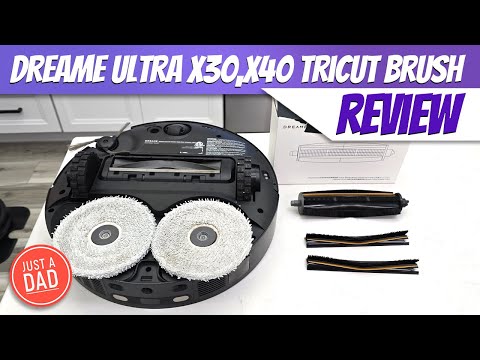
Instead of trying (and often failing) to prevent hair from wrapping, the TriCut system accepts that hair will get caught—and then deals with it immediately. It uses a cutting-head design integrated next to the roller to actively slice through strands before they can accumulate.
It’s a subtle but important shift. Not prevention—intervention.
The result? Hair doesn’t build up into those dense, performance-killing tangles. Instead, it gets shortened and moved along like any other debris. For anyone tired of “maintenance weekends,” that’s a big deal.
2.2 The 3-Step Process: Capture, Cut, and Transfer
So what actually happens when the X30 Ultra runs over a patch of hair-covered floor?
The TriCut system follows a simple but clever three-stage process:
- Capture. As the roller spins, bristles grab hair just like a normal brush would. Nothing new here—this is where most vacuums stop innovating.
- Cut. Here’s where things change. Instead of letting hair wrap endlessly, strategically positioned blades slice through the strands as they pass through the brush zone. Longer hair gets shortened before it can form a knot.
- Transfer. Once cut, the smaller hair fragments are pulled into the airflow and directed into the dust collection system, rather than staying behind wrapped around the roller.
According to aggregated real-world testing insights, this system can lead to almost no visible hair buildup even after extended use, which is a dramatic shift from the usual weekly clean-outs most robot vacuums require.
In practice, that means fewer interruptions, more consistent suction, and—most importantly—less time spent maintaining the machine than using it.
2.3 What Makes It Different from Standard Rubber Rollers
At a glance, the TriCut brush might look similar to the rubber rollers used in many premium robot vacuums—but structurally, it’s doing something very different.
Standard rubber rollers rely on flexible fins and airflow to reduce tangling. They help, but they don’t eliminate the problem. Hair still wraps, just a bit slower.
The TriCut system adds a physical intervention layer: cutting elements positioned alongside the roller. These aren’t decorative—they’re placed precisely where hair tension builds during rotation, which is exactly where cutting is most effective.
There is, however, a trade-off. Some independent observations suggest that because the brush includes additional components (like cutting elements), contact with certain debris types can vary slightly compared to full rubber rollers. In other words, it’s optimized for hair management first, and general debris pickup second—but still performs strongly overall.
For pet owners or long-hair households, though, that’s usually the right priority.
3. Real-World Performance: Pet Hair, Long Hair, and Maintenance
3.1 Pet Hair Performance: Where the TriCut System Shines
If you live with pets, you already know: fur gets everywhere. Rugs, corners, under furniture—and worst of all, wrapped around vacuum brushes.
This is exactly where the Dreame X30 Ultra feels purpose-built.
- Across multiple independent evaluations, pet hair pickup is consistently rated as “good.”
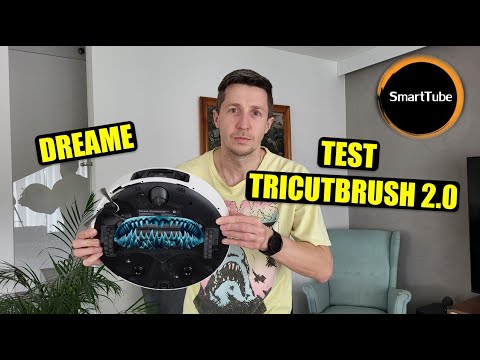
- The TriCut system prevents that familiar buildup of fur wrapped around the roller.
- Suction stays consistent over time without gradual degradation.
Instead of performance gradually degrading over a few days (as hair accumulates), the X30 Ultra keeps operating at a steady level. You don’t get that slow decline where it starts missing clumps of fur or leaving trails behind.
For busy households with shedding pets, that consistency is everything. You stop babysitting the robot. It just runs. And honestly—that’s the whole point of automation.
3.2 Long Human Hair: Not Perfect, But Noticeably Better
Now let’s talk about the real torture test: long human hair. This is where even high-end robot vacuums struggle. Long strands are flexible, strong, and perfect for wrapping tightly around any rotating brush.
The TriCut system definitely improves things—but it’s not magic.
Pros
- Reduces the severity and frequency of tangles significantly.
- Leaves smaller, looser strands rather than thick coils.
- Massive upgrade from standard "weekly surgery" routines.
Cons
- Extremely long strands can still occasionally wrap.
- Requires specific contact angle and tension for 100% cutting.
So no, it’s not zero-maintenance in extreme cases. But it’s a massive upgrade from the usual “weekly hair surgery” routine.
3.3 Maintenance Reality: From Weekly Cleaning to Occasional Checks
Here’s where the TriCut system delivers its biggest real-world win: maintenance. With traditional robot vacuums, cleaning the brush is a routine chore. Weekly, sometimes more. You flip the robot over, pull out the roller, and start cutting hair away like you’re defusing a bomb.
With the X30 Ultra, that routine changes dramatically. Independent testing and user feedback consistently show minimal hair accumulation—even after extended use. Instead of weekly deep cleaning, maintenance shifts to occasional visual checks.
It’s the difference between: “Ugh, I need to clean the robot again” and “Oh right… I should probably check it.”
If your goal is truly hands-free cleaning, this is where the Dreame X30 Ultra starts to justify its premium positioning. Less friction. Less interruption. More time back.
4. Beyond the Brush: Full Cleaning Performance and Automation
4.1 Vacuuming Power and Mopping Innovation in Daily Use
Let’s be honest—an anti-tangle brush is great, but it’s useless if the robot can’t actually clean.
Thankfully, the Dreame X30 Ultra backs it up with serious overall performance. With 8,300Pa of suction power, it sits firmly in flagship territory, and that shows up in everyday use. Think scattered cat litter, fine dust in grout lines, or that gritty feeling under your feet in the kitchen—it doesn’t just sweep over it. It pulls it out.
But what really changes the experience is the mopping system.
Instead of dragging a damp cloth around, the X30 Ultra uses dual spinning mop pads that actively scrub the floor—closer to how you’d clean by hand. Add in hot water washing at the dock and adjustable wetness levels, and suddenly sticky spots (coffee drips, paw prints) don’t linger.
Then there’s the extendable mop arm. It reaches into edges and along baseboards—those annoying zones most robots miss entirely. You can literally watch it stretch out and clean where dirt usually hides.
But overall? It doesn’t just clean. It deep-cleans.
4.2 Hands-Free Living: Dock Automation and Self-Maintenance
Here’s where things go from “smart gadget” to “why didn’t I buy this sooner?”
The X30 Ultra’s base station does almost everything for you. After each run, it automatically empties the dustbin into a large bag, washes the mop pads with hot water, dries them with heated air, and refills the robot’s water tank.
Let that sink in.
No more emptying dust every day. No more rinsing dirty mop pads in the sink. No more dealing with that sour, damp cloth smell after a few uses.
Instead, the cycle becomes invisible. The robot cleans → returns → resets itself → waits for the next run.
But here’s the thing: that noise replaces manual labor.
If you’ve ever spent 15 minutes scrubbing mop pads or dumping dirty water, hearing the machine do it for you feels… kind of amazing.
4.3 Navigation and Obstacle Avoidance: Smart but Not Flawless
A powerful vacuum is pointless if it gets stuck under a chair five minutes in.
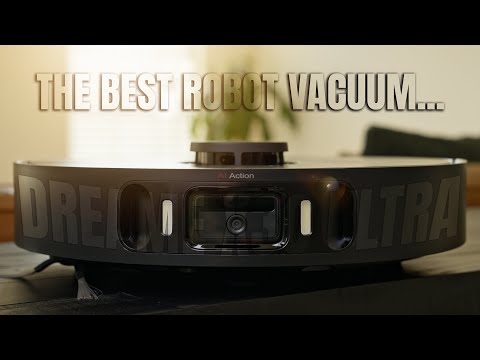
The X30 Ultra uses a combination of LiDAR (think of it as a spinning laser scanner mapping your home in 3D) and an RGB camera system to “see” and navigate. In practice, this dual setup gives it a strong sense of space—it maps rooms quickly and moves efficiently without random bumping.
Most of the time, it feels confident. It glides around furniture, recognizes obstacles, and rarely needs rescuing.
But—and this matters—it’s not perfect.
Some real-world observations show occasional inconsistencies. It might misidentify small objects, slow down too much in cluttered areas, or slightly alter maps over time. Not deal-breakers, but noticeable if you’re expecting perfection.
Compared to older robots that ping-ponged around your house like a confused Roomba from 2015, this feels like a different generation entirely. It’s not flawless intelligence, but it’s smart enough to trust.
5. How It Compares: TriCut vs Traditional Brushes and Competitors
5.1 TriCut vs Standard Brushes: A Practical Upgrade?
Let’s cut through the marketing for a second.
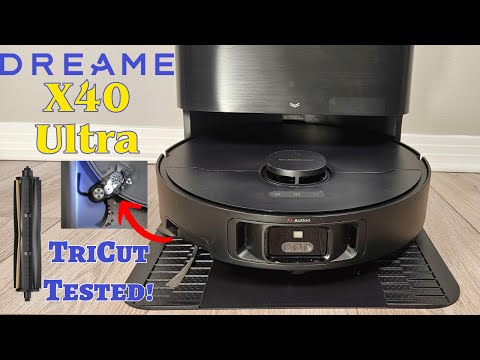
Traditional rubber rollers try to “manage” hair. The TriCut system actively removes it. That’s the real difference.
With standard brushes, hair wraps gradually. At first, you don’t notice. Then suction drops. Then one day you flip the robot over and find a thick, stubborn coil wrapped around the roller like a nightmare.
With the TriCut system, that buildup simply… doesn’t happen the same way.
Instead of accumulating, hair is cut into smaller pieces and pulled into the dustbin during cleaning. The result? Far less manual intervention.
| Factor | Traditional Brush | TriCut Brush (X30 Ultra) |
|---|---|---|
| Hair Wrapping | Frequent | Rare |
| Maintenance | Weekly cleaning | Occasional checks |
| Suction Consistency | Drops over time | Stays stable |
| Pet Hair Handling | Moderate | Strong |
There is a small trade-off. Some testing suggests full rubber rollers may have slightly more consistent contact with certain debris types. But for most homes—especially with pets—the reduced maintenance alone makes this feel like a meaningful upgrade.
5.2 Optional Accessory or Must-Have Feature?
Here’s something many buyers miss: the TriCut brush may not always come pre-installed—it can be an optional add-on depending on the package.
If your home has:
- Pets that shed constantly
- Long hair (human or animal)
- Carpets that trap fibers
Then yes—this quickly shifts from “nice feature” to “essential upgrade.” Because without it, you’re back to the same old cycle of hair buildup and manual cleaning.
On the flip side, if you live alone, have short hair, and mostly hard floors, the standard brush may already be “good enough.” But here’s the honest take: once you experience a robot that doesn’t need weekly brush cleaning, it’s very hard to go back.
5.3 How It Stacks Against Other Flagship Robots
At this price level, the X30 Ultra isn’t competing with budget robots—it’s going head-to-head with other premium flagships.
| Feature | Dreame X30 Ultra | Ecovacs X2 Omni | Dreame L20 Ultra |
|---|---|---|---|
| Anti-Tangle System | TriCut cutting mechanism | No cutting system | Standard anti-tangle |
| Suction Power | 8,300Pa | Slightly lower | Lower than X30 |
| Mop Features | Extend + hot water + auto detach | Strong, but less flexible | Strong but no hot water |
| Automation | Fully hands-free dock | Similar automation | Slightly less advanced |
| Value | Premium | Slightly cheaper | Better value overall |
The interesting twist? Some comparative testing suggests competitors like the Ecovacs X2 Omni can outperform it in certain cleaning scenarios, and the older L20 Ultra may offer better value for the price.
Pros
- Superior hair handling with TriCut mechanism
- Incredible 8,300Pa suction power
- Advanced hot water mop washing
Cons
- Premium price point
- Occasional navigation quirks
- Large dock footprint
If your biggest frustration is maintenance—hair tangles, dirty mop pads, constant upkeep—the X30 Ultra leans heavily into solving that. It’s not the cheapest, it’s not perfect, but it’s one of the closest things to “set it and forget it” cleaning right now.
6. Conclusion: Is the Anti-Tangle Tech Worth It?
If you’ve ever wrestled with a hair-wrapped brush, the Dreame X30 Ultra feels like a genuine upgrade—not just a spec bump.
The TriCut system doesn’t eliminate maintenance entirely, but it dramatically reduces it. Pair that with strong suction, advanced mopping, and a truly hands-free dock, and the experience shifts from “robot assistant” to something closer to automation you can rely on.
It’s not flawless. Navigation has quirks. Mopping can occasionally struggle with carpets. And the price is undeniably high.
In the end, you’re not just buying cleaning performance. You’re buying back your weekends.
FAQ
Q: How does the TriCut brush handle long pet hair?
A: According to technical specifications and aggregated user insights, the TriCut system uses integrated blades to slice through hair strands as they wrap, preventing the dense coils typical of standard rollers and maintaining consistent suction levels over time.
Q: Does the Dreame X30 Ultra require manual brush cleaning?
A: While it drastically reduces the frequency of maintenance, it is not entirely maintenance-free. Aggregated data suggests that users transition from weekly brush cleaning to occasional visual checks, as the system handles most hair automatically.
Q: Is the TriCut brush safe for all floor types?
A: The design is optimized for both hard floors and carpets. The cutting elements are shielded within the brush housing to ensure they only interact with wrapped hair and do not damage delicate floor surfaces.
Q: Can the X30 Ultra mop and vacuum at the same time?
A: Yes, it is designed for simultaneous operation. It features a sophisticated system that can extend the mop pads for edge cleaning and lift them automatically when it detects carpet to prevent wetting.
Q: How loud is the Dreame X30 Ultra base station?
A: Data indicates the dock produces noticeable noise during its self-cleaning cycle, specifically during hot water mop washing and dustbin emptying, which is typical for high-performance fully automated base stations.