
Shark Matrix Plus vs. Roomba i3+ EVO: Which Budget Self-Emptying Robot Vacuum Is Actually Worth It?
Aaron Cooper1. Introduction: Budget Self-Emptying Robots, Big Decisions
There’s something deeply satisfying about a robot vacuum that not only cleans your floors—but empties itself afterward. No daily bin dumping. No dusty mess. Just… done.
That’s exactly why budget self-emptying models like the Shark Matrix Plus and Roomba i3+ EVO are getting so much attention. They promise hands-off cleaning without flagship prices. But here’s the catch: they take very different approaches to cleaning, navigation, and maintenance.
So which one actually saves you more time (and frustration)? In this guide, we’ll break down the real differences—so you can stop second-guessing and pick the one that fits your home.
2. Shark Matrix Plus vs. Roomba i3+ EVO: Core Specs and Feature Breakdown
2.1 Suction Power and Cleaning Hardware Differences
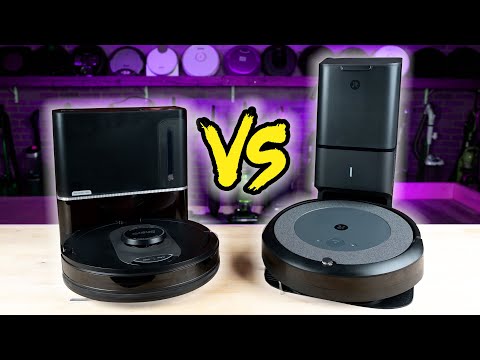
On paper, the Shark Matrix Plus looks like the obvious winner. It delivers stronger raw suction—about 25% higher than the Roomba i3+ EVO. And yes, you can feel that difference in certain situations. Think crumbs trapped along baseboards or grit buried in entryway cracks. The Shark tends to pull more out in a single pass.
But here’s where things get interesting.
The Roomba doesn’t try to win with brute force. Instead, it leans on its dual rubber roller system—two counter-rotating brushes that grip carpet fibers and agitate dirt upward. It’s less about “sucking harder” and more about “lifting smarter.” That’s also why it pairs with Dirt Detect, automatically spending more time on messy spots.
Independent performance comparisons consistently show that while Shark wins on raw power, Roomba often keeps up—or even pulls ahead—on carpet thanks to its brush design.
Shark cleans harder. Roomba cleans smarter. And your floors will decide which matters more.
2.2 Navigation Tech: LiDAR vs Floor Tracking Explained
Navigation is where these two robots feel completely different to live with.
The Shark Matrix Plus uses LiDAR (laser-based navigation)—basically a spinning laser that scans your home and builds a precise map. Imagine it like giving your robot night vision and a blueprint at the same time. It knows where it is, where it’s been, and where it still needs to go.
The Roomba i3+ EVO? It uses floor tracking sensors and gyroscopes instead. No laser. No camera. It learns your home gradually over multiple runs.
- Shark maps fast and accurately. You get clean, straight lines and reliable room boundaries almost immediately.
- Roomba takes longer to “learn,” but once it does, it cleans in consistent rows and rarely gets confused.
In controlled testing environments, LiDAR systems like Shark’s don’t just feel smarter—they’re measurably more efficient. In fact, some evaluations show faster coverage and more area cleaned per run, especially in complex layouts.
So ask yourself:
Do you want instant convenience, or long-term control?
If your home has lots of rooms, tight spaces, or “don’t go there” zones (pet bowls, cables, rugs), Shark’s precision is a game-changer.
If your layout is simple? Roomba’s simpler system is often good enough.
2.3 Auto-Empty Systems: Bagless vs Bagged Convenience
This is the part no one thinks about… until they’re standing over a trash can covered in dust.
Both robots empty themselves. But how they do it? Completely different.
The Shark Matrix Plus uses a 2.1L bagless base. That’s a big container—large enough that many households can go weeks without touching it. No bags to buy. No recurring cost. Just dump it when it’s full.
Sounds perfect, right? Well… not always.
Shark (Bagless)
- No recurring costs for bags
- Large 2.1L capacity
Roomba (Bagged)
- Sealed 0.6L bags (no dust clouds)
- Ideal for allergy sufferers
If you have allergies? The Roomba’s system is hard to beat.
If you hate ongoing costs? Shark feels liberating.
2.4 Battery Life, Runtime, and Coverage Differences
This is where the gap becomes impossible to ignore.
| Model | Runtime |
|---|---|
| Shark Matrix Plus | 110–120 minutes |
| Roomba i3+ EVO | 75 minutes |
Now, both robots support recharge-and-resume. So technically, they’ll both finish the job eventually. But in larger homes, that pause matters. It stretches a “quick clean” into a multi-hour process.
So if you live in:
- A small apartment → both are fine
- A multi-room home → Shark feels noticeably faster
- A larger house (1,500+ sq ft) → Shark starts to feel like the only practical option
3. Which One Fits Your Home? Real-World Use Case Scenarios
3.1 Carpet vs Hard Floors: Where Each Robot Excels
Let’s be honest—most homes aren’t just one type of floor. And this is exactly where the difference between these two becomes obvious.
If your home leans heavily toward carpet, the Roomba i3+ EVO has a clear edge. Its dual rubber rollers stay in constant contact with the carpet fibers, flexing and digging in as they rotate. Pair that with Dirt Detect, and it doesn’t just pass over dirty areas—it lingers.
On hard floors, the Shark Matrix Plus starts to shine. Its higher suction combined with that cross-hatch “matrix” cleaning pattern means it doesn’t just glide over your kitchen—it works it from multiple angles.
3.2 Pet Hair, Allergies, and Daily Messes
If you’ve ever pulled a wad of hair out of a brush roll… you already know this matters.
The Shark Matrix Plus uses a self-cleaning brushroll designed to resist hair wrap. The Roomba i3+ EVO takes a different route; its rubber rollers don’t trap hair the same way, so cleanup is usually faster and less gross.
Q: Which is better for pet owners with allergies?
A: While Shark helps with hair wrap, the Roomba wins for allergies because its sealed bag system ensures zero dust exposure during disposal.
3.3 Small Apartments vs Large Multi-Room Homes
In a small apartment or simple layout, the Roomba i3+ EVO feels effortless. You press clean, it runs in neat rows, and it finishes without overthinking things.
Now take that same robot into a larger, more complex home. Multiple rooms. Narrow hallways. Furniture everywhere. Suddenly, precision matters. The Shark Matrix Plus, with its LiDAR mapping, builds a detailed layout of your space.
3.4 Smart Features That Actually Matter (No-Go Zones vs Dirt Detect)
The Shark Matrix Plus is about control. You can draw no-go zones, block off problem areas, and fine-tune exactly where the robot goes. The Roomba i3+ EVO is about automation. Its standout feature, Dirt Detect, quietly watches for dirtier areas and automatically spends more time there.
- If you like control → Shark feels empowering
- If you prefer “just handle it” → Roomba feels effortless
Different philosophies. Same goal. Cleaner floors. Less effort.
Check Price on Amazon4. Long-Term Value: Maintenance Costs and Ownership ROI
4.1 Bagged vs Bagless: The True Cost Over Time
At first, both of these robots feel like a one-time purchase. You pay, you schedule, and your floors magically stay clean.
But a few months in? Reality kicks in.
With the Shark Matrix Plus, that 2.1L bagless base feels liberating. No bags. No subscriptions. No “oh great, I ran out again.” You just dump the bin and move on. Over time, that simplicity adds up—especially in busy homes where the robot runs daily.
Now contrast that with the Roomba i3+ EVO.
Every time the Clean Base fills up, you’re swapping out a sealed bag. It’s clean. It’s effortless. But it’s also recurring. And according to long-term cost breakdowns, those small purchases quietly stack into a noticeable expense over a few years.
- Shark = lower ongoing cost, but hands-on emptying
- Roomba = higher ongoing cost, but cleaner, simpler disposal
If you run your robot frequently (pets, kids, high-traffic floors), that difference becomes very real. Over time, a bagless system like Shark’s can significantly reduce total ownership cost—especially in heavy-use homes.
But money isn’t the only “cost.”
There’s also convenience. And tolerance for mess.
If dumping a dusty bin sounds like a deal-breaker? The Roomba earns its keep.
If you’d rather save long-term and don’t mind a little hands-on work? Shark starts to look smarter.
4.2 Parts, Filters, and Maintenance Effort
Here’s the part no one talks about enough: robot vacuums don’t stay “hands-free” forever.
Sooner or later, you’re dealing with filters, brushes, and that moment when something smells… off.
With the Shark Matrix Plus, maintenance is a bit more involved. You’re dealing with:
- Filters in both the robot and the base
- A brushroll that still needs occasional hair removal
- A bagless system that benefits from regular cleaning to avoid buildup
The Roomba i3+ EVO takes a different approach.
Its dual rubber rollers are easier to clean (hair doesn’t wrap as aggressively), and the bagged base reduces how often you deal with internal dust buildup. You still replace filters and rollers—but the process feels more predictable and less messy.
Shark gives you more control and lower costs… But it asks for more involvement. Roomba asks for less from you day-to-day… But charges you for that convenience.
Neither is maintenance-free. But one definitely feels closer.
4.3 Durability, Ecosystem, and Resale Value
This is the long game—the part you only notice after a year or two.
The Roomba i3+ EVO sits inside a much larger, more mature ecosystem. Replacement parts? Easy to find. Third-party options? Everywhere. Troubleshooting? There’s a guide, a forum, or a video for almost everything.
That kind of support matters more than people expect.
It means your robot is easier to repair, easier to maintain, and more likely to stay useful for years. It also helps resale value—buyers trust a platform that’s been around.
The Shark Matrix Plus? It’s newer. More aggressive on features and pricing—but with a shorter track record.
That doesn’t mean it’s unreliable. But it does mean:
- Fewer third-party parts
- Less long-term data on durability
- Slightly more uncertainty over multi-year ownership
| Brand Strategy | Core Advantage |
|---|---|
| Roomba | Safer long-term bet, stronger ecosystem |
| Shark | Better value upfront and over time, but with more “unknowns” |
If you’re the kind of buyer who upgrades every few years, this probably won’t matter.
But if you want something that just keeps working, year after year?
That’s where the Roomba quietly earns its reputation.
5. Real-World Ownership: The Hidden Pros and Frustrations
5.1 App Experience and Mapping Stability
This is one of those things you don’t think about… until it ruins your day.
The Shark Matrix Plus gives you a powerful app experience. You can draw no-go zones, edit maps, and customize cleaning exactly how you want. On paper, it feels like a smart home dream.
But in real life? It can be a little temperamental.
The Roomba i3+ EVO takes the opposite approach.
Its app is simpler. Fewer controls. No no-go zones. But it’s also far more stable. Once your map is set, it tends to stay that way. You open the app, press clean, and it just works.
So here’s the trade-off:
- Shark = more control, but occasional frustration
- Roomba = less control, but more reliability
If you love tweaking settings and optimizing your setup, Shark feels powerful.
If you just want your robot to behave the same way every day without surprises, Roomba feels… calm.
5.2 Noise, Daily Use, and Annoyances
Let’s talk about something you’ll notice immediately: noise.
Neither of these robots is “quiet.” But they sound different—and that matters more than you’d think.
The Roomba i3+ EVO has a softer, lower-pitched hum during cleaning. It’s still noticeable, but easier to ignore in the background.
The Shark Matrix Plus? A bit sharper, a bit more high-pitched—especially on higher power modes.
Now add the self-empty cycle.
Both robots suddenly sound like a mini jet engine for a few seconds. It’s loud. It’s abrupt. And the first time it happens, it will absolutely make you jump.
The Roomba’s Clean Base is often described as particularly intense—short, but very loud. The Shark isn’t exactly quiet either, but some find it slightly less jarring.
Either way, you’ll quickly learn to schedule cleanings when you’re not on a call.
Daily annoyances go beyond noise, though:
- Shark may occasionally get confused or need map adjustments
- Roomba may bump into things more and lacks fine control
Neither is perfect. But over time, these small quirks shape how “invisible” the robot feels in your life.
5.3 Maintenance Reality: Clogs, Hair, and Hands-On Work
This is where the fantasy of “fully automated cleaning” meets reality.
With the Shark Matrix Plus, the biggest issue isn’t cleaning—it’s keeping it running smoothly.
Because it’s bagless, debris moves through internal ducts in the base. And over time, especially in homes with pet hair or fine dust, those pathways can clog. When that happens, the robot docks… tries to empty… and nothing really happens.
The Roomba i3+ EVO avoids most of that.
Its bagged system keeps debris contained, and clogs are less common and easier to fix when they do happen. Combined with the rubber rollers, daily upkeep is generally simpler and quicker.
That said, you’re not completely off the hook:
- Bags need replacing
- Filters need cleaning
- Brushes still need occasional attention
But the experience feels more predictable. Less troubleshooting. Less mess.
Shark Matrix Plus
- More powerful suction
- More flexible mapping
- Zero recurring bag costs
Roomba i3+ EVO
- More routine & predictable
- Superior app stability
- Easier maintenance with bags
If you’re okay getting your hands a little dirty to save money and gain control, Shark delivers.
If you want something that quietly does its job with minimal intervention?
Roomba is hard to beat.
6. Conclusion: Which Budget Self-Empty Robot Should You Buy?
So—which one is actually worth it?
If your priority is power, mapping control, and long-term savings, the Shark Matrix Plus is hard to ignore. You get stronger suction, LiDAR precision, no-go zones, and a bagless system that keeps costs down over time. It’s the better “value engine”—especially for larger or more complex homes.
But value isn’t just about money.
If you want reliability, simplicity, and less day-to-day hassle, the Roomba i3+ EVO makes a strong case. It’s easier to live with. The app is more stable, the maintenance is cleaner, and the overall experience feels more predictable.
Q: Which is better for pet hair?
A: Shark offers stronger suction for deep cleaning, but Roomba's dual rubber rollers are often easier to maintain as hair doesn't tangle as easily.
Q: Do I really need to buy bags for the Roomba?
A: Yes, the Roomba i3+ Clean Base requires proprietary or compatible bags to function, which is a recurring cost to consider.
FAQ
Q: Does the Shark Matrix Plus require monthly subscription fees or bags?
A: No, the Shark Matrix Plus features a bagless self-empty base, which eliminates the need for recurring bag purchases. Users simply manually empty the dustbin, making it a more cost-effective option for long-term ownership compared to bagged models.
Q: How does the navigation differ between these two models?
A: The Shark Matrix Plus uses LiDAR technology for precise, high-speed mapping and no-go zone support. The Roomba i3+ EVO utilizes floor tracking sensors and gyroscopes, which provide reliable row-by-row cleaning but lack the advanced precision and instant mapping of laser-based systems.
Q: Which vacuum is better for homes with heavy carpeting?
A: While the Shark has higher raw suction, the Roomba i3+ EVO often performs better on carpets due to its dual multi-surface rubber rollers and Dirt Detect technology, which allow it to agitate fibers and focus on high-traffic messy spots more effectively.
Q: Are these robot vacuums suitable for large homes?
A: The Shark Matrix Plus is generally better for larger homes due to its 110-120 minute runtime and efficient LiDAR navigation. The Roomba i3+ EVO has a shorter 75-minute battery life, which may require more frequent recharging pauses during large-scale cleaning tasks.
Q: Can I set boundaries or 'no-go zones' in the app?
A: The Shark Matrix Plus supports customizable no-go zones via its app, allowing you to block off specific areas. The Roomba i3+ EVO does not support digital no-go zones, requiring physical barriers if you need to keep it away from certain spots.