
Aiper Seagull Pro: Data-Driven Breakdown and Common Complaints (Safety, Performance, and Real-World Risks)
Aaron Cooper2. Introduction: Why the Aiper Seagull Pro Is Under Serious Scrutiny
A cordless pool robot is supposed to feel like freedom. No cables. No hassle. Just drop it in and come back to a sparkling pool. That’s the promise that made the Aiper Seagull Pro so appealing in the first place.
But recently, that promise has been overshadowed by something far more serious.
In this breakdown, we’ll cut through the noise and focus on what actually matters: verified safety risks, documented failures, and whether this robot is still worth considering—or avoiding entirely.
2. Critical Safety Breakdown: Fire Hazards, Recall Data, and What It Means
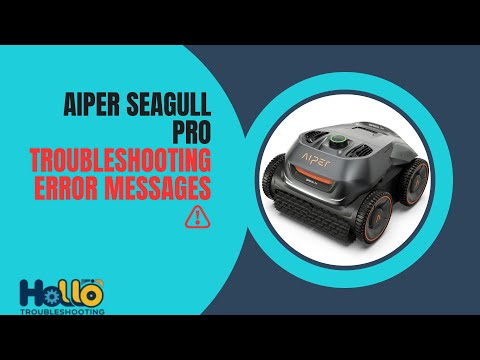
2.1 Official Recall Details: Scope, Timeline, and Affected Units
This isn’t a minor product update or a quiet fix—it’s a full-scale safety recall.
On March 20, 2025, the U.S. Consumer Product Safety Commission (CPSC) announced a voluntary recall of the Aiper Seagull Pro (Model ZT6001), affecting more than 35,000 units sold across major retailers like Amazon, Walmart, Best Buy, Home Depot, and Lowe’s. These units were distributed between March 2023 and May 2024, meaning a huge number of current pool owners could be impacted.
This wasn’t labeled as a precaution. It was flagged as a serious fire and burn hazard tied directly to the product’s charging system.
If you’re picturing a rare edge-case defect, think again. This is a nationwide recall tied to a core component of the device. The kind of issue that fundamentally changes how you look at a “set-it-and-forget-it” pool cleaner.
2.2 Incident Data: Overheating, Melting, and Fire Reports
Now let’s talk about what actually triggered the recall—real incidents.
| Incident Type | Reported Data |
|---|---|
| Documented Failures | At least 19 cases |
| Property Damage | At least 5 cases |
| Reported Symptoms | Overheating, melting, smoking, fire |
No injuries have been officially confirmed, which is fortunate. But that doesn’t reduce the severity. Fires don’t need a high incident count to be taken seriously—just one is enough to raise alarms.
There’s also a widely discussed case involving a house fire in Las Vegas, where the device was allegedly charging at the time. It’s important to note that investigations have not definitively confirmed the cause. Still, when stories like this align with official recall data, it adds a layer of real-world urgency that’s hard to ignore.
2.3 Root Cause: Battery and Charging System Failure Explained
So what’s actually going wrong under the hood?
The issue traces back to the lithium-ion battery system—the same type of battery used in phones, laptops, and most cordless devices. Normally, these are safe when properly managed. But when charging conditions go wrong, things escalate quickly.
What’s critical here is that this isn’t about how you use the robot in the pool. It’s about how it behaves when it’s sitting idle, plugged in. That’s what makes this defect concerning. Because it turns a passive device into an active risk.
2.4 What Owners Must Do Immediately
If you own an Aiper Seagull Pro, this is not a “wait and see” situation. The official guidance is clear—and urgent:
- Stop using the device immediately
- Do not charge it under any circumstances
- Unplug it and store it in a safe location
- Contact Aiper to initiate the recall process
Aiper is offering a free replacement unit (the Scuba S1) once you return the affected model. The process includes prepaid shipping and verification before the replacement is issued.
3. Real-World Performance Complaints: Where the Seagull Pro Falls Short
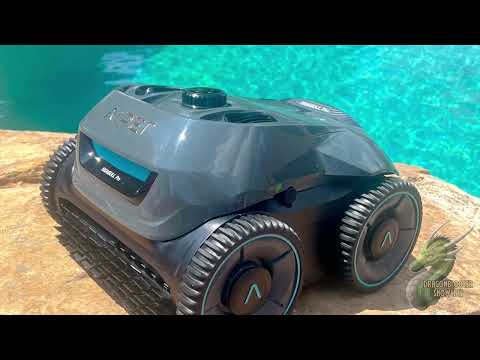
3.1 Battery Life vs Claims: From 90 Minutes to Real-World 45 Minutes
Let’s start with the promise: cordless freedom. On paper, the Seagull Pro advertises up to 90 minutes of runtime. That sounds like enough to clean most pools in a single session, right?
Now here’s the reality.
Across independent reviews and user feedback, a consistent pattern shows the runtime dropping to roughly 45 minutes after just a few weeks of use. That’s not a small dip—it’s a 50% cut in usable cleaning time.
According to independent performance testing showing runtime dropping to roughly 45 minutes, this isn’t an isolated complaint. It’s a pattern of short cycles and frequent recharging.
3.2 Navigation Issues: Random Patterns and Missed Spots
Instead of using intelligent navigation (like mapping systems that plan efficient coverage), the Seagull Pro relies on a more random, zigzag-style movement. In theory, it should eventually cover everything. In practice? It doesn’t.
Users consistently report the robot:
- Re-cleaning the same areas multiple times
- Completely skipping other sections
- Struggling to maintain consistent wall coverage
Compare that to more advanced systems (often found in corded models), which map the pool like a GPS and clean in structured paths. The difference is between “mostly clean” and “actually done.”
3.3 Getting Stuck and Needing Supervision
A robotic pool cleaner is supposed to remove work—not create new chores. But with the Seagull Pro, many owners report the opposite. It frequently gets stuck on:
- Steps and ladders
- Steep slopes
- Wrinkles in the liner
- Small debris
This turns automation into “babysitting.” Instead of reclaiming your weekend, you’re standing poolside, acting like a lifeguard for a robot.
3.4 Filtration and Debris Handling Limitations
Even when it does move properly, there’s another issue: what it actually picks up.
Pros
- Handles larger debris like leaves reasonably well.
Cons
- Struggles with fine particles (sand, dirt, silt).
- Suction weakens significantly as the filter fills.
- Flow reduces and cleaning efficiency drops mid-cycle.
So you end up with a double frustration: It doesn’t capture everything, and it gets worse as it runs. At that point, you’re not saving time—you’re just adding steps.
4. Design and Usability Friction: Daily Use Isn’t as ‘Hands-Off’ as Promised

4.1 Charging Hassles and Maintenance Burden
A cordless pool robot is supposed to simplify your life. Drop it in, let it run, plug it in, done.
That’s the expectation.
But with the Seagull Pro, the charging experience quickly becomes part of the problem—not the solution.
And it’s not just the time.
The charging port itself has been described as awkward to access, turning what should be a quick plug-in into a fiddly, slightly annoying task every single time. Add in the need to recharge frequently بسبب the shortened runtime, and suddenly you’re interacting with this thing far more than you ever planned.
This is where the “automation” promise breaks down. Instead of saving time, it starts quietly consuming it—in small, repetitive chunks that add up fast.
4.2 Manual Retrieval and Handling Challenges
Now picture this: the cleaning cycle is done, and instead of the robot conveniently waiting near the edge…
…it’s sitting at the bottom of your pool.
So you grab the pole. Attach the hook. Try to line it up. Lift carefully. And hope you don’t drop it back in.
That’s the actual retrieval process here.
Unlike more advanced robots that return to a fixed spot or park themselves for easy pickup, the Seagull Pro requires full manual retrieval every time. And it’s not effortless. The unit has weight, water resistance works against you, and balancing it on a pole can feel surprisingly clumsy.
4.3 Durability Concerns and Build Quality Issues
Then there’s the long-term question: does it actually hold up?
This is where things get a bit uncomfortable.
Across user feedback and detailed reviews, there’s a recurring theme—parts don’t always feel as sturdy as you’d expect at this price point. Plastic clips, in particular, have been called out as fragile, with reports of breakage after a few months of regular use.
And once something like that fails, the entire unit can become unusable.
That’s a frustrating place to be. Because a pool robot isn’t an impulse buy—it’s an investment. You expect it to last through seasons, not start ցույց showing wear early on.
Pair that with the already مطرح battery degradation issues, and you get a bigger picture: this isn’t just about performance in week one. It’s about reliability over time.
5. Should You Still Consider It? Better Alternatives and Smarter Choices
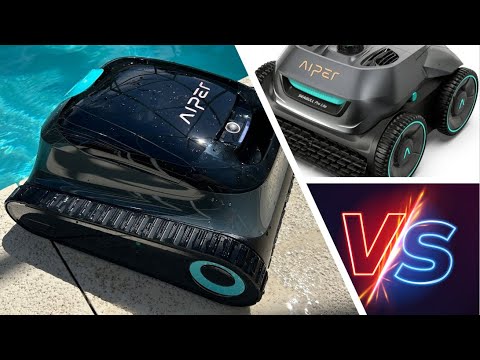
5.1 Why Corded Pool Robots Still Outperform Cordless Models
Let’s be honest—the idea of cordless is جذاب. No cables. No tangles. Total freedom.
But here’s the trade-off most people don’t realize until it’s too late: that freedom comes at the cost of consistency.
Pros of Corded Models
- Steady, uninterrupted power from start to finish
- No mid-cycle battery failures
- Smarter navigation systems (GPS-like coverage)
- True "set-it-and-forget-it" experience
Cons of Cordless (Seagull Pro)
- Requires constant recharging
- Inconsistent cleaning performance
- Babysitting and manual retrieval required
5.2 Replacement Option: Aiper Scuba S1 as the Official Fix
If you already own a Seagull Pro, the path forward is pretty clear.
As part of the official recall, Aiper is offering a free replacement—the Scuba S1. No extra cost. No upgrade fee. Just a direct swap once you return the affected unit.
Now, it’s important to stay grounded here. The Scuba S1 is positioned as the company’s corrective step following the recall—not as some miracle leap forward with undocumented performance claims. What matters is that it exists as a resolution to a serious safety issue, giving owners a way out without losing their investment.
If you’re still holding onto a Seagull Pro, this is the move. Not later. Now.
Check Price on Amazon5.3 Key Buying Criteria After This Case: What Actually Matters
This situation highlights something bigger than just one product. It forces a rethink of what actually matters when buying a pool robot.
- Safety certifications and recall history
- Battery reliability (not just advertised runtime)
- Navigation intelligence and coverage consistency
- Proven durability over multiple seasons
These aren’t exciting bullet points. But they’re the difference between a tool that disappears into your routine—and one that creates new problems. Don’t buy based on promises. Buy based on الأداء in real-world conditions—and how much تدخل it actually requires from you.
6. Conclusion: A Cautionary Tale for Pool Robot Buyers
The Aiper Seagull Pro started as a compelling idea: cordless convenience, simple operation, פחות hassle.
But when you look at the full picture—a large-scale recall involving over 35,000 units and multiple fire-related incidents, combined with consistent real-world complaints about battery life, navigation, and usability—the story shifts.
This isn’t just about one flawed feature. It’s about a breakdown in trust.
A pool robot should remove effort, not add supervision. It should feel reliable, not unpredictable. And above all, it should be safe to use without hesitation.
If a device can’t meet those الأساسية expectations, no level of convenience makes up for it. Prioritize safety. Choose proven performance. And don’t compromise on reliability just to cut the cord.
FAQ
Q: Why was the Aiper Seagull Pro recalled?
A: The U.S. CPSC issued a voluntary recall because the battery charging system can overheat, posing fire and burn hazards. This followed 19 reports of overheating or melting, including 5 incidents involving property damage.
Q: How can I tell if my Aiper Seagull Pro is affected?
A: The recall affects approximately 35,000 units of Model ZT6001 sold between March 2023 and May 2024. Owners should check their model number and stop using and charging the device immediately for safety.
Q: What is the real-world battery life of the Seagull Pro?
A: While advertised at 90 minutes, aggregated user feedback and performance data indicate that actual runtime often drops to approximately 45 minutes after several weeks of regular use in standard pool environments.
Q: Does the Seagull Pro have intelligent mapping?
A: No, this model utilizes a random zigzag-style navigation pattern. Data analysis suggests this often results in missed spots, repetitive cleaning of the same areas, and struggles with consistent wall and corner coverage.
Q: What should I do if I currently own a Seagull Pro?
A: You should immediately unplug the device, stop all use, and store it in a safe location. Contact the manufacturer to participate in the recall program and receive a free replacement Scuba S1 unit.