
Aiper Seagull Pro vs. Seagull SE: Which Cordless Model is Right for You?
Aaron Cooper1. Introduction
Choosing a cordless pool cleaner sounds simple—until you realize you’re really choosing between convenience and actual cleaning power. The Aiper Seagull SE and Seagull Pro sit on opposite ends of that spectrum. One is a lightweight, budget-friendly helper for quick cleanups. The other promises a more “set-it-and-relax” experience for bigger, more demanding pools.
But here’s the catch: specs don’t always translate into real-world results. In this guide, we’ll break down what actually matters—coverage, suction, runtime, and the hidden limitations most buyers only discover after their first few cleaning cycles.
2. Seagull Pro vs. Seagull SE: Core Differences That Actually Matter
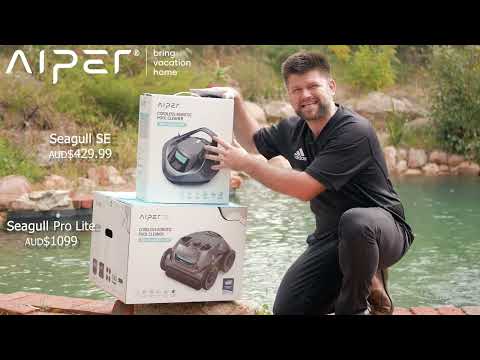
2.1 Pool Type Compatibility: Above-Ground vs In-Ground Is the First Decision
Before you even think about suction power or runtime, you need to answer one brutally simple question: what kind of pool do you have?
The Aiper Seagull SE is built strictly for flat, above-ground pools. Not “mostly flat.” Not “slightly sloped.” Flat. The moment you introduce curves, slopes, or steps, its small wheels and basic design start to struggle. Instead of confidently navigating your pool, it tends to wander, bounce, and miss sections entirely.
Now contrast that with the Seagull Pro. This is designed for in-ground pools—the kind with deep ends, angled floors, and vertical walls. Its four-wheel-drive system gives it the traction needed to move across uneven surfaces and climb where the SE simply can’t.
This isn’t a minor difference. It’s a dealbreaker.
2.2 Cleaning Coverage: Floor-Only vs Full Pool (Walls + Waterline)
Let’s talk about what “clean” actually means.
With the Seagull SE, cleaning is limited to the pool floor. That’s it. It moves in a random pattern, picking up debris where it happens to pass. But walls? Untouched. Waterline buildup? Still there, slowly forming that stubborn ring you’ll eventually have to scrub by hand.
And that’s where frustration kicks in. Because you didn’t buy a robot to still clean your pool manually.
The Seagull Pro changes that equation. It adds full coverage—floor, walls, and even the waterline. With multiple cleaning modes, it can shift focus depending on what your pool needs most. Think of it less like a random rover and more like a system that actually understands your pool’s structure.
This is where the Pro starts to feel like a true upgrade. It includes dedicated wall and waterline cleaning modes, which dramatically expand what “one cleaning cycle” actually accomplishes.
Still, it’s not perfect. Even higher-end cordless models can miss spots along walls or edges. But compared to the SE? It’s not even close.
2.3 Power & Suction: Why 4,800 GPH Feels Very Different from 1,300 GPH
On paper, suction numbers can feel abstract. In reality, they’re the difference between “looks clean” and actually clean.
The Seagull SE operates around 1,200–1,300 GPH. That’s enough for light dust, ചെറിയ الرمل, or tiny debris. But throw in leaves, twigs, or anything heavier, and you’ll start noticing something frustrating—it rolls right over debris without picking it up.
Now step up to the Seagull Pro, which pushes up to 4,800 GPH. That’s not just a small upgrade—it’s a completely different cleaning tier. In side-by-side comparisons, that’s roughly 3–4x more water flow, which directly translates to stronger pickup and better debris handling.
| Feature | Seagull SE | Seagull Pro |
|---|---|---|
| Suction Power | ~1,300 GPH | Up to 4,800 GPH |
| Debris Handling | Fine particles only | Leaves, twigs, sand |
| Motor System | Basic | Quad-motor system |
| Real-World Result | Misses heavier debris | Handles mixed debris well |
2.4 Runtime & Navigation: Longer Doesn’t Always Mean Smarter
At first glance, the runtime difference seems straightforward: 90 minutes for the SE vs 180 minutes for the Pro.
Twice the time. Easy win, right?
Not exactly. The Seagull SE uses random navigation. It doesn’t “learn” your pool—it just moves until the battery runs out. That means you can end a full 90-minute cycle with patches of debris still sitting untouched.
The Seagull Pro improves this with smarter routing. Instead of wandering aimlessly, it follows more structured paths, reducing overlap and missed zones. Combined with its longer runtime, it has a much better chance of actually finishing the job in one go.
But here’s the nuance: longer runtime doesn’t automatically mean better cleaning. If navigation is inefficient, you’re just spending more time repeating the same paths.
3. Real-World Performance Issues You Shouldn’t Ignore
3.1 Battery Life, Charging Hassle, and Daily Maintenance Reality
Cordless sounds effortless—until you live with it.
In reality, both the Seagull SE and Pro follow the same routine: run a single cleaning cycle, then head straight back to the charger. For many users, that means 90–180 minutes of cleaning followed by several hours of charging. And if your pool isn’t fully clean? You’re doing it all over again.
This creates a hidden chore loop. Drop it in. Wait. Pull it out. Charge it. Repeat. It gets worse when the battery doesn’t last as long as expected. Some users report cycles ending early, leaving sections untouched. Now you’re not just maintaining your pool—you’re babysitting the robot.
3.2 Weak Suction, Missed Spots, and Inconsistent Coverage
Here’s where expectations and reality often collide.
Even with decent specs, cordless robots—especially entry-level ones like the Seagull SE—can struggle with consistency. Random navigation leads to missed spots. Weak suction means debris gets pushed instead of collected. And by the end of the cycle, performance can noticeably drop as the battery drains.
Pros
- Convenience of no tangled cords.
- Pro model offers strong 4,800 GPH suction.
- Smarter routing in higher-end models.
Cons
- SE model misses heavier debris like leaves.
- Random navigation leaves untouched patches.
- Need for frequent manual intervention.
The result? A pool that looks clean at a glance… but isn’t. Across independent evaluations, a common theme shows up: cordless cleaners can feel like “part-time helpers.” They handle some of the work—but not all of it.
3.3 Reliability Concerns: Recalls, Durability, and Customer Support
This is the part most buyers don’t see coming.
While Aiper’s cordless lineup is popular, broader industry feedback highlights recurring concerns around durability, battery longevity, and support. Some users report components wearing out faster than expected, while others mention difficulties getting timely help when something goes wrong.
Add to that reports of slow customer service responses and warranty frustrations, and you start to see the bigger picture. These aren’t dealbreakers for everyone—but they are part of the real ownership experience. Because at the end of the day, a pool robot isn’t just about how well it cleans on day one. It’s about how well it holds up after months of sun, water, and daily use.
Check Price on Amazon2. Cordless Pool Robots: Convenience vs Performance Trade-Offs
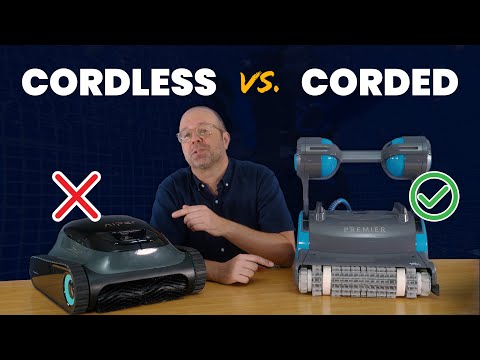
2.1 Why Cordless Feels Convenient (But Isn’t Always)
At first glance, cordless pool robots feel like a dream. No tangled cables. No setup. You just drop it in, press a button, and walk away. For a moment, it really does feel like you’ve outsmarted pool maintenance.
But then reality creeps in.
This is where the illusion breaks. Cordless doesn’t mean hands-off—it just shifts the work into smaller, more frequent tasks. Industry insights consistently point out that battery-powered cleaners often require daily interaction, sometimes twice a day, just to keep up.
And then there’s performance. As the battery drains, suction can fade. What starts as a solid clean can end as a sluggish glide across the pool floor.
So yes—it’s convenient. Until it isn’t.
2.2 Corded Alternatives: Stronger Power and True Automation
Now imagine a different scenario.
You set a schedule once. The robot turns on automatically. It cleans your pool while you’re at work, sleeping, or doing literally anything else. Days go by, and all you do is empty the filter once in a while.
That’s the corded experience.
Because they’re plugged into constant power, corded robots don’t have to “ration” energy. They clean at full strength from start to finish—no drop-off, no fading suction. Many operate in the same power range as high-end units, delivering the kind of deep, consistent cleaning that cordless models struggle to maintain.
Yes, there’s a cord. And yes, that can be inconvenient depending on your setup. But in exchange, you get something cordless models rarely deliver:
- Consistency.
- Reliability.
- And actual hands-off cleaning.
2.3 Who Should Still Consider Cordless Models Like Seagull SE or Pro
So… are cordless robots like the Aiper Seagull SE or Seagull Pro ever the right choice?
Actually—yes. But only in specific situations.
If you have a small, flat above-ground pool with minimal debris, the Seagull SE can feel like a lightweight helper. It’s easy to carry, simple to use, and good enough for quick maintenance—especially if your pool stays relatively clean.
Step up to the Seagull Pro, and the use case shifts. It makes more sense for in-ground pools where you need wall climbing and longer runtime—but still don’t want to deal with cords. If your pool sits far from power outlets or you simply hate the idea of cables, that trade-off might be worth it.
These robots work best when expectations are realistic. Think of them as maintenance tools—not complete replacements for a fully automated system.
Used in the right context, they can save you time. Used in the wrong one? They create more work than they remove.
3. Which One Should You Choose? Simple Use-Case Recommendations
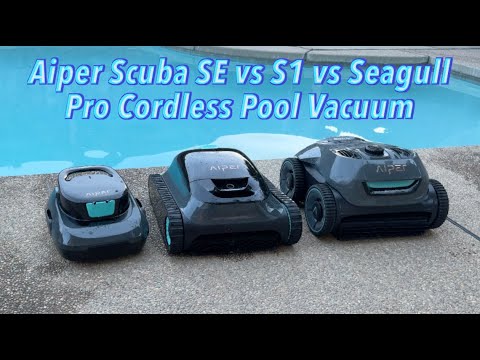
3.1 Choose Seagull SE If You Have a Small, Flat Above-Ground Pool
Let’s be blunt—the Seagull SE is not trying to be a powerhouse. And that’s actually fine… if your pool matches its limits.
Pros
- No complexity.
- No learning curve.
- Pick up light dirt and fine particles.
Cons
- Struggles with slopes or liner wrinkles.
- Inadequate for heavier debris like leaves.
- Lower suction power.
But here’s where expectations matter. The moment your pool has slopes, wrinkles in the liner, or heavier debris like leaves and twigs, things start to break down. Its lower suction and flat filter design struggle to keep up, and you may find yourself stepping in to finish the job manually.
That’s the trade-off for the lower price.
3.2 Choose Seagull Pro If You Need Full Coverage for an In-Ground Pool
Now, if your pool has walls, slopes, and that stubborn waterline ring that never seems to go away, the Seagull Pro starts to make a lot more sense.
This is where the upgrade feels real. Instead of just rolling across the floor, the Pro climbs, scrubs, and covers multiple zones in a single cycle. Combined with its stronger suction and longer runtime, it’s built for pools that actually get dirty—leaves, sand, and everything in between.
You can see the difference in capability immediately. The jump to a suction range reaching up to 4,800 GPH isn’t just a spec—it’s what allows the Pro to handle heavier debris that the SE simply can’t manage.
So who is it for? Someone who wants better coverage without going fully corded. Someone willing to trade a bit of convenience for stronger performance.
Check Price on Amazon3.3 When Neither Model Is the Right Choice
Here’s the part most comparison guides avoid—but it matters. Sometimes, the best decision is… neither.
If you have a large pool, heavy debris (think leaves every day), or simply don’t want to deal with daily charging and manual handling, both the Seagull SE and Pro will likely fall short. You’ll start noticing incomplete cleaning cycles, fading suction, and the need to step in more often than you expected.
If your goal is true automation, consistent power, and minimal effort, a corded robotic cleaner is simply the better fit.
It costs more upfront. But it gives you something cordless models often can’t: Peace of mind.
4. Conclusion
The Aiper Seagull SE and Seagull Pro aren’t just different models—they’re built for completely different pool owners.
- Seagull SE: Best for small, flat above-ground pools and light cleaning.
- Seagull Pro: Best for in-ground pools requiring wall climbing and stronger suction.
But zoom out, and the bigger question isn’t just SE vs Pro—it’s whether cordless fits your lifestyle at all.
Because in the end, the “right” choice isn’t about specs. It’s about how much time and effort you’re willing to trade for convenience.
FAQ
Q: Can the Aiper Seagull SE clean in-ground pool walls?
A: No. Based on technical specifications, the Seagull SE is designed strictly for flat-bottom, above-ground pools and lacks the traction and motor power required for wall climbing or navigating sloped floors typically found in in-ground pools.
Q: What is the main suction difference between Seagull SE and Pro?
A: Data analysis shows a significant gap in performance. The Seagull SE offers approximately 1,300 GPH suction for light debris, while the Seagull Pro provides up to 4,800 GPH, making it much more effective for leaves and twigs.
Q: How long does it take to charge these cordless models?
A: While runtimes vary from 90 to 180 minutes, aggregated user data indicates that both models require several hours of charging between cycles, often necessitating a daily charging routine for consistent pool maintenance.
Q: Does the Seagull Pro cover the waterline?
A: Yes, the Seagull Pro is engineered with dedicated cleaning modes for floors, walls, and the waterline. However, user feedback suggests that its effectiveness at the waterline can vary depending on the pool's specific tile surface.
Q: Can I leave the Aiper Seagull in the pool overnight?
A: It is generally not recommended. Since these are cordless, battery-operated units, they should be removed and dried after their cycle to be recharged and to prevent long-term seals or battery degradation from constant submersion.