
Beatbot AquaSense Pro: Aggregated Review of Surface Cleaning Tech—Does It Really Deliver 5-in-1 Pool Cleaning?
Aaron Cooper1. Introduction: What Buyers Expect From a ‘5-in-1’ Pool Robot
A “5-in-1” pool robot sounds like the ultimate escape hatch from one of the most stubborn chores of homeownership. No more dragging hoses, no more skimming leaves under the sun, no more scrubbing that grimy waterline by hand. The promise? One device that handles surface debris, walls, floors, and even water clarity—completely hands-free.
The Beatbot AquaSense Pro steps directly into that dream, positioning itself as a premium, all-in-one solution. But here’s the real question buyers are asking: does it actually replace manual cleaning—or just reduce it?
To answer that, we’re not relying on a single review. This is a synthesis of expert testing, real-world usage, and industry benchmarks to separate what sounds revolutionary from what actually works in your pool.
2. Surface Cleaning Tech Breakdown: Floating Debris, Waterline, and Coverage
2.1 Floating Debris & Surface Skimming: Innovation With Limitations
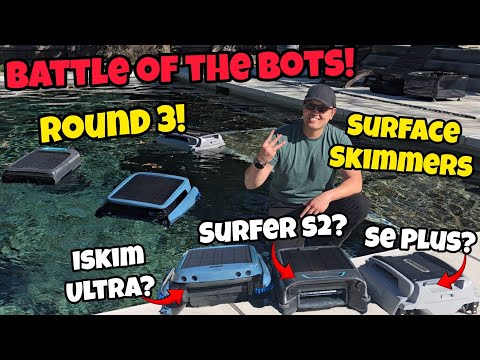
Let’s start with the feature that makes people stop scrolling: a pool robot that floats and skims the surface.
On paper, it sounds like magic. Instead of manually sweeping leaves with a net, the AquaSense Pro glides across the water, passively collecting debris as it goes. It’s a rare capability—most robotic cleaners ignore the surface entirely.
But here’s where expectations hit reality.
That creates a subtle but important limitation. Surface cleaning becomes opportunistic, not systematic.
And when you factor in battery constraints, things get trickier. While the brand promotes long surface-cleaning sessions, real-world usage shows it often can’t sustain a full multi-mode cycle without interruption—especially when switching between surface and underwater cleaning.
2.2 Waterline Scrubbing: Strong Concept, Inconsistent Execution
If you’ve ever scrubbed that greasy ring around your pool, you know this is where things get nasty.
The waterline isn’t just cosmetic—it’s where oils, sunscreen, and bacteria concentrate. In fact, industry consensus highlights that the majority of pool bacteria accumulates along the waterline, making it one of the most critical cleaning zones.
The AquaSense Pro tackles this with rotating brushes designed to scrub right at the surface edge. In controlled testing environments, this approach has been rated highly. And when it works, it really works—you can visibly see that clean, sharp line return.
But real-world behavior? Less predictable.
- Multiple reviews describe inconsistent passes: sometimes thorough, sometimes barely touching the waterline at all.
- There are even cases where the robot simply doesn’t engage with the waterline during a cycle.
Why does that matter? Because waterline cleaning isn’t something you want done “occasionally.” It’s all or nothing. Miss a few passes, and that grime builds up fast—putting you right back where you started, scrubbing manually on a Saturday morning.
2.3 Full-Surface Coverage: Floor, Walls, Steps, and Blind Spots
This is where the “5-in-1” promise really gets tested: can one robot truly clean everything?
On flat surfaces like the pool floor, the AquaSense Pro performs confidently. It picks up both large debris like leaves and finer dirt that cheaper robots tend to scatter. For routine maintenance, this is where it shines.
Pros
- Confident performance on flat pool floors.
- Effective climbing and coverage of vertical walls.
- Handles large debris and fine dirt effectively.
Cons
- Steps often get partially cleaned or skipped.
- Corners collect leftover debris after full cycles.
- Irregular pool shapes confuse navigation patterns.
In some cases, the robot even gets stuck repeatedly in stair zones, burning battery while going nowhere. The result? You’re still reaching for a manual brush to finish the job.
It’s not that the AquaSense Pro fails completely—it’s that it delivers “most of the pool” instead of “the entire pool.” And when you’re paying premium pricing, that last 10–15% matters more than you’d expect.
3. Real-World Performance vs Manufacturer Claims
3.1 Battery Life and Cleaning Cycles: Claimed vs Actual Runtime
Battery life is where expectations can quietly fall apart. On paper, the AquaSense Pro sounds unstoppable—long cleaning times that suggest it can handle everything in one go.
| Performance Metric | Actual Real-World Observation |
|---|---|
| Mixed Mode Runtime | 3.5 to 4 hours per charge |
| Low Battery Behavior | May stop mid-cycle without returning to surface |
| Coverage Consistency | Sections may be left untouched if battery depletes |
That might not sound like a dealbreaker—until you watch a cleaning cycle stop halfway through your pool. Even worse, if you’re expecting a fully automated routine, this breaks the illusion. You’re no longer “set it and forget it.” You’re managing charge cycles, planning cleaning modes, and sometimes running multiple sessions to finish the job.
3.2 Navigation & AI Mapping: Smart on Paper, Frustrating in Practice
With a quad-core processor and a network of sensors, the AquaSense Pro sounds like it should think its way around your pool like a self-driving car underwater.
But here’s the reality: smart doesn’t always mean efficient.
- The robot covers large open areas well using AI-driven mapping.
- It struggles with common residential features like stairs and tight corners.
- Recovery behavior is inconsistent; it may stay stuck instead of "figuring it out."
That gap between intelligence and execution is what stands out most. The system looks advanced on paper, but in real pools, it doesn’t consistently translate into smarter cleaning.
3.3 Filtration Performance: Fine Debris vs Clogging Reality
Filtration is the unsung hero of any pool robot. The AquaSense Pro uses a dual-layer filtration system designed to capture both large debris and finer particles. And yes, it can trap visible dirt effectively—especially leaves and heavier debris.
But when you zoom in on fine particles like sand or silt, performance becomes less impressive.
That second point matters more than you think. A clogged filter doesn’t just reduce performance—it increases maintenance. You’ll find yourself rinsing it more often than expected, especially during heavy cleaning periods.
So while the filtration system is capable, it doesn’t quite match the level of refinement you’d expect at this price point. It is good in isolation, but not quite elite in execution.
4. User Experience: App Control, Maintenance, and Daily Use Friction
4.1 App Connectivity and Control Limitations
Here’s the uncomfortable truth: the “smart” part of a smart pool robot matters most when things go wrong.
You expect to open the app, check progress, maybe redirect the robot, or call it back to the surface. That’s the dream. But with the AquaSense Pro, that control often disappears the moment the robot goes underwater.
And that’s where frustration creeps in.
Imagine watching your pool from the patio, wondering: Is it done? Is it stuck? Did it even clean that corner? Without visibility, you’re guessing. Even basic features—like cleaning progress or coverage maps—can be unreliable, sometimes showing zero activity after hours of operation.
Add in reports of a buggy interface—overlapping screens, inconsistent status updates—and the experience starts to feel less like a polished smart system and more like a beta test.
For a premium robot, that gap between expectation and control is hard to ignore.
4.2 Maintenance Burden: Filters, Charging, and Manual Retrieval
Robots are supposed to remove chores—not quietly replace them with different ones.
But in daily use, the AquaSense Pro introduces a new routine you didn’t quite sign up for.
- Daily Handling: After each cycle, you’re pulling a 24-pound machine out of the pool, opening the filter compartment, rinsing debris, and placing it back on the dock. Not difficult—but not exactly effortless either.
- Charging Management: Because it’s cordless, you’re looking at frequent recharge cycles. Miss one? Your next cleaning session gets cut short.
- Manual Retrieval: When the battery runs out mid-cycle, the robot may stop wherever it is—sometimes requiring manual retrieval from the bottom of the pool.
Individually, these tasks are manageable. Together? They chip away at the “hands-free” promise.
4.3 Cordless Convenience vs Real-World Trade-Offs
Cordless sounds like freedom. No tangled cables. No hoses floating around while you swim. Just drop it in and let it work.
And to be fair, that part is great. The AquaSense Pro feels clean, modern, and easy to deploy. No setup headaches. No external connections.
But convenience always comes with trade-offs.
"Industry-wide insights show that cordless pool robots often sacrifice raw power and consistency compared to corded models. Smaller motors, limited runtime, and the need for frequent charging all play a role."
In real terms, that means:
- Less aggressive suction compared to corded units
- Shorter, sometimes incomplete cleaning cycles
- More hands-on management (charging, retrieval, resets)
It’s a bit like switching from a plug-in vacuum to a cordless stick vacuum. You gain flexibility—but lose some deep-cleaning muscle.
If your pool is already well-maintained, that trade-off might feel worth it. But if you’re expecting a fully autonomous, heavy-duty cleaner? That’s where the gap becomes obvious.
5. Is It Worth the Price? Value vs Performance Verdict
5.1 Premium Pricing vs Mid-Tier and Corded Alternatives
Let’s address the elephant in the backyard: price.
At around $2,000+, the Beatbot AquaSense Pro sits firmly in premium territory. That kind of investment comes with expectations—near-perfect cleaning, true automation, and minimal maintenance.
But when you stack it against the broader market, things get complicated.
| Robot Category | Performance Profile |
|---|---|
| AquaSense Pro | Premium price, 5-in-1 innovation, average consistency. |
| Mid-Tier Cordless | Significantly lower cost, similar "maintenance" cleaning. |
| Corded Models | Stronger suction, unlimited runtime, often cheaper. |
Even expert scoring reflects this tension. In aggregated testing, the AquaSense Pro lands at a 79/100 overall performance score, which is solid—but not exceptional for its price bracket.
So what are you really paying for?
- A sleek, award-winning design
- Innovative 5-in-1 concept
- Cordless convenience
But not necessarily best-in-class cleaning performance. That creates a strange middle ground. It’s more expensive than most cordless competitors—but doesn’t outperform strong corded options that cost less.
5.2 Where AquaSense Pro Actually Performs Well
To be fair, it’s not all trade-offs and compromises. There are areas where the AquaSense Pro genuinely shines.
Pros
- Effective Floor Cleaning: Consistently picks up large debris and fine dirt on flat surfaces.
- Premium Build Quality: Materials, finish, and construction feel high-end and durable.
- Genuine Innovation: Surface skimming and water clarification are unique, useful additions.
- Battery Retention: The battery holds charge well over time, adding flexibility.
Cons
- Navigation hiccups and inconsistent coverage.
- App connectivity losses when submerged.
- Higher maintenance frequency than expected for "fully automated."
5.3 Who Should (and Shouldn’t) Buy It
This is where things get practical.
You should consider the AquaSense Pro if:
- Your pool is already relatively clean and needs maintenance, not rescue
- You value cordless convenience and clean design over raw power
- You’re okay stepping in occasionally for touch-ups (steps, corners, waterline inconsistencies)
You should probably skip it if:
- You want true “set-it-and-forget-it” automation
- Your pool has lots of steps, ledges, or irregular shapes
- You expect deep cleaning comparable to corded, high-power systems
Because here’s the reality: this robot doesn’t eliminate manual work—it reduces it. And whether that’s “worth it” depends entirely on how much work you’re trying to escape.
Check Price on Amazon6. Conclusion: A Smart Concept That Still Needs Refinement
The Beatbot AquaSense Pro is one of the most ambitious pool robots on the market right now. A 5-in-1 system that cleans floors, walls, waterlines, and even the surface? That’s the future—no question.
But today, it feels like a first draft of that future.
The innovation is real. The design is premium. And in certain scenarios—especially routine maintenance—it genuinely makes pool care easier.
Yet the cracks show up in consistency. Navigation hiccups, incomplete coverage, app limitations, and ongoing maintenance demands all chip away at the “fully automated” promise.
So, does it deliver? Partially.
If you’re looking to reduce effort, it can help. If you’re hoping to eliminate it entirely, you may walk away frustrated.
For now, the AquaSense Pro is a glimpse of what pool robots could become—not quite the finished product many buyers are expecting.
FAQ
Q: Does the Beatbot AquaSense Pro actually clean the pool surface?
A: Based on technical specifications and aggregated reviews, the robot features surface-skimming technology. However, performance is often described as opportunistic rather than systematic, meaning it captures debris that happens to float into its path rather than actively hunting for it.
Q: How long does the battery last in a single cleaning cycle?
A: While manufacturer claims suggest longer runtimes, data-driven analysis of real-world usage indicates that mixed cleaning modes—covering the floor, walls, and waterline—typically result in an actual runtime of approximately 3.5 to 4 hours per charge.
Q: Can it handle pools with complex steps and ledges?
A: Consumer feedback suggests that while the robot climbs walls effectively, its AI navigation frequently struggles with irregular pool shapes, tight corners, and steps, often requiring manual touch-ups to ensure these areas are fully cleaned.
Q: Is the app control reliable while the robot is cleaning?
A: Aggregated buyer sentiment indicates significant connectivity challenges once the unit is submerged. Users often report the robot going offline in the app, which limits real-time tracking and remote intervention during a cleaning session.
Q: What type of debris does the filtration system handle best?
A: The dual-layer filtration system is highly effective at capturing larger debris like leaves and twigs. However, performance data suggests it may struggle with ultra-fine particles like silt or sand compared to models equipped with dedicated nano-filtration.