
Best Pool Robots for Fine Debris, Sand, and Algae: Top Picks for Ultra-Fine Filtration & Deep Cleaning
Aaron Cooper1. Introduction
Fine sand that never seems to disappear. A faint green haze creeping back along the walls. That gritty feeling under your feet no matter how many times you “clean” the pool.
This is where most pool routines fall apart.
Standard vacuums and basic filters simply aren’t built to capture microscopic debris or scrub away stubborn algae film. They move dirt around—but don’t truly remove it. The result? Cloudy water, recurring algae, and hours of frustrating maintenance.
Modern robotic pool cleaners change that completely. With ultra-fine filtration, active scrubbing brushes, and smart navigation, they don’t just clean—they deep-clean. In this guide, we’ll break down exactly what features matter most and which robots actually handle fine debris, sand, and algae without constant babysitting.
2. What Makes a Pool Robot Effective for Fine Debris, Sand, and Algae?

2.1 Ultra-Fine Filtration: Why Micron-Level Matters
If your pool still looks cloudy after cleaning, the problem usually isn’t effort—it’s filtration.
Most entry-level robots rely on standard mesh filters. These are fine for leaves and bugs, but when it comes to fine sand, silt, or algae particles? They slip right through and get recirculated back into your water. That’s why your pool can look “cleaned”… but never truly clear.
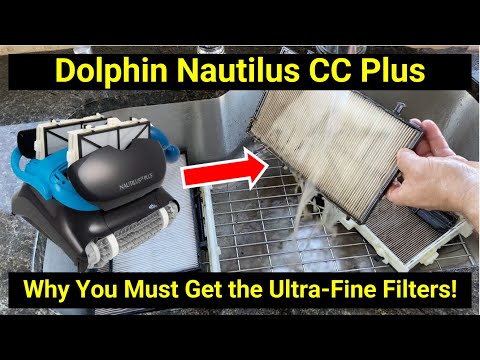
The real upgrade comes from ultra-fine filtration. High-end robots can trap particles as small as 2 microns, which is small enough to capture dust-like debris, dead algae, and even pollen. For context, that’s far beyond what typical sand or cartridge pool filters can handle.
The difference is immediate. Instead of that lingering haze, the water looks polished. Crisp. Almost glass-like.
2.2 Active Scrubbing vs Suction Alone for Algae Removal
Here’s the uncomfortable truth: suction alone does not remove algae.
Algae doesn’t just float around—it forms a thin, sticky biofilm that clings to pool surfaces. Especially along walls, steps, and that stubborn waterline ring. If you’ve ever brushed it manually, you know how stubborn it can be.
Now imagine a robot without brushes. It glides right over that film, maybe picking up loose debris—but leaving the root of the problem untouched.
That’s why active scrubbing is non-negotiable.
Robots like the Dolphin Escape use dual scrubbing brushes, including systems like HyperBrush™, which rotate at roughly twice the speed of standard brushes. That extra agitation physically breaks apart algae buildup so it can actually be vacuumed and filtered out.
It’s the difference between wiping a greasy pan with a paper towel… versus scrubbing it with a brush under hot water.
- No scrubbing = algae comes back fast.
- Proper scrubbing = surfaces stay clean longer.
2.3 Wall Climbing and Waterline Cleaning: Where Algae Hides
Most people assume “wall climbing” means full cleaning coverage. It doesn’t.
A robot that climbs walls might still stop short of the most important zone: the waterline. And that’s exactly where algae thrives—where sunlight, oils, and debris combine to create the perfect breeding ground.
| Feature | Cleaning Impact |
|---|---|
| Wall climbing | Cleans vertical surfaces, but may not reach the top edge |
| Waterline cleaning | Actively scrubs along the surface line where buildup is worst |
If your robot skips the waterline, you’ll notice it quickly. That faint ring returns. Then dark patches. Then you’re back to manual scrubbing on a Saturday morning.
Robots with true full coverage—floor, walls, and waterline—eliminate that cycle. They target algae where it starts, not just where it settles.
2.4 Smart Navigation and Automation for Complete Coverage
Ever watched a cheap pool cleaner bounce around randomly? It looks busy. But it’s inefficient—and worse, it misses spots.
Modern robotic cleaners use intelligent navigation systems to map your pool and follow structured cleaning paths instead of chaotic movement. Some systems even adjust routes dynamically to avoid overlap and reduce missed areas.
The result? More consistent, predictable cleaning—without babysitting.
As highlighted across expert testing and user feedback, a built-in smart timer can turn pool care into a true “set-it-and-forget-it” routine—dramatically reducing how often you need to intervene.
3. Best Pool Robots for Fine Debris, Sand, and Algae (Top Picks Explained)
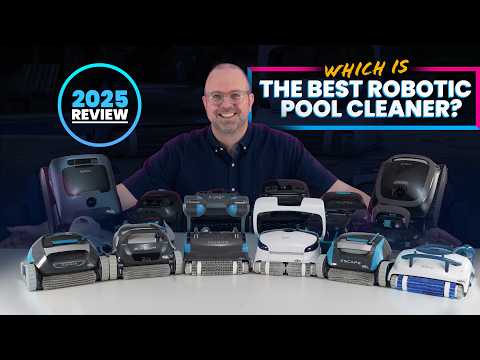
3.1 Best for Ultra-Fine Filtration and Algae: Dolphin Premier & Dolphin Sigma
If your biggest frustration is cloudy water that never quite clears—or algae that keeps coming back—this is where Dolphin’s top-tier models stand out.
Pros
- Multi-Media filtration system for versatile debris handling
- NanoFilters™ capture microscopic particles
- Commercial-grade motor power
- Gen-2 Smart navigation (Sigma model)
Cons
- Higher upfront cost (premium pricing)
- Overkill for pools with only light debris
The Dolphin Premier is built around a Multi-Media filtration system, which essentially lets you swap filters depending on the mess. Heavy leaves after a storm? There’s a filter for that. Fine sand and algae dust? Switch to NanoFilters™ and suddenly those invisible particles stop slipping through.
Check Price on Amazon3.2 Best for Sand and Fine Particles: Polaris Freedom & Aiper X1 Pro Max
Fine sand is a different kind of enemy. It’s heavy, settles quickly, and loves to sit just out of reach—especially in textured pool floors or corners. You vacuum it… and somehow it’s back the next day.
The Polaris Freedom is widely recognized for its ability to handle fine debris efficiently, making it a strong choice for sandy environments. It focuses on consistent pickup and reliable coverage without overcomplicating the experience.
Then there’s the Aiper X1 Pro Max, which takes a more customizable approach. It allows you to switch between ultra-fine filter media (for silt and algae) and coarser mesh options (for larger debris). That flexibility matters if your pool deals with mixed conditions—like sand one day, leaves the next.
3.3 Best Scrubbing Performance for Stubborn Algae: Dolphin Escape
If algae is your main battle, filtration alone won’t save you. You need scrubbing power.
The Dolphin Escape focuses exactly on that. Its dual HyperBrush™ system spins faster than traditional brushes, creating the kind of friction needed to break apart algae biofilm instead of just gliding over it.
- Aggressive agitation for steps and corners
- Optimized for above-ground and small in-ground pools
- Value-focused performance
Of course, it’s not perfect. It doesn’t pack the same advanced filtration systems as higher-end models, so ultra-fine particles may still require additional filtration support. But if your biggest headache is stubborn algae clinging to surfaces, this kind of aggressive scrubbing is exactly what stops the cycle.
4. 2026 Pool Robot Comparison: Performance, Navigation, and Coverage
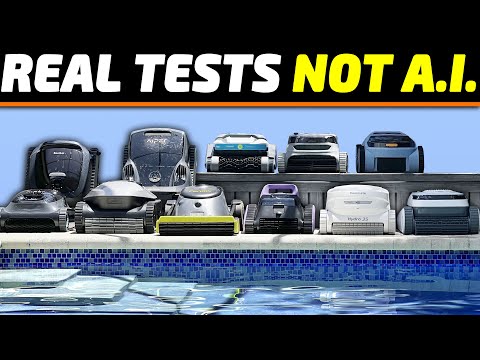
4.1 High-Performance Models for Complex Debris: MOVA Diver A10, Aiper Scuba V3, Dolphin Sigma
If your pool deals with everything at once—fine sand, floating debris, and stubborn algae—you already know the frustration. One pass looks clean… until the sunlight hits and reveals everything you missed.
That’s where high-performance robots separate themselves.
The MOVA Diver A10 is built for heavy-duty scenarios. It combines ultra-fine filtration with strong suction and an aggressive scrubbing approach, including a dual-pass waterline scrubbing system that reaches above the surface. That matters because algae doesn’t stop at the waterline—it starts there. Add in its large debris capacity, and it’s clearly designed for pools that constantly battle sand and residue.
The Aiper Scuba V3 takes a smarter route. Instead of brute force, it uses AI-driven navigation with multi-layer filtration to adjust cleaning paths dynamically. It’s especially useful when debris isn’t evenly distributed—think sand collecting in corners while algae builds along walls.
Then there’s the Dolphin Sigma. It leans heavily into filtration depth and consistency. With NanoFilters™ and continuous corded power, it’s built for long, uninterrupted cleaning cycles—ideal for larger pools or recurring debris problems.
| Model | Filtration Strength | Key Advantage | Best For |
|---|---|---|---|
| MOVA Diver A10 | Ultra-fine + optional micro screen | Strong suction + aggressive waterline scrubbing | Sand + algae-heavy pools |
| Aiper Scuba V3 | Multi-layer MicroMesh™ | AI debris detection and adaptive cleaning | Mixed debris, uneven buildup |
| Dolphin Sigma | Gen-2 NanoFilters™ | Deep, consistent cleaning with no battery limits | Large pools, recurring fine debris |
No single winner here—just different tools for different battles.
4.2 Navigation Technology: AI Mapping vs Traditional Pathing
Here’s something most people don’t realize until they watch closely: not all “smart” robots are actually smart.
AI-driven navigation changes that.
Systems like VisionPath™ or similar sensor-based mapping don’t just map your pool—they react. They detect debris concentrations, avoid obstacles, and adjust routes mid-clean. That means fewer missed spots and less wasted time going over already-clean areas.
Traditional systems like gyroscope-based navigation (used in models like the Dolphin Sigma) are still highly effective. They ensure structured, full coverage with minimal overlap. But they lack that real-time adaptability.
AI Navigation
- Smarter and more efficient
- Better for uneven debris distribution
- Real-time obstacle avoidance
Traditional Mapping
- Predictable and reliable
- Often simpler and more stable
- Consistent full coverage
If your pool gets messy in specific zones—like sand collecting in one end—AI is a noticeable upgrade. If you just want consistent, no-fuss cleaning? Traditional still gets the job done.
4.3 Coverage and Runtime: Corded vs Cordless Trade-offs
This is where convenience meets reality.
Cordless robots sound amazing. No cables, no tangles, just drop it in and go. And honestly? That freedom feels great—especially if you swim often and don’t want a cord floating around.
But there’s a catch.
Battery-powered models have limited runtime. Once the battery runs out, the cleaning stops—whether the job is finished or not. For smaller pools, that’s fine. For larger pools or heavy debris? You may need multiple cycles.
Corded robots, on the other hand, don’t have that limitation. They run as long as needed, delivering consistent suction and full coverage every time. That’s why many high-end models still rely on cords—they prioritize performance over convenience.
"There’s no perfect answer—just what fits your routine. If you want effortless drop-in cleaning, cordless wins. If you want a 'clean it once and forget it' deep clean, corded still dominates."
- Cordless: Easy handling, quick deployment, great for light-to-moderate cleaning
- Corded: Maximum power, longer cleaning cycles, better for deep or large-pool cleaning
4.4 Best Robot by Pool Type and Debris Scenario
Choosing the “best” robot without considering your pool is how people end up disappointed.
Because sand, algae, and mixed debris behave completely differently.
- Sandy Environments: Prioritize ultra-fine filtration and strong suction. Models like the MOVA Diver A10 handle constant fine particle load without letting it slip back into the water.
- Algae Issues: Scrubbing and waterline cleaning matter most. Robots with active brushes and full vertical coverage stop algae at its source.
- Mixed Debris: Flexibility is key. Robots like the Dolphin Premier or Aiper X1 Pro Max with interchangeable filters adapt to changing conditions.
- Smaller/Above-Ground Pools: Simpler models like the Dolphin Escape deliver strong scrubbing without overcomplicating things.
5. Algae Removal Reality Check: What Pool Robots Can (and Can’t) Do
Let’s clear up the biggest misconception right away.
A pool robot does not kill algae.
If you skip chemicals and expect a robot to “fix” a green pool, you’re going to be disappointed—fast. Algae is a biological problem. It needs chlorine or algaecide to be eliminated at the source.
So where does the robot come in? It’s the cleanup crew.
After chemical treatment kills the algae, what’s left behind is a cloud of ultra-fine particles—dead algae floating everywhere. This is the stage where most pool owners get stuck. The water looks worse before it gets better, and your main filter can take 24–48 hours to clear it.
A robotic cleaner speeds that up dramatically.
- Active Scrubbing: Breaks apart remaining biofilm stuck to surfaces and waterlines.
- Ultra-fine Filtration: Captures microscopic particles instead of letting them recirculate.
- Speed: Clears in a single cycle what normally takes days.
And for prevention? Consistency beats intensity. Running your robot regularly removes organic debris—the “food” algae needs to grow. Pair that with proper chlorine levels, and you stop the cycle before it starts.
6. Conclusion
If you’re dealing with fine debris, sand, or algae, the difference between a “good” pool robot and the right one is night and day.
It comes down to three things: ultra-fine filtration, active scrubbing, and full coverage. Skip any one of these, and you’ll keep chasing the same problems—cloudy water, gritty floors, and algae that won’t stay gone.
Match your choice to your pool. Sand-heavy? Prioritize filtration. Algae issues? Focus on scrubbing and waterline cleaning. Mixed debris? Go for flexible, multi-filter systems.
And remember—robots don’t replace chemistry, they complete it.
FAQ
Q: Can a robotic pool cleaner remove algae independently?
A: A pool robot cannot kill algae as it is a biological issue requiring chemical treatment. However, robots with active scrubbing brushes and ultra-fine filters are essential for removing the sticky biofilm from surfaces and capturing dead algae particles after the pool has been shocked.
Q: What is the difference between standard and ultra-fine filtration?
A: Standard mesh filters are designed for large debris like leaves and bugs. Ultra-fine filters, or NanoFilters, can trap microscopic particles as small as 2 microns, effectively removing fine sand, silt, and pollen that typically pass through standard pool filtration systems.
Q: Why is waterline scrubbing important for algae control?
A: Algae thrives at the waterline where sunlight and organic oils concentrate. Robots that specifically feature waterline scrubbing target this high-growth zone, physically breaking down buildup that standard floor-and-wall cleaners often miss, preventing the recurring green ring around the pool edge.
Q: Should I choose a corded or cordless robot for fine debris?
A: For heavy fine debris or sand, corded models are often preferred because they provide consistent, uninterrupted power and suction. Cordless models offer convenience but may have limited runtimes that might not be sufficient for the multiple deep-cleaning passes required for silt removal.
Q: How often should I run my robot to prevent sand buildup?
A: In sandy environments, it is recommended to use the robot's weekly timer to schedule daily cleanings. Frequent short cycles prevent sand from settling into floor textures and corners, making it easier for the ultra-fine filters to maintain water clarity.