
Dolphin Nautilus CC Plus: Spec Analysis & Aggregated Consumer Sentiment (Is It Still Worth It in 2026?)
Aaron Cooper1. Introduction: Why the Dolphin Nautilus CC Plus Still Gets Attention
There’s a reason the Dolphin Nautilus CC Plus keeps showing up in “best pool robot” conversations year after year. It’s not flashy. It’s not cutting-edge. But for a long time, it hit a sweet spot: solid cleaning, simple setup, and a price that didn’t feel outrageous.
Because once you look past the familiar name, two concerns start to surface fast: what it actually does versus what people assume it does, and whether its aging feature set can still compete with newer robots that promise truly hands-off cleaning. Let’s break it down.
2. Core Specs Breakdown: What the Dolphin Nautilus CC Plus Actually Offers
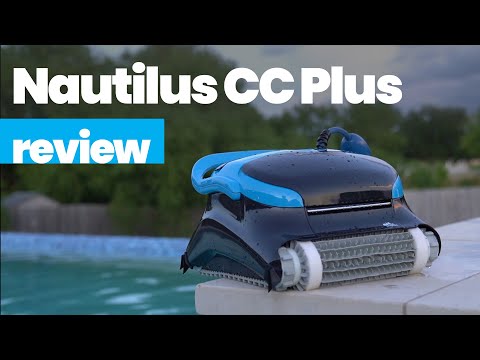
2.1 Cleaning Coverage: Floor and Walls—But Not the Waterline
Let’s start with the part most buyers misunderstand.
On paper, the Dolphin Nautilus CC Plus sounds like it covers your entire pool. In reality, it doesn’t. It handles the floor well and climbs walls—but stops short of the waterline. And that’s not a small omission.
Independent reviews consistently confirm that it delivers floor and wall cleaning only, without waterline scrubbing. That means even after a full cleaning cycle, you’re still grabbing a brush and doing that final, annoying pass yourself.
2.2 Navigation & Mobility: CleverClean vs Real-World Performance
The CC Plus uses something called CleverClean navigation. In simple terms, it’s a scanning system that maps your pool and tries to create an efficient cleaning path—kind of like a robot vacuum learning your living room.
In theory, that sounds great. In practice? It’s… decent.
- Navigates around drains, steps, and ladders
- Non-random movement patterns
- Lacks a gyroscope for precision orientation
Some runs look methodical. Others leave missed patches or require a second cycle. You might even notice it spending more time on the floor than the walls, or climbing halfway up before dropping back down. It gets the job done. Just not always in one perfect pass.
2.3 Filtration System: Fine Filters vs Modern NanoFiltration
Here’s where things start to feel dated. The Nautilus CC Plus relies on standard fine filters (or ultra-fine in some Wi-Fi bundles), accessed through a top-load compartment. That top access is genuinely convenient—you’re not digging into a soggy debris bag.
Compared to newer NanoFiltration systems (think ultra-dense mesh that traps microscopic debris), the CC Plus can leave water looking just slightly… off. Not dirty. But not crystal clear either. And there’s no full filter indicator, so you’re guessing when it’s time to empty it—especially during heavy debris seasons.
2.4 Cycle Time, Weight, and Smart Features
| Feature | Specification |
|---|---|
| Cleaning Cycle | 2 to 3 hours |
| Weight | 19 pounds (dry) |
| Connectivity | Wi-Fi (MyDolphin Plus App) |
| Automation | Weekly Scheduler |
From a usability standpoint, this robot keeps things simple—sometimes a little too simple. No advanced modes. No quick clean. No deep clean toggle.
Physically, it weighs just over 19 pounds. That might not sound like much—until you’re pulling it out of the water, soaked and heavier than expected, without a caddy to help. It’s manageable, but not effortless. The Wi-Fi version adds app control, letting you start, stop, and schedule remotely. Nice convenience—but it doesn’t fundamentally change what the robot can clean.
3. Real-World Performance: Where It Delivers—and Where It Falls Short
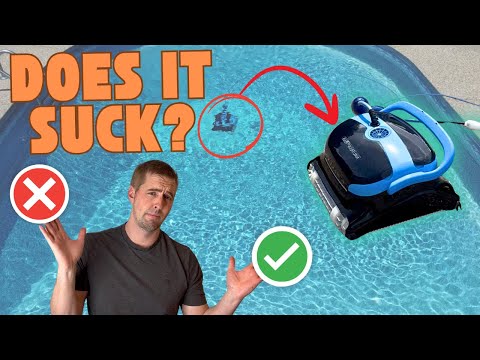
3.1 What Users Like: Simplicity, Reliability, and Plug-and-Play Setup
"It cleans. It stops. You rinse the filter. Done. For many, that's the peak of pool maintenance."
If there’s one reason the Nautilus CC Plus has stayed popular this long, it’s this: it just works. Setup is almost laughably easy. Plug it in, drop it in the pool, press a button. That’s it. No plumbing. No booster pump. No complicated calibration.
The dual brushes do a solid job loosening dirt, and the suction is strong enough to pick up everyday debris without constant babysitting. For routine maintenance—especially in pools that aren’t constantly bombarded with leaves—it delivers consistent, predictable results.
3.2 Common Complaints: Coverage Gaps, Weak Climbing, and Filter Limits
Pros
- Extremely easy plug-and-play setup
- Reliable dual scrubbing brushes
- Convenient top-access filter system
- Solid everyday debris pickup
Cons
- No waterline scrubbing capability
- Inconsistent wall climbing performance
- Lacks advanced NanoFiltration for fine silt
- Can leave missed patches in complex pools
The biggest complaint? Coverage inconsistency. Some cleaning cycles look great. Others leave behind patches—especially in corners, shallow areas, or around steps. Wall climbing is another sticking point. While it can climb, it doesn’t always climb well. Many observations show it reaching only partway up before dropping back down.
3.3 Ownership Friction: Weight, Maintenance, and Warranty Concerns
Living with the CC Plus long-term introduces a few small annoyances that add up over time:
- The Weight Factor: Lifting ~20 lbs out of water repeatedly without a caddy becomes a chore.
- Filter Cleaning: While top-loading is nice, the rinsing and reassembling can feel fiddly compared to modern baskets.
- Warranty Uncertainty: Coverage varies by seller, often falling behind the 3-year protection offered by premium models.
None of these are deal-breakers individually. But together? They chip away at that “effortless pool ownership” promise.
4. Value for Money: Is the CC Plus Still Competitive in 2026?
4.1 What $800 Gets You Today: A Shifting Market Standard
Here’s the uncomfortable truth: the definition of a “mid-range” pool robot has changed.
A few years ago, spending around $800 on something like the Dolphin Nautilus CC Plus felt like a smart, balanced choice. You got reliable cleaning, wall climbing, and a trusted brand. Done.
But fast forward to 2026, and expectations have quietly leveled up.
At this same price point, many newer robots now include features that used to be reserved for premium models—waterline scrubbing, finer filtration systems, and more precise navigation. That means what once felt “complete” now feels… selective.
And this is where the friction starts to show.
That’s the moment where value becomes subjective.
If you’re okay finishing the job manually, it still holds up. But if your expectation is true hands-off cleaning, the market has moved on—and it’s not subtle about it.
4.2 Feature Gap vs Competitors: Sigma, Premier, and Newer Models
Let’s put things side by side, because this is where the gap becomes impossible to ignore.
| Feature | Nautilus CC Plus | Dolphin Premier | Dolphin Sigma | Newer 2026 Mid-Range |
|---|---|---|---|---|
| Waterline Cleaning | ✗ | ✓ | ✓ | ✓ (common) |
| Filtration | Standard / Ultra-Fine | Multi-media | NanoFilters | Often Nano-level |
| Navigation | CleverClean (no gyro) | Advanced | Gyroscope-based | AI / gyro (varies) |
| App Control | Limited (Wi-Fi model) | Basic | Full control | Often enhanced |
| Cleaning Coverage | Floor + partial walls | Full | Full | Full |
On paper, the CC Plus doesn’t look terrible. It still covers the essentials.
But look closer.
It’s missing the exact features that reduce your workload the most.
- No waterline cleaning means manual scrubbing.
- Basic filtration means you might still see cloudy water after a cycle.
- Without gyroscope-based navigation, it simply can’t match the precision of higher-end models.
This is why many comparisons consistently point out that it falls short and leaves a lot of cleaning up for you to do—not because it’s bad, but because everything around it has gotten better.
And once you see that difference in action, it’s hard to unsee.
4.3 Who Should Still Buy It—and Who Should Skip It
So… is there still a place for the Nautilus CC Plus?
Yes—but it’s narrower than it used to be.
Who Should Buy It
- Small pool owners wanting simplicity.
- Users who don't mind manual waterline brushing.
- Those seeking a "plug-and-play" reliable floor cleaner.
Who Should Skip It
- Pool owners seeking a fully automated, hands-off experience.
- Anyone with heavy fine debris or algae issues.
- Buyers who want the latest AI navigation and app features.
It’s the “I just want it clean enough” choice.
5. Final Verdict: Strengths, Trade-Offs, and Buying Guidance
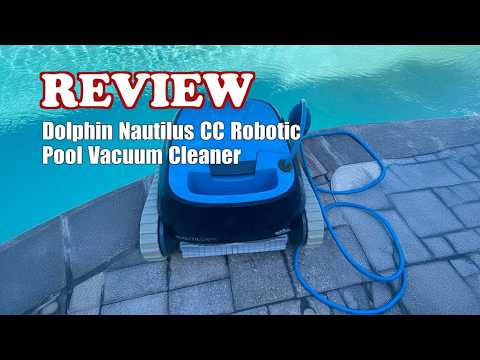
The Dolphin Nautilus CC Plus is a classic case of a product that hasn’t gotten worse—the world around it just got better.
It still delivers where it always has: dependable floor cleaning, simple operation, and a no-fuss setup that anyone can handle. Drop it in, press a button, walk away. There’s real value in that simplicity.
But the trade-offs are no longer easy to ignore.
So here’s the honest guidance.
If you want a reliable, straightforward cleaner for basic maintenance—and you’re okay stepping in to finish the job—it’s still a solid pick.
If you want true automation? Look higher.
Because in 2026, “good enough” and “hands-free” are no longer the same thing.
Check Price on Amazon6. Conclusion: A Good Cleaner—Just Not a Complete One
The Dolphin Nautilus CC Plus hasn’t lost its ability to clean—it just hasn’t kept up with what “complete cleaning” now means.
It handles the basics well. Floors get clean. Walls get attention. Setup is effortless. For many pool owners, that’s still enough.
But the moment you expect more—crystal-clear water, a spotless waterline, zero follow-up work—you start to notice what’s missing.
And that’s the key takeaway.
This is not a bad robot. It’s a partial solution in a market that now offers full solutions at similar prices.
So before you buy, picture your ideal outcome. If you’re okay grabbing a brush now and then, the CC Plus will serve you well. If not, it might be time to aim a little higher—and let the robot actually finish the job.
FAQ
Q: Does the Dolphin Nautilus CC Plus clean the pool waterline?
A: Based on technical specifications and aggregated owner feedback, this model is designed to clean the pool floor and climb walls, but it does not have the waterline scrubbing functionality found in more premium models.
Q: What type of filtration system does this model use?
A: The Nautilus CC Plus utilizes a top-load fine filter cartridge system. While efficient for large debris like leaves and bugs, it may struggle with microscopic particles compared to newer machines equipped with NanoFiltration.
Q: Is the Nautilus CC Plus easy to set up?
A: Yes, consumer consensus highlights its plug-and-play design. It requires no booster pump or complex plumbing, allowing users to begin a cleaning cycle almost immediately after unboxing and connecting the power supply.
Q: How long is a standard cleaning cycle?
A: This robot typically runs for a fixed 2-hour cleaning cycle. It also includes a weekly timer that allows you to schedule it to run every day, every other day, or every three days automatically.
Q: How heavy is the robot for manual removal?
A: The unit weighs approximately 19 pounds. While manageable for many, it becomes significantly heavier when filled with water, and users often recommend a caddy for easier transport and storage.