
Dolphin Pool Robot Keeps Getting Stuck on Main Drain? Here’s the Best Fix (Step-by-Step + Proven Solutions)
Aaron Cooper1. Introduction
You drop your Dolphin into the pool, hit start… and a few minutes later it’s parked прямо on the main drain like it owns the place. Again.
It’s one of those oddly common (and incredibly annoying) issues that catches a lot of pool owners off guard. The robot isn’t broken—it’s just losing a battle against suction, drain design, or its own setup.
2. Quick Fixes You Can Try Right Away (Most Effective First)

2.1 Turn Off the Pool Pump or Reduce Suction
Let’s start with the fix that feels almost too simple—but works shockingly often.
When your Dolphin gets stuck on the main drain, it’s usually not “confused.” It’s pinned down. The pool’s filtration system is pulling water through the drain, creating what many technicians describe as a “suction lock” effect that pins the robot in place. Your robot tries to move… but it’s like driving with the parking brake welded on.
Turn off the pool pump during the cleaning cycle, and suddenly—freedom. No suction. No pinning. Just smooth movement across the floor.
- Lower the RPM if you’re using a variable-speed pump
- Adjust your skimmer diverter to reduce drain pull
- In newer pools, remove the float assembly inside the skimmer to effectively disable the main drain
You’ll literally see the difference within minutes. The robot stops “parking” itself and starts cleaning like it should.
2.2 Use Manual Drive or Change Cleaning Settings
Ever watched your robot slowly crawl onto the drain… hesitate… and then just give up? Yeah, painful.
If your model supports it, manual control via the My Dolphin app (or remote) lets you step in instantly. A quick directional command is often all it takes to break it free without pulling it out of the pool.
But here’s the smarter long-term tweak: adjust the navigation behavior.
Many Dolphin models allow you to modify things like wall-follow delay or turning intervals. Increasing that delay slightly helps the robot build momentum before climbing obstacles—like your drain cover. Instead of stalling out right on top, it rolls over with enough force to keep going.
Think of it like this: A slow roll = stuck. A confident push = clears the obstacle.
It’s a small setting change, but it can completely change how your robot handles tricky spots.
2.3 Change Placement and Cable Setup
Here’s something most people never think about: your robot might be getting stuck… because you’re dropping it in the same place every time.
Dolphin cleaners follow semi-random navigation patterns, but starting position still influences their early path. If you always place it near the same corner, there’s a good chance it heads straight toward the drain early in the cycle—and gets trapped before it even finishes 10% of the job.
Try this instead:
- Start it from a different side of the pool
- Rotate entry points between cleaning cycles
- Avoid placing it facing directly toward the drain
Now layer in cable management. Too much slack can cause the robot to loop back over the same area repeatedly—including the drain. Slightly shortening or repositioning the cable reduces those repeat passes. It’s not about perfection. It’s about breaking the pattern.
2.4 Check Water Level and Basic Setup
This one feels minor… until it isn’t.
Your Dolphin relies on a delicate balance of weight and buoyancy to stay planted while still gliding over obstacles. When the water level drops too low, that balance shifts. The robot can tilt forward slightly—and that’s all it takes for the front edge to catch on a raised drain cover.
Ideal Water Level
- Right around the skimmer opening
- Optimal buoyancy balance
- Better obstacle clearance
Low Water Level Risks
- Reduced buoyancy
- Poor obstacle clearance
- Higher chance of getting stuck
- Filters clean?
- No visible debris in the impeller?
- Brushes moving freely?
Because even a small drop in performance can mean the difference between gliding over the drain… and getting stranded on it.
3. Why Your Dolphin Gets Stuck on the Main Drain
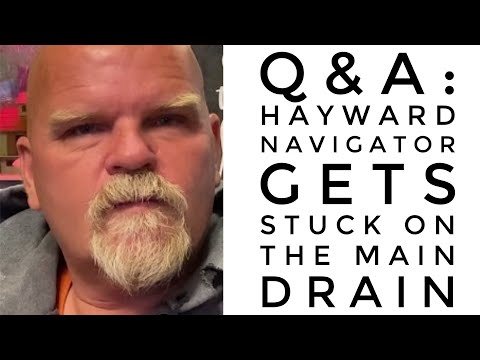
3.1 Drain Design and Physical Obstruction
Not all pool drains are robot-friendly. In fact, many modern ones are the opposite.
Raised, anti-vortex drain covers—designed for safety—often have ridges, edges, or domed shapes. Great for preventing entrapment. Not so great for your robot’s wheels or tracks.
- Wheels losing traction
- Tracks hung up on edges
- The chassis bottoming out
Instead of gliding over, it “perches” on top—like a car stuck on a curb. It’s not just the robot. It’s the geometry of the drain itself.
3.2 Suction Lock vs. Mobility Limitations
Now combine that awkward drain shape with active suction—and things escalate fast.
As explained earlier, the drain pulls water downward. When your robot passes directly over it, that force increases dramatically. At a certain point, the suction becomes stronger than the robot’s ability to drive forward. That’s the tipping point.
The robot isn’t malfunctioning—it’s simply outmatched. Its drive system can’t generate enough torque to break free, especially if:
- The surface is slippery
- The brushes are worn
- The robot approaches at a bad angle
3.3 Maintenance Issues That Make It Worse
Even if your pool setup is less than ideal, a well-maintained Dolphin usually powers through. But once performance drops, the drain becomes a trap.
| Issue | Impact on Performance |
|---|---|
| Clogged filters | Reduce internal water flow and lift |
| Debris in the impeller | Weaker propulsion |
| Worn brushes | Less grip and lower clearance |
| Missing rapid drain flap | Reduced climbing ability |
There’s even data suggesting worn brushes can make robots significantly more likely to snag on obstacles due to reduced ground clearance. Instead of confidently climbing, the robot hesitates… slips… and then gets stuck exactly where it used to pass without a problem.
4. Permanent Hardware Fixes (Drain Covers, Clips & Upgrades)
If you’re tired of babysitting your robot every cycle, this is where things get real. Quick fixes help—but hardware solutions are what actually end the problem.
4.1 Main Drain Clip-Ons: The Most Popular Solution
Let’s start with the fix most pool owners eventually land on.
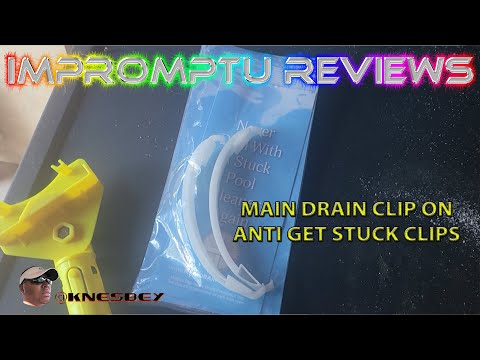
Main drain clip-ons are small devices that attach directly to your existing drain cover. Their job? Simple but brilliant: slightly elevate the robot so it can’t form that tight suction seal that traps it in place.
Instead of your Dolphin sitting flush against the drain (and getting pinned), the clip creates just enough spacing to break the suction effect and destabilize the “stuck” position.
Even better, they come in different sizes to match common drain diameters, and some setups allow using two clips in a cross pattern for extra protection.
The result? Your robot rolls over the drain… and keeps going. No hesitation. No parking.
4.2 Drain Covers and Dome Solutions
If your issue is more about geometry than suction, clip-ons might not be enough.
That’s where dome-style covers or bridge systems come in. Instead of just lifting the robot slightly, these solutions completely change the shape of the obstacle.
Imagine turning a sharp-edged drain into a smooth hill.
That’s exactly what products like dome covers or “bridge-style” solutions do—they create a continuous surface so the robot never gets hung up in the first place. According to troubleshooting guidance, installing a dome-style cover allows the cleaner to glide over the drain instead of catching on edges.
This is especially effective for:
- Raised or anti-vortex drain covers
- Pools where the robot gets physically “perched”
- Situations where suction isn’t the main issue
The trade-off? Slightly more visible hardware in your pool. But for many owners, that’s a small price to pay for a robot that finally runs uninterrupted.
4.3 Impeller Covers and Manufacturer Fixes
Now here’s a lesser-known option that feels almost like a hidden upgrade.
Some Dolphin models support a replacement impeller cover designed to redirect water flow. Instead of pushing water straight up, it angles the flow backward—creating a subtle forward thrust.
Think of it like giving your robot a tiny boost when it needs it most. That extra push can be just enough to break free from a drain or avoid getting stuck in the first place. It doesn’t eliminate the obstacle, but it helps the robot fight back more effectively.
And based on aggregated user feedback, results can vary. Some see a dramatic improvement. Others notice only a slight reduction in getting stuck. Still, if your model supports it, it’s one of the few upgrades that improves the robot itself—not just the environment.
4.4 Compatibility Warnings (Not All Dolphin Models Fit)
Before you click “buy” on any of these fixes—pause for a second.
Not every solution works with every Dolphin model. For example, certain clip-on systems explicitly don’t fit some models like the Dolphin SIGMA. And that’s not a small detail—buying the wrong accessory means wasted time, money, and another frustrating weekend.
Here’s what to double-check:
- Your exact Dolphin model
- Drain size (commonly 8-inch vs. 10-inch covers)
- Compatibility notes from the manufacturer or seller
If you’re unsure, even a quick photo of your drain can help match the right accessory—something many users rely on when choosing clip-ons.
Bottom line? These fixes work—but only when they fit your setup.
5. How to Choose the Right Fix for Your Pool Setup
At this point, you’ve got options. Maybe too many. So how do you actually decide what works for your pool—without wasting money or trial-and-error frustration?
Let’s simplify it.
5.1 If Suction Is the Problem: Start with Pump Adjustments
If your robot feels like it’s being pulled down and pinned, don’t buy anything yet.
This is the classic suction-lock scenario—and it’s often solved in minutes. Turning off the pump during cleaning cycles is the fastest fix. If that’s not practical, reducing RPM or adjusting your skimmer/diverter setup can dramatically lower the pull from the main drain.
In newer pools, even removing the float assembly inside the skimmer can effectively disable the drain altogether.
Once you do, the robot suddenly behaves like it should—moving freely instead of fighting invisible pressure. Start here. Always.
5.2 If It’s a Physical Obstruction: Use Covers or Clip-Ons
Now, if your robot gets stuck even with low suction, you’re dealing with a shape problem. This is where hardware shines.
| Solution Type | Best For |
|---|---|
| Clip-ons | Preventing suction lock and light hang-ups |
| Dome/bridge covers | Raised or aggressive drain designs |
If your robot consistently “climbs and stalls” on the same drain, this is your fix. And the difference is immediate. Instead of getting perched or wedged, the robot transitions smoothly across the drain like it’s just another part of the floor. No hesitation. No intervention.
5.3 If It Happens Occasionally: Optimize Setup and Maintenance
If this only happens once in a while, don’t overcomplicate it. You’re likely dealing with a combination of small factors:
- Slightly dirty filters
- Minor debris in the impeller
- Suboptimal starting position
- Too much cable slack
Fix those first. Clean the filters. Check the brushes. Adjust placement. Shorten the cable slightly. These aren’t dramatic changes—but together, they restore the robot’s ability to handle obstacles without getting stuck. And often, that’s all you need.
6. Conclusion
If your Dolphin keeps getting stuck on the main drain, it’s not random—and it’s definitely not something you just have to live with.
In most cases, it comes down to two things: suction pressure or drain design. Start simple. Turn off the pump or reduce suction, and you might solve the problem instantly. If not, check maintenance and setup—because even small performance drops can tip the balance.
Still stuck? That’s when hardware fixes like clip-ons or dome covers become game-changers.
Do that, and your robot stops getting stuck—and finally does what you bought it for.
Set it. Forget it. Enjoy your pool.
FAQ
Q: Why does my Dolphin robot stop moving when it reaches the drain?
A: This is usually caused by suction lock, where the pool's main pump pulls the robot down, pinning it against the drain. Aggregated data suggests turning off the pool pump or lowering its RPM during the cleaning cycle is the most effective immediate remedy for this issue.
Q: Can I fix the drain issue without buying new parts?
A: Yes, you can often resolve the problem by adjusting your pool's valves to divert suction away from the main drain or by starting the robot from a different location in the pool to break its repetitive navigation patterns toward the obstacle.
Q: What are main drain clips and do they work?
A: Main drain clips are small accessories that snap onto your drain cover to prevent the robot from forming a tight seal. Based on technical reviews, these are highly effective for suction-related stalls but must be checked for size compatibility with your specific drain and robot model.
Q: Does water level affect the robot getting stuck?
A: Yes, low water levels can reduce the robot's buoyancy and shift its weight distribution. This change in balance can cause the front edge of the cleaner to catch on raised drain covers more easily than it would at the ideal water level.
Q: Is my robot's impeller causing it to get stuck?
A: If the impeller is clogged with debris, the robot loses the downward pressure and vertical lift needed to climb over obstacles. Regular maintenance and cleaning of the impeller and filter canisters are essential for ensuring the robot has enough power to clear drains.