
Dolphin Sigma: Gyro Navigation Specs and Real-World Sentiment (Does It Actually Clean Better?)
Aaron Cooper1. Introduction
If you’ve ever watched a pool robot wander aimlessly—missing obvious debris while obsessively re-cleaning the same tile—you already know the biggest frustration isn’t suction or filters. It’s navigation.
That’s exactly why buyers are suddenly paying attention to smarter systems like the Dolphin Sigma’s gyroscope-powered navigation. Instead of “bumping around and hoping for the best,” it promises something very different: awareness, precision, and full coverage.
But here’s the real question: does a 3-axis gyroscope actually translate into a cleaner pool… or is it just fancy marketing? Let’s break down how it works—and what it really changes.
2. How Dolphin Sigma’s 3-Axis Gyroscope + SmartNav 3.0 Actually Works

2.1 3-Axis Gyroscope Explained: How the Robot Tracks Orientation and Movement
At its core, the Dolphin Sigma doesn’t just move—it knows how it’s moving.
The built-in 3-axis gyroscope tracks three types of motion: roll (side tilt), pitch (forward/back tilt), and yaw (rotation). If that sounds abstract, think of how your phone knows when you rotate it—or how an airplane stays stable mid-flight. Same idea, just underwater.
Every time the robot tilts while climbing a wall or pivots around a drain, sensors instantly measure that movement and send data to its onboard processor. This creates a constant feedback loop where the Sigma always understands its orientation, direction, and position in real time.
Why does this matter? Because without that awareness, most pool robots lose track of where they’ve been. That’s when you get missed spots, random patterns, and that annoying “didn’t it just clean that area?” feeling.
With a gyroscope, the Sigma stays grounded. Literally. Even when climbing walls or transitioning across slopes, it maintains balance and direction.
- No drifting.
- No confusion.
- Just controlled movement.
2.2 SmartNav 3.0 + D9 Microprocessor: Real-Time Mapping and Route Optimization
Here’s where things get interesting.
The gyroscope alone is just the “sense of balance.” The real magic happens when it feeds data into SmartNav 3.0—Dolphin’s navigation software powered by its D9 microprocessor.
Instead of reacting randomly, the Sigma actively builds an understanding of your pool as it cleans. It tracks where it’s been, what’s left, and calculates the most efficient path forward.
In practical terms, that means:
- No excessive overlap
- No forgotten zones
- No wasted time circling the same patch of floor
According to industry analysis, this system enables real-time route optimization and coverage tracking, which is exactly what older “random walk” robots lack.
You can actually see the difference in behavior. Rather than zig-zagging unpredictably, the Sigma moves with purpose—long, deliberate passes, clean turns, and quick corrections when encountering obstacles.
And yes, obstacles matter. Ladders, drains, steps—these are where cheaper robots get stuck or confused. The Sigma detects them, adjusts, and then resumes its planned route without losing progress.
2.3 Obstacle Handling, Wall Climbing, and Waterline Precision
Let’s talk about where most pool robots fail: transitions.
Floor to wall. Wall to waterline. Around steps. Into corners.
This is where navigation systems either shine—or completely fall apart.
With the Sigma, the gyroscope plays a critical role in stability. As it climbs vertically, it constantly adjusts its orientation to stay aligned with the surface. That means fewer slips, fewer retries, and more consistent contact with the wall.
The Sigma’s controlled movement allows it to:
- Transition smoothly from floor to wall
- Maintain grip while partially out of water
- Navigate tight corners and curved surfaces
The result? More consistent waterline cleaning and better coverage in those awkward, easy-to-miss zones. Compare that to basic robots that bounce off walls or lose traction halfway up—and you start to see why navigation isn’t just a “nice-to-have.”
3. What the Specs Translate to in Real Cleaning Performance

3.1 Coverage Consistency: Why Gyro Navigation Reduces Missed Spots
Let’s be honest—this is the real pain point.
You run a cleaning cycle, come back a few hours later… and somehow there’s still debris sitting in the same corner. Or worse, a patch of fine dirt that never got touched. That’s not a suction problem. It’s a coverage problem.
Traditional robots don’t remember where they’ve been. They rely on random movement, which means missed spots are inevitable. Over time, it averages out—but not in a single cleaning cycle.
- Fewer untouched patches
- More uniform cleaning across the entire pool
- Less need to rerun cycles
- Frequent missed spots
- Redundant cleaning of same areas
- Inefficient battery/energy use
Review consensus consistently highlights this shift: the Sigma doesn’t just feel smarter—it visibly reduces those frustrating “why is this still dirty?” moments. It’s the difference between random effort and intentional coverage.
3.2 Cleaning Speed and Efficiency Gains (Without Wasted Passes)
Here’s something most people don’t think about: inefficient navigation doesn’t just miss spots—it wastes time.
A robot that keeps revisiting the same areas is burning energy and extending cleaning cycles without improving results. The Sigma approaches this differently.
Because it maps and optimizes its route in real time, it avoids redundant passes and focuses on uncleaned zones. The result is a more streamlined cleaning pattern that feels steady and purposeful rather than chaotic.
| Feature | Dolphin Sigma Performance |
|---|---|
| Cycle Time | Approx. 2.5 hours |
| Movement Pattern | Optimized Real-Time Mapping |
| Efficiency | High (Minimal Redundant Passes) |
That consistency matters more than raw speed. Especially in larger or irregular pools, where inefficient robots can take significantly longer—or still fail to achieve full coverage. With the Sigma, you’re not just saving time. You’re getting more done within that time.
3.3 Hard-to-Reach Areas: Corners, Steps, and the Waterline
Every pool has its problem zones. Tight corners where debris settles. Steps that confuse navigation. Curved transitions that most robots skim over instead of properly cleaning.
These are the areas that usually force you back into manual cleaning. Scrubbing. Brushing. Wasting your weekend. The Sigma is designed to minimize exactly that.
Its gyroscope-guided control allows it to:
- Navigate into corners without overshooting
- Adjust around steps and uneven surfaces
- Maintain precise alignment along the tile line
And because it tracks its position continuously, it doesn’t “forget” to revisit these tricky spots. Independent observations consistently note that it reaches areas many robots skip—especially corners and waterline sections where precision matters most.
Is it perfect? No robot is. But the difference is noticeable. Instead of constantly spotting missed areas after a cycle, you start trusting the result.
And that’s the real upgrade—not just cleaner water, but fewer reasons to grab a brush yourself.
4. Real-World Sentiment: Does the Dolphin Sigma Actually Deliver?

Here’s the uncomfortable truth: there’s no clean, lab-style benchmark showing “X% better coverage” or “Y minutes saved” with gyroscope navigation.
But that doesn’t mean we’re flying blind.
When you zoom out and look at hands-on reviews, technician insights, and long-term user feedback, a few patterns show up again and again—and they’re hard to ignore.
- Consistency: People consistently describe a shift from “random cleaning” to something that actually feels deliberate. Instead of circling the same area or missing obvious debris, the Sigma moves with purpose, covering the pool in a way that looks… planned.
- Coverage: Across multiple real-world evaluations, the Sigma is frequently noted for reaching corners, climbing walls reliably, and maintaining contact along the waterline.
- Results You Can See: Cleaner tile lines. Fewer missed patches. Filters loaded with both large debris and fine particles after a cycle.
In fact, aggregated testing perspectives emphasize complete floor-to-waterline coverage as a defining performance benchmark, and this is exactly where the Sigma stands out.
But let’s keep it honest.
- Deliberate, planned cleaning path
- Reliable wall climbing and waterline scrubbing
- Superior fine particle filtration
- Price is firmly in premium territory
- Finicky Bluetooth connectivity and app setup
- Heavier unit (noticeable when lifting)
Not a gimmick. Not hype. Just a noticeably smarter clean.
5. Sigma vs Other Dolphin Models: Is Gyro Navigation Worth the Upgrade?
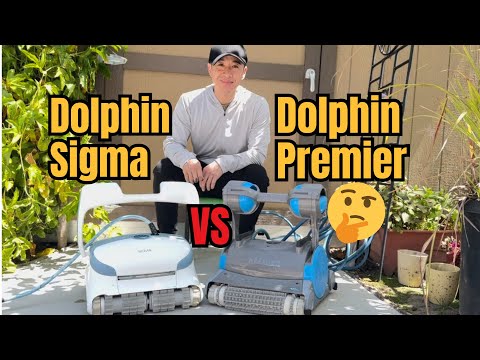
5.1 Sigma vs Premier (SmartNav 3.0 vs 2.0): What Actually Changes?
At first glance, the Dolphin Premier already feels “smart.” It uses SmartNav 2.0, maps your pool, avoids obstacles, and delivers strong, reliable cleaning.
So what does the Sigma actually add? The difference isn’t a dramatic leap—it’s refinement.
With the Sigma’s gyroscope layered into SmartNav 3.0, movement becomes tighter, smoother, and more controlled. Think of it like upgrading from cruise control to adaptive driving. Both get the job done, but one constantly adjusts in real time.
The Premier already avoids ladders and navigates efficiently. The Sigma just does it with more precision and less hesitation. Is it night-and-day? No. But in side-by-side observations, it’s consistently described as a “subtle but noticeable” improvement—especially over longer cleaning cycles where inefficiencies add up.
5.2 Sigma vs Non-Gyro Models: Precision vs ‘Random Walk’ Cleaning
Now this is where the gap becomes obvious. If you’ve ever owned a basic pool robot, you’ve seen the chaos: zig-zagging paths, repeated passes over the same spot, and somehow… still missing debris in plain sight.
That’s the “random walk” problem.
Non-gyro robots don’t truly understand where they are. They react. They bump. They redirect. Over time, they eventually cover the pool—but not efficiently, and not reliably in a single cycle.
The Sigma flips that experience. Instead of wandering, it tracks position, orientation, and coverage in real time. It knows where it’s been—and more importantly, where it hasn’t.
The result feels completely different:
- Movement is structured, not chaotic
- Coverage is intentional, not accidental
- Cleaning feels complete after one cycle, not two or three
This is why many users upgrading from older models describe the change as immediate. It’s not just cleaner—it’s less frustrating. You stop babysitting the robot. And that alone is a huge quality-of-life upgrade.
5.3 When the Upgrade Matters Most (Pool Size, Shape, Complexity)
Here’s where you need to be honest about your pool. Because not every pool needs a gyroscope.
If you have a small, rectangular pool with minimal obstacles, even a mid-range robot can deliver solid results. The gains from gyro navigation will be there—but they’ll feel incremental.
Now picture a different scenario: A larger pool. Curved walls. Steps. A ladder. Maybe a deep end with awkward transitions.
This is where navigation starts to matter—a lot. In these environments, inefficiencies compound quickly:
- Random robots waste time repeating areas
- Missed zones become more common
- Wall and waterline cleaning becomes inconsistent
That’s exactly where the Sigma earns its keep. Its ability to map, track, and adjust in real time means those complexities don’t throw it off course. Instead of struggling, it adapts.
6. Conclusion: Who Should (and Shouldn’t) Choose a Gyro-Powered Pool Robot
If you strip away the marketing, the Dolphin Sigma’s gyroscope does one thing really well: it makes cleaning more intentional.
Not faster in a dramatic, stopwatch sense. Not magically more powerful. Just… smarter. That translates into fewer missed spots, better wall and waterline coverage, and a cleaning pattern that actually makes sense when you watch it.
But it’s not for everyone. If your pool is small and simple, you’ll still get solid results from lower-tier models. The Sigma’s advantages will feel incremental, not essential.
On the other hand, if you’re tired of rerunning cycles, brushing corners by hand, or dealing with inconsistent coverage in a larger or more complex pool—this is exactly the kind of upgrade that changes your experience.
FAQ
Q: How does the gyroscope improve cleaning compared to standard models?
A: Unlike random-path robots, the gyroscope allows the Dolphin Sigma to track its orientation in real-time. This prevents drifting, ensures straight lines, and enables the robot to remember which areas of the pool floor and walls have already been cleaned for total coverage.
Q: Does the Dolphin Sigma clean the waterline effectively?
A: Yes, the gyroscopic stabilization helps the robot maintain balance while climbing walls. This allows it to stay positioned at the waterline longer to scrub away debris and oily buildup more consistently than models without advanced navigation sensors.
Q: Can the Dolphin Sigma handle pools with complex shapes?
A: Highly complex pools are where the Sigma excels. The SmartNav 3.0 system and D9 microprocessor use gyro data to map the environment, allowing the robot to navigate around obstacles like ladders and deep-end transitions without getting stuck.
Q: How long is a typical cleaning cycle for the Dolphin Sigma?
A: A standard cleaning cycle typically takes about 2.5 hours. Because the navigation is optimized to avoid redundant passes, it can often achieve a more thorough clean in this timeframe than less advanced robots.
Q: Does this robot require a remote control for full coverage?
A: No manual intervention is required for coverage. The internal mapping system handles the navigation automatically, though users can use the MyDolphin Plus app for basic remote steering if they wish to spot-clean a specific area.