
Dolphin Triton PS Waterline Scrubbing: Specs, Real Performance & Conflicting Reviews Explained
Aaron Cooper1. Introduction
If you’ve been researching the Dolphin Triton PS, you’ve probably hit the same frustrating wall: one site says it scrubs the waterline, another says it doesn’t. So which is it?
And this isn’t a small detail. The waterline is where grime builds up fastest—oils, sunscreen, algae, and that stubborn scum ring that makes your pool look dirty even when the water is clear. Miss that strip, and you’re back to manual scrubbing. Every week.
In this guide, we’ll cut through the noise. You’ll see what the official specs actually say, how the robot is designed to clean that critical area, and what you should realistically expect once it’s in your pool.
2. Does the Dolphin Triton PS Really Have Waterline Scrubbing?
2.1 Official Specs: Waterline Cleaning Is Listed as a Core Feature
Let’s start with the source of truth: manufacturer specs and consistent product documentation.
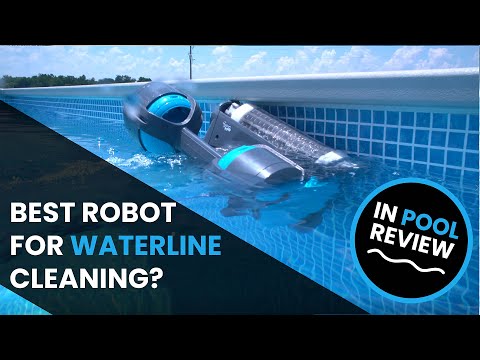
Across official listings and detailed product breakdowns, the Dolphin Triton PS is clearly described as a full-coverage cleaner—meaning it handles the floor, walls, and waterline. In fact, the spec sheet explicitly confirms waterline scrubbing as a built-in feature, alongside a standard 2-hour cleaning cycle and dual-brush system.
That matters more than it sounds. Many entry-level robots stop at the walls. They’ll climb, sure—but then drop before actually scrubbing the tile line. The Triton PS is positioned a step above that, designed to reach and actively clean that upper edge.
- Dual brushes for continuous scrubbing
- An “active brush” that spins faster for more agitation
- Coverage designed for pools up to 50 feet
- A weekly timer for automated cleaning cycles
In other words, on paper, this isn’t a “floor-only” or even “floor + wall” bot. It’s meant to handle the entire pool—including the dirtiest ring.
2.2 How It Cleans the Waterline: Brushes + PowerStream Mobility
So how does it actually pull this off?
Two key systems work together here: active brushing and PowerStream mobility.
First, the brushes. The Triton PS uses a dual-brush setup, but one of them spins faster than standard brushes. Think of it like switching from wiping a surface to scrubbing it. That extra agitation is what helps break up the oily फिल्म and early-stage algae that cling to the tile line.
Then there’s PowerStream mobility. This is essentially a system of directional water jets that help the robot stay stable while climbing. Without it, most robots lose grip or drift when they hit vertical surfaces.
This combination is why many product descriptions refer to it as being “nimble” on vertical surfaces. It’s not just climbing for coverage—it’s staying there long enough to do meaningful work.
2.3 Where the Confusion Comes From (And Why Some Sites Say ‘No’)
Now let’s address the elephant in the room: why do some sites flat-out say the Triton PS doesn’t have waterline cleaning?
It usually comes down to one critical misunderstanding—confusing wall climbing with waterline scrubbing.
| Function | Action Description |
|---|---|
| Wall climbing | The robot can drive up the wall |
| Waterline scrubbing | The robot reaches the top, stabilizes, and actively cleans along that line |
Some reviews (like the Poolbots page) claim the Triton PS lacks waterline cleaning entirely. But at the same time, more detailed product documentation explains that cleaning the waterline is a distinct function—not something every wall-climbing robot can do.
Bottom line: climbing alone doesn’t equal cleaning. But based on consistent spec sheets and product descriptions, the Triton PS is designed to do both.
3. Real-World Waterline Performance: What You Can (and Can’t) Expect
Here’s where things get a bit more nuanced.
There’s a noticeable gap when it comes to hard, model-specific performance data for the Triton PS. No controlled lab metrics. No quantified “algae removal rates” or tile-by-tile comparisons. That kind of precision simply isn’t available.
But we can still piece together a realistic expectation from consistent patterns in product descriptions and user feedback.
Pros
- Reaches and scrubs the waterline consistently
- Helps control oily buildup and scum rings
- Significantly reduces frequency of manual maintenance
Cons
- Not a miracle worker for hardened calcium deposits
- May struggle with thick, baked-on algae blooms
- Occasional manual touch-ups still required for perfect results
First, the good news: the Triton PS does reach the waterline and scrub it. That’s not theoretical—it’s baked into how the robot is designed to move and clean. Owners consistently highlight that it helps control buildup, especially when run multiple times per week. In regular maintenance scenarios, that’s exactly what you want: prevention, not rescue.
Now the reality check.
When you’re dealing with heavier problems—like an algae bloom or hardened calcium deposits—the robot isn’t a miracle worker. One user noted that while it scrubbed away some algae during an early cleanup, it didn’t remove everything. Manual brushing was still needed to finish the job.
And honestly? That’s normal. Even higher-end robotic cleaners struggle with thick, baked-on residue at the tile line.
So what does that mean for your day-to-day life?
- Run it regularly → cleaner waterline, less visible buildup
- Skip maintenance for weeks → expect to step in with a brush
- Deal with heavy scaling or stubborn grime → manual help required
It’s not 100% hands-off. But it dramatically cuts down the worst part of pool cleaning. And if you’ve ever spent a Saturday scrubbing that greasy tile ring by hand… that trade-off feels more than fair.
4. Triton PS vs Other Dolphin Models: Is the Waterline Cleaning Competitive?

4.1 Triton PS vs Triton PS Plus: Same Cleaning, More Control
At first glance, the Triton PS and Triton PS Plus look like twins—and in terms of raw cleaning ability, they basically are.
Both models are built to clean the full pool: floor, walls, and waterline. That means the same core promise holds true—you’re not stuck scrubbing that greasy tile ring every weekend. The brushes, coverage, and overall cleaning behavior are fundamentally similar.
So where does the “Plus” actually earn its name?
Control and convenience.
The PS Plus adds Wi-Fi connectivity and app-based navigation, letting you manually steer the robot or schedule cleans from your phone. It also includes more flexible cleaning modes. In real-world use, that means you can target problem spots instead of waiting for the robot to eventually pass over them.
If you love tweaking settings and steering your robot like a remote-control car? Then the PS Plus starts to make more sense.
4.2 Entry-Level vs Premium Models: Filtration and Power Trade-Offs
This is where things get more interesting—and where expectations need to be grounded.
The Triton PS sits in that middle sweet spot. It has full coverage, including waterline scrubbing, but it skips some of the high-end extras found in premium models like the Dolphin Premier.
Here’s a clear breakdown:
| Feature | Triton PS | Triton PS Plus | Dolphin Premier |
|---|---|---|---|
| Waterline Cleaning | Yes | Yes | Yes |
| Cleaning Coverage | Floor, walls, waterline | Floor, walls, waterline | Floor, walls, waterline |
| Filtration | Standard mesh | Standard mesh | Multi-media (incl. NanoFilters) |
| Smart Control | No | Yes (App) | Yes |
| Cleaning Cycle | 2 hours | 2 hours | Longer cycle |
| Warranty | 2 years | 2 years | 3 years |
So what does this actually feel like in day-to-day use?
The biggest difference isn’t whether the waterline gets scrubbed—it’s how “polished” your pool looks afterward.
Without NanoFilters, the Triton PS can miss ultra-fine debris like dust or cloudy particles. That doesn’t stop it from scrubbing the tile line, but it can affect that crystal-clear finish, especially after heavy use or storms.
Premium models go further. More filtration options. Slightly stronger overall cleaning systems. Longer cycles. The result? A more refined clean—but not necessarily a dramatically different experience at the waterline itself.
4.3 Value for Money: Who Should Choose the Triton PS?
Let’s be real: nobody buys a robotic pool cleaner just for fun. You’re buying your time back.
The Dolphin Triton PS hits a very specific balance. It gives you full pool coverage—including active horizontal waterline scrubbing—without pushing you into premium pricing territory.
Ideal For
- Automating regular pool maintenance
- Waterline cleanliness (without needing perfection)
- Simple “drop it in and go” operation
- Users who don't need app controls or advanced filtration
Not Ideal For
- Pools with constant fine dust or heavy debris
- Owners seeking showroom-level sparkle daily
- Users who require remote manual steering
But for most pool owners? It removes the most annoying job—the weekly scrub—without overcomplicating your setup.
5. Key Limitations to Know Before You Rely on Waterline Cleaning
5.1 No Fine Performance Metrics on Tiles, Algae, or Calcium
Here’s something most reviews don’t say clearly enough: there are no hard performance benchmarks for how well the Triton PS removes specific types of buildup.
- No measured algae removal rates.
- No side-by-side tile cleaning scores.
- No quantified calcium scale results.
Instead, everything is described in broad terms—“intense scrubbing,” “effective cleaning,” “powerful brushing.”
That can be frustrating if you’re trying to predict exactly what will happen in your pool.
It’s designed to keep your waterline clean over time—preventing buildup from becoming a problem. But if you’re already dealing with thick white calcium deposits or a slippery green algae layer, don’t expect a single cycle to erase it.
It helps. It improves things. But it doesn’t replace chemical balancing or occasional manual scrubbing.
5.2 Filter Limitations Affect Overall Cleaning Results
Let’s talk about something that quietly impacts your perception of “clean”: filtration.
The Triton PS uses standard mesh filters. They’re great for leaves, bugs, and visible debris. You’ll absolutely notice cleaner floors and fewer floating particles after a cycle.
But when it comes to fine dust or cloudy residue?
That’s where the limitations show up. Those ultra-fine particles can stay suspended in the water or settle back onto surfaces—including near the waterline. So even if the robot scrubs the tile, the pool might not look as polished as you expect.
It’s a bit like vacuuming with a basic filter—you’ve cleaned the room, but the air still feels dusty.
There is a workaround: optional finer filters exist, but they’re not always included by default. And compared to premium models with built-in multi-stage filtration, this is one of the clearest trade-offs.
5.3 Still Not 100% Hands-Off in Tough Conditions
Let’s address the expectation head-on: no robotic cleaner fully replaces you.
And the Triton PS is no exception.
In ideal conditions—balanced water, light debris, regular use—it dramatically reduces manual work. You’ll spend less time brushing, less time dealing with buildup, and more time actually enjoying your pool.
But push it into tougher scenarios, and reality kicks in:
- Heavy algae bloom: partial removal, manual brushing still needed
- Calcium scaling: may loosen it, but not fully remove it
- Complex shapes (steps, benches, curves): inconsistent coverage
Even closely related models struggle with these same challenges, especially around tricky surfaces and vertical transitions.
So what’s the takeaway?
The Triton PS gets you 80–90% of the way there. You handle the last 10–20%.
And compared to doing everything by hand? That’s still a massive win.
6. Conclusion: Should You Trust the Triton PS for Waterline Cleaning?
So, does the Dolphin Triton PS actually scrub the waterline?
Yes—despite the confusion, the specs and consistent product descriptions all point in the same direction: it’s built to clean the floor, walls, and that stubborn tile line where grime loves to collect.
But here’s the honest expectation.
It’s excellent for maintenance. Run it regularly, and you’ll see a noticeably cleaner waterline with far less effort. The kind where you stop dreading that weekly scrub.
It’s not a miracle worker. Heavy algae, calcium buildup, or tricky pool features will still need occasional hands-on attention.
And that’s really the trade-off.
If you want a simple, reliable robot that handles the bulk of the dirty work—without overcomplicating things—the Triton PS absolutely earns its place. If you’re chasing perfection? That’s when it’s worth looking higher up the lineup.
Check Price on Amazon
FAQ
Q: Does the Dolphin Triton PS truly scrub the waterline?
A: Based on technical specifications and design analysis, yes. It uses PowerStream mobility to stabilize itself at the top of the pool wall, allowing its active brushes to scrub the tile line and remove oily buildup and grime.
Q: What is the difference between the Triton PS and Triton PS Plus?
A: Both robots offer identical scrubbing performance for floors, walls, and waterlines. The 'Plus' model adds convenience through Wi-Fi connectivity and smartphone app control, allowing for remote scheduling and manual steering features not found on the standard model.
Q: Will the Triton PS remove heavy algae from the waterline?
A: Technical data and user reports indicate it is highly effective for preventing algae buildup. However, for established blooms or thick layers, it may only partially remove the debris, necessitating a manual scrub or chemical treatment to finish the job.
Q: How long is the cleaning cycle for the Triton PS?
A: The Triton PS is programmed with a standard 2-hour cleaning cycle. During this time, it utilizes smart navigation to cover the floor, climb the walls, and traverse the waterline for comprehensive pool coverage.
Q: Does it come with ultra-fine filters for small particles?
A: The standard Triton PS typically ships with a large-capacity fine mesh filter basket. While this is excellent for leaves and bugs, users seeking to capture sand or silt may need to purchase ultra-fine filter inserts separately.