
Hayward TigerShark QC: Aggregated Owner Experiences (Pros, Failures & Should You Still Buy It?)
Aaron Cooper1. Introduction
If you’ve been eyeing the Hayward TigerShark QC, you’ve probably seen wildly conflicting opinions. Some owners swear it’s a decade-long workhorse that quietly keeps their pool spotless. Others? They describe early breakdowns, frustrating repairs, and a machine that never quite “figures out” their pool.
So what’s the truth?
This guide cuts through the noise by aggregating real owner experiences—both the glowing and the brutal—to uncover clear patterns in reliability, performance, and long-term value. Because when you’re investing this much to avoid scrubbing your pool every weekend, the last thing you want is regret.
2. Long-Term Reliability: Does the TigerShark QC Actually Last?
2.1 Best-Case Scenarios: 8–11 Years of Use with Minor Maintenance
Let’s start with the dream scenario—the one every pool owner hopes for.
In the most positive cases, the TigerShark QC behaves like that one appliance you forget about because it just… works. Drop it in, walk away, and come back to a clean pool. Over and over again. For years.
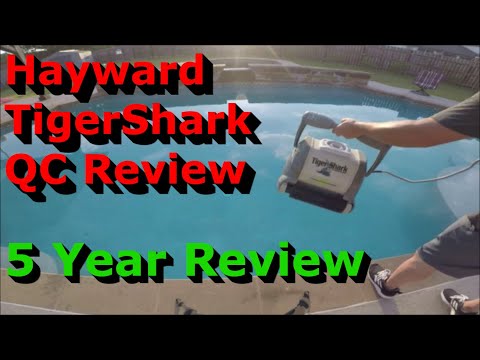
There are multiple long-term ownership stories describing 8 to 11 years of use, where the only real “maintenance” involved replacing wear-and-tear parts like filters, foam rollers, or treads. No catastrophic failures. No constant repairs. Just routine upkeep—similar to changing tires on a car.
And when it works like this, it’s incredibly satisfying. You’re not thinking about your pool. You’re not dragging out hoses. You’re not manually vacuuming for an hour. It just gets done.
That’s the high point. And honestly—it’s a very high one.
2.2 Worst-Case Scenarios: Failures Within Months to 2–3 Years
Now for the other side—and it’s a sharp contrast.
Because for every “10 years no problem” story, there’s another where things fall apart shockingly fast. We’re talking failures within months, or just outside the warranty window—arguably the most frustrating timing possible.
Some owners report power supply units failing almost immediately. Others describe cleaners that worked “okay” for about a year, then suddenly lost climbing ability or stopped functioning properly altogether. And then comes the real pain: trying to fix it.
And here’s where the emotional frustration peaks: several breakdowns happen just after warranty coverage ends. That moment when you realize you’re now paying out of pocket? Brutal.
It’s not just inconvenience. It’s losing the very thing you paid for—time.
2.3 Common Failure Patterns: Power Supply, Motor, and Structural Weak Points
When you zoom out and look across dozens of owner reports, some patterns start to repeat.
- Power supply: Multiple accounts point to early or sudden failures here—sometimes even right out of the box.
- Motor-related issues: Declining performance—like weaker climbing or incomplete cleaning—was eventually linked to suspected motor problems or expensive internal repairs.
- The handle: There are repeated complaints about handles snapping, sometimes more than once, occasionally damaging the unit in the process.
To be clear, there’s no official failure-rate dataset. Even the available research acknowledges a lack of formal statistics on these issues. But the consistency of anecdotal reports is hard to ignore.
At a high level, this aligns with broader sentiment data, where aggregated user ratings land at around 2.6–2.8 out of 5 stars across review platforms—a signal that reliability is, at best, inconsistent.
So what do you get?
A machine that can last a decade… or one that becomes a headache far sooner.
That unpredictability is the real story.
3. Real-World Cleaning Performance: Where It Shines—and Where It Struggles
3.1 Cleaning Strengths: Strong Debris Pickup and Full-Pool Coverage (When It Works)
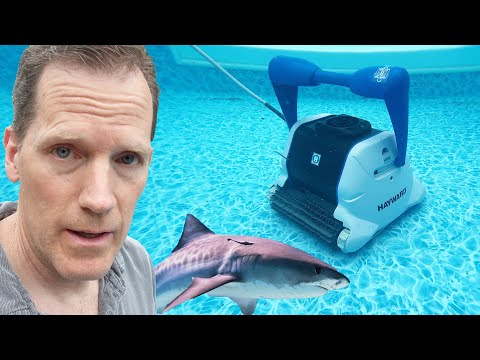
When the TigerShark QC is dialed in, it delivers the kind of clean that makes you stop and stare at your pool for a second.
We’re talking about visibly clearer water after a single cycle—fine silt gone, leaves scooped up, and that “gritty” feeling underfoot completely eliminated. Some owners even describe being surprised by how much hidden debris it pulled out, especially after switching from manual vacuuming.
And it’s not just the floor. In its best moments, the cleaner tackles walls, waterline, and even steps, giving you that full-pool coverage that makes robotic cleaners so appealing in the first place.
This aligns with its intended design: a self-contained unit that handles everything internally—no extra hoses, no reliance on your pool’s filtration system, just drop it in and let it go.
When it behaves like this, it feels like a true upgrade. Less effort. Less time. More swimming.
3.2 Navigation Issues: Repeating Areas, Missing Zones, and Getting Stuck
But here’s where things start to unravel.
One of the most common frustrations isn’t suction power—it’s behavior. Specifically, how the TigerShark QC moves.
Instead of methodically covering the pool, many owners report it cleaning the same section repeatedly. You’ll watch it obsess over one corner while completely ignoring another. The shallow end? Sometimes barely touched.
Some users try workarounds—changing the starting position, flipping the handle orientation—but results vary. On simpler pool shapes, it may eventually cover everything. On more complex layouts, it can feel random at best.
3.3 Wall Climbing and Steps: Inconsistent Performance Across Pools
Wall climbing is one of those features that sounds amazing—until it doesn’t work consistently.
In some pools, the TigerShark QC climbs like a champ, reaching the waterline and scrubbing away buildup. In others, it struggles—either slipping, stopping halfway, or avoiding walls altogether after a short time.
And here’s the tricky part: performance can change over time.
There are reports of units that initially climbed well but gradually lost that ability, even after basic maintenance like filter cleaning. Others never quite managed steps or shallow ledges at all.
Pool conditions matter—things like surface texture, debris, or even slight algae can impact traction—but from an owner’s perspective, that nuance doesn’t make it less frustrating.
You bought a robot to clean everything. Not just the easy parts.
3.4 Usability Pain Points: Cable Tangling and Filter Maintenance
Now let’s talk about the everyday annoyances—the ones that don’t show up on spec sheets but absolutely affect your experience.
The biggest one? The cable.
Because the TigerShark QC lacks a swivel mechanism, the cord has a tendency to twist and tangle over time. And not just slightly—we’re talking about stopping mid-clean to untangle it, or dealing with a coiled mess before every use. According to aggregated feedback, this is one of the most consistently reported issues, with the lack of a swivel cord leading to frequent tangling during normal operation as highlighted in multiple owner reports.
Then there’s filter maintenance. While the filters are technically removable and rinseable, some users find them awkward to take out—especially when fine debris gets lodged in the housing. It’s not a dealbreaker, but it’s not exactly effortless either.
Pros
- Strong debris pickup (fine silt and leaves)
- Self-contained filtration system
- Durable basic design in best-case scenarios
Cons
- No swivel cord leading to constant tangling
- Inconsistent navigation and "stuck" points
- Unpredictable long-term electronics reliability
4. Ownership Costs: Repairs, Warranty Reality, and Service Experience
4.1 Repair Costs That Can Exceed the Value of the Cleaner
Here’s the part most buyers don’t think about—until it’s too late.
You buy a robotic cleaner to save time. But what happens when it breaks?
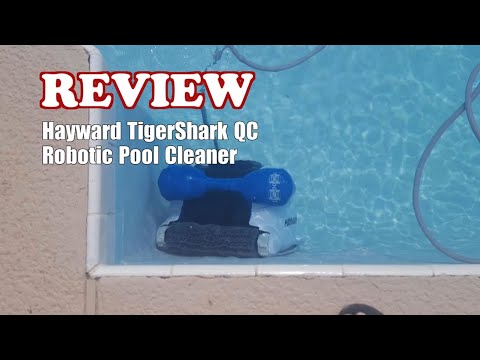
Now imagine this moment: your pool is getting cloudy, your robot is out of action, and you’re staring at a repair bill that rivals the cost of a brand-new cleaner.
That’s when many owners make the same decision—walk away.
Some even abandon the unit entirely rather than pay for repairs, especially after multiple failures. And emotionally, it stings. You didn’t just lose a machine—you lost the time-saving promise you paid for in the first place.
4.2 Warranty Experience: Delays, Frustration, and Limited Direct Support
A warranty should feel like a safety net. For many TigerShark QC owners, it feels more like a maze.
One recurring frustration is the lack of direct manufacturer communication. In some regions, customers can’t even contact Hayward directly—they’re forced to go through retailers. That adds layers. And delays.
We’re talking weeks… sometimes months… just to get updates.
There are also cases where units were sent in for repair, only to be returned with the same issue unresolved. That’s the kind of experience that erodes trust fast. You’re left chasing answers, without your cleaner, while your pool maintenance workload quietly creeps back in.
Even when warranty claims are accepted, the process itself can feel slow and opaque. And when peak swim season hits? That downtime hurts even more.
4.3 Value for Money: Premium Price, Mixed Satisfaction
Let’s zoom out.
The TigerShark QC has historically sat in the premium price tier—often around $1,200 or more based on documented owner purchases. That puts it firmly in competition with some very capable modern robotic cleaners.
So the big question: does it deliver premium value?
The answer, based on aggregated owner sentiment, is… inconsistent.
On one hand, you have users who got years of reliable service and feel it paid for itself many times over. On the other, you have buyers who experienced early failures, expensive repairs, and lingering frustration.
One owner summed it up bluntly after years of use: it simply wasn’t worth what they paid.
And when you combine that with overall sentiment trends—like the low average ratings across aggregated user reviews—a clear pattern emerges:
5. Is the TigerShark QC Still Worth Buying Today?
5.1 Who It Might Still Work For
Let’s be fair—this cleaner isn’t a disaster for everyone.
If you have a simple, rectangular pool with minimal obstacles, the TigerShark QC can still deliver a satisfying experience. In these environments, its behavior tends to be more predictable, and over time, it often manages to cover most of the pool.
For users who prefer that “old-school reliability” and don’t mind occasional hands-on adjustments—like repositioning the cleaner or untangling the cord—it can still feel like a solid, no-frills tool.
And when it works? It really works.
You come back to a pool that looks clean enough to jump straight in. No scrubbing. No vacuuming. Just done.
5.2 Who Should Avoid It
Who It's For
- Simple rectangular pools
- Users seeking "no-app" simplicity
- Occasional hands-on maintenance is okay
Who Should Avoid It
- Pools with complex shapes or ledges
- Users wanting a fully hands-off experience
- Those sensitive to high repair costs/delays
Now the hard truth.
If your pool has complex shapes, steps, ledges, or multiple depth transitions—this is where frustration starts to build.
Because the TigerShark QC doesn’t use modern navigation systems (like advanced mapping or gyroscopic sensors), it can behave unpredictably. Repeating areas. Missing spots. Getting stuck.
And if you’re expecting a fully hands-off experience?
This probably isn’t it.
Add in the risk factors we’ve already covered—repair costs, warranty delays, inconsistent reliability—and it becomes a tougher sell for buyers who just want something that works without drama.
Especially if you don’t have the patience (or time) to troubleshoot, follow up on repairs, or deal with downtime during peak pool season.
For these users, the experience can quickly shift from convenience… to chore.
5.3 What Modern Alternatives Do Better
Here’s where things get interesting.
The robotic pool cleaner market has evolved—a lot.
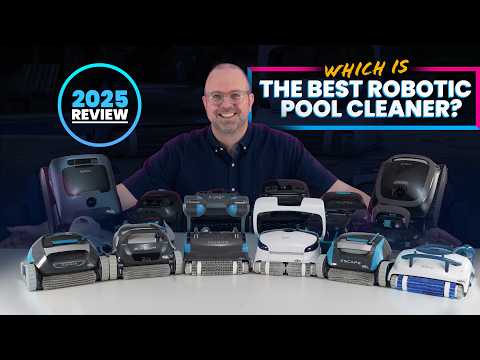
Modern units now focus heavily on automation, smarter navigation, and reducing the exact pain points TigerShark QC owners complain about.
For example:
- Smarter navigation systems help cleaners map the pool and avoid cleaning the same spot repeatedly
- Anti-tangle swivel cords dramatically reduce cable frustration
- Advanced filtration systems (like finer cartridge or “nano-style” filters) capture smaller debris more effectively
- Features like weekly timers allow true “set-it-and-forget-it” cleaning
In fact, many newer models are designed so you barely interact with them at all. As highlighted in broader industry comparisons, features like scheduled cleaning cycles can turn pool maintenance into something you think about once a week—not every day.
And that’s the real shift.
From “robotic helper”… to “fully automated system.”
When you compare that to the TigerShark QC’s more manual, trial-and-error experience, the gap becomes obvious.
6. Conclusion
The Hayward TigerShark QC is a classic case of “it depends.”
At its best, it’s a durable, simple machine that can quietly clean your pool for years with minimal fuss. At its worst, it’s a frustrating investment—plagued by inconsistent performance, expensive repairs, and slow service experiences.
That unpredictability is the real issue.
If you value simplicity and have the right pool setup, it might still work for you. But if you’re looking for a modern, hands-off experience with reliable support, newer robotic cleaners have clearly moved the bar forward.
In the end, this isn’t just about cleaning performance.
It’s about protecting your time.
And today, there are safer bets for doing exactly that.
FAQ
Q: Does the Hayward TigerShark QC have a swivel cable?
A: No, this model lacks a mechanical swivel. Based on owner feedback, the cable is prone to twisting and tangling during its cleaning cycle, often requiring manual untangling to maintain full pool coverage.
Q: Can the TigerShark QC clean pool steps and waterlines?
A: While designed to climb walls and reach the waterline, performance varies by pool surface and shape. Data suggests it excels on flat floors but may struggle with traction on complex steps or ledges.
Q: How long does a typical cleaning cycle take?
A: The TigerShark QC features a Quick Clean mode for 90-minute touch-ups and a standard 3-hour full cleaning cycle for deep scrubbing of the floor, walls, and waterline areas.
Q: Is the TigerShark QC easy to maintain?
A: Maintenance is relatively simple with a reinforced cartridge filter system. Owners report that rinsing the filters is straightforward, though the unit's weight makes lifting it out of the pool physically demanding.
Q: What are common failure points for this model?
A: Aggregated consumer sentiment identifies the power supply unit and the handle as common structural weak points, with some users reporting internal motor issues after two to three years of service.