
Paxcess Cordless Pool Cleaner: Data-Driven Pros and Cons (Performance, Pitfalls & Is It Worth It?)
Aaron Cooper1. Introduction
Cordless pool robots are having a moment—and it’s easy to see why. No hoses snaking across your deck, no booster pumps humming in the background, no complicated setup that turns a “quick clean” into a weekend project. Just drop it in and walk away.
The Paxcess Cordless Pool Cleaner sits right at the center of this trend, promising a simple, budget-friendly way to keep your pool floor and waterline under control. But here’s the real question: does it actually deliver in day-to-day use, or does the low price come with frustrating trade-offs? Let’s break down where it genuinely works—and where it doesn’t.
2. Real-World Performance: Where the Paxcess Cleaner Works Well
2.1 Strong Basic Cleaning: Debris Pickup and Coverage Speed
Let’s start with the part that actually matters most: does it clean your pool, or just wander around looking busy?
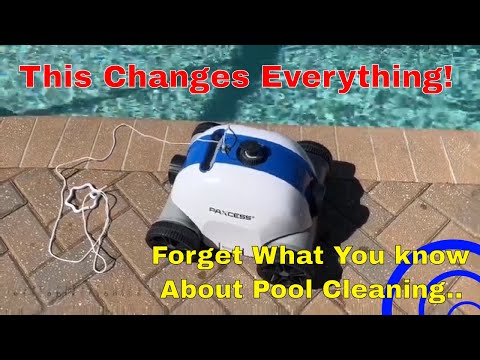
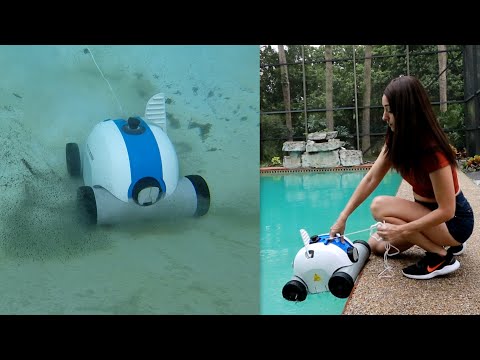
In everyday scenarios—think leaves, dirt, sand, and the random debris that shows up after a windy afternoon—the Paxcess does a surprisingly solid job. Its design leans on two large suction doors paired with a bottom brush, which work together to scoop and guide debris into the filter as it moves. And it doesn’t crawl—it moves with purpose. Faster movement means it can cover a decent portion of the pool floor within a single cycle.
Across multiple real-world reviews and testing summaries, there’s a consistent takeaway: it does a “credible job” on visible debris. Not perfect. But reliable enough that you’ll notice the difference after one run.
Picture this: you wake up, glance at the pool, and see scattered leaves and grit. Drop the cleaner in, grab a coffee, come back—and the mess is gone. That’s where Paxcess shines. It doesn’t overpromise. It just handles the basics well.
For routine maintenance? It works. And for many pool owners, that’s already a huge win.
2.2 Cordless Convenience: Why Ease of Use Is Its Biggest Strength
If you’ve ever wrestled with a traditional pool cleaner, you already know the pain: tangled hoses, awkward connections, adjusting suction lines, and somehow still ending up wet before you even start.
This is where Paxcess completely flips the experience.
- No hoses: Eliminates the trip hazard and storage headache.
- No installation: Works out of the box without professional help.
- No booster pump: Saves on energy costs and equipment wear.
At around 12 pounds, it’s also manageable to lift in and out of the pool—something that matters more than you think after a long day. And because it’s fully cordless, there’s zero risk of tangling or drag slowing it down mid-cycle.
This simplicity isn’t just a nice-to-have—it’s the core reason people choose it. In fact, many users consistently rate it highly for usability, with feedback clustering around how “easy” and “quick” it is to deploy. Some summaries even point to an overall strong ease-of-use rating backed by consistent user feedback.
2.3 Waterline Cleaning and Multi-Surface Compatibility
Now here’s something that often gets overlooked: not all pool cleaners handle the waterline well—and that’s exactly where grime loves to build up.
The Paxcess can climb enough to reach and scrub along the waterline, which makes a visible difference over time. That thin ring of oils, sunscreen, and debris? It doesn’t just sit there anymore.
It’s not a full wall-climbing powerhouse (we’ll get to that later), but for surface-level cleaning, it absolutely pulls its weight.
Even better, it’s not picky about pool types. Whether you’re dealing with vinyl, fiberglass, or concrete, it’s designed to operate safely across all of them. That versatility makes it a practical choice for a wide range of residential pools—especially if you don’t want to stress about compatibility.
So what does this mean in real life? It means fewer manual touch-ups. Fewer moments where you’re standing there with a brush thinking, “Didn’t I just clean this yesterday?”
3. Where It Struggles: Navigation, Stuck Issues, and Design Limitations
3.1 Random Navigation vs. Smart Mapping: The Biggest Trade-Off
Here’s the catch—and it’s a big one.
The Paxcess doesn’t “think” its way around your pool. There’s no smart mapping, no LiDAR (laser-based spatial awareness), no optimized path planning. Instead, it follows what’s best described as a random back-and-forth movement pattern observed in real-world use.
You can’t tell it where to go. You can’t prioritize dirty zones. You’re essentially hoping it “happens” to pass over problem spots. And sometimes, it just… doesn’t.
This is the fundamental trade-off: you’re saving money, but giving up precision. For some users, that’s acceptable. For others, it becomes frustrating fast.
3.2 Getting Stuck on Steps: A Real-World Frustration
Now let’s talk about the issue that frustrates people the most: getting stuck.
If your pool has curved steps—especially those rounded “wedding cake” designs—this cleaner can struggle. The geometry creates situations where the wheels lose proper contact with the surface, leaving the robot awkwardly perched and unable to move.
And it’s not a rare occurrence. In documented real-world use, the cleaner has been observed getting stuck multiple times in a single cycle—sometimes almost immediately after being dropped into the pool. When that happens, it doesn’t intelligently recover. It just sits there… until it randomly frees itself or you step in.
Imagine expecting a hands-off cleaning session, only to check back and realize it’s been stuck in the same spot for minutes. That’s not just annoying—it defeats the whole purpose of automation.
3.3 Limited Wall Climbing and Slope Handling
At a glance, it looks like the Paxcess climbs walls. And technically, it does—to a point. It can reach and scrub along the waterline, which gives the impression of full wall-cleaning capability. But underneath that is a clear limitation: it’s not designed for steep inclines.
The maximum slope it can handle is around 15°, which is relatively shallow. In deeper pools or designs with steeper walls, it simply won’t maintain traction long enough to climb effectively. So what happens? It sticks mostly to the floor and lower wall sections. The upper walls? Often left untouched.
In short: it’s a partial climber, not a full one.
3.4 Filtration Limits: Why Fine Debris and Algae Are a Challenge
Here’s where expectations really need to be grounded.
The Paxcess uses a filter system rated around 170 microns, which is perfectly fine for larger debris like sand, dirt, and leaves. But when it comes to finer particles—like algae or very fine silt—it falls short.
Pros
- Excellent for leaves, sand, and visible dirt.
- Easy cordless deployment.
- Multi-surface safe.
Cons
- Struggles with fine silt and algae (170-micron limit).
- Random navigation can miss spots.
- Low slope tolerance (15° max).
There’s also a practical annoyance: the filter is a one-piece design, which makes it a bit more tedious to clean compared to modular systems where you can quickly rinse and reset.
So what’s the takeaway? This robot is for debris removal—not water chemistry correction. If your pool looks dirty because of fine particles or algae, the real solution isn’t a better robot. It’s better chemical balance.
Check Price on Amazon4. Is the Paxcess Pool Cleaner Worth Buying for Your Pool?
4.1 Best Fit Scenarios: When Paxcess Makes Sense
Let’s be real—this cleaner is not trying to be a high-end, AI-powered pool butler. And that’s exactly why it works for the right person.
If you’ve got a small to medium-sized pool (under roughly 861 sq ft) with a simple shape—think rectangular, oval, or anything without too many obstacles—this is where Paxcess feels almost effortless. You drop it in, let it roam, and it picks up the everyday mess without demanding attention.
It’s also a strong match for budget-conscious buyers who don’t want to spend four figures just to avoid scooping leaves. You’re essentially trading advanced intelligence for simplicity—and if your pool doesn’t need that intelligence, you won’t miss it.
And maybe the biggest factor: expectations. If you see this as a maintenance tool, not a miracle worker, it fits beautifully into your routine.
Clean pool. Minimal effort. Low cost. Done.
4.2 When to Avoid It: Pool Types That Expose Its Weaknesses
Now flip the scenario.
Got a large in-ground pool with curves, slopes, and multiple depth transitions? That’s where things start to fall apart—literally and figuratively.
Then come the steps. If your pool has wide, curved, or tiered steps, you’re likely going to run into the same frustrating pattern: it climbs, gets awkwardly stuck, and stays there until something changes. Not exactly the hands-off experience you were hoping for.
And if your pool regularly deals with fine debris or algae, the filtration simply isn’t built for that level of detail. You’ll still see that cloudy haze, even after a full cycle.
In these cases, the cleaner doesn’t just underperform—it becomes something you have to monitor. And once you’re babysitting a robot, the whole value proposition starts to crumble.
4.3 Price vs. Performance: What You’re Really Paying For
Here’s the honest breakdown: Paxcess is affordable for a reason.
Typically priced in the entry-level range, it delivers the core experience—cordless operation, basic debris pickup, and simple usability—without the premium features that drive up cost in higher-end models.
So what are you not getting?
- No smart mapping
- No precision targeting
- No ultra-fine filtration
- No advanced obstacle avoidance
But what you are getting is something surprisingly valuable: frictionless cleaning.
Think of it like this—upgrading to a premium robotic cleaner is like hiring a meticulous housekeeper who cleans every corner perfectly. The Paxcess? It’s more like a quick daily tidy that keeps things from getting out of control.
5. Ownership Experience: Battery, Maintenance, and Handling Trade-Offs
5.1 Battery Runtime and Charging Expectations
Cordless freedom sounds amazing—until you realize it comes with a clock.
The Paxcess runs for about 60 to 90 minutes per charge, which is generally enough for smaller pools or quick maintenance cycles. Drop it in, let it do its thing, and it’ll shut itself off automatically when the battery runs low—no guessing, no fishing around blindly.
But here’s where reality kicks in.
If your pool is on the larger side, or particularly dirty, one cycle might not cut it. You may need to run multiple sessions—and with a 4 to 6 hour recharge time, that means planning ahead.
It’s not a dealbreaker. But it does shift how you use it.
Instead of one deep clean, it becomes part of a rhythm. A quick run today. Another tomorrow. Maintenance instead of overhaul.
5.2 Filter Cleaning and Maintenance Effort
Emptying the filter should feel like a quick rinse-and-go moment. With Paxcess, it’s… a bit more involved.
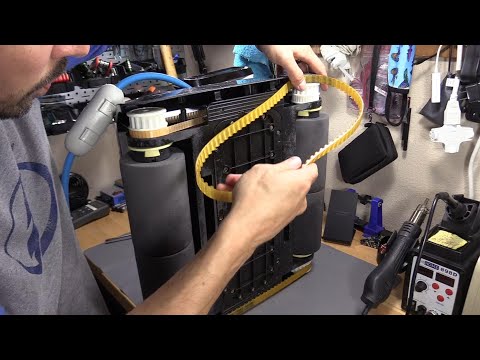
The unit uses a one-piece filter design, which means everything—leaves, dirt, sand—collects in a single compartment. It works fine for capturing debris, but when it’s time to clean it out, you don’t get the convenience of modular baskets that pop apart easily.
Instead, you’re rinsing, shaking, and sometimes repeating to get everything cleared.
And remember that ~170-micron filtration level? It explains why you’ll often see fine residue slip through. You’re removing the visible mess, but not polishing the water.
Pros
- Fewer parts (easy to manage)
Cons
- Slightly more effort per clean (less efficient)
5.3 Handling and Storage: Weight, Retrieval, and Drying Time
Here’s something most buyers don’t think about—until the first time they lift it out of the water.
While the cleaner itself is relatively lightweight on paper, the foam rollers absorb water, making it noticeably heavier when you pull it up. That “quick lift” can suddenly feel like a mini workout, especially after a long day.
And then there’s drying.
Those same foam components hold onto moisture, which means you can’t just toss it into storage immediately. It needs time to dry out properly, or you risk that damp, musty smell nobody wants lingering in their garage.
It’s not a dealbreaker—but it’s one of those small, repeated frictions that add up over time.
You start to realize: this isn’t a “set it and forget it forever” device. It’s more like a helpful assistant that still needs a little attention after every job.
6. Conclusion
The Paxcess Cordless Pool Cleaner lands exactly where you’d expect: a solid entry-level option that prioritizes simplicity, affordability, and ease of use over advanced performance.
In the right setting—a smaller, simple pool with light debris—it genuinely delivers. You get quick deployment, reliable basic cleaning, and the kind of low-effort routine that makes pool ownership feel easier, not harder.
But the trade-offs are real. Random navigation, step-related hangups, and limited filtration mean it struggles in complex or demanding environments.
Match the tool to the job—and you won’t regret the choice.
Check Price on Amazon
FAQ
Q: How long does the battery last on the Paxcess pool cleaner?
A: Based on technical specifications and real-world usage data, the battery typically provides 60 to 90 minutes of cleaning time per charge. It requires approximately 4 to 6 hours to fully recharge before its next cycle, making it ideal for daily maintenance runs.
Q: Can the Paxcess cordless cleaner handle fine algae?
A: This model is equipped with a 170-micron filter, which is designed for larger debris like leaves and sand. Aggregated performance data suggests it is not effective for microscopic particles or algae blooms, which often pass through the filtration system back into the pool.
Q: Does it work effectively in large, irregularly shaped pools?
A: Analysis of its navigation patterns shows it uses a random movement logic rather than smart mapping. In larger or complex pool shapes, this often leads to missed spots and inefficient coverage compared to higher-end models with systematic path planning.
Q: Will it get stuck on my pool steps?
A: User feedback frequently highlights that this cleaner struggles with rounded or "wedding cake" style steps. The geometry of these features can cause the robot to lose traction and become high-centered, requiring manual intervention to resume the cleaning cycle.
Q: Is it suitable for all pool types?
A: The cleaner is designed for multi-surface compatibility, including vinyl, fiberglass, and concrete. However, it is most effective on flat floors with slopes less than 15 degrees, as it lacks the high-torque climbing power required for steep deep-end transitions.