
Polaris P825 vs. P965iQ: Is the Smart Upgrade Justified?
Aaron Cooper1. Introduction: Do You Really Need a ‘Smart’ Pool Robot?
There’s a moment every pool owner hits: you’re standing over the water, skimmer in hand, wondering why keeping a pool clean still feels like a part-time job. Robotic cleaners promise freedom—drop it in, walk away, done. But now there’s a new twist: “smart” robots with WiFi, apps, and scheduling.
So here’s the real question: if a proven workhorse like the Polaris P825 already scrubs, climbs, and vacuums your entire pool, does upgrading to something like the P965iQ actually make your life easier—or just more complicated?
The answer isn’t as straightforward as marketing makes it seem. Cleaning power, convenience, automation, and cost all pull in different directions. And here’s the catch: while the P825 is well-documented, verified data on the P965iQ is surprisingly limited. That means this comparison isn’t about hype—it’s about what we can actually prove, and what still remains a question mark.
2. Polaris P825: Proven Performance Without the ‘Smart’ Layer
2.1 Core Specs and Cleaning Capabilities You Can Rely On
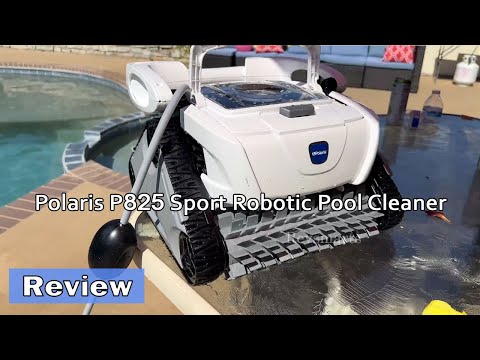
If your biggest frustration is watching debris settle back onto the pool floor right after cleaning, the Polaris P825 tackles that head-on with consistency rather than gimmicks. It’s built for in-ground pools up to 40 feet and runs on dual cleaning cycles (1.5 or 2.5 hours), giving you flexibility depending on how messy things get.
What really stands out is its patented cyclonic vacuum technology that maintains strong, consistent suction throughout the entire cycle. In real-world terms? It doesn’t start strong and fade halfway through—it keeps pulling in leaves, grit, and fine debris until the job is done.
The 4-liter debris canister is roomy enough that you’re not constantly stopping mid-cycle to empty it. And because it covers the full pool—floor, walls, steps, and even the waterline—you’re not left with that annoying “almost clean” result where grime lingers just out of reach.
2.2 Navigation, Climbing, and Real-World Cleaning Strengths
A robotic cleaner is only as good as its ability to move intelligently. Otherwise, it’s just randomly bumping around like a confused Roomba in a maze.
The P825 avoids that problem with an all-terrain navigation system paired with tank-style treads. Instead of slipping on slopes or struggling at transitions, it grips and climbs—walls, steps, even sun shelves—without hesitation. That’s where many cheaper robots fail: they clean the easy parts and ignore the rest.
Its Surface Control System™ continuously adjusts traction and suction based on the pool surface. Think of it like a car automatically adapting from asphalt to gravel—except here, it’s shifting between smooth finishes, textured walls, and angled corners.
Add in dual scrubbing brushes (front and rear), and you get something more aggressive than simple vacuuming. It actively scrubs stuck-on dirt and algae instead of just gliding over it.
- Fewer missed spots.
- Fewer repeat cycles.
- Less babysitting.
Drop it in. Let it work. Come back to a pool that actually looks—and feels—finished.
2.3 Where It Falls Short: No App, No Scheduling, No Remote Control
Now let’s address the obvious gap.
You walk outside, it’s a busy weekday, and your pool needs cleaning. With the P825, there’s no remote start, no scheduling, no app. You physically go out, plug it in, and press a button. Every time.
But for others? It becomes friction.
Modern robotic cleaners increasingly offer app-based control, allowing you to schedule cleanings, start a cycle remotely, or manage routines from your phone. According to broader industry trends, many newer robotic systems now integrate directly with mobile apps for hands-off operation and automation convenience.
Pros
- The P825 gives you rock-solid, no-nonsense cleaning.
Cons
- But it stops short of true “set-it-and-forget-it” automation.
If your idea of convenience is fewer tech headaches, this simplicity is a strength. If your goal is total hands-off control… this is where it starts to feel dated.
3. Polaris P965iQ: What the ‘Smart Upgrade’ Actually Adds
3.1 WiFi and App Control: Convenience or Gimmick?
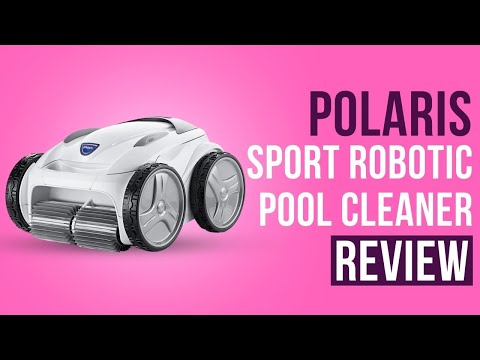
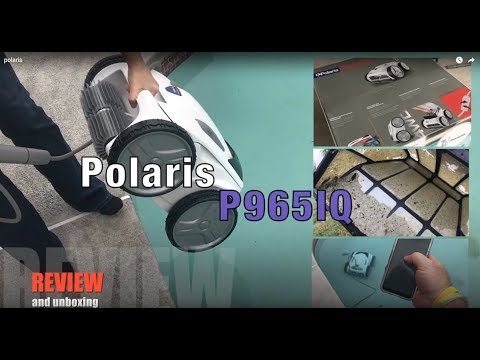
The headline feature of the Polaris P965iQ is simple: built-in WiFi that connects to your smartphone. Through app control, you can manage cleaning schedules without ever stepping outside.
Sounds great, right?
Imagine this: you’re at work, you check the weather, and realize guests are coming over tonight. Instead of rushing home to clean the pool, you tap your phone and the robot gets to work. That’s the promise.
In practice, this kind of control typically integrates with systems like iAquaLink, allowing scheduling and remote activation. It shifts pool maintenance from a manual chore to something closer to background automation.
If you already run your cleaner on a routine, the benefit might feel marginal. If your schedule is unpredictable, though, this feature can feel like a small luxury that quickly becomes essential.
3.2 Expected Smart Features: Scheduling, Remote Start, and Automation
Zooming out, the P965iQ fits into a broader trend: robotic cleaners becoming part of the smart home ecosystem.
Typical smart features in this category include:
- Scheduled cleanings (set specific days and times)
- Remote start/stop via app
- Status monitoring without checking the pool physically
And this is where things get interesting. The real benefit isn’t just control—it’s consistency.
Instead of waiting until your pool looks dirty, automation keeps it clean all the time. It’s the difference between reactive cleaning (“I guess I should run it today”) and proactive maintenance (“it already ran this morning”).
That shift reduces the mental load. No reminders. No second-guessing. No dragging the unit out after a long day.
But—and this is important—these features don’t inherently improve cleaning performance. They improve when and how often the cleaning happens.
3.3 The Big Unknowns: Missing Specs and Why They Matter
Here’s where the upgrade decision gets tricky.
Despite the P965iQ being positioned as a step up, there’s a significant lack of verified data on its core performance specs—things like cleaning cycle duration, debris capacity, navigation efficiency, and real-world durability.
And those aren’t small details. They’re everything.
Because at the end of the day, a pool robot has one job: clean your pool thoroughly. If you don’t know whether it matches—or exceeds—the P825 in that fundamental task, you’re essentially paying extra for convenience without clarity on performance.
From a buyer’s perspective, this creates a tension:
- You know exactly what the P825 delivers. It’s proven, documented, and consistent.
- The P965iQ introduces smart features—but leaves key performance questions unanswered.
That doesn’t mean it’s worse. It just means the upgrade is harder to justify purely on evidence.
So before getting swept up in the appeal of app control, it’s worth asking: are you upgrading your cleaning results—or just upgrading how you press “start”?
4. Smart Features vs. Cleaning Power: What Actually Improves Your Pool?
4.1 Cleaning Coverage: Floor, Walls, and Waterline Expectations
Let’s start with what actually makes your pool feel clean—not just look clean from a distance.
You know that moment when you step in and feel grit under your feet? Or you notice that faint ring of grime hugging the waterline? That’s where coverage matters. A robotic cleaner that only handles the floor leaves behind the most visible (and annoying) parts of the job.
Across the industry, high-performing robotic cleaners are expected to deliver full-pool coverage because partial cleaning just creates repeat work. And repeat work is exactly what you’re trying to escape.
So here’s the key insight: the P965iQ’s “smart” upgrade doesn’t inherently expand coverage. If anything, it’s expected to match what the P825 already does well.
If your current cleaner already leaves your pool spotless from bottom to tile line, upgrading won’t suddenly make it cleaner. It just changes how you manage the process. Clean is clean. The rest is convenience.
4.2 Navigation and Efficiency: Does ‘Smarter’ Mean Cleaner?
“Smart navigation” sounds impressive—but what does it actually mean when your pool is full of leaves and debris?
In simple terms, navigation is how the robot decides where to go next. The P825 uses an advanced all-terrain system with tank treads that help it move methodically across surfaces, climb walls, and avoid getting stuck. It’s not random—it’s structured enough to reduce missed spots and unnecessary overlap.
Industry comparisons consistently show that robotic cleaners already combine suction, brushing, and navigation into a single system designed to minimize cleaning time while maximizing coverage by integrating smart navigation with active scrubbing and suction.
Now, could the P965iQ introduce improvements here? Possibly. But based on available data, there’s no confirmed evidence that its navigation is significantly better than the P825.
So don’t confuse “smart features” with “smarter cleaning.” One is about control. The other is about results. And results are what save you time.
4.3 Convenience Factor: Set-It-and-Forget-It vs Manual Start
This is where the real lifestyle difference shows up.
With the P825, the routine is simple—but manual. You walk outside, plug it in, drop it in the water, press a button. Done. It works every time, no setup, no app, no friction.
But let’s be honest—on a busy week, even that small step can feel like a chore. Especially when it’s hot, you’re tired, or you simply forget. That’s where the P965iQ shifts the experience.
- Schedule cleanings in advance from anywhere.
- Trigger a cycle remotely while you’re at work.
- Turn pool maintenance into a background task (like a dishwasher).
No more “I need to clean the pool today.” It’s already done.
So the question isn’t just “Do you want smart features?” It’s: how much do you value removing that last bit of manual effort from your routine? Because that’s what you’re really paying for.
5. Is the Price Premium Worth It? A Practical Buyer’s Verdict
5.1 What You’re Paying Extra For (and What You’re Not)
Let’s cut through the marketing for a second.
| Feature Category | Polaris P965iQ Status |
|---|---|
| Confirmed Upgrades | WiFi Connectivity & App-based Control |
| New Functions | Scheduling, Remote Start, Smart Home Integration |
| Not Guaranteed | Stronger Suction or Better Debris Handling |
What you’re not guaranteed is stronger suction, better debris handling, or more efficient coverage compared to the P825. And that distinction matters more than most people realize.
Because when your pool is full of leaves after a storm, you don’t care how you started the cleaner. You care whether it finishes the job in one cycle. So the premium is really about convenience—not performance certainty.
5.2 Who Should Stick with the P825
The P825 is for people who just want the job done—reliably, consistently, without thinking about it. If your current frustration is dirt, debris, and wasted weekends manually cleaning, this machine already solves that. It climbs, scrubs, and vacuums your entire pool without needing babysitting or troubleshooting.
Pros of P825
- Straightforward, dependable performance
- No apps to update or WiFi issues
- No learning curve; just plug and play
Cons of P825
- Requires manual start for every cycle
- No remote monitoring capability
In other words, if your goal is a clean pool—not a “smart” pool—the P825 already delivers exactly what you need. Sometimes, boring is perfect.
5.3 Who Might Benefit from the P965iQ Upgrade
Now, if your pain point isn’t cleaning—it’s remembering to clean—that’s where the P965iQ starts to make sense. This model is better suited for people who want pool maintenance to disappear into the background.
You’ll benefit most if:
- Your schedule is unpredictable
- You travel frequently or manage your home remotely
- You’re already invested in smart home ecosystems
Just keep expectations realistic. You’re not upgrading the cleaning result—you’re upgrading the experience around it. And for the right person, that’s worth every extra dollar.
Check Price on Amazon6. Conclusion: Smart Upgrade or Just Smarter Marketing?
So, is the upgrade justified?
Here’s the honest answer: it depends on what you value more—results or convenience.
The Polaris P825 already delivers what most pool owners actually need: full coverage, strong cleaning performance, and reliable operation. It’s the kind of machine that quietly does its job and gives you your weekends back.
The P965iQ, on the other hand, leans into automation. WiFi control, scheduling, and remote access make pool care feel თანამედროვე and effortless—but without clear evidence of improved cleaning performance.
If you hate scrubbing your pool, the P825 is already the solution. If you hate thinking about your pool, the P965iQ might be worth it.
Either way, clean water is the goal. How you get there is up to you.
FAQ
Q: Does the Polaris P965iQ clean better than the P825?
A: Based on available specifications, the P965iQ offers the same core cleaning coverage—floors, walls, and waterline—as the P825. The primary difference lies in connectivity and automation features rather than a confirmed increase in raw vacuuming suction or scrubbing power.
Q: Can the Polaris P825 be controlled via a smartphone app?
A: No, the Polaris P825 is a manual-start robotic cleaner. It does not feature WiFi connectivity or app integration. Users must physically select the cleaning cycle and start the unit using the button on the control box.
Q: What are the main benefits of the P965iQ's WiFi connectivity?
A: The WiFi integration allows for remote start/stop functionality and customizable scheduling through the iAquaLink app. This is ideal for pool owners who travel frequently or want to automate their maintenance routines without manual intervention.
Q: Do both models handle wall climbing and waterline scrubbing?
A: Yes, both the P825 and P965iQ are designed to provide full-pool coverage. They utilize all-terrain treads and specialized navigation systems to climb walls and scrub the waterline, ensuring debris is removed from all pool surfaces.
Q: Is the Polaris P825 suitable for large in-ground pools?
A: The Polaris P825 is specifically engineered for in-ground pools up to 40 feet in length. Its cyclonic vacuum technology and 4-liter debris canister are built to handle the volume and debris types typically found in mid-sized residential pools.