
Robotic Pool Cleaner Buying Guide: How to Choose the Best Model for Power, Filtration, and Hassle-Free Automation
Aaron CooperReview: Robotic Pool Cleaner Buying Guide: How to Choose the Best Model for Power, Filtration, and Hassle-Free Automation
Quick Take: A comprehensive guide to selecting a robotic pool cleaner based on pool type, filtration needs, and automation features.
Best For: In-ground and above-ground pool owners looking to replace energy-intensive suction cleaners with independent robotic units.
Keep in Mind: While cordless models offer cable-free convenience, they often lack the sustained suction power and "set-it-and-forget-it" scheduling found in corded commercial-grade units.
1. Introduction: Why a Robotic Pool Cleaner Is a Smart Upgrade for Modern Pool Owners
If you’ve ever spent a Saturday dragging a manual vacuum across the pool floor—or listening to your suction cleaner clack and rattle for hours—you already know the frustration. Traditional suction and pressure-side systems rely on your pool pump, burn more electricity, and often miss the waterline entirely.
A robotic pool cleaner changes that equation. These self-contained units operate independently, typically using just 100–200 watts—about the same as a household light bulb—while scrubbing the floor, climbing walls, and targeting the waterline. In this guide, we’ll break down how to choose the right model for your pool size, compare corded vs. cordless, decode key features like NanoFiltration and Smart Navigation, and show you what truly delivers hassle-free automation.
2. How to Choose the Best Robotic Pool Cleaner for Your Pool Type
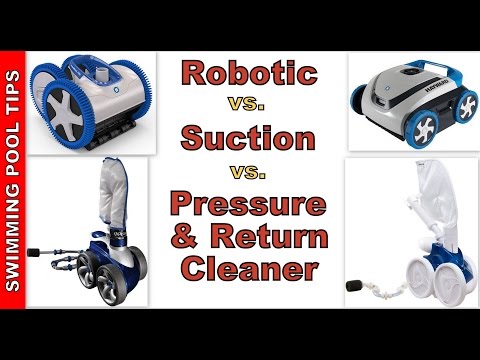
Not all pools—and not all robots—are created equal. A compact above-ground pool with light debris has very different needs than a 40-foot in-ground pool surrounded by oak trees. Choosing the wrong cleaner can mean missed walls, weak suction, or constantly emptying undersized filters.
Let’s match the robot to your pool.
2.1 Best for In-Ground Pools: Full Coverage, Waterline Cleaning, and Commercial-Grade Motors
If you own an in-ground pool, especially one with a deep end, tile line, and complex shape, this is where you do not want to cut corners.
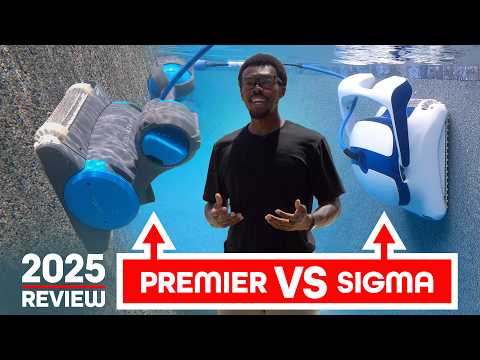
Corded robotic models dominate here for one reason: consistent power. Unlike battery-powered units that taper off as charge drops, corded robots maintain full suction throughout the entire cycle. Premium in-ground models like the Dolphin Premier and Dolphin Sigma are equipped with dual or triple commercial-grade motors delivering over 4,500 gallons per hour (GPH) of suction, ensuring debris doesn’t just get brushed—it gets fully removed.
Both models are built on Dolphin’s commercial platforms and include:
- SmartNav intelligent mapping
- NanoFiltration for ultra-fine debris
- Full floor, wall, and waterline cleaning
- 3-year warranty coverage
The Premier stands out with its exclusive MultiMedia™ filtration system, including NanoFilters™, standard cartridges, and an oversized leaf bag—ideal if your pool collects heavy debris. The Sigma adds a third motor and gyroscopic navigation for even tighter coverage patterns.
2.2 Best for Above-Ground Pools: Lightweight, Floor-Focused Cleaning with Smart Navigation
Above-ground pools don’t usually need aggressive wall-scaling power—but they do need efficient floor cleaning without complexity.
Models like the Dolphin E10 and Escape are purpose-built for smaller pools. They feature plug-and-play setup—drop it in, plug it into a standard outlet, and press start. No booster pump. No plumbing. No complicated installation.
The Dolphin E10 uses CleverClean scanning technology to map the pool floor and follow an efficient cleaning pattern rather than wandering randomly. With a 1.5-hour cycle and top-access filter basket, it’s designed for quick, low-hassle maintenance.
Lightweight. Simple. Efficient. For above-ground owners, that’s exactly what you want.
2.3 Best for Large Pools (Over 30–33 ft): Extended Runtime, 60 ft Swivel Cords, and Strong Suction
Once your pool crosses the 30–33 foot mark, you’re officially in “large pool” territory—and the wrong robot will struggle.
Large pools demand three things:
- Long runtime (3+ hours preferred)
- 60-foot anti-tangle swivel cord
- Strong wall-ramping ability and smart navigation
Independent testing shows that the Aiper Scuba S1 achieved 95% wall and 95% floor coverage in large pool trials, highlighting how critical runtime and coverage strategy are in bigger environments.
The Dolphin Premier includes a 60-ft swivel cable and SmartNav 2.0 scanning, allowing it to clean pools up to 50 feet without tangling. The Sigma adds gyroscopic stabilization for even more precise mapping.
Large pools also tend to accumulate more debris—meaning higher GPH suction (4,000+ minimum) becomes essential. Weak robots may climb walls but fail to actually pull debris into the filter.
3. Corded vs Cordless Robotic Pool Cleaners: Power, Safety, and Daily Convenience

Cordless robots sound appealing. No cable. No visible tether. Just drop it in and go.
But here’s the uncomfortable truth: convenience on paper doesn’t always translate to convenience in real life.
Let’s break this down.
3.1 Power & Suction Differences: Why Corded Models Deliver Deeper Cleaning
According to industry comparisons, cordless pool robots are dramatically underpowered compared to their corded counterparts. The reason is simple: battery constraints limit motor size and flow rate.
Corded robots commonly deliver 4,000+ GPH suction and maintain it for the entire 2–3 hour cycle. Cordless units typically run 60–120 minutes and may reduce power as the battery depletes.
What does that mean in real life?
- Sand and silt may get stirred instead of captured.
- Wall climbing becomes inconsistent.
- Large pools may not finish in one cycle.
Corded robots also consume just 100–200 watts per hour—far less than pressure-side systems running your pump at 700–1,000 watts. You’re getting stronger suction with lower total energy draw.
3.2 Lithium-Ion Fire Risks and Recall Concerns
Another factor buyers rarely consider: battery safety.
There have been documented reports of lithium-ion overheating incidents involving cordless pool cleaners, including recalls of certain models due to short-circuiting and fire risks. The U.S. Consumer Product Safety Commission recalled 22,000 units of the Aiper Elite Pro over overheating concerns.
For many homeowners, the simplicity of a low-voltage corded power supply eliminates that concern entirely.
3.3 Set-It-and-Forget-It Automation vs Daily Charging
This is where corded robots quietly win.
Premium corded models like the Dolphin Premier, Sigma, and Cayman include weekly programmable timers. Press a button once, and the robot cleans daily, every other day, or every third day automatically.
Corded Automation
- Set-it-and-forget-it weekly timers
- Stays in the pool, ready to go
- Consistent power delivery
Cordless Manual Tasks
- Must remove after every cycle
- Daily manual recharging required
- Battery depletion affects performance
If the goal of owning a robotic cleaner is to reclaim your time, true set-it-and-forget-it scheduling matters more than cable aesthetics.
Because the best pool cleaner isn’t the one that looks sleek—it’s the one you barely have to think about.
4. Key Features That Actually Matter (and the Marketing Hype to Ignore)
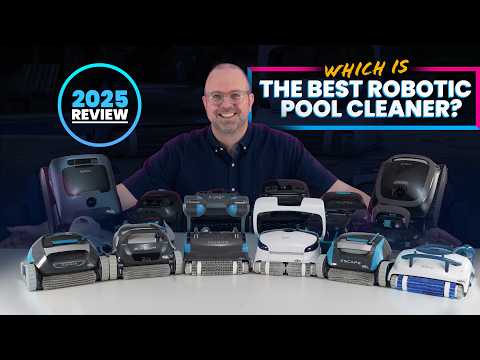
The robotic pool cleaner market is flooded with buzzwords—“AI mapping,” “ultra suction,” “5-in-1 cleaning.” But when you strip away the marketing noise, only a handful of features truly impact cleaning performance and long-term satisfaction.
Let’s separate substance from hype.
4.1 NanoFiltration vs Standard Mesh: Why Micron Ratings Matter
Most budget robots use large-pore plastic mesh baskets. They’re fine for leaves. Not fine for algae, pollen, or silt.
Premium models like the Dolphin Premier and Sigma use 2-micron NanoFilters, capable of capturing microscopic debris that standard mesh allows to pass through. That’s the difference between a pool that looks clean and water that’s genuinely crystal clear.
| Filter Type | Best For | When to Use |
|---|---|---|
| Oversized Leaf Bag | Heavy leaf season | Fall or storm cleanup |
| Standard Cartridge | Daily debris | Routine maintenance |
| NanoFilters™ | Fine particles, algae | Spring, dusty climates |
| Disposable Bag (optional) | Extreme debris loads | Large messes |
NanoFilters™ also help reduce turbidity—the cloudy look caused by suspended fine particles. Clearer water disinfects more easily and simply looks better.
4.2 Commercial-Grade Motors and GPH: What Real Cleaning Power Looks Like
Motor count matters—but flow rate matters more.
| Model | Motor System | Suction Output | Platform |
|---|---|---|---|
| Dolphin Premier | Dual Commercial Motors | 4,500+ GPH | Commercial Wave Platform |
| Dolphin Sigma | Triple Motors | 4,500+ GPH | Commercial Wave Platform |
| Typical Battery Robot | Single Motor | Significantly Lower | Battery-Constrained |
Higher GPH means debris doesn’t get brushed away—it gets fully vacuumed. Lower-powered models may climb walls but lack the suction strength to capture heavier sand or acorns effectively.
4.3 Smart Navigation, Waterline Cleaning, and Anti-Tangle Swivels
“Smart Navigation” sounds vague—but here’s what it actually means.
Systems like SmartNav 2.0 (Premier) and SmartNav 3.0 with gyroscope (Sigma) scan and map your pool to create efficient cleaning paths instead of random wandering. That reduces missed spots and avoids repetitive overlap.
Waterline cleaning is another premium differentiator. Models with dual stabilizers can climb walls and scrub horizontally across the tile line—even when nearly 40% of the robot is above water. That’s critical because oils, sunscreen, and biofilm accumulate at the waterline.
Without these features, you may find yourself brushing manually—exactly what you bought a robot to avoid.
In the next section, we’ll dive into real-world cleaning benchmarks—coverage percentages, fine debris tests, and where even premium robots can struggle.
5. Real-World Cleaning Performance: Coverage, Walls, Waterline, and Fine Debris
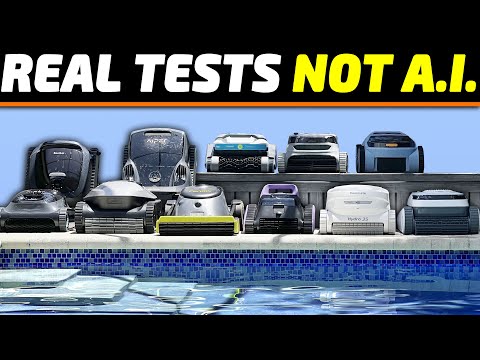
Specs are one thing. Real-world cleaning is another.
A robot might claim “full coverage,” but what does that actually mean in a 40-foot pool with slopes, steps, and debris after a storm? Independent testing across multiple models reveals big differences—not just in how much area gets covered, but in how well it’s actually cleaned.
Let’s break it down where it matters most.
5.1 Floor & Wall Coverage Benchmarks from Independent Testing
In controlled large-pool testing, coverage results varied dramatically—even among similarly priced robots.
For example, the Aiper Scuba S1 achieved approximately 95% floor and 90–95% wall coverage in extended runtime testing, thanks to a long cleaning cycle and aggressive wall ramping. By contrast, other models in the same review missed significant wall sections despite appearing to “map” the pool carefully.
The Wybot S2 used a hybrid wall-and-floor approach, staying in mixed mode for its entire cycle. It covered roughly 95% of the floor but closer to 70% of the walls—respectable, but not complete.
Interestingly, some robots that used random cleaning patterns actually outperformed mapped units in total coverage. The key wasn’t just navigation—it was runtime and consistency.
- 3+ hour runtime matters for large pools.
- Wall climbing ability must be sustained—not occasional.
- Mapping alone doesn’t guarantee full coverage.
If your pool is 30–50 feet long, choosing a robot proven to hit 90%+ wall and floor benchmarks can mean the difference between weekly brushing and true automation.
5.2 Waterline & Stairs: Where Budget Robots Fall Short
The waterline is where oils, sunscreen, pollen, and biofilm collect. It’s also where cheaper robots give up.
In side-by-side testing, waterline performance varied significantly. Some robots could only clean about half an inch above the waterline. Higher-performing models managed closer to 1–2 inches above the surface, scrubbing more of that visible scum line.
Premium robots use dual stabilizers and stronger motors to cling horizontally at the surface. That extra buoyancy counterbalance allows them to scrub aggressively even when partially out of the water.
Stairs are another weak point. In testing, some robots cleaned lower steps but struggled to reach the top step consistently. Stronger wall-ramping models performed better but still showed that stair geometry remains a technical challenge across brands.
No robot is perfect on stairs. But stronger motors and better stabilization make a noticeable difference at the waterline—where visual cleanliness matters most.
5.3 Fine Sand, Silt, and Algae: Suction + Filter Quality in Action
If you live in a dusty climate or deal with fine debris, this is where separation happens.
In debris testing with sand and silt piles:
- Some robots passed directly over sand multiple times without fully capturing it.
- Others cleaned only a narrow strip directly under the suction port.
- Top performers left a visibly clean path and avoided stirring silt into the water column.
Filter mesh size played a major role. Many robots use 150–180 micron baskets. A few use larger 250 micron mesh, which struggles with fine silt.
Secondary filtration systems made the biggest difference. Models equipped with fine filter inserts or NanoFiltration captured smaller particles more effectively than standard mesh alone.
This is why suction power and filtration must work together. Strong suction without fine filtration just recirculates debris. Fine filtration without adequate suction struggles with heavier material.
If your pool regularly sees sand, pollen, or algae dust, prioritize both high GPH flow rate and fine filter capability.
6. Maintenance, Durability, and Warranty: What to Expect Long Term
Buying a robotic pool cleaner isn’t just about performance on day one. It’s about what happens in year two… and year five.
Maintenance habits, build quality, and warranty support determine whether your robot becomes a decade-long workhorse—or a short-term experiment.
Here’s what real ownership looks like.
6.1 Filter Cleaning, Impeller Checks, and Seasonal Storage
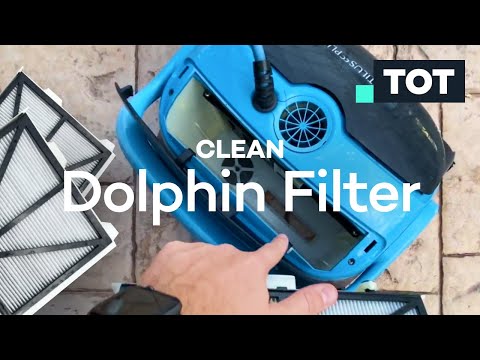
Most robotic pool cleaners require filter rinsing after each use. That’s non-negotiable.
- Remove the filter basket or cartridge from the unit.
- Empty debris into a waste bin.
- Rinse with a garden hose until clean.
Monthly deep cleaning with mild detergent is recommended to prevent buildup. Avoid high-pressure spraying above 40 PSI, which can damage polyester mesh filters.
Impeller inspection every couple of weeks helps maintain suction efficiency. Small debris can accumulate and restrict flow if ignored.
Freshwater rinsing after removal is especially important in saltwater pools to prevent chlorine degradation of plastic components.
With proper care, robotic pool cleaners are generally reported to last 4–10 years. Consistent maintenance can extend lifespan significantly.
6.2 Weight When Lifting and Ease of Basket Cleaning
Here’s something most buyers don’t think about until day one: lifting weight.
In comparative testing, peak lift weights ranged from about 30 lbs up to 72 lbs when fully waterlogged. Drain times varied from 3 to 7 seconds depending on design and drainage ports.
Heavier robots often drain quickly—but lifting them from the deep end can still feel substantial.
User-Friendly Design Features
- Dual-opening baskets: Easiest to rinse and clear.
- Top-loading designs: Reduce flipping and deck mess.
- Quick-drain valves: Make lifting much lighter.
Maintenance Realities
- Fine mesh filters may require more spraying time.
- You will get wet cleaning filters.
- Heavy units can be taxing for elderly users.
6.3 Warranty Length and Brand Support Considerations
Warranty length is one of the clearest signals of manufacturer confidence.
- Entry-level robots typically include 1-year warranties.
- Premium models like the Dolphin Premier and Sigma include 3-year warranties.
In independent support call testing across multiple brands, most companies connected buyers to live representatives and opened service cases when needed. However, warranty departments sometimes vary by model line.
Longer warranties provide peace of mind—especially for models built on commercial platforms.
7. Total Cost of Ownership: Energy Savings vs Upfront Investment
At first glance, robotic pool cleaners seem expensive. Most models range from $500 to $2,000 depending on features and build quality.
But purchase price is only part of the equation. Let’s talk energy.
Robotic pool cleaners typically consume around 100–250 watts per hour and operate independently from your main pool pump. By contrast:
| System Type | Annual Energy Usage | Estimated Annual Cost |
|---|---|---|
| Robotic Cleaner | 197 kWh | ~$59 |
| Suction Cleaner (Pump Driven) | 1,675 kWh | ~$501 |
That’s roughly 90% less energy usage compared to traditional suction systems. Over time, annual energy savings of about $442 can offset the higher upfront purchase price in approximately two years.
Robotic cleaners also reduce strain on your primary pump and filtration system, potentially extending equipment lifespan by 2–3 years.
Over a typical 4–10 year lifespan, those savings compound. While the upfront cost is higher, the long-term math strongly favors robotics over pump-dependent systems.
8. Conclusion: Choosing the Right Robotic Pool Cleaner for a Cleaner, Stress-Free Season
At the end of the day, choosing the best robotic pool cleaner comes down to matching the robot to your pool—not chasing marketing buzzwords.
Q: Which model should I choose?
A: Large, leaf-heavy pools? A model with MultiMedia™ filtration like the Dolphin Premier gives you flexibility. Tech-focused owners? The Dolphin Sigma adds gyroscopic navigation. Above-ground pools? Compact models like the Dolphin E10 are best. Budget-conscious? Prioritize strong suction and a weekly timer.
Corded robots consistently deliver stronger suction, longer runtime, and true set-it-and-forget-it scheduling. NanoFiltration dramatically improves water clarity. Commercial-grade motors provide durability that lasts seasons—not months.
FAQ
Q: What is the difference between NanoFiltration and standard mesh filters?
A: Standard mesh filters capture large debris like leaves, while NanoFilters are rated at 2 microns to trap microscopic particles like silt, pollen, and algae for superior water clarity.
Q: Are corded robotic pool cleaners energy efficient?
A: Yes, they typically use only 100–200 watts, which is about 90% less energy than traditional suction cleaners that rely on your high-horsepower pool pump.
Q: How long do robotic pool cleaners typically last?
A: With proper maintenance, such as rinsing the filters after every use and storing the unit out of direct sunlight, a quality robotic cleaner can last between 4 to 10 years.
Q: Do robotic pool cleaners work on pool stairs and sun shelves?
A: While most high-end models can climb walls and scrub the waterline, performance on stairs varies by pool geometry; they rarely clean shallow tanning ledges effectively.
Q: Is it safe to leave a robotic cleaner in the pool all the time?
A: It is safe during its cleaning cycle, but it should be removed periodically for filter cleaning and to prevent chemical damage to the plastic and rubber components from long-term submersion.