
Top Cordless Pool Robots for Above-Ground Pools: Best Picks, Real Pros & Cons, and What to Avoid
Aaron Cooper1. Introduction
Cordless pool robots sound like the dream, right? No cords, no setup, just drop it in and walk away. But here’s the reality most pool owners run into: what looks effortless on paper often turns into daily lifting, charging, and wondering why your pool still isn’t fully clean.
Above-ground pools may be smaller, but they still collect leaves, dirt, and algae just as fast—and nobody wants to spend weekends manually vacuuming. In this guide, we’ll cut through the hype and show you what cordless robots actually do well, where they fall short, and which models are genuinely worth considering before you buy.
2. Top Cordless Pool Robots for Above-Ground Pools (What’s Actually Worth Considering)
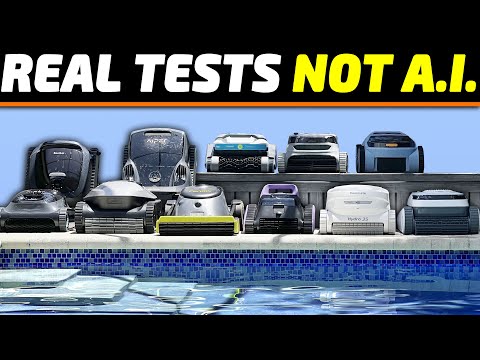
2.1 Best Known Cordless Option for Above-Ground Pools: Dolphin Liberty Series
If you’re set on going cordless, the Dolphin Liberty series (like the Liberty 200 and 400) is one of the few options that feels purpose-built rather than an afterthought.
In real-world usage patterns, what stands out is simplicity. You’re not dealing with hoses, external pumps, or complicated setup. Drop it in, let it run, pull it out. Done. For busy homeowners who just want a quick clean before guests arrive, that alone can feel like a win.
So who is this actually for? Small above-ground pools, light debris, and people who value portability over power. If that’s you, the Liberty series makes sense. If you’re expecting deep, hands-off cleaning… it may feel underwhelming.
Check Price on Amazon2.2 High-End Cordless Alternative: Beatbot AquaSense Series
Now, if you’re thinking, “Fine, I’ll just buy the most advanced cordless robot and solve everything”—that’s where the Beatbot AquaSense 2 Ultra comes in.
On paper, it sounds incredible. AI-based navigation (think of it like your robot “learning” your pool layout instead of wandering randomly), multi-mode cleaning, even surface skimming in some cases. It’s positioned as an all-in-one cleaning system.
And to be fair, independent test observations show it can map and move in a much more structured pattern than basic cordless units. That means fewer missed spots—at least in theory.
Pros
- Smart AI-based mapping and structured movement
- Multi-mode cleaning including surface skimming
- Less random wandering than budget units
Cons
- Coverage isn't always perfect; spots still get missed
- Filtration lags behind high-end corded systems
- Significantly higher price point
Even with smart mapping, coverage isn’t always perfect. Some test scenarios showed areas being repeatedly missed despite the “intelligent” navigation. And like all cordless robots, it still needs to be pulled out and charged after each cycle.
Then there’s filtration. Compared to top corded systems with advanced filters, cordless units like this still lag behind in capturing fine debris that clouds your water.
If cordless is non-negotiable and you want the most advanced version available, this is the one. Just go in knowing: it’s premium convenience—not premium cleaning performance.
2.3 Budget-Friendly Cordless Picks (And Their Trade-Offs)
Tempted by those $500–$700 cordless robots promising “effortless cleaning”? You’re not alone. Models like the Mammotion Spino E1 often show up as “best value” picks—and on the surface, they seem like a steal.
These robots can handle light debris—think dust, small leaves, maybe a bit of sand—but once your pool gets even slightly dirty after a storm, they start to struggle. Navigation is another weak spot. While some advertise “smart” movement, in practice it often feels closer to random wandering.
"Cheap cordless isn’t a shortcut. It’s a compromise."
For small pools with minimal debris and owners who just want occasional touch-ups, they can get the job done. But if you’re expecting that “drop it in and forget it” experience, you’ll likely end up frustrated.
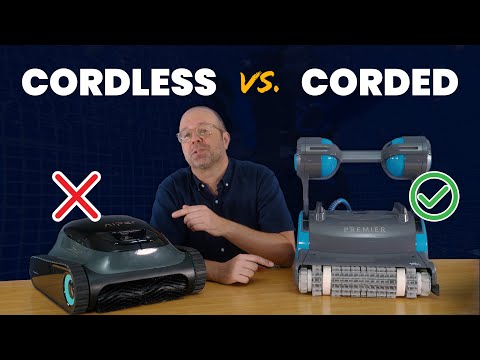
3. Cordless vs Corded Pool Robots: The Real-World Performance Gap
3.1 Battery Life vs Continuous Cleaning Power
Let’s start with the biggest limitation you’ll feel immediately: time.
Most cordless pool robots run for about 60 to 180 minutes per charge. That might sound like plenty—until you realize your pool isn’t always perfectly clean when the cycle ends. Leaves settle. Dirt shifts. Algae clings.
And when the battery dies? The robot stops. Wherever it is. Corded robots don’t have this problem. They run as long as needed, with consistent power from start to finish. No drop-off. No interruptions.
3.2 Suction Power and Cleaning Efficiency Differences
Here’s where things get brutally honest.
| Feature | Cordless Robots | Corded Robots |
|---|---|---|
| Suction Power | 1,200–1,500 GPH | 4,000+ GPH |
| Water Circulation | Standard | ~3x Higher |
| Fine Debris Removal | Moderate/Low | High |
In fact, multiple comparisons highlight that cordless units deliver roughly three times less water circulation than corded cleaners, which directly impacts how much debris they can actually remove.
- Fine dust and sand? Often left behind by cordless units
- Leaves? Picked up… but sometimes pushed around first
- Algae? Hit or miss depending on suction depth
3.3 Daily Effort vs ‘Set-and-Forget’ Automation
This is the part most buyers underestimate. Cordless robots feel convenient—until you live with one.
Every cycle means:
- Pulling a wet, heavy robot out of the pool
- Waiting hours for it to charge
- Dropping it back in
Compare that to corded robots with weekly timers. You plug them in once, set a schedule, and they clean automatically. You might only touch it once a week to empty the filter.
"Cordless = active involvement; Corded = passive automation. One saves effort, the other just changes the type of effort."
3.4 Safety and Long-Term Reliability Considerations
Finally, let’s talk about what most marketing pages won’t. Cordless robots rely on lithium-ion batteries. Over time, those batteries degrade—meaning shorter runtimes, weaker performance, and eventually replacement costs.
There have also been documented concerns around overheating and recalls tied to certain battery-powered units. Corded robots avoid this entirely. No battery degradation. No charging cycles. Just consistent performance year after year.
4. Key Features That Actually Matter for Above-Ground Pool Robots
4.1 Filtration Quality: Why It Impacts Water Clarity More Than You Think
Here’s something most people don’t realize until it’s too late: your robot can be running every day… and your pool can still look cloudy.
Why? Filtration.
Basic mesh filters catch the obvious stuff—leaves, bugs, maybe some dirt. But the real troublemakers? Fine dust, algae spores, sunscreen residue. They slip right through. Your pool looks clean… until sunlight hits the water and exposes that hazy layer.
Industry analysis consistently shows that robots with multi-stage or fine filtration systems capture particles that standard mesh simply misses, dramatically improving water clarity and reducing strain on your main pool filter.
So if your goal is that crystal-clear, “resort-style” water? Filtration matters more than almost anything else.
4.2 Navigation and Coverage: From Random Paths to Smart Mapping
Ever watched a pool robot wander around like it’s lost? That’s not just annoying—it’s inefficient.
Older or budget cordless models rely on random movement. They bounce, turn, loop… and hope they eventually cover everything. Sometimes they do. Sometimes they don’t.
Modern systems try to fix this with smart navigation—using sensors, gyroscopes, or even AI-based mapping (basically, the robot “learning” your pool layout like a Roomba mapping your home). In theory, this means methodical cleaning and fewer missed spots.
And yes, higher-end cordless options like the Beatbot AquaSense 2 Ultra do show more structured movement patterns compared to entry-level models.
But here’s the reality check: smart doesn’t always mean perfect. Even in controlled tests, mapped robots can still miss sections or repeat the same paths.
So what should you look for?
- Consistent, repeatable coverage patterns
- The ability to handle your pool shape (round, oval, rectangular)
- Minimal “stuck” moments in corners or slopes
Smart navigation helps. But it doesn’t guarantee perfection—especially in cordless models with limited runtime.
4.3 Coverage Types: Floor vs Walls vs Waterline Cleaning
Let’s talk about the dirtiest part of your pool. It’s not the floor.
It’s the waterline—that thin ring where water meets air. That’s where oils, sunscreen, and over 90% of bacteria and algae tend to accumulate. And guess what? Many cordless robots don’t clean it at all.
Here’s how coverage typically breaks down:
| Coverage Level | Typical Performance Class |
|---|---|
| Floor-only | Common in budget cordless robots |
| Floor + walls | Mid-range performance |
| Floor + walls + waterline | Full, deep clean |
If your robot only cleans the floor, you’re still scrubbing walls or dealing with that greasy line yourself. That defeats the whole purpose.
This is where cordless limitations show up again. Wall climbing and waterline cleaning require power, traction, and sustained suction—things battery-powered units struggle to maintain consistently.
So before you buy, ask yourself: do you want a robot that helps… or one that actually replaces manual cleaning?
Because full coverage is what turns a gadget into a true hands-off solution.
4.4 Ease of Use: Cordless Convenience vs Practical Handling
On paper, cordless is unbeatable. No cords. No setup. Just drop it in.
But real life? It’s a bit messier.
Picture this: the cleaning cycle ends, and your robot is sitting at the bottom of the pool. You reach in, pull out a waterlogged unit, and suddenly you’re lifting something that feels way heavier than expected. Then you wait for it to drain, carry it over, plug it in, and repeat the next day.
That “effortless” experience starts to feel… repetitive.
Cordless robots are absolutely easier to deploy. No cables to untangle, no power supply to manage. For quick, occasional cleaning, that’s a genuine advantage.
But over time, the daily handling—lifting, charging, redeploying—adds up.
Corded robots flip this completely. Slightly more setup upfront, but once they’re in? They run on schedules, clean automatically, and require minimal interaction.
So the real question isn’t “cord vs cordless.” It’s: do you want quick convenience… or long-term effort reduction?
5. When a Cordless Pool Robot Actually Makes Sense (And When It Doesn’t)
5.1 Best Scenarios for Choosing Cordless
Let’s be fair—cordless pool robots aren’t useless. In the right setup, they actually make a lot of sense.
- Small Pools: If you have a small above-ground pool and light debris.
- Portability: If you store your robot in a shed or don't want a power supply poolside.
- Awkward Shapes: Lack of a cable can help movement feel smoother in tight corners.
So yes—if your expectations are realistic (light cleaning, occasional use, smaller pools), cordless delivers on its promise. It’s quick. It’s simple. It works… within limits.
5.2 When Cordless Becomes a Hassle
Now let’s flip the coin.
If your pool deals with heavy debris—leaves after a storm, sand, or algae—cordless robots start to struggle fast. Limited suction and shorter runtimes mean they may only partially clean before stopping.
Larger above-ground pools make this even worse. A single battery cycle often isn’t enough for full coverage, so you’re either accepting a half-clean pool… or running multiple cycles.
Then there’s long-term frustration: weaker filtration, battery degradation, and inconsistent performance over time.
5.3 Honest Verdict: Convenience vs Performance Trade-Off
So here’s the truth most buying guides won’t say clearly:
Pros (Cordless)
- Quick, occasional cleaning
- Minimal setup/No cables
- Highly portable
Cons (Cordless)
- Limited runtime & power
- Manual charging daily
- Weaker filtration systems
Cordless pool robots are about convenience—not performance. They remove the cord, simplify setup, and make quick cleaning easy. But in exchange, you give up power, filtration, runtime, and true automation.
6. Conclusion
Cordless pool robots for above-ground pools sit in an awkward middle ground. They promise convenience—and in the right situations, they absolutely deliver. For small pools, light debris, and quick cleanups, they can save time and simplify your routine.
But the trade-offs are real. Limited runtime, weaker suction, less effective filtration, and the need for constant charging all add friction over time. What starts as “easy” can slowly turn into another task on your to-do list.
If your priority is simplicity and portability, cordless can work. But if you’re chasing truly clean water and hands-off maintenance, it’s hard to ignore the performance gap.
At the end of the day, the best choice isn’t about specs—it’s about your lifestyle. Choose the robot that removes the most effort from your life, not just the one that looks best on paper.
FAQ
Q: How long do cordless pool robots typically run on a single charge?
A: Most cordless pool robots provide between 60 to 180 minutes of cleaning time. While sufficient for smaller above-ground pools, this limited runtime may require multiple charging cycles to achieve a thorough clean in larger pools or those with heavy debris loads.
Q: Can cordless pool robots clean the waterline of an above-ground pool?
A: Many entry-level and mid-range cordless models are designed only for floor or floor-and-wall cleaning. High-end units may offer waterline scrubbing, but sustained vertical climbing often drains the battery significantly faster than standard floor horizontal movement.
Q: How does the suction power of cordless robots compare to corded models?
A: Data indicates a significant gap; cordless units usually operate at 1,200–1,500 GPH, whereas corded models often exceed 4,000 GPH. This difference means corded robots are generally more effective at capturing fine silt, sand, and heavy leaf clusters.
Q: Do cordless pool robots require more manual effort than corded ones?
A: Yes, because they lack weekly timers and continuous power. Owners must manually retrieve the unit from the pool, charge it for several hours, and redeploy it for every cycle, whereas corded models can stay in the pool and run automatically.
Q: What happens to the battery life of these robots over time?
A: Like all lithium-ion devices, the internal batteries in cordless pool robots will naturally degrade over several seasons. This results in shorter runtimes and eventually requires professional battery replacement or the purchase of a new unit to maintain performance.