
Top Dual-Drive Motor Pool Robots for Large In-Ground Pools: Power, Coverage & Best Picks Compared
Aaron Cooper1. Introduction
Owning a large in-ground pool sounds like luxury—until you’re the one skimming leaves, scrubbing walls, and chasing debris across a 40–50 ft surface every weekend. The bigger the pool, the more relentless the maintenance. And if trees, dust, or algae are involved? It never really feels “done.”
That’s exactly where dual-drive motor robotic pool cleaners change the game. These machines don’t just move—they power through heavy debris, climb walls, and scrub the dirtiest waterline areas automatically. In this guide, we’ll break down how they work, why they outperform standard robots, and which models are actually worth your money.
2. What Makes Dual-Drive Motor Pool Robots Ideal for Large Pools?

2.1 Dual-Motor Architecture Explained: Power + Mobility
Here’s the thing most pool owners don’t realize: not all robotic cleaners are built the same under the hood.
Dual-drive motor systems split the workload between two critical functions. One motor acts as the “lungs,” pulling in water and debris through strong suction. The other acts as the “legs,” driving the robot across the floor, up walls, and along the waterline. It’s like having one system focused on cleaning power while the other ensures precise movement.
Why does that matter in real life?
Because with a dedicated drive motor, these robots don’t stall halfway up a wall or lose grip near the waterline. They climb. They stabilize. They finish the job.
The result?
- Less random wandering.
- More intentional cleaning.
- And most importantly—no missed zones.
2.2 Why High Suction Power Matters for Heavy Debris
If your pool ever looks clean… until you step in and feel grit under your feet—you already know suction matters.
Large pools collect everything: leaves, sand, pollen, even fine algae. And weaker robots? They just push debris around instead of actually removing it.
Dual-motor robotic cleaners typically deliver 4,000–4,500+ gallons per hour of suction power, which is in a completely different league compared to many lower-powered or cordless models. That kind of flow rate means debris isn’t just lifted—it’s captured in fewer passes.
Strong suction doesn’t just clean faster. It cleans once. And that’s a huge difference.
2.3 Full Coverage: Floor, Walls, and Waterline Cleaning
Let’s be honest—the floor is the easy part.
The real nightmare? That greasy, grimy ring at the waterline. The area where oils, sunscreen, and algae love to build up. Ignore it, and suddenly you’re back to scrubbing with a brush like it’s 1998.
High-end dual-drive robots are designed for full coverage: floor, walls, and waterline. And that’s not just a feature—it’s the difference between “mostly clean” and “actually done.”
Industry testing consistently shows that models with commercial-grade motor platforms deliver stronger wall grip, smoother climbing, and more consistent waterline cleaning compared to entry-level units.
Bottom line? If your robot can’t clean all three zones, you’re still doing part of the job yourself.
3. Top Dual-Drive Motor Pool Robots for Large In-Ground Pools
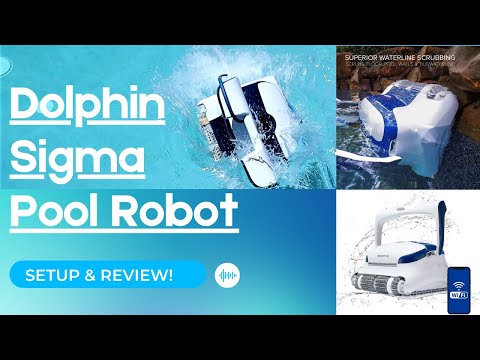
3.1 Dolphin Premier: Commercial-Grade Power for Large Pools
If you want something that feels closer to a “set it and forget it” solution, the Dolphin Premier is where most pool owners end up.
This model uses dual commercial-grade motors—the same class of hardware found in machines designed for high-demand environments like resorts and public pools. It delivers 4,500+ GPH suction power and is designed to handle pools up to 50 feet long.
Pros
- Dual commercial-grade motors for maximum durability
- Superior waterline scrubbing and vertical grip
- Handles pools up to 50ft with ease
Cons
- Premium price point
- Cable requires swivel management for long distances
3.2 Dolphin Quantum: Best for Heavy Debris and Large Capacity
Now, if your pool sits under trees—or constantly collects leaves, dirt, and debris—the Dolphin Quantum becomes incredibly hard to ignore.
The biggest advantage here is capacity. Its XXL MaxBin holds 225% more debris than standard filters, which means fewer interruptions mid-cycle. Pair that with dual motors and 4,000+ GPH suction, and you get a robot that’s built for messy environments.
3.3 How These Models Compare in Real-World Use
Choosing between the Premier and Quantum really comes down to your pool’s personality. Here’s a clear side-by-side breakdown:
| Feature | Dolphin Premier | Dolphin Quantum |
|---|---|---|
| Motor Type | Dual commercial-grade motors | Dual motors |
| Suction Power | 4,500+ GPH | 4,000+ GPH |
| Debris Capacity | Large (leaf bag system) | XXL MaxBin (225% larger) |
| Best For | Balanced, full-pool cleaning | Heavy debris environments |
| Waterline Cleaning | Strong, consistent | Effective |
| Ideal Pool Size | Up to 50 ft | Large in-ground pools |
So which one should you pick?
- Go Premier if you want maximum performance, especially for walls and waterline scrubbing.
- Go Quantum if your biggest headache is leaves, dirt, and constantly full filters.
4. Performance Comparison: Power, Navigation, and Durability

4.1 Suction Power vs Cleaning Efficiency
Here’s where things get real. You don’t feel suction power on a spec sheet—you feel it when your pool is actually clean after one cycle instead of three.
Large in-ground pools amplify inefficiency. If a robot misses debris or pushes it around, you’re not just losing time—you’re repeating the same cleaning over and over again. That’s exhausting.
Industry benchmarks consistently show that higher GPH suction enables single-pass debris removal, especially in pools with heavy leaf fall or sediment buildup. That’s the difference between “looks clean” and actually being clean when you step in barefoot.
The trade-off? More powerful robots tend to be heavier and slightly more expensive. But if your goal is fewer cleaning cycles—and fewer weekends wasted—this is exactly where you don’t want to cut corners.
4.2 Navigation Technology: Smart Mapping vs Random Paths
Ever watched a cheaper robot bounce around your pool like it’s lost? That’s random navigation. And in a large pool, it’s a nightmare.
Instead of methodically covering the surface, it overlaps, misses sections, and wastes time. You end up with clean patches… and untouched corners.
Some advanced models even incorporate gyroscope-based positioning (basically an internal sense of direction that keeps the robot oriented as it climbs walls and changes angles).
The result? Clean, parallel passes across the floor. Smooth transitions up walls. And consistent waterline coverage without slipping or repeating zones.
In real-world use, this translates to something simple but powerful: you drop the robot in, walk away, and actually trust that it covered everything.
That’s what separates “automation” from babysitting a machine.
4.3 Reliability and Long-Term Durability
Here’s the part most buyers overlook—until something breaks.
A pool robot isn’t a gadget. It’s a workhorse. It’s going to run in water, deal with debris, climb walls, and repeat that cycle hundreds of times a year.
Models like the Dolphin Premier and Quantum use commercial-grade motor platforms—the same foundation found in machines designed for high-demand environments. That matters.
Why?
- Strong motors maintain suction over time.
- Drive systems don’t lose traction after a season.
- Parts are designed to be replaceable, not disposable.
Across long-term user feedback and industry analysis, it’s common to see these units lasting well beyond typical expectations, with many owners reporting years of reliable performance with minimal maintenance.
Pros
- Commercial-grade motor platforms for consistency.
- Replaceable parts extend machine lifespan.
- Superior suction and traction on all surfaces.
Cons
- Heavier builds can make lifting more effort.
- Filters need regular cleaning to maintain flow.
But compared to constantly replacing underpowered units? This is the kind of investment that quietly pays you back—season after season.
5. Key Buying Factors for Large Pool Owners
5.1 Corded vs Cordless: Why Power Still Wins
Cordless sounds convenient—until you actually live with it.
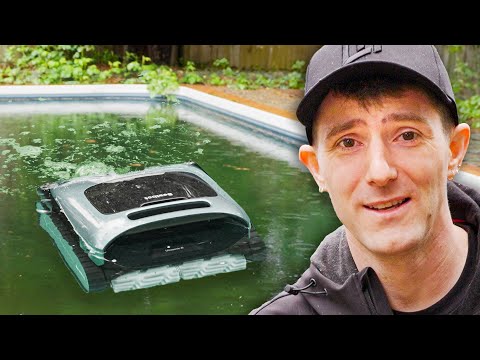
At first, the idea is appealing: no cables, no setup, just drop it in. But then reality kicks in. Limited runtime. Daily recharging. And weaker motors that struggle with large pools.
That’s not automation. That’s another chore.
Corded robotic cleaners, on the other hand, deliver consistent, uninterrupted power—often in the same 4,000+ GPH range we talked about earlier. No drop-off. No waiting hours for a recharge. Just plug it in, schedule it, and let it run.
In fact, many pool owners quickly realize that corded models offer stronger suction, better filtration, and true “set-it-and-forget-it” operation with weekly timers.
Yes, there’s a cable. But modern designs include tangle-reduction features, and in real-world use, it’s far less of an issue than people expect.
5.2 Filtration Quality: Fine vs NanoFilters
You know that moment when your pool looks clean… but the water still feels slightly cloudy?
That’s a filtration problem.
Basic mesh filters catch leaves and large debris—but fine particles like sand, algae, and dust slip right through. It’s like sweeping your house but leaving all the dust behind.
Higher-end systems use pleated filtration—often referred to as NanoFilters. These are tightly woven, designed to trap microscopic debris that standard filters miss.
The difference is dramatic.
Instead of just removing visible dirt, these filters polish the water. The kind of clarity where the deep end looks sharp and inviting—not hazy.
Because a pool that looks clean isn’t enough. You want it to feel clean.
5.3 Automation Features: Timers, Apps, and Smart Control
Let’s talk about real convenience.
Without automation, even the best robot becomes another task. You still have to walk outside, plug it in, start it… every single time.
That gets old fast.
Features like weekly timers completely change the experience. You set the schedule once, and the robot handles the rest—turning on, cleaning, and shutting off automatically.
Some models also include app connectivity, letting you start cycles, adjust settings, or monitor progress remotely. It’s not essential—but it’s nice to have.
The key takeaway? True automation means you forget about pool cleaning entirely. If you still have to think about it daily, something’s missing.
5.4 Maintenance and Ease of Use
Here’s the good news: modern robotic pool cleaners are surprisingly low-maintenance.
Most follow a simple routine—lift, open, rinse, done.
Top-access filter designs make a big difference here. Instead of flipping the robot over or dealing with complicated parts, you just pop the lid, remove the filter, and hose it off.
Setup is equally simple. These are plug-and-play systems—no booster pumps, no complicated installation. You can go from unboxing to cleaning in minutes.
That said, there are a couple of realities to keep in mind:
- Larger, more powerful units can feel heavy when lifting them out of the water
- Filters need regular cleaning, especially in leaf-heavy environments
But compare that to manual vacuuming, brushing walls, and skimming debris? It’s not even close.
6. Conclusion: Choosing the Right Dual-Drive Pool Robot for Your Needs
At the end of the day, owning a large pool shouldn’t mean giving up your weekends to maintenance.
Dual-drive motor robots solve the core problem: they bring the power, coverage, and consistency needed to handle big pools without constant supervision. Whether it’s the Dolphin Premier with its commercial-grade performance or the Dolphin Quantum built for heavy debris, both represent a massive upgrade over traditional cleaning methods.
The real decision comes down to your pool’s needs—maximum performance vs debris capacity.
But the bigger picture? Once you switch to a high-powered, fully automated cleaner, you stop thinking about cleaning altogether.
FAQ
Q: What is the advantage of a dual-drive motor in a pool robot?
A: Dual-drive motors separate suction power from movement. One motor focuses entirely on water filtration while the other ensures precise navigation and traction. This allows the robot to climb walls and scrub waterlines in large pools without losing grip or stalling during the cleaning cycle.
Q: Can these robots handle pools up to 50 feet long?
A: Yes, models like the Dolphin Premier and Quantum are specifically engineered for large in-ground pools up to 50 feet. Their high suction rates, ranging from 4,000 to 4,500 GPH, ensure they can cover significant surface areas efficiently within a single cleaning pass.
Q: Do these robots clean the waterline effectively?
A: High-end dual-drive robots are designed for full-surface coverage, including the floor, walls, and waterline. The dedicated drive motor provides the necessary torque to maintain contact with the vertical tile line, scrubbing away oily buildup and debris where standard robots often slip.
Q: What is the difference between standard filters and NanoFilters?
A: Standard mesh filters are designed to capture larger debris like leaves and twigs. NanoFilters, or pleated fine filters, are tightly woven to trap microscopic particles such as silt, sand, and algae, resulting in significantly clearer water by polishing the pool's surface at a microscopic level.
Q: Are corded pool robots better than cordless for large pools?
A: For large pools, corded models are generally superior because they provide uninterrupted power and higher suction GPH. Cordless units often have limited battery runtimes and weaker motors, which may not be sufficient to thoroughly clean a 40–50 ft pool in one charge.