
Top Robotic Cleaners for Fiberglass Pools (Traction Focus): Best Wall-Climbing Robots That Actually Grip
Aaron Cooper1. Introduction
Fiberglass pools look stunning—until you try to clean them. That sleek, glossy gel coat finish? It’s basically the pool equivalent of a freshly waxed car hood. Beautiful. And incredibly slippery.
That’s exactly why so many robotic cleaners fail here. They slide, lose grip, miss the walls, and leave that ugly waterline ring behind. Frustrating.
In this guide, we’re cutting through the noise to focus on what actually works: traction, wall-climbing, and full coverage. You’ll discover which robots truly grip fiberglass surfaces, how different drive systems perform, and which models consistently clean floors, walls, and waterlines—without slipping halfway up.
2. Why Traction Is Everything for Fiberglass Pool Cleaners
2.1 The Problem with Smooth Gel Coat Surfaces
Here’s the irony: the very thing that makes fiberglass pools low-maintenance also makes them hard to clean.
The gel coat surface is smooth, non-porous, and مقاiculously slick. Dirt, algae, and oils don’t embed—they sit on top. Sounds good, right? Until your robot tries to climb a wall and slowly slides back down like it just hit black ice.
This creates a chain reaction of problems. Missed wall sections. Patchy cleaning. That stubborn waterline ring that keeps coming back no matter how often you run the robot.
And it gets worse. Fiberglass can scratch. Use the wrong cleaner with aggressive brushes, and you’re not just cleaning—you’re slowly damaging the surface, creating tiny imperfections where algae can cling even more easily.
That’s why fiberglass isn’t about brute force. It’s about controlled grip + gentle, consistent cleaning.
2.2 Track vs Wheel Systems: What Actually Works
Let’s get real: not all robotic pool cleaners are built to handle fiberglass.
The biggest divide? Tracks vs. wheels.
Here’s how they stack up:
| Feature | Track-Driven Systems | Wheel-Driven Systems |
|---|---|---|
| Wall Climbing | Up to 90° vertical surfaces | Limited to gradual slopes |
| Grip on Fiberglass | High, consistent contact | Prone to slipping |
| Waterline Cleaning | Stable and controlled | հաճախ inconsistent |
| Overall Stability | मजबूत, أقل slippage | Less stable on slick surfaces |
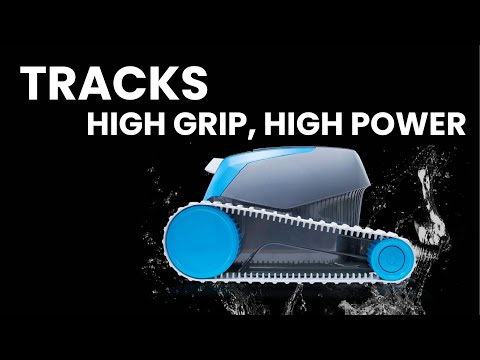
Track-driven robots behave more like a tank—spreading weight evenly and maintaining constant contact. Wheels, on the other hand, rely on نقط contact, which struggles on smooth gel coat.
In fact, industry comparisons show that rubber track systems can reduce slippage by up to 25% on slick surfaces. That’s the difference between a robot that actually reaches your waterline… and one that gives up halfway.
So when a robot claims “wall-climbing,” the real question is: Does it actually stay there? If it’s running on tracks, chances are—yes.
2.3 Must-Have Features for Fiberglass Safety and Performance
Once you understand traction, the rest of the buying decision becomes much clearer. The best fiberglass pool robots all share a few critical features—and skipping any one of them can bring back those same cleaning headaches.
- Soft, Non-Abrasive Brushes: Think soft PVC or PVA. These materials glide across the surface, lifting debris without scratching the gel coat. It’s the difference between gentle polishing and धीरे धीरे sanding your pool down over time.
- Strong, Consistent Suction: Fiberglass needs steady suction to keep the robot anchored while it climbs. Without it, even a tracked robot can lose contact mid-wall.
- Fine Filtration (Nano-level matters): Because debris sits on the surface, fine particles are highly visible. Systems like NanoFilters capture microscopic dirt, algae, and oils that standard mesh filters simply miss—preventing that cloudy look and surface staining.
- True Waterline Cleaning: Here’s the part most people underestimate: the waterline is where the worst buildup happens. Oils, sunscreen, and bacteria تجمع here. A robot that doesn’t scrub the waterline isn’t fully cleaning your pool. Period.
When all four come together—soft contact, strong grip, fine filtration, and full coverage—you get something rare: A robot that doesn’t just clean your pool. It keeps it looking brand new.
3. Top Robotic Cleaners for Fiberglass Pools (Best Traction Picks)
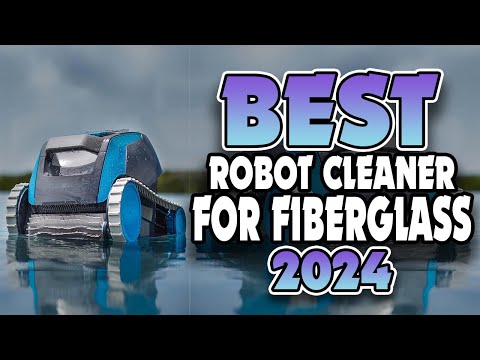
3.1 Best Overall: Dolphin Sigma (Maximum Grip + Smart Navigation)
If you’re tired of watching robots slip down your pool walls like they’ve given up halfway through the job, the Dolphin Sigma feels like a completely different experience.
What sets it apart starts with its triple-motor system and gyroscope-based navigation. Think of the gyroscope as the robot’s internal balance system—it constantly adjusts positioning so the cleaner doesn’t drift, tilt, or lose contact on slick surfaces. The result? More controlled climbs. More consistent coverage.
According to aggregated industry analysis, the Sigma’s triple-motor system with gyroscope navigation is specifically effective at maintaining grip on smooth fiberglass surfaces—something many robots struggle with.
In real-world use, that translates into something simple but powerful: it actually reaches the waterline… and stays there long enough to clean it properly.
Add in full coverage (floor, walls, waterline), NanoFiltration for fine debris, and smart app control, and you get a cleaner that feels less like a gadget—and more like a fully automated maintenance system.
Pros
- Superior grip with triple-motor drive
- Advanced gyroscope navigation prevents drifting
- NanoFiltration captures microscopic surface particles
Cons
- It’s a premium model with a higher price point
- Might be more machine than needed for small pools
3.2 Best for Wall Climbing: Cayman & Quantum Technologies
If your biggest frustration is poor wall climbing, this is where things get interesting.
You’ll notice the difference immediately. Where budget robots hesitate or stall, Cayman keeps moving. Up. Across. Along the waterline.
Then there’s the Quantum, which solves the same problem بطريقة مختلفة. Instead of relying purely on mechanical grip, it uses PowerJet 3D Mobility™—a system of water jets that stabilize and guide the robot along vertical surfaces. It’s almost like watching it “stick” to the wall using controlled thrust rather than friction alone.
The result?
- Better balance at the waterline
- Smoother navigation around tight corners
- More consistent horizontal movement across the dirtiest part of the pool
Trade-offs? Cayman leans more toward raw traction power. Quantum offers more finesse and maneuverability. Either way, both solve the same core problem: they don’t fall off your walls halfway through cleaning.
3.3 Best Cordless Innovation: Spino E1 and Smart Sensor Navigation
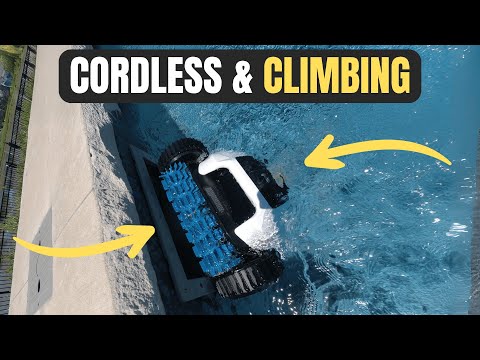
Cordless pool robots sound amazing—no cables, no tangling, just drop it in and walk away. But here’s the catch: convenience often comes at the cost of consistent power.
The Mammoth Spino E1 is one of the few cordless models trying to close that gap. It uses a triple-motor system, 12 sensors, and SmartArc navigation (a path-planning system that maps efficient cleaning routes instead of random movement). It also delivers floor, wall, and waterline cleaning, which many cordless models struggle to achieve reliably.
With a runtime of around 240 minutes per charge, it’s capable of finishing most standard pools in a single cycle—no mid-clean interruptions. And yes, the experience is refreshingly simple. No cords to manage. No setup headaches. Just drop it in and go.
So who is this for? If you value convenience above all else—and your pool isn’t constantly battling heavy debris—it’s a compelling option. If your priority is maximum grip and zero slippage? Corded, traction-focused machines still hold the edge.
4. Dolphin Sigma vs Premier vs Quantum: Which One Grips Best?
4.1 Navigation & Coverage: SmartNav vs PowerStream
At first glance, all three robots promise the same thing: full pool coverage. Floor, walls, waterline. Done.
But here’s where fiberglass changes the game.
On a slippery gel coat surface, how a robot moves matters just as much as whether it moves at all. Random movement isn’t just inefficient—it increases the chances of slipping, missing sections, or repeatedly cleaning the same spot while ignoring others.
The Dolphin Sigma leads here with SmartNav 3.0, a navigation system powered by onboard sensors and a gyroscope (think of it as an internal balance + orientation system). It helps the robot track where it’s been and maintain stable positioning—even when climbing vertical walls.
The Quantum uses SmartNav 2.0, which still maps the pool and avoids obstacles like drains and ladders, but with slightly less precision in path optimization.
Then there’s the Premier. It doesn’t lean as heavily on advanced mapping, but still delivers reliable, methodical coverage thanks to stabilizers and consistent movement patterns.
- Sigma: Most precise, least wasted movement
- Quantum: Balanced, efficient for mid-sized pools
- Premier: Steady and dependable, but less “smart”
4.2 Motor Power, Filtration, and Waterline Performance
This is where things get tangible. You don’t “see” motors—but you absolutely feel the difference in cleaning results.
The Sigma runs on a triple-motor system, giving it stronger propulsion and suction. That extra power is what helps it stay planted on vertical walls and scrub the waterline without dropping off midway. It also pushes water through fine filters more effectively, capturing the tiny particles that cause staining on fiberglass.
In fact, performance breakdowns show the Sigma delivering higher filtration flow compared to similar models, reinforcing its ability to maintain both suction and grip during wall climbs.
The Quantum uses dual motors, which still perform well but can feel slightly less aggressive on steep climbs. However, it compensates with efficient design and NanoFilters, making it a strong mid-range option for maintaining water clarity.
The Premier takes a different route. Its standout feature is MultiMedia filtration—giving you multiple filter types depending on your needs. Heavy leaves after a storm? Use the oversized bag. Fine debris causing cloudy water? Switch to NanoFilters.
| Feature | Dolphin Sigma | Dolphin Premier | Dolphin Quantum |
|---|---|---|---|
| Motors | Triple motors | Dual commercial-grade | Dual motors |
| Filtration | NanoFilters | MultiMedia (4 options) | NanoFilters |
| Waterline Cleaning | Excellent, stable | Strong, consistent | Good, slightly less aggressive |
| Traction Feel | Strongest grip | Very stable | Balanced |
4.3 Real-World Use: Which Model Fits Your Pool Size and Debris Type
So which one should you actually buy? This is where specs stop mattering—and your pool reality takes over.
- Choose Dolphin Sigma if: You want the least amount of intervention possible. Large pool, frequent use, visible waterline buildup. You press start… and expect everything handled. Its traction, navigation, and power make it the closest thing to “set and forget” for fiberglass.
- Choose Dolphin Premier if: Your pool deals with changing debris conditions—leaves in fall, fine dust in summer. The MultiMedia system lets you adapt without buying another machine. It’s not flashy, but it’s incredibly practical.
- Choose Dolphin Quantum if: You want strong performance without going full premium. It’s especially well-suited for pools under 50 feet, delivering reliable wall climbing and waterline cleaning with a more accessible price point.
"There’s no universal 'best.' Match the robot to your pool—not the other way around. That’s how you avoid buyer’s remorse."
Best For...
- Sigma: Big pools + zero tolerance for missed spots
- Premier: Mixed debris + filtration flexibility
- Quantum: Balanced performance + value
5. What Most Reviews Don’t Tell You About Traction Performance

Most reviews fall back on surface-level claims: “great wall climber,” “excellent traction,” “handles smooth surfaces well.” But what do those actually mean? Not much—unless you know how to read between the lines.
Instead of chasing non-existent traction metrics, focus on the engineering signals that indirectly tell you how a robot will perform:
- Drive system: Tracks and rubber treads consistently outperform wheels on slick gel coat
- Motor configuration: More power = better ability to maintain contact on vertical surfaces
- Navigation stability: Gyroscopes and smart mapping reduce unnecessary movement that leads to slipping
- Waterline capability: If it can stay horizontal at the surface, it has real grip—not just marketing
In other words, you’re not buying “traction” as a spec. You’re buying the combination of features that create it.
6. Conclusion: How to Choose a Fiberglass Pool Robot That Won’t Slip
Fiberglass pools demand a different standard. Smooth surface. Visible debris. Zero margin for slipping.
So the decision comes down to a simple framework:
Prioritize traction first—look for track systems, strong motors, and stable wall-climbing. Then confirm gentle cleaning with soft brushes that won’t damage the gel coat. Add fine filtration to prevent staining, and make sure it includes true waterline cleaning—because that’s where the real mess lives.
Get this right, and something shifts. Your pool stops being a chore. And starts feeling like it should.
Check Price on Amazon
FAQ
Q: Why do robotic cleaners struggle with fiberglass pools?
A: Fiberglass pools feature a smooth, non-porous gel coat that is significantly more slippery than concrete or vinyl. Many robots lose traction on these slick surfaces, causing them to slide down walls or fail to reach the waterline during their cleaning cycles.
Q: Are track-driven or wheel-driven robots better for fiberglass?
A: Aggregated performance data suggests that track-driven systems are superior for fiberglass. Tracks provide a larger contact patch and more consistent grip than wheels, which helps the robot maintain stability and prevent slippage while climbing vertical gel coat walls.
Q: Will robotic pool cleaner brushes scratch my fiberglass finish?
A: Most modern robotic cleaners use soft PVC or PVA brushes designed to be non-abrasive. These materials are effective at lifting debris and biofilm without damaging or scratching the delicate and glossy gel coat finish of a fiberglass pool.
Q: What is the benefit of a gyroscope in a pool robot?
A: A gyroscope acts as an internal balance system, helping the robot maintain its orientation. On slippery fiberglass surfaces, this technology prevents the robot from drifting or tilting, ensuring more precise navigation and more reliable wall-climbing performance.
Q: How often should I run my robot in a fiberglass pool?
A: Because fiberglass surfaces are smooth, dirt and algae sit on top rather than embedding. Running your robot 2-3 times per week helps prevent these particles from settling and prevents the formation of a stubborn waterline ring.