
Top Robotic Pool Cleaners for Kidney-Shaped Pools: Best Picks for Curves, Coverage & Smart Navigation
Aaron Cooper1. Introduction
Kidney-shaped pools look stunning—until it’s time to clean them. Those elegant curves, the narrow “pinch” in the middle, and constantly changing depths turn what should be a quick vacuum job into a frustrating, never-ending chore. Traditional robotic cleaners, especially ones designed for rectangular pools, often leave behind dirty edges, missed corners, and that stubborn waterline ring.
This guide cuts through the noise. We’ll break down why kidney pools are so tricky, what technology actually solves the problem, and the best robotic cleaners that can handle curves, slopes, and tight transitions—without you babysitting the process.
2. What Makes Kidney-Shaped Pools Harder to Clean?
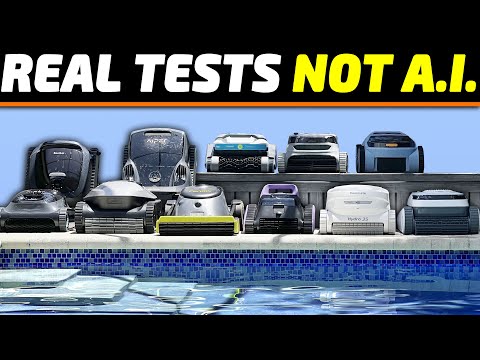
2.1 Curves, Narrow Waists, and Asymmetry: The Core Challenges
At first glance, a pool is just… a pool. But kidney-shaped designs are a completely different beast.
Instead of straight lines and predictable corners, you’re dealing with flowing curves, two rounded “lobes,” and a narrow waist that connects them. That middle pinch point? It’s where debris loves to settle—and where many robots hesitate, turn awkwardly, or just give up and loop back.
Then there’s the depth variation. One side might slope gently while the other drops faster, which can throw off robots that rely on simple movement logic. Without real-time awareness, they treat your pool like a rectangle—and that’s where things fall apart.
Because let’s be honest—if you still have to grab a brush for the “problem areas,” what’s the point?
2.2 Why Basic Navigation Robots Miss Spots
Here’s the uncomfortable truth: a lot of “smart” pool robots… aren’t that smart.
Many entry-level models rely on random or pattern-based navigation. They move in straight lines, bounce off walls, and hope that over time, they’ll cover everything. In a rectangular pool, that might work. In a kidney shape? It’s chaos.
- The robot cleans the same open area three times
- It skips tight inner curves entirely
- It struggles at transitions between floor and wall
- It leaves thin strips of debris hugging the edges
Independent comparison tests consistently show this problem—robots can achieve strong floor coverage but fall short on walls and edges, sometimes cleaning only a portion of vertical surfaces while missing key sections entirely.
Even worse, some units get stuck in corners or along slopes, wasting battery or time repeating the same movement loop.
It’s not just inefficient. It’s frustrating. Because instead of “set it and forget it,” you’re stuck watching it… correcting it… restarting it. That’s not automation. That’s babysitting.
2.3 The Importance of Full Coverage: Floor, Walls, and Waterline
If you’ve ever wondered why your pool still looks dirty after a full cleaning cycle, here’s the reason: not all cleaning zones are equal.
The floor collects leaves and debris—but the real trouble lives higher up.
The waterline, where air meets water, is where oils, sunscreen, pollen, and algae build up fastest. In fact, industry analysis shows that over 90% of bacteria and algae accumulate along the waterline. Skip this area, and you’ll still be scrubbing by hand every few weeks. Guaranteed.
That’s why full coverage—floor, walls, and waterline—is the gold standard.
Top-tier robots don’t just climb walls; they stabilize themselves and move horizontally along the waterline, actively scrubbing that stubborn ring. Combine that with strong wall-climbing and consistent floor coverage, and suddenly your pool maintenance routine changes completely.
No more:
- Bending over with a brush
- Scrubbing tiles on a hot afternoon
- Re-running the robot because it “missed a spot”
3. Top Robotic Pool Cleaners for Kidney-Shaped Pools
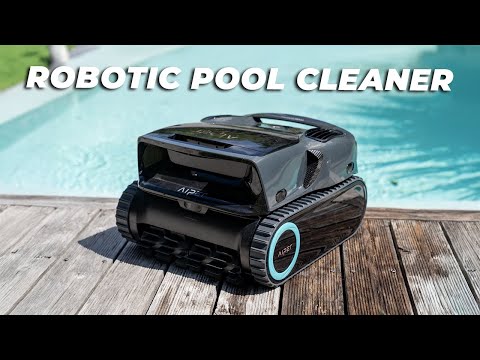
3.1 Best Specialized Option: Beatbot AquaSense 2
If kidney-shaped pools had a “custom-built” solution, this would be it.
The Beatbot AquaSense 2 isn’t just another robot trying to adapt—it’s designed specifically for irregular, asymmetrical layouts. And you feel that difference immediately in how it moves.
Instead of bouncing around, it uses SonicSense™ sensors paired with CleverNav™ planning to map and follow the actual shape of your pool. That means it recognizes the tight inner curve, adjusts through the narrow waist, and doesn’t ignore those awkward transition zones.
Pros
- Designed for asymmetrical, kidney-shaped layouts
- Strong edge and waterline coverage with dual-pass scrubbing
- Smart surface parking makes retrieval easy
Cons
- Premium pricing tier
- Some independent tests note occasional missed sections despite mapping
3.2 Best Value Pick: Dolphin Quantum
Not everyone wants to spend top dollar—and honestly, you don’t have to.
The Dolphin Quantum hits a sweet spot where performance meets practicality. It uses SmartNav™ 2.0 mapping, which is specifically designed to handle curves and irregular layouts better than basic pattern-based cleaners.
In real-world use, that translates to more consistent movement through the pool’s “pinch” area and fewer awkward turns along curved walls. Another standout feature? NanoFiltration™. Instead of letting fine debris slip through like standard mesh filters, it captures the stuff that actually makes your water look cloudy.
Pros
- Strong value for the price
- Reliable navigation for curved layouts
- Excellent fine-particle filtration
Cons
- Less advanced mapping than premium models
- No high-end smart features like app-based optimization
3.3 Best Premium Performance: Dolphin Sigma
If you want the “set it and forget it” experience dialed all the way up, the Dolphin Sigma is where things get serious.
This is a flagship-level cleaner with SmartNav™ 3.0—an upgraded navigation system designed for complex shapes. Compared to earlier versions, it’s more precise in how it maps and covers irregular pools, reducing overlap and missed zones.
Pros
- Most advanced navigation in the Dolphin lineup
- Full coverage with excellent wall and waterline performance
- App control and scheduling for true automation
Cons
- Premium price point
- Overkill for smaller or simpler pools
3.4 Alternative Smart Option: Polaris ALPHA iQ
Prefer something outside the Dolphin ecosystem? The Polaris ALPHA iQ is a strong contender.
What makes it interesting is its SMART Cycle mode. Instead of following a fixed pattern, it analyzes your pool—shape, size, and surface—and calculates an efficient cleaning path before it even gets started.
Pros
- Adaptive cleaning strategy with SMART Cycle
- Strong mobility with 4WD system
- App control and ongoing updates
Cons
- Slight learning curve with smart features
- Not as specialized for kidney shapes as sensor-driven models
4. Real-World Performance Comparison: What Actually Matters

4.1 Suction Power and Debris Pickup in Irregular Pools
Let’s get real for a second—navigation means nothing if your robot can’t actually pick stuff up.
Kidney-shaped pools make this painfully obvious. Leaves settle in curved pockets, sand collects along slopes, and debris hides in that narrow middle section. Weak suction doesn’t just underperform—it leaves behind a trail of “almost clean” areas that drive you insane.
Across independent testing and expert reviews, high-performing models consistently deliver strong water flow and debris pickup. For example, some Dolphin models operate at around 4,500 gallons per hour of filtration throughput, which translates into noticeably better pickup of leaves, grit, and fine debris in a single pass.
- Fewer repeated cycles
- Less debris getting pushed around instead of captured
- A visibly cleaner pool after one run
Lower-powered robots? They tend to stir up debris without fully capturing it—especially in curved sections where water flow is less predictable.
The takeaway: in a kidney-shaped pool, suction isn’t just about power. It’s about finishing the job the first time.
4.2 Wall Climbing and Waterline Scrubbing Performance
Here’s where most robots get exposed.
Climbing a straight wall is one thing. Holding position on a curved wall, transitioning smoothly, and then scrubbing the waterline? That’s a completely different challenge.
And that waterline? It’s the dirtiest part of your pool.
This is where models like the Beatbot AquaSense 2 stand out with dual-pass waterline scrubbing—meaning each section gets cleaned twice in a single cycle. On curved edges, that repeated contact makes a visible difference, especially where buildup forms faster.
Dolphin Sigma and Quantum also perform well here, thanks to stable wall climbing and consistent horizontal movement along the waterline.
Performance Tiers
- Top-tier robots: Stay, scrub, and finish the waterline job.
- Better robots: Clean the wall effectively.
Common Failures
- Basic robots: Only reach the wall without scrubbing.
If you’re still brushing your waterline manually… this is the feature you’re missing.
4.3 Filtration Systems: Why Fine Particle Capture Matters
Ever notice your pool looks clean—but the water still feels… cloudy?
That’s a filtration problem.
Most budget robots use simple mesh filters. They’ll grab leaves and bugs, sure—but fine debris like pollen, dust, and algae? It slips right through and goes back into the water.
That’s why systems like NanoFiltration™ matter so much.
Think of it like upgrading from a kitchen strainer to a high-end air purifier. Instead of just catching the obvious debris, it traps the microscopic stuff that actually affects water clarity. Models like the Dolphin Quantum and Sigma include NanoFilters designed to capture:
- Fine dirt and sediment
- Algae particles
- Oils and residues that contribute to scum lines
If your current robot leaves the water dull or hazy, filtration—not suction—is usually the missing piece.
4.4 Automation and Smart Features: App Control vs Set-and-Forget
Here’s a question most buyers don’t ask upfront: Do you want a robot you control… or one that just handles everything?
Because there’s a big difference.
Some models, like the Dolphin Sigma or Polaris ALPHA iQ, lean into app control. You can schedule cleanings, monitor cycles, and tweak settings from your phone. It’s convenient—especially if you like control.
But here’s the flip side: more features can mean more setup, more decisions, more tinkering.
On the other hand, many corded robots focus on “set-and-forget” simplicity—especially those with weekly timers. You press one button, and the robot runs automatically on a schedule. No apps. No babysitting.
And honestly? For busy homeowners, that’s often the better experience. Because the real goal isn’t controlling your robot. It’s forgetting your pool even needs cleaning.
5. Corded vs Cordless Robots: Which Is Better for Complex Shapes?

5.1 Corded Robots: Power, Consistency, and True Automation
Let’s cut through the marketing hype—corded robots still dominate where it actually counts.
Kidney-shaped pools demand consistency. Curves, slopes, and irregular edges require sustained power and long, uninterrupted cleaning cycles. That’s exactly where corded models shine.
They deliver continuous performance—no battery drop-off, no mid-cycle slowdown. Many also support scheduled cleaning, so your pool gets cleaned automatically without you lifting a finger.
- Drop the robot in once.
- Let it run on a weekly schedule.
- Only touch it when it’s time to empty the filter.
No interruptions. No charging. No second guesses. When you’re dealing with complex shapes, that uninterrupted cleaning time often means better coverage—especially in tricky areas like the narrow waist or deep-end slopes.
Bottom line: if you want reliability and true automation, corded is still the gold standard.
5.2 Cordless Robots: Convenience with Trade-Offs
Cordless robots sound amazing on paper. No cables. No tangles. Just drop it in and go. But here’s the reality most people don’t realize until after they buy one… you’re trading convenience for performance.
Cordless Benefits
- No cable tangles
- Easy deployment
Critical Trade-Offs
- Limited run time before recharging
- Manual retrieval required after every cycle
- Typically weaker suction than corded models
In a simple, rectangular pool, that might be fine. In a kidney-shaped pool? It becomes a problem. Because when the battery runs out mid-clean—or the robot misses areas—you’re back outside restarting it, repositioning it, or running multiple cycles.
That’s not automation. That’s extra work.
5.3 Safety and Reliability Considerations
There’s one more factor that rarely gets talked about—but should. Battery safety.
Recent industry reports and recalls have raised concerns about certain cordless pool cleaners, particularly around lithium-ion battery overheating and charging risks. While not every model is affected, it highlights an important point: reliability matters just as much as performance.
Corded robots avoid this entirely. No battery. No charging risks. Just consistent, predictable operation. When you’re investing in a long-term solution—not a gadget—you want something that works the same way every time you drop it in the water.
The last thing you want from a “labor-saving” device… is another thing to worry about.
6. Conclusion: How to Choose the Right Robot for Your Kidney-Shaped Pool
Kidney-shaped pools don’t need just any robot—they need a smart one.
The biggest mistake? Focusing only on price or suction. What really matters is how well the robot handles curves, transitions, and full coverage—from floor to walls to that stubborn waterline.
| Need | Recommended Model |
|---|---|
| Purpose-built for curves | Beatbot AquaSense 2 |
| Balanced value & filtration | Dolphin Quantum |
| Premium automation & mapping | Dolphin Sigma |
Choose based on your pool’s complexity and how hands-off you want to be.
FAQ
Q: Why are kidney-shaped pools difficult for robotic cleaners?
A: Kidney-shaped pools feature asymmetrical curves and narrow "pinch" points that confuse standard navigation algorithms. Without advanced mapping or sensors, many robots struggle to maintain a consistent cleaning path, often missing the inner curves and transition zones between the floor and walls.
Q: What navigation technology works best for curved pools?
A: Based on technical specifications, systems utilizing real-time contour mapping and sensor-driven navigation (like SonicSense or SmartNav) are superior. These technologies allow the robot to trace the actual shape of the pool rather than relying on random patterns or basic wall-bouncing logic.
Q: Is waterline scrubbing necessary for irregular pools?
A: Yes, because organic debris and oils tend to accumulate heavily along the waterline of curved pools. High-end robots with horizontal waterline scrubbing capabilities ensure that these stubborn rings are removed automatically, reducing the need for manual brushing and chemical treatments.
Q: Are corded or cordless robots better for complex pool shapes?
A: Data suggests corded robots are generally more reliable for complex layouts. They offer uninterrupted power for long cleaning cycles and consistent suction, which is essential for navigating the varied slopes and tight turns found in kidney-shaped pool designs.
Q: What is the benefit of NanoFiltration in pool cleaners?
A: While standard mesh filters catch large leaves, NanoFiltration systems are designed to trap fine particles like silt, pollen, and algae. This is critical for maintaining water clarity in irregular pools where fine debris often settles in curved pockets.