
Wybot Osprey 700: Spec Analysis and Battery Performance Review – Is 110-Min Runtime Enough for Your Pool?
Aaron Cooper1. Introduction
Pool cleaning always sounds simple… until you’re the one dragging hoses, untangling cords, and scooping out soggy leaves under the sun. That’s exactly the kind of frustration cordless robots like the Wybot Osprey 700 are trying to eliminate.
On paper, it checks a lot of boxes: an 8800 mAh battery, up to 110 minutes of runtime, and fully cordless operation. But here’s the real question most pool owners care about—is that actually enough to clean your entire pool without stopping halfway?
2. Wybot Osprey 700 Specifications Breakdown: What the Numbers Really Mean
2.1 Battery Capacity, Runtime, and Charging Explained
Let’s start with the number everyone fixates on: 110 minutes of runtime. Sounds solid—but what does that actually feel like in real life?
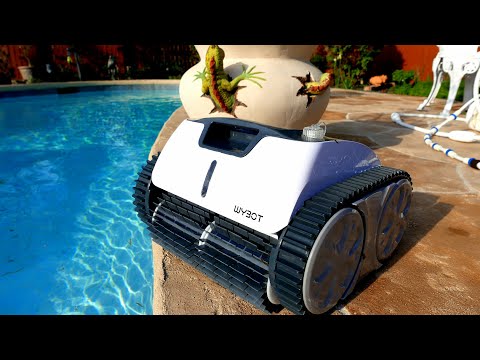
The Osprey 700 runs on an 8800 mAh battery, paired with a 10.8V system and 65W power output. Instead of thinking in raw numbers, imagine this: it’s designed to balance endurance and consistent suction without fading halfway through a cycle. That’s crucial, because weaker cordless cleaners often start strong… then quietly lose power when you need them most.
Charging takes about 3.5 hours, which puts it in the “same-day reuse” category. Drop it in the pool in the morning, recharge over lunch, and it’s ready again by afternoon. No overnight waiting.
If your goal is a quick weekly refresh instead of rescuing a neglected pool, this battery setup hits a very practical sweet spot.
2.2 Coverage, Suction, and Filtration: Cleaning Power in Practice
Numbers like 6500 GPH suction and 1000 sq ft/hour coverage sound impressive—but what do they actually mean when your pool is full of sand, leaves, and mystery debris?
Let’s translate.
The suction level is strong enough to handle the usual suspects: fine sand, dirt, leaves, and small debris. It’s not just about power—it’s about consistency. Combined with a dual 2-micron filtration system, the Osprey 700 doesn’t just pick up visible debris; it traps the stuff that usually clouds your water.
That filtration level is where things get interesting. According to specifications highlighting its dual ultra-fine filtration system, it’s capable of capturing very small particles that cheaper cleaners often recirculate back into the pool.
In practice, this means fewer “it looks clean but still feels gritty” moments.
| Feature | Specification |
|---|---|
| Suction Power | 6500 GPH |
| Filtration Precision | Dual 2-micron |
| Cleaning Rate | 1000 sq ft/hour |
The 1000 sq ft/hour cleaning rate also gives you a rough mental timer. A متوسط-sized pool won’t feel endless anymore—you can actually estimate how long the robot needs instead of guessing.
It doesn’t just clean. It systematically clears. And that difference shows up when you step in barefoot.
2.3 Mobility System: Motors, Wheels, and Wall-Climbing Ability
Here’s where a lot of robotic cleaners either impress… or completely fall apart.
The Osprey 700 uses a three-motor system, which basically splits responsibilities: propulsion, suction, and navigation. Why does that matter? Because single-motor systems tend to struggle when doing multiple things at once—especially when climbing walls.
With three motors working together, movement feels more deliberate. Pair that with tank-like wheels, and you get better traction across slippery pool floors and slopes.
But the real headline feature? Wall climbing.
Its movement is guided by what’s often described as intelligent path planning that reduces overlap and missed spots. In simple terms: instead of wandering randomly, it tries to clean in a structured pattern.
Is it perfect? No robot is. But compared to basic “bump-and-turn” cleaners, this feels far more intentional—and far less frustrating to watch.
3. Battery Performance in Real Pools: Can It Finish the Job?
3.1 110 Minutes in Reality: Light Cleaning vs Deep Cleaning
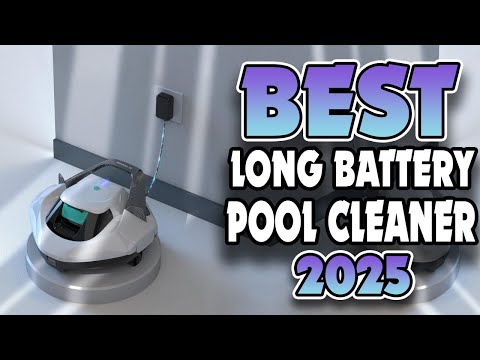
Here’s the honest truth: 110 minutes is enough—just not always in the way you expect.
If your pool is already in decent shape, that runtime usually covers a full cleaning cycle without issue. Drop it in, let it run, and you’re done. That’s the ideal scenario.
But what if your pool hasn’t been cleaned in weeks? That’s where things change. Real-world observations show that heavily soiled pools may require two cleaning cycles to fully finish the job.
Maintenance Clean
- One quick cycle
- Full 110-minute potential
- Effortless weekly upkeep
Deep Clean/Post-Storm
- Two cleaning cycles required
- Higher motor strain
- Increased battery drain
Once the initial deep clean is done, though, maintenance becomes easy—and that’s where the Osprey 700 shines. Regular weekly use fits comfortably within a single charge.
3.2 Pool Size Matching: Up to 2,000 sq ft—But With Conditions
The official claim says it can handle pools up to 2,000 sq ft. That sounds generous, but there’s a nuance most people miss.
The cleaner works at about 1000 sq ft per hour. So if you do the math, a full 110-minute run theoretically covers a large portion of that maximum size—but not always perfectly in one go.
- Small to medium pools: One cycle is usually enough, even with moderate debris.
- Larger pools (approaching 2,000 sq ft): Coverage is possible, but may feel tight on time.
- Heavily dirty large pools: Expect multiple runs.
This doesn’t mean it underperforms—it just means expectations matter. If you’re maintaining a متوسط-sized backyard pool, this robot feels effortless.
3.3 Charging Habits and Temperature Considerations
Battery performance isn’t just about capacity—it’s about how you treat it.
The Osprey 700 is designed to charge in about 3.5 hours, but there’s a key recommendation: charge it indoors, within a temperature range of 41°F to 95°F.
The charging process itself is simple: access the port on top, plug it in, and you’re set. No complicated setup, no awkward cable management.
And here’s a small but important detail—because it charges relatively quickly, doing two cleaning cycles in a single day is actually realistic. That’s a huge advantage if you’re prepping your pool for guests or recovering from a storm.
4. Is the Wybot Osprey 700 Worth Buying? Feature Comparison and Value

4.1 Cordless Convenience vs Traditional Corded Cleaners
Let’s be honest—corded pool cleaners can feel like wrestling a garden hose… underwater.
You’re dealing with tangled cables, limited reach, and constantly repositioning the unit. It works, sure. But it’s not exactly the “relaxing backyard experience” you had in mind.
That’s where the Wybot Osprey 700 flips the script. No cord. No booster pump. No setup gymnastics. You drop it in, press a button, and walk away. That freedom is the real selling point.
But here’s the trade-off.
Corded models—like many Dolphin cleaners—offer continuous power. They don’t stop after 110 minutes. They can run longer cycles and often include scheduled cleanings, meaning your pool gets cleaned automatically even when you forget.
So what matters more to you?
- Effortless, grab-and-go cleaning with zero setup
- Or unlimited runtime with more automation features
For most everyday pool owners? The freedom is addictive.
4.2 Navigation and Smart Features: Gyroscope vs Premium Mapping
Ever watched a cheap pool robot bounce around like it’s lost? That’s exactly what smarter navigation tries to fix.
The Osprey 700 uses gyroscope-based navigation—think of it like an internal sense of direction that helps the robot move in more structured paths instead of random zigzags. It’s not just wandering aimlessly; it’s trying to cover your pool efficiently.
In fact, its gyroscope-guided path planning system is designed to reduce overlap and missed areas, which is a noticeable step up from basic “bump-and-turn” cleaners.
But let’s keep expectations grounded.
Higher-end models—like Dolphin Sigma—go further. They offer:
- Wi-Fi connectivity
- App control
- Weekly scheduling
- Real-time control and spot cleaning
The Osprey 700 doesn’t have those. No app. No automation. You manually start each cycle.
So the question becomes: do you need smart features, or do you just want a clean pool?
If you’re the type who enjoys setting schedules and controlling everything from your phone, this might feel a bit basic. But if you just want something that works when you drop it in—without tech headaches—it hits a very practical sweet spot.
4.3 Suction and Wall-Climbing Compared to Competitors
Cleaning performance is where things get interesting—because not all “powerful” cleaners behave the same.
The Osprey 700 delivers strong suction capable of handling sand, dirt, and leaves, backed by a three-motor system that keeps movement and pickup consistent. It doesn’t just vacuum—it scrubs and climbs.
And yes, it climbs walls.
On the flip side, premium robotic models like Dolphin units combine powerful scrubbing with highly refined wall navigation and multi-surface adaptability. They tend to feel more “polished” in how they move and clean.
So where does the Osprey 700 land?
- Strong all-around cleaning for floors, walls, and waterline
- Reliable debris pickup across common pool conditions
- Slightly less refined movement compared to top-tier robots
It’s not the most advanced cleaner on the market. But it covers more than you’d expect at its level.
And for many users, that’s more than enough.
4.4 Who Should Buy It (and Who Should Skip It)
This is where everything clicks—or doesn’t.
The Wybot Osprey 700 makes the most sense if you see yourself in this situation:
You’ve got a medium-sized pool, you clean it regularly, and you’re tired of dealing with hoses, cords, and complicated setups. You want something simple. Drop it in. Walk away. Done.
Who Should Buy It
- Your pool stays relatively maintained
- You value convenience over advanced automation
- You want solid performance without jumping into premium pricing
Who Should Skip It
- Your pool is large and heavily debris-prone
- You expect fully automated scheduled cleaning
- You want app control and smart home integration
So is it worth buying?
If your goal is consistent, low-effort maintenance, it absolutely is. If your goal is set-it-and-forget-it perfection for a large pool, you may outgrow it.
5. Ownership Reality: Maintenance, Reliability, and What’s Missing
5.1 Maintenance Routine: Filters, Cleaning, and Upkeep
Here’s the part no one tells you: even the best pool robot still needs a little love.
The good news? The Osprey 700 keeps this refreshingly simple.
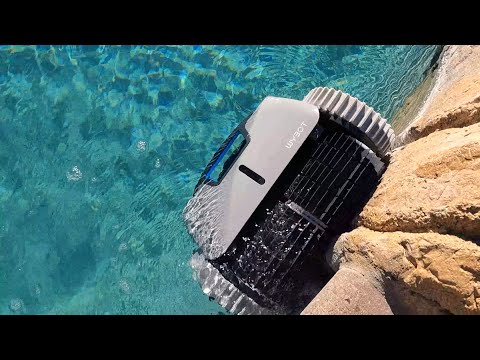
It uses a dual filter cartridge system with a quick-release design. Translation: no tools, no complicated disassembly. You pop it open, rinse it with a garden hose, and you’re done.
After a cleaning cycle, imagine lifting the unit out, opening the top, and blasting away all that trapped debris in under a minute. No digging. No mess. No frustration.
That 2-micron filtration also means it’s catching fine particles—not just leaves—so regular cleaning of the filter becomes important to maintain performance.
Less time maintaining the cleaner… means more time actually enjoying your pool. And honestly, that’s the whole point.
5.2 Common Limitations of Cordless Pool Robots
Now let’s talk about the stuff manufacturers don’t highlight.
Cordless pool robots—including the Osprey 700—share a few common trade-offs.
- They can get stuck: Steps, drains, corners—these are classic trouble spots.
- Runtime limits everything: That 110-minute window is generous, but it’s still a ceiling.
- No scheduling: Unlike premium corded models, you can’t automate weekly cleaning.
These aren’t dealbreakers—but they are realities.
Think of cordless robots as incredibly convenient tools, not fully autonomous systems. They reduce effort dramatically, but they don’t eliminate involvement completely.
5.3 Battery Longevity: What We Know (and What We Don’t)
Here’s where things get a bit uncertain—and it’s important to be upfront about it.
There’s no detailed long-term degradation data specifically for the Osprey 700’s battery. No multi-year studies. No clear performance curve after hundreds of cycles.
What we do know comes from general lithium battery behavior. Over time, you can expect:
- Slightly shorter runtimes
- Gradual efficiency loss
- Increased sensitivity to charging conditions
So while the 110-minute runtime looks great today, it’s smart to view it as a “best case” that may slowly shift over time.
6. Conclusion: Is the 110-Minute Runtime Enough for Your Pool?
So—does 110 minutes actually cut it?
For most pool owners, yes… with a caveat.
If your pool is moderate in size and regularly maintained, the Wybot Osprey 700 fits beautifully into your routine. One cycle, clean pool, no hassle. That’s where it shines.
But if you’re dealing with larger pools or heavy debris, that runtime starts to feel like a limit rather than a luxury. You may need a second cycle—and a bit more patience.
This isn’t a “set it and forget it forever” machine. It’s a highly convenient, low-effort maintenance tool that dramatically reduces the work—just not 100%.
FAQ
Q: How long does the Wybot Osprey 700 battery last on a single charge?
A: According to technical specifications, the 8800 mAh battery provides up to 110 minutes of runtime. Real-world performance may vary based on debris levels and pool surface types, as heavy scrubbing and wall climbing consume more power than floor-only cleaning.
Q: Can the Wybot Osprey 700 clean the waterline?
A: Yes, the Osprey 700 features a three-motor system and tank-style wheels designed to climb walls and reach the waterline. This allows it to scrub the grimy buildup that often accumulates at the top of the pool surface.
Q: How long does it take to fully recharge the battery?
A: The device typically requires approximately 3.5 hours for a full charge. For optimal battery longevity, it is recommended to charge the unit in a temperature-controlled indoor environment between 41°F and 95°F.
Q: Does this robot include Wi-Fi or app control?
A: No, the Osprey 700 is a manual-start cordless cleaner. It uses gyroscope-based path planning for systematic cleaning but does not feature smartphone connectivity, remote control, or the ability to set automated weekly schedules.
Q: What type of debris can the filtration system handle?
A: The unit is equipped with a dual 2-micron filtration system. This high-density setup is designed to capture both large debris like leaves and very fine particles such as sand and silt, preventing them from recirculating.