
Wybot vs. Aiper: Budget Cordless Brand Comparison – Which Pool Robot Actually Delivers Better Value?
Aaron Cooper1. Introduction
Cordless pool robots are having a moment—and it’s easy to see why. No tangled cables, no complicated setup, no dragging hoses across your patio. Just drop it in and walk away. Sounds perfect, right?
That’s exactly why comparisons like Wybot vs. Aiper are exploding right now. Both brands promise affordable, hassle-free cleaning—but once you get past the marketing, the real question hits: Do they actually clean your pool well enough to justify skipping a corded machine?
2. Wybot vs. Aiper: Core Performance Comparison That Actually Matters

2.1 Battery Runtime and Cleaning Time: Who Finishes the Job?
Let’s start with the one thing that quietly determines everything: battery life.
Because here’s the reality—if your robot runs out of juice halfway through, it doesn’t matter how “smart” or “powerful” it claims to be. You’re left with a half-clean pool and a second cleaning cycle you didn’t plan for.
Across multiple model tiers, Wybot consistently pushes longer cleaning sessions. Mid-range options like the C1 and C2 typically run longer than comparable Aiper units, often stretching into extended cleaning windows that better cover medium-to-large pools. In contrast, Aiper’s entry and mid-range models tend to offer shorter or less consistent runtimes.
That’s why this gap matters. A robot with 40–80% longer runtime in comparable tiers doesn’t just “last longer”—it actually finishes the job in one go.
If your pool is anything beyond small and simple, that difference is the line between “set it and forget it”… and “babysit it all afternoon.”
2.2 Suction Power and Debris Handling: Fine Sand vs Leaves
Now let’s talk about what you actually see after a cleaning cycle: what’s left behind.
At first glance, Aiper seems to have the edge here. Models like the Scuba S1 are known for strong initial suction and do a solid job grabbing larger debris like leaves and small twigs. Drop it in after a windy day, and it’ll pick up what’s directly in its path.
But here’s the catch—and it’s a big one.
That suction doesn’t always stay consistent. As the battery drains, performance can taper off. In practical terms? The first half of your pool looks great… the second half, not so much.
Wybot takes a different approach. Instead of chasing peak suction numbers, its dual-motor systems focus on steady, consistent pickup throughout the entire cycle. That shows up in real-world scenarios—especially with fine debris like sand, silt, or that annoying dusty layer you feel under your feet.
And both brands, to be fair, sit in the “good but not amazing” category compared to corded robots. You’ll still see some debris stirred up or missed on the first pass.
So the trade-off is clear:
Aiper
- Stronger burst performance
- Better for larger debris like leaves and twigs
Wybot
- More consistent cleaning throughout cycle
- Better for mixed and fine debris (sand/silt)
If your pool deals with fine dirt or pollen regularly, consistency wins. Every time.
2.3 Wall Climbing, Waterline Cleaning, and Coverage Gaps
Here’s where a lot of buyers get caught off guard.
You assume your robot cleans the whole pool—floor, walls, waterline. But with budget cordless models, that’s often… not true.
A large portion of Aiper’s lineup focuses on floor-only cleaning. Even when wall-climbing is available (like on higher-end models), real-world performance can be inconsistent. You’ll see it start climbing, hesitate, drop off, and leave patches behind—especially along the waterline where grime builds up the most.
Wybot, on the other hand, starts offering full-surface cleaning (floor + walls + waterline) earlier in its lineup. Models like the C1 and above are designed to actively climb, scrub, and return—rather than just attempt it.
That’s not just a feature difference—it’s a maintenance difference. Because if your robot skips the waterline, guess who’s back with a scrub brush every weekend?
2.4 Navigation and Smart Features: Random vs Pattern Cleaning
Finally, let’s talk about something you can’t always see—but definitely feel: how the robot moves.
Ever watched a pool robot zigzag randomly, hitting the same spot five times while ignoring an entire corner? That’s what basic navigation looks like.
Many Aiper entry-level models rely on random movement patterns. They bounce, turn, and hope to eventually cover everything. Sometimes they do. Sometimes they don’t. Missed spots are common, especially in larger or irregular-shaped pools.
Wybot takes a more structured approach. Mid-range models introduce S-path and N-path cleaning patterns—basically methodical back-and-forth coverage, similar to how a robot vacuum maps your living room.
The difference is subtle at first… until you check your pool afterward. Instead of wondering what got missed, you get predictable, repeatable coverage. Add in app controls and scheduling (available on many Wybot models), and you start getting closer to actual automation—not just “drop and hope.”
So ask yourself:
Do you want your robot to wander around your pool… or systematically clean it?
3. Are Budget Cordless Pool Robots Worth It (or Just Convenient)?
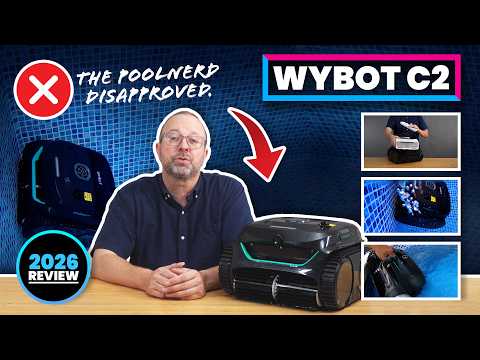
3.1 The Reality of Cordless: Convenience vs Power Trade-Off
Let’s be honest for a second. Cordless pool robots feel like the future. No cables. No setup. Just drop it in and enjoy your weekend.
But once you’ve used one for a few weeks, the trade-off becomes clear: You’re gaining convenience—but giving up raw cleaning power.
Across independent testing and expert reviews, one conclusion keeps showing up: cordless robots like Wybot and Aiper are noticeably less powerful than corded machines. In fact, many analyses describe them as “dramatically underpowered compared to corded models” in terms of suction, filtration, and overall cleaning ability.
That shows up in real life in frustrating ways:
- Fine debris gets stirred up instead of fully captured
- Heavy dirt takes multiple passes
- Large pools often need more than one cleaning cycle
So yes, cordless is easier. Way easier. But it’s not a free upgrade—it’s a compromise.
3.2 The "Retrieve, Charge, Repeat" Workflow Explained
Here’s the part nobody tells you before you buy. You imagine pressing a button and letting the robot handle everything for the week. But in reality, the workflow looks more like this:
- Drop it in
- Wait for cycle completion
- Pull it out (Retrieve)
- Clean filters and Charge it
- Repeat for the next session
This is what industry experts call the “retrieve, charge, repeat” cycle—and it’s the biggest limitation of budget cordless robots. There’s no self-docking. No automatic recharging. No true scheduling that runs indefinitely.
3.3 When Budget Cordless Actually Makes Sense
Now, with all that said—cordless robots aren’t a bad choice. You just have to use them in the right scenario. They shine in situations where their limitations don’t matter as much:
- Smaller pools that can be cleaned in a single cycle
- Light debris environments (minimal leaves, mostly dust/sand)
- Above-ground pools or simple shapes
- Buyers who prioritize convenience and lower upfront cost
In these cases, something like the Wybot C1 hits a sweet spot. You get longer runtime, full-surface cleaning, and smarter navigation—all without jumping into premium price territory.
Aiper models, especially at the ultra-budget end, can also work well if you only need quick floor cleaning and want the simplest possible setup.
4. Best Wybot and Aiper Models by Pool Type and Budget

4.1 Best Entry-Level Picks: Wybot C1 vs Aiper Scuba SE
This is where most people start—and where a lot of disappointment happens.
You’re trying to stay under budget, you see two cordless options, and you think: “How different can they really be?”
Turns out… pretty different.
Aiper Scuba SE
- Ultra-budget tier pricing
- Simple, lightweight design
- Good for basic floor cleaning
- Ideal for small above-ground pools
Cons
- Shorter runtime
- Basic navigation (random)
- Limited cleaning coverage
- Missed patches on uneven floors
The Aiper Scuba SE sits firmly in the ultra-budget tier. It’s simple, lightweight, and gets the job done for basic floor cleaning. Drop it in, press a button, and it’ll wander around picking up visible debris. For small above-ground pools with minimal dirt, that’s often enough.
But here’s where things start to crack. Shorter runtime, basic navigation, and limited cleaning coverage mean you’ll likely see missed patches—especially if your pool isn’t perfectly flat and simple.
Now compare that to the Wybot C1.
That’s why, for most buyers, the C1 feels like the first model that actually replaces manual cleaning instead of just assisting it.
If your goal is “cheapest possible,” Aiper wins.
If your goal is “I don’t want to babysit this thing,” Wybot C1 is the smarter buy.
4.2 Mid-Range Showdown: Wybot C1/C2 vs Aiper Scuba S1
This is the real battleground—and honestly, where your decision matters most.
On paper, the Aiper Scuba S1 looks incredibly tempting. Strong suction, solid debris pickup, and a reputation for handling larger debris like leaves better than most cordless competitors. In controlled testing, it even achieved coverage results approaching 95% of pool floors and walls, which is impressive for this price range.
Now look at the Wybot C1 and C2.
They don’t chase peak power—they focus on complete cleaning. You get:
- More consistent suction across the entire cycle
- App control and scheduling (on supported models)
- Better coverage logic with fewer missed zones
- Reliable wall and waterline cleaning baked into the experience
The C2 adds incremental upgrades, but as many real-world evaluations point out, those improvements can feel modest compared to the price jump.
Here’s a quick breakdown:
| Feature | Wybot C1/C2 | Aiper Scuba S1 |
|---|---|---|
| Suction Style | Consistent, steady | Strong upfront, may fade |
| Navigation | Structured (S/N path) | Semi-random / adaptive |
| Coverage | Full pool (walls + waterline) | Full pool (less consistent) |
| Smart Features | App + scheduling | Limited |
| Best For | Balanced, hands-off cleaning | Heavy debris bursts |
If your pool regularly collects leaves, Aiper has an edge.
If you want predictable, whole-pool cleaning without second passes, Wybot wins.
4.3 Choosing Based on Your Pool: Size, Depth, and Debris Type
There is no “best robot.” There’s only the best robot for your pool.
Start with size.
If you’ve got a small pool, almost anything will work. But once you move into medium or larger pools, runtime becomes critical. A robot that runs out of battery halfway through isn’t saving you time—it’s doubling your workload.
That’s where Wybot models like the C1 and C2 start to make more sense, thanks to longer cleaning cycles and better coverage efficiency.
Now think about debris.
- Lots of leaves and bigger debris? Aiper’s stronger initial suction can help.
- Fine dust, sand, or pollen? Wybot’s consistent pickup and finer filtration will leave your pool feeling noticeably cleaner underfoot.
And then there’s pool design.
Flat-bottom, above-ground pool? You can get away with simpler, floor-only models.
In-ground pool with slopes, walls, and a visible waterline ring? You need full-surface cleaning—or you’ll be back out there scrubbing.
This is where many buyers regret going too cheap.
5. Filtration, Maintenance, and Real-World Usability Differences
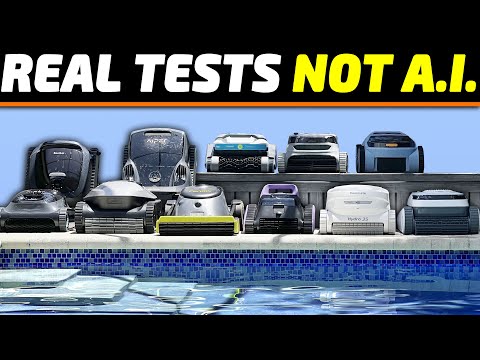
5.1 Filter Design: Why Wybot Handles Fine Debris Better
Let’s talk about the stuff you don’t notice—until you step into your pool barefoot.
That fine, dusty layer. The sand. The pollen. The stuff that makes your pool look clean… but not feel clean.
This is where filtration design quietly becomes the dealbreaker.
Many Aiper models rely on flat or basic mesh filters, which are fine for catching leaves and larger debris—but struggle with smaller particles. In real-world use, these filters can clog quickly or allow fine debris to pass through, especially during longer cleaning cycles.
Wybot takes a more layered approach.
Models like the C1 use ultra-fine 180μm filtration, and some designs incorporate dual-layer systems that expand filtration area and improve debris capture. The result? Better handling of mixed debris—especially the fine stuff that tends to settle at the bottom.
Even more importantly, these systems are less prone to performance drop-offs mid-cycle.
With Wybot’s design, you’re more likely to finish a cycle with visibly clearer water and less residue left behind.
It’s not flashy. You won’t see it on a spec sheet. But you’ll feel it the moment you walk across your pool floor.
5.2 Ease of Maintenance and Daily Use Experience
Now let’s zoom out from performance and talk about something just as important:
What’s it actually like to live with these things?
Because this is where expectations collide with reality.
Both Wybot and Aiper score well on basic usability. They’re cordless, lightweight, and easy to drop into the pool. No hoses, no setup headaches. That part genuinely feels like a win.
But once the cleaning cycle ends, reality kicks in.
- Pulling a wet, heavy robot out of the water.
- Opening the filter compartment.
- Rinsing out debris—sometimes more often than you’d like.
Aiper has a slight edge in simplicity here. Its filter compartments are straightforward, easy to access, and quick to rinse out. If you just want something that works with minimal thought, it delivers.
Wybot, on the other hand, leans into a more “feature-rich” experience. Slightly more involved, but also more capable—especially if you’re using app controls or scheduling features.
Neither is truly hands-off. Not even close. But compared to manual vacuuming or dealing with tangled hoses? It’s still a massive upgrade.
6. Conclusion: Which Brand Should You Actually Buy?
So—Wybot or Aiper?
If you strip away the marketing, the answer becomes pretty clear.
Aiper is about simplicity
- Lower upfront cost
- Easy operation
- Strong initial suction
- Best for small pools / heavy leaves
Wybot is about value over time
- Longer runtime
- Smarter navigation
- Better filtration
- Complete cleaning coverage
And that difference shows up in your day-to-day life.
Less missed spots. Less manual scrubbing. Less frustration.
If your pool is small and your expectations are low, Aiper works.
If you actually want your robot to replace cleaning—not just assist it—Wybot is the better investment.
Because at the end of the day, the real luxury isn’t the robot. It’s getting your time back.
FAQ
Q: Which brand is better for cleaning pool walls and waterlines?
A: Based on model specifications, Wybot offers full-surface cleaning including walls and waterlines earlier in its product lineup. While some Aiper models include these features, many budget-friendly Aiper units are designed strictly for floor cleaning, potentially requiring more manual maintenance from the owner.
Q: Does the Aiper Scuba S1 have better suction than Wybot?
A: Aggregated data suggests the Aiper Scuba S1 provides stronger initial suction, making it effective for large debris like leaves. However, Wybot models are often noted for more consistent suction power throughout the entire battery cycle, which is more effective for fine sand and silt.
Q: How does navigation differ between Wybot and Aiper?
A: Many entry-level Aiper models use random movement patterns which can lead to missed spots. In contrast, mid-range Wybot models typically utilize structured S-path or N-path cleaning patterns, providing more methodical and repeatable coverage of the pool floor and walls.
Q: Are cordless pool robots as powerful as corded ones?
A: Generally, no. Expert reviews and technical specs indicate that cordless models from both brands are less powerful than corded alternatives. They prioritize convenience and ease of use over the raw suction and advanced filtration found in high-end corded robotic pool cleaners.
Q: What is the main maintenance requirement for these robots?
A: Both brands follow a retrieve, charge, and repeat workflow. Because they are cordless, they do not self-dock. Users must manually remove the robot after a cycle, clean the filter canisters, and plug them in to recharge before the next cleaning session.