
Best Robot Lawn Mowers for Large Yards (Over 1 Acre): Top Picks, Real-World Performance & Buying Guide
Aaron Cooper1. Introduction
If you’ve ever spent an entire Saturday mowing a 1+ acre lawn, you know the drill—hours of noise, sweat, and that lingering feeling you just lost your weekend. Now imagine doing that every single week during peak growing season. It adds up fast.
That’s exactly why robot lawn mowers have exploded in popularity. Thanks to RTK (satellite-level positioning with centimeter accuracy), AI vision, and fully wire-free setups, today’s machines can handle lawns that used to require riding tractors. In this guide, we’ll break down the best models for 1–5 acre properties, how they actually perform in real-world conditions, and how to choose the right one without wasting thousands.
2. Top Robot Lawn Mowers for Large Yards (1–5 Acres Compared)
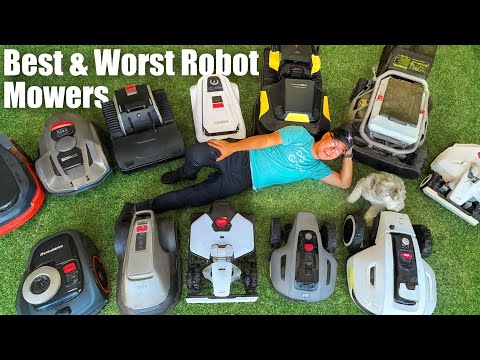
2.1 Best Overall & High-Capacity Models (2.5+ Acres)
When your lawn pushes past 2 acres, the biggest frustration isn’t just mowing—it’s consistency. Miss one week, and suddenly you’re dealing with uneven patches, clumps, and a yard that looks… tired.
This is where flagship models separate themselves.
The Husqvarna Automower 550 EPOS and 450X EPOS are built around EPOS (Electronic Positioning System), which essentially replaces physical boundary wires with satellite-guided virtual zones. That means no trenching, no broken wires, and far easier adjustments when your landscaping changes. The 550 EPOS, for example, stretches to about 2.5 acres with extended runtime, making it a workhorse for large, open properties.
Then there’s the Segway Navimow X3, which leans heavily into RTK-based navigation. Think of RTK as GPS on steroids—it corrects positioning errors in real time, allowing the mower to move in clean, parallel lines instead of random wandering. The result? A lawn that actually looks professionally striped instead of patchy.
What stands out across these models is reliability. They don’t just mow—they maintain. Quietly. Continuously. And yes, they’re expensive. But if your goal is “set it and forget it” for a multi-acre yard, these are the machines that actually deliver.
2.2 Best Value & Innovation Picks for Large Properties
Here’s the uncomfortable truth: many premium robot mowers charge a lot… without dramatically increasing capability.
That’s why the Mammotion LUBA 3 AWD has been getting so much attention. It flips the usual equation.
Instead of relying on a single navigation method, it uses a Tri-Fusion navigation system combining RTK, LiDAR, and AI vision. In plain English? If one system struggles—like GPS under trees—the others compensate. That kind of redundancy matters on real properties, not just showroom demos.
But the real kicker is value. Based on aggregated pricing data, it delivers one of the lowest cost-per-acre ratios in the category—dramatically undercutting premium brands while covering up to 5 acres.
Pros
- Tri-Fusion navigation (RTK, LiDAR, AI Vision)
- All-wheel drive (AWD) for superior traction
- Excellent cost-per-acre value
- Covers up to 5 acres
Cons
- Slightly steeper learning curve during setup
- RTK mapping requires initial patience
2.3 Specialized Options: Slopes, Thick Grass, and Extreme Terrain
Not all lawns are neat, flat rectangles. Some are… chaos. Slopes, thick grass, roots, uneven patches—the kind of terrain that exposes weak machines instantly.
That’s where specialized models come in.
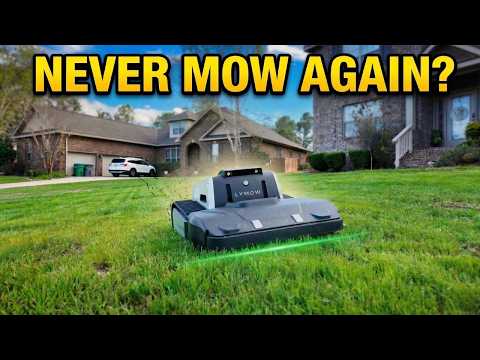
Take the Lymow One Plus. It’s designed for tough conditions, with a track-driven system and high-power dual rotary blades that don’t just trim grass—they chew through dense, overgrown sections. Unlike typical robot mowers that struggle with tall grass, this one is built to handle it without needing a “pre-cut.”
Then there’s the Mowrator S1 4WD. It’s a bit of an outlier because it’s remote-controlled rather than fully autonomous—but there’s a reason. When you’re dealing with extreme slopes (up to 75%), full autonomy can become unreliable. This machine trades automation for control, letting you tackle terrain most robot mowers simply can’t survive.
And for sheer scale, the Ambrogio L400 Deluxe sits at the top end, covering up to 5 acres. It’s less about fancy AI and more about brute coverage—ideal for large, open estates where efficiency matters more than obstacle complexity.
3. Which Robot Mower Fits Your Property? (Real-World Scenarios)
3.1 Flat vs. Hilly Terrain: Matching Slope Capability
A spec sheet might say “handles slopes,” but what does that actually mean when your mower is halfway up a hill after rain?
Slope capability is one of the most misunderstood factors. On paper, many models handle 45% inclines. In reality, traction and drive systems matter just as much as the number itself.
For relatively flat or gently rolling lawns, models like the Husqvarna EPOS series or Segway Navimow X3 perform smoothly and predictably. They’re stable, efficient, and optimized for consistent coverage.
But once you start dealing with steeper grades, things change fast. This is where AWD systems—like those found in Mammotion LUBA models—become essential. Power is distributed across all wheels, reducing slippage and helping the mower maintain control even on damp or uneven ground.
And for truly extreme slopes? That’s where machines like the Mowrator S1 step in, with a 75% slope capability that far exceeds typical robotic mowers. The trade-off is less automation—but in return, you get reliability where others fail.
3.2 Simple vs. Complex Layouts: Multi-Zone Intelligence
A wide-open lawn is easy. A property with a front yard, backyard, side yard, pathways, and obstacles? That’s where things get interesting.
Modern robot mowers solve this with multi-zone mapping. Instead of treating your lawn as one big area, they divide it into manageable sections—each with its own schedule, cutting pattern, and boundaries.
Advanced systems can handle dozens of zones. For example, some models allow up to 50 separate mowing areas, which is more than enough for most residential properties. This becomes critical if your lawn includes disconnected sections or requires the mower to navigate narrow passages.
3.3 Thick Grass, Obstacles, and Real Yard Conditions
Let’s be honest—most lawns aren’t perfectly maintained. There are toys left outside, patches of thicker grass, uneven growth, maybe even the occasional branch or rock.
Cutting systems matter more than you’d think. Many robot mowers use small razor-style blades, which work great for frequent trimming but struggle with taller or denser grass. That’s why models like the Lymow One Plus stand out—they use more aggressive blade systems designed for heavier-duty cutting.
Obstacle detection is another key factor. Basic models rely on bump sensors—they hit something, stop, and redirect. More advanced systems use AI vision to recognize and avoid objects before contact. That means fewer interruptions and a smoother mowing cycle.
Independent observations consistently show that robotic mowers perform best when used frequently—cutting small amounts each day rather than tackling overgrown grass all at once. It’s a different mindset. Less “mow once a week,” more “maintain constantly.”
The payoff? A lawn that always looks freshly cut. No effort required.
4. Navigation Technology Explained: RTK, Vision, and Wire-Free Systems
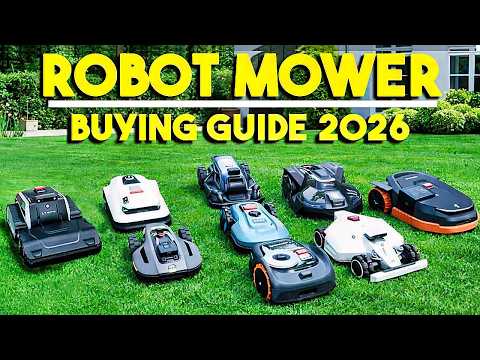
4.1 RTK vs EPOS vs Hybrid Systems: What Actually Works Best?
If you’ve ever watched a cheap robot mower wander randomly like it’s lost… you already know why navigation matters.
Modern large-yard mowers don’t “guess” where to cut anymore—they map, track, and move with intention. But not all systems are equal.
RTK (Real-Time Kinematic) is the big leap forward. Think of it as GPS with real-time correction, allowing the mower to move in clean, parallel lines with centimeter-level precision. That’s why models like the Segway Navimow X3 and Lymow One Plus feel almost surgical in how they cover large areas.
EPOS, used by Husqvarna, takes a slightly different approach. It still relies on satellite positioning but focuses on stability and proven reliability. You get virtual boundaries without wires, and fewer surprises during daily operation.
Then you have hybrid systems—arguably the most advanced option today. Machines like the Mammotion LUBA combine multiple technologies (RTK, LiDAR, and AI vision), creating redundancy. If one system struggles, another takes over. Industry analysis shows these systems can achieve centimeter-level precision with multiple layers of positioning backup, which is exactly what you want on a property filled with trees, slopes, and obstacles.
| Lawn Type | Recommended Navigation System |
|---|---|
| Open, simple lawns | RTK or EPOS works beautifully |
| Complex, obstacle-heavy yards | Hybrid systems win |
Because in real life, perfection isn’t about accuracy alone—it’s about consistency when conditions aren’t perfect.
4.2 Signal Loss, Trees, and Mapping Challenges
Here’s the part nobody tells you until it’s too late: even the smartest robot mower can get confused.
You’ll notice this most in edge zones—those tricky areas along fences, under tree canopies, or between structures. Instead of smooth lines, the mower may slow down or reroute inefficiently.
This is where hybrid navigation earns its keep. By combining satellite positioning with vision systems (basically cameras that “see” the yard) or LiDAR (laser-based mapping), the mower can keep moving even when GPS isn’t perfect. It’s like switching from Google Maps to actually looking out the windshield when driving.
Bottom line:
If your yard is wide open, most systems will work.
If your yard has trees, shadows, or complexity—you want backup navigation. No question.
4.3 Why Wire-Free Setup Is Now the Standard for Large Yards
Let’s talk about one of the most frustrating parts of early robot mowers: boundary wires.
Imagine spending an entire weekend laying cables around your property—digging trenches, adjusting corners, fixing breaks every season. And then one day, a small cut in the wire stops your entire system. That’s the old world.
Modern robot mowers for large yards are almost entirely wire-free. Instead of physical boundaries, they use virtual mapping through apps. You literally draw your lawn on your phone—or even let the mower map it automatically.
- Need to adjust a boundary? Tap your screen.
- Adding a new garden bed? Update the map in minutes.
- Expanding your lawn? No digging required.
For properties over 1 acre, this isn’t just convenience—it’s survival. Running wires across multi-acre land is time-consuming, fragile, and hard to maintain. That’s why industry trends are clear: wire-free RTK and hybrid systems have effectively replaced boundary wires for large lawns.
5. Are Robot Lawn Mowers Worth It for 1+ Acre Yards?
5.1 Upfront Cost vs Long-Term Value
Let’s address the elephant in the yard: these machines aren’t cheap.
For large properties, you’re typically looking at a few thousand dollars upfront. That alone makes a lot of homeowners hesitate—and honestly, that’s fair. But here’s where the perspective shifts.
Traditional mowing isn’t free. Between fuel, maintenance, and—most importantly—your time, the costs stack up quickly. Over several years, the total cost of ownership for robot mowers is often significantly lower, especially when you factor in labor savings and reduced maintenance.
In fact, long-term comparisons show robot mowers can deliver 35–65% lower total cost over five years compared to gas or electric alternatives.
Pros
- Lower ongoing maintenance and fuel costs
- Significant time savings (automated labor)
- Consistently maintained lawn appearance
Cons
- Higher initial investment
- Setup time (especially for RTK systems)
- Learning curve for mapping and zones
5.2 Time Savings and Lawn Quality Benefits
Think about your last mowing session. The heat. The noise. The hours gone. And then doing it all over again next week. Now imagine never having to plan your weekend around that again.
Robot mowers flip the entire concept of lawn care. Instead of occasional, heavy mowing, they trim small amounts constantly. The result? Your lawn never looks overgrown—it just stays perfect. Consistently.
This “little and often” approach actually improves grass health too. Short, frequent cuts help create denser turf and reduce weed growth over time. It’s the difference between crash dieting and steady maintenance.
And the time savings are real. Instead of spending dozens of hours each season mowing, you’re down to occasional check-ins—cleaning, adjusting settings, maybe replacing blades. That’s it.
You gain back evenings. Weekends. Entire chunks of your life. And the mower? It just keeps going. Quietly. Automatically. Even while you’re away.
5.3 Maintenance, Lifespan, and Hidden Costs
Of course, it’s not completely hands-off. Nothing is.
Robot mowers still require maintenance—but it’s a different kind of effort. Instead of oil changes, fuel refills, and engine repairs, you’re mostly dealing with:
- Blade replacements (small, inexpensive, and quick)
- Occasional cleaning (grass buildup, sensors)
- Battery replacement every few years
The overall workload is dramatically lower compared to gas mowers—no engine headaches, no seasonal prep rituals. That said, there are a few hidden realities:
- Batteries don’t last forever (typically replaced every few years)
- Complex systems (RTK, sensors) can require troubleshooting
- Large yards may push the mower to its limits if undersized
Durability also depends on build quality and terrain. Rough, uneven properties naturally put more strain on wheels, motors, and cutting systems. But even with those factors, most robot mowers are built for multi-year use, with typical lifespans in the 5–10 year range depending on usage and care.
6. Conclusion: Choosing the Best Robot Lawn Mower for Your Large Yard
Choosing the right robot mower for a 1+ acre property isn’t about chasing the most expensive model—it’s about matching the machine to your yard.
If you have a wide, open lawn, proven systems like Husqvarna EPOS or Segway Navimow deliver reliable, low-maintenance performance. If your property is complex—trees, slopes, multiple zones—hybrid systems like Mammotion’s Tri-Fusion approach offer the flexibility and resilience you’ll actually need. And if your terrain is extreme? Specialized options like track-driven or AWD models become essential, not optional.
The big shift is this: mowing is no longer a weekly chore. It becomes background automation.
Q: Are robot mowers worth the cost for large properties?
A: Yes, despite the higher upfront cost, they offer 35–65% lower total ownership costs over five years when factoring in fuel, maintenance, and labor time.
FAQ
Q: What is the benefit of RTK navigation for large lawns?
A: RTK (Real-Time Kinematic) provides centimeter-level positioning accuracy by correcting standard GPS signals. For large properties, this enables the mower to follow efficient parallel paths rather than random patterns, ensuring full coverage without the need for physical boundary wires buried around the perimeter.
Q: Can robot mowers handle yards over 2 acres with many trees?
A: While standard GPS may struggle under dense canopies, hybrid navigation systems combining RTK with LiDAR or AI vision are designed for these environments. These multi-sensor setups allow the mower to maintain its position and continue operation even when satellite signals are temporarily obstructed.
Q: How do robot mowers perform on steep hills or slopes?
A: Typical models handle inclines up to 45%, but performance depends on the drive system. All-wheel drive (AWD) models offer superior traction on damp or uneven terrain, while specialized remote-controlled mowers can tackle extreme slopes up to 75% where fully autonomous units might slip.
Q: What maintenance is required for a large-scale robot mower?
A: Maintenance is significantly lower than gas mowers. Primary tasks include regularly replacing the small cutting blades, cleaning grass buildup from the chassis and sensors, and ensuring the charging station remains clear. Batteries generally require replacement every three to five years depending on usage cycles.
Q: Are wire-free robot mowers reliable for complex property layouts?
A: Yes, wire-free systems using virtual mapping allow for high flexibility. Users can define multiple zones, create no-go areas, and set specific paths through narrow passages via a smartphone app. This makes them more adaptable to landscaping changes than traditional mowers requiring buried boundary wires.