
Best Smart Mowers with Advanced Obstacle Avoidance (Pet & Kid Safe): Real-World Safety Guide & Top Picks
Aaron Cooper1. Introduction: Why Pet & Kid Safety Is the New Standard for Smart Mowers
There was a time when “obstacle avoidance” in robot mowers basically meant… bumping into things and hoping for the best. That might have been acceptable when the biggest obstacle was a tree trunk. But in a real family yard—where a soccer ball appears out of nowhere, or your dog decides to nap in the grass—that old approach just doesn’t cut it anymore.
Today’s smartest mowers have flipped the script. Instead of reacting after impact, they see, recognize, and avoid objects before getting close. Think less “pinball machine,” more “self-driving car for your lawn.” This shift is exactly why safety—especially for kids and pets—has become the #1 priority for buyers, not just a nice-to-have feature.
And here’s the reality: modern lawns aren’t clean, empty test environments. They’re messy, dynamic, and constantly changing. That’s why choosing the right mower now means understanding how well it can think, not just how well it can cut.
2. Top Smart Mowers with Advanced Obstacle Avoidance (Pet & Kid Safe Picks)
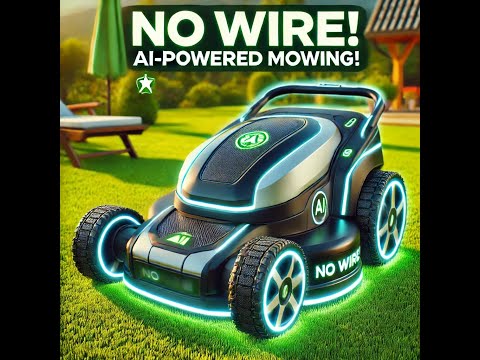
2.1 Best Overall Safety: AI Vision + Multi-Sensor Fusion Leaders
If your yard regularly looks like a mix of toys, pets, and unpredictable chaos, you don’t want a mower that “figures it out eventually.” You want one that anticipates problems before they happen.
This is where premium models like the Segway Navimow i Series and Mammotion LUBA Series stand out. Instead of relying on a single sensor, they combine AI cameras, positioning systems, and physical safety layers into something much closer to a real-time awareness system.
In fact, its ability to recognize 13 different animal species and keep a safe distance is one of the clearest examples of how far this category has evolved.
Mammotion pushes even further with a multi-layer safety design—AI vision backed by redundant physical sensors. If one system misses something, another steps in. That redundancy matters when your kid runs across the yard mid-cycle.
Pros
- Proactive avoidance (no bumping first)
- Real-time reaction to moving objects like pets or children
- Multiple safety backups for peace of mind
Cons
- Premium pricing
- More complex setup in some cases
2.2 Best for Complex Yards: Hybrid Navigation (LiDAR + Camera + RTK)
Now let’s talk about the yards that break most robot mowers.
You know the type: trees blocking the sky, uneven terrain, narrow paths between garden beds. In these environments, even a “smart” mower can suddenly act… not so smart.
That’s because no single technology is reliable everywhere. RTK (satellite positioning) struggles under tree cover. Cameras need clear visual landmarks. LiDAR excels in mapping—but doesn’t classify objects on its own.
That’s why models like the Ecovacs Goat A3000 and Lymow One lean into hybrid systems—combining multiple technologies so one compensates for another.
LiDAR, for example, scans your yard in 3D using lasers (think of it like giving the mower “depth perception” in total darkness), while cameras identify what those shapes actually are. Meanwhile, RTK keeps everything aligned with precise positioning.
The result? A mower that doesn’t panic when conditions change.
There’s a growing consensus from real-world testing that combining LiDAR, RTK, and vision creates far more reliable navigation than any single system. And you feel that difference immediately—fewer random stops, fewer missed zones, and far fewer “why is it stuck there?” moments.
Why this matters for safety
- Better awareness in shaded or cluttered yards
- More consistent obstacle detection across conditions
- Less reliance on perfect setup or ideal environments
The downside
- Higher cost
- More tech than you may need for simple lawns
But if your yard isn’t a flat, open rectangle, this category can be the difference between “set it and forget it” and constant babysitting.
2.3 Best Value & Simplicity: Vision-Based Safe Mowers for Smaller Yards
Not every yard is a jungle gym of chaos. If your lawn is relatively simple—and you just want something that works without a weekend-long setup—vision-based models like the Eufy E18 are surprisingly compelling.
These mowers rely primarily on cameras to navigate and avoid obstacles. No boundary wires, no RTK antennas, no complicated calibration. You can go from unboxing to mowing in under an hour.
And honestly? That simplicity feels amazing.
For smaller, well-defined lawns, they handle the basics well: mapping, avoiding larger obstacles, and maintaining consistent cuts. They’re also typically quieter and easier to manage day-to-day.
Pros
- Fast setup, minimal friction
- Lower cost
- Clean, simple app control
Cons
- Less reliable detection in complex environments
- Limited performance at night (needs light)
- Not ideal for busy, unpredictable yards
So if your lawn is calm, predictable, and relatively obstacle-free? This is the easiest way to reclaim your weekends. If not… you may quickly outgrow it.
3. Navigation & Obstacle Avoidance Tech Explained (What Actually Keeps Kids Safe)

3.1 AI Vision vs LiDAR vs RTK: What Each Technology Does Best
Let’s strip away the marketing for a second. All these buzzwords—AI vision, LiDAR, RTK—sound impressive, but they do very different jobs.
-
AI Vision (Camera Systems)
This is what actually “sees” your world. It identifies objects—like a dog, a toy, or a garden chair—and decides how to react. It’s the only system that truly understands what something is. -
LiDAR (Laser Mapping)
Think of this as spatial awareness. It shoots out laser signals to build a precise 3D map of your yard. It knows where things are—even in low light—but not necessarily what they are. -
RTK (Real-Time Kinematic GPS)
This is all about positioning. It tells the mower exactly where it is on your lawn with extremely high accuracy. Great for straight mowing lines and large areas—but it cannot detect obstacles at all.
A mower using only RTK might drive in perfect lines… straight into a toy. A camera-only mower might recognize objects but struggle with positioning. LiDAR might map beautifully but still need help identifying a moving pet. That’s why understanding the role of each technology isn’t just technical—it directly impacts how safe your mower actually is.
3.2 Why Hybrid Systems (Multi-Sensor Fusion) Are the Safest Choice
Now imagine combining all three.
Instead of relying on one “sense,” the mower uses multiple layers—like human perception. Eyes (camera), spatial awareness (LiDAR), and location tracking (RTK). This is what’s called multi-sensor fusion.
And in real-world conditions, this isn’t just better—it’s dramatically more reliable.
If the camera struggles in low light, LiDAR still maps the environment. If RTK signal drops under trees, vision and LiDAR keep things on track. If one system fails, others back it up. That redundancy is exactly what you want when safety is non-negotiable.
It’s also why premium models—especially those designed for families with pets and kids—lean heavily into multi-layer detection systems. They’re not just trying to mow efficiently. They’re trying to avoid mistakes entirely. Because in a backyard, mistakes aren’t just inconvenient. They’re risky.
3.3 Real-World Yard Scenarios: Matching Tech to Your Lawn
So what actually works best for your yard? It depends less on price—and more on your environment.
| Yard Type | Recommended Technology |
|---|---|
| Large, open lawns (few obstacles) | RTK-based systems |
| Tree-heavy or shaded yards | LiDAR-essential systems |
| Busy family yards (pets, kids, toys) | Hybrid systems (Vision + LiDAR + RTK) |
| Small, simple lawns | Camera-based / Vision systems |
If you’ve ever watched a robot mower hesitate, spin in circles, or get stuck, you’ve already seen what happens when the wrong tech meets the wrong yard. Match them correctly, though? It just works.
4. Real-World Safety: What Robot Mowers Can (and Can’t) Detect

4.1 What They Handle Well: Pets, Large Objects, and Dynamic Obstacles
Let’s start with the good news—because this is where modern smart mowers genuinely feel like magic.
Picture this: your dog wanders into the yard mid-cycle. Instead of blindly continuing, the mower slows down, reroutes, or stops entirely—before getting anywhere close. That’s the power of AI vision combined with real-time processing.
Today’s top-tier models can recognize a wide range of objects—everything from pets and kids to garden furniture and moving toys. Systems like those in Navimow or Mammotion don’t just “see something”—they classify it and react accordingly. Some can even maintain a safety buffer, keeping distance rather than reacting at the last second.
Under the hood, this works because modern AI systems can identify hundreds of different backyard object types, allowing the mower to treat a sleeping dog very differently from a rock or tree.
What this feels like in real life:
- Smooth slowdowns instead of sudden stops
- Clean rerouting around moving obstacles
- Far less “panic behavior” compared to older bump-based mowers
It’s not just safer. It’s calmer. More predictable. And honestly? That peace of mind is everything.
4.2 The Gaps: Small Toys, Flat Objects, and Edge Cases
Now for the uncomfortable truth—because ignoring this part is how accidents happen.
Robot mowers are not perfect. Not even close.
Small objects are the biggest problem. Think LEGO pieces, small dog toys, sticks, or a jump rope lying flat on the grass. These often sit below detection thresholds or don’t have enough height or contrast to be recognized reliably.
Even worse? Flat objects like wires or thin branches are especially tricky. They don’t reflect well for sensors and often sit too low for cameras to interpret clearly.
High-risk blind spots include:
- Small scattered toys
- Flat items (sticks, cables, garden hoses)
- Very small pets or fast-moving animals
So while the marketing says “smart,” the reality is: you still need to think ahead.
4.3 How They Actually Behave: Slowdown, Bump, or Avoid?
So what really happens when a mower encounters something?
It depends on the tech level—and this is where expectations need a reality check.
| Technology Level | Typical Behavior |
|---|---|
| Best-case scenario (AI + multi-sensor) | The mower detects the object early, slows down, and reroutes smoothly. No contact. No drama. |
| Mid-tier behavior (vision/partial sensors) | It notices something late, slows slightly, then changes direction—sometimes awkwardly. |
| Basic systems (or edge cases) | It gently bumps into the object, stops, then reverses and tries again. |
That last one might sound scary—but here’s the nuance. Modern mowers move slowly and are designed to minimize impact. Many use small, lightweight blades that retract or deflect on contact, reducing damage compared to traditional mowers.
Still… it’s not something you want happening around kids’ toys or pet areas.
4.4 How Much Prep Work Is Still Required?
Here’s the part nobody loves hearing: robot mowers don’t eliminate yard work—they change it.
Instead of pushing a mower for an hour, you spend a few minutes prepping your lawn. And in a busy household, that prep becomes routine.
What you’ll realistically need to do:
- Pick up small toys and loose items
- Set virtual no-go zones for play areas
- Adjust zones if furniture or layouts change
Even with advanced mapping and app controls, constantly updating zones for temporary clutter gets tedious fast. And if you skip it? The mower will still try to do its job—sometimes at your expense.
The upside? Once your yard is dialed in, the system becomes incredibly low-maintenance. The catch? A messy yard will always fight automation.
5. Practical Safety Setup Tips for Homes with Pets & Kids
5.1 Use Virtual Boundaries to Create Safe Zones
If there’s one feature that instantly reduces stress, it’s virtual boundaries.
Instead of hoping your mower “figures it out,” you can explicitly tell it where not to go. Think of it like drawing invisible fences around the most sensitive areas of your yard.
Got a trampoline? A sandbox? A spot where your dog loves to nap? Just block it off in the app.
Best use cases for safe zones:
- Kids’ play areas
- Pet resting spots
- Garden beds or fragile landscaping
It takes a few minutes to set up—but saves you from constant worry later.
5.2 Schedule Smartly: When the Lawn Is Empty
Here’s a simple truth: the safest mower is the one running when no one’s around.
Even with advanced detection, the easiest way to avoid risk is… avoiding interaction altogether.
Smart scheduling strategy:
- Run during school/work hours or overnight
- Avoid peak outdoor activity times
- Adjust seasonally as routines change
5.3 Choose Quiet, Low-Stress Operation for Pets
You might not think noise matters… until your dog starts chasing the mower.
Loud, unpredictable machines trigger curiosity—or anxiety—in pets. And both increase the chance of unwanted interaction.
Most robot mowers operate in a much lower noise range than traditional gas mowers, often quiet enough to run in the background without drawing attention. Some are barely louder than a conversation.
The result? Your pet ignores it. No chasing. No barking. No stress.
6. Conclusion: Choosing the Safest Smart Mower for Your Family
Choosing a “pet and kid safe” robot mower isn’t about chasing the most advanced specs—it’s about understanding how these machines behave in real life.
The Safest Setup Strategy
- Mowers with AI vision and multi-sensor systems that avoid obstacles before contact
- Technology matched to your yard (not the other way around)
- Smart usage habits—clear lawns, defined zones, and thoughtful scheduling
Because here’s the reality: even the smartest mower isn’t a substitute for awareness. It’s a powerful помощник—but still part of a system you control.
Get that balance right, though? You stop worrying about what’s happening in your yard. And start enjoying the time you just got back.
FAQ
Q: How does AI vision improve robot mower safety?
A: AI vision allows mowers to identify and classify specific objects like pets or toys. Unlike basic sensors that only detect a physical presence, vision-based systems can maintain a proactive safety buffer, rerouting the mower before it ever makes contact with a person or animal.
Q: Can robot mowers detect small toys or flat objects?
A: Small objects like LEGOs or flat items like garden hoses are challenging for most sensors. While advanced models handle larger obstacles well, aggregated user data suggests that small, low-profile items may still be missed, necessitating a quick yard sweep before a mowing cycle.
Q: What is multi-sensor fusion in lawn mowers?
A: Multi-sensor fusion combines technologies like LiDAR, RTK-GPS, and AI cameras. This redundancy ensures that if one system is limited by low light or poor satellite signal, the others compensate, maintaining high levels of both navigational accuracy and obstacle avoidance safety.
Q: Are robot mowers quiet enough to run at night?
A: Yes, most modern robot mowers operate significantly quieter than gas-powered alternatives. This low noise level is a safety benefit as it reduces pet anxiety and allows for scheduling during nighttime hours when the yard is empty of children and pets.
Q: Do I still need to prep my yard for a smart mower?
A: While smart mowers reduce labor, they are most effective on clear lawns. Removing small debris and setting virtual no-go zones via the app for play areas ensures the highest safety standards and prevents the mower from becoming stuck or damaging loose items.