
Best Wire-Free (RTK, Vision & LiDAR) Robot Lawn Mowers of 2026: Top Picks Compared for Every Yard Type
Aaron Cooper1. Introduction: The End of Boundary Wires and the Rise of Smart Lawn Automation
If you’ve ever installed a traditional robot mower, you already know the pain: hours spent crawling around your yard, burying a fragile perimeter wire—only for it to break weeks later and bring everything to a halt. It wasn’t “smart home.” It was weekend sabotage.
That era is officially over.
The real question now isn’t whether to automate—it’s which technology and model actually fits your yard. That’s where things get interesting.
2. Top Wire-Free Robot Lawn Mowers of 2026 (Compared by Use Case)
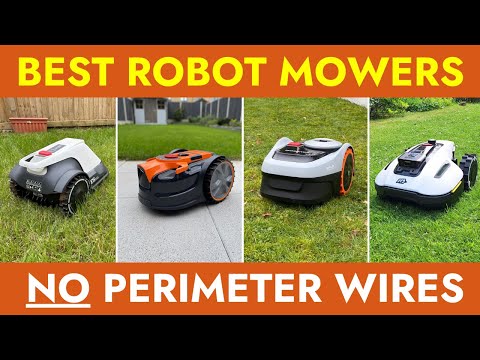
2.1 Best for Small Lawns & Budget Buyers: Sunseeker V3 and Segway i110N
Let’s be honest—if you’ve got a smaller yard, spending $3,000+ on a robot mower feels… excessive. But going cheap used to mean dealing with wires, random mowing, or constant babysitting. That trade-off is finally gone.
The Sunseeker V3 and Segway i110N sit right in that sweet spot: affordable, wire-free, and actually practical for everyday homeowners.
The Sunseeker V3 keeps things simple. Its Vision AI dual-camera system recognizes over 160 types of obstacles, which means it can navigate around toys, garden decor, or that hose you forgot to move. Setup is refreshingly painless—no antenna, no trenching, just map and go. But here’s the catch: it’s best suited for smaller, simpler lawns. Push it into complex terrain or larger areas, and you’ll start to feel its limits.
The Segway i110N, on the other hand, feels like a “next step up” without jumping into premium pricing. It combines RTK with vision (Segway calls it EFLS 2.0), giving you cleaner, more structured mowing lines instead of that random zigzag pattern older robots used. Even better? Setup is dramatically easier thanks to AI-assisted boundary detection—no more driving it like a remote-control car for half an hour.
Pros
- Affordable entry point into wire-free technology
- Extremely easy setup (No antennas or trenching)
- Advanced obstacle recognition (160+ types)
Cons
- Limited slope capability
- Modest coverage area
- Struggles with highly complex yard layouts
2.2 Best for Medium Lawns: Segway Navimow H1500N vs Ecovacs GOAT A3000
This is where things get serious.
Medium-sized lawns are the tipping point—too big for entry-level machines, but not quite “estate-level.” And this is exactly where two very different philosophies collide: RTK + Vision vs LiDAR.
The Segway Navimow H1500N is all about balance. It uses RTK combined with vision sensors to create precise, structured mowing paths—think clean, parallel lines instead of chaotic wandering. The result? A lawn that actually looks professionally maintained. It’s also impressively quiet (around 54 dB), which means it can run in the background without turning your backyard into a construction zone.
That’s where the Ecovacs GOAT A3000 flips the script.
Instead of satellites, it uses Dual-LiDAR to build a 3D map of your yard. No signal dependency. No antenna placement stress. Just consistent navigation—even in shaded or complex environments. And when it comes to finishing work, it stands out with its ability to cut within about 2 inches of edges, dramatically reducing the need for follow-up trimming.
| Feature | Segway Navimow H1500N | Ecovacs GOAT A3000 |
|---|---|---|
| Navigation | RTK + Vision (EFLS 2.0) | Dual-LiDAR 3D Mapping |
| Noise Level | 54 dB | Ultra-Quiet |
| Best Environment | Open lawns / Clear sky | Shaded / Complex / Tree-heavy |
| Edge Cutting | Standard | Within 2 inches |
So the choice becomes simple:
- Open lawn with clear sky? Segway wins.
- Shaded, complex yard? Ecovacs takes it.
Either way, this is the tier where robot mowing stops feeling like a gadget—and starts replacing real work.
2.3 Best for Large, Complex, or Hilly Yards: Mammotion LUBA Series & Husqvarna EPOS
Now we’re in “this used to require a landscaping crew” territory.
Large lawns, steep slopes, multiple zones—this is where most robot mowers fall apart. Wheels spin. Navigation fails. You end up finishing the job yourself anyway. Frustrating doesn’t even begin to cover it.
The Mammotion LUBA series was basically built to solve that exact problem.
With all-wheel drive and a slope capability reaching up to 80%, these machines handle terrain that would make most robot mowers give up instantly. Uneven ground, hills, awkward transitions—it just keeps moving. Combine that with RTK + Vision (or even newer tri-fusion systems), and you get both global positioning and local obstacle awareness working together.
In practical terms? It means fewer “stuck” notifications. Fewer rescue missions. More actual autonomy.
Husqvarna’s EPOS system takes a slightly different approach. It leans heavily on satellite-based positioning to create highly accurate virtual boundaries—no wires, no guesswork. And backed by years of robotic mowing experience, it delivers reliability that feels closer to professional-grade equipment than a consumer gadget.
However, if your yard includes steep slopes, multiple zones, or complex layouts, this is where the magic happens. You go from “constant intervention” to “it just handles it.” And once you experience that level of automation, there’s no going back.
2.4 Easiest Setup & No Infrastructure Option: Worx Landroid Vision
What if you don’t want to deal with RTK stations, antennas, or mapping at all?
That’s exactly the problem Worx Landroid Vision tries to solve. This is a pure Vision AI system—no satellites, no base station, no complicated setup. You literally drop it on the lawn, press start, and it begins figuring things out by itself. It identifies grass visually and avoids non-grass areas like driveways or patios.
Pros
- Zero setup friction (No mapping/antennas)
- Pure Vision AI recognition
- "Drop and go" usability
Cons
- Lacks precise RTK/LiDAR positioning
- Randomized mowing pattern (less efficient)
- Dependent on lighting (struggles in deep shade/night)
Still, for smaller, simple yards—or for anyone who just wants zero setup friction—this is one of the most accessible entry points into robotic mowing. No wires. No mapping. No headaches. Just press go.
3. RTK vs Vision vs LiDAR: Which Navigation Technology Fits Your Yard?

3.1 RTK-GPS: Best for Large Open Lawns with Clear Sky Access
RTK-GPS sounds complicated, but the idea is simple: your mower knows exactly where it is—down to a centimeter-level position accuracy. Think of it like giving your mower a hyper-precise GPS brain.
The result? Clean, straight mowing lines. Efficient coverage. No wasted passes. If you’ve ever watched a robot mow in perfect parallel stripes, that’s RTK doing its thing.
3.2 Vision AI: Best for Dynamic Yards with Pets, Obstacles, and Simplicity
Vision-based systems are the closest thing to “human-like” mowing. Instead of relying on satellites, these mowers use cameras and AI to interpret the world around them—identifying grass, avoiding objects, and adapting in real time. That means they can recognize things like toys, furniture, or even pets, and steer around them intelligently.
- Kids leave stuff everywhere? No problem.
- Dog running around? Still fine.
- Setup? Usually much easier. No antenna placement.
But there’s a trade-off. Vision systems depend heavily on lighting. Low light, heavy shadows, or glare can affect performance.
3.3 LiDAR & Hybrid Systems: Best for Complex, Shaded, or Irregular Lawns
If RTK is about precision and Vision is about adaptability, LiDAR is about consistency. LiDAR uses lasers to scan your yard and build a detailed 3D map—kind of like giving your mower night vision and depth perception at the same time. It doesn’t care about lighting conditions, and it doesn’t rely on satellites.
Even more interesting is where the industry is heading: hybrid systems.
It’s not just smarter. It’s more resilient. Because in the real world, your lawn isn’t perfect—and your mower shouldn’t need it to be.
4. Real-World Usage: Setup, App Control, and Daily Ownership Experience

4.1 Setup & Mapping: From 15-Minute AI Mapping to Manual Boundary Driving
Here’s the part nobody tells you upfront: buying a robot mower doesn’t eliminate effort—it just shifts it to the beginning.
The first time you set one up, you’re essentially teaching it what “your lawn” looks like. With RTK-based systems, that usually means placing a base station somewhere with a clear view of the sky, then driving the mower around your yard using your phone like a remote-control car to define boundaries. It’s not hard—but it can feel tedious, especially on larger or more complex properties.
Instead of manually tracing every edge, the mower detects grass boundaries automatically as it moves. It’s the difference between drawing a map by hand and letting your phone auto-detect a route.
Still, there’s a trade-off. Faster setup often means less control. Manual mapping gives you pixel-level precision—perfect for intricate borders or tight spaces—while AI mapping prioritizes speed and convenience.
And yes, you’ll probably tweak things later. Almost everyone does. But once it’s dialed in? You never touch it again.
4.2 App Features, Scheduling, and Multi-Zone Control
This is where the magic really kicks in.
After setup, your robot mower basically lives inside an app. And honestly, it feels less like yard work and more like managing a smart home device.
- Multi-Zone Management: Divide your yard into multiple zones with different schedules.
- Custom Patterns: Choose parallel stripes for the front and relaxed schedules for the back.
- No-Go Zones: Protect flower beds or play areas without digging or rewiring.
- Smart Integration: Some models integrate with Alexa or Google Home for voice commands.
Because these machines mow frequently—daily or every other day—the lawn never gets out of control. Instead of one exhausting weekend mow, it’s constant, light maintenance. The result? Healthier grass and that always-fresh, just-cut look.
One tap. Silence. It sounds like a gimmick—until you’re hosting a backyard BBQ and realize the mower is about to start.
4.3 Maintenance, Limitations, and What Robot Mowers Still Can't Do
Let’s get real for a second—these aren’t magic. Yes, they save an incredible amount of time. But they’re not completely hands-off.
Maintenance & Efficiency
- Quick, screwdriver-level blade replacement.
- Constant, light maintenance for healthier grass.
- Saves hours of manual labor every weekend.
Limitations to Consider
- Requires "livable" lawns (no toy explosions or hoses).
- Edges aren't perfect; may need a string trimmer.
- Does not mulch leaves or handle heavy sticks.
Instead of spending two hours every weekend mowing, you spend a few minutes occasionally maintaining the system. That’s it.
5. How to Choose the Best Wire-Free Robot Lawn Mower for Your Yard

5.1 Match Your Lawn Size, Terrain, and Complexity
Buying the wrong robot mower usually comes down to one mistake: underestimating your yard. It’s tempting to think, “My lawn isn’t that big.” But once slopes, obstacles, and multiple zones enter the picture, complexity skyrockets.
| Lawn Type | Recommended Tech/Models | Key Features |
|---|---|---|
| Small (<1000m²) | Vision-based (Sunseeker V3, Segway i110N) | Simple, affordable, easy setup. |
| Medium (1k–3k m²) | RTK + Vision or LiDAR | Structured mowing, high efficiency. |
| Large/Complex (3k+ m²) | AWD (Mammotion LUBA series) | Handles steep slopes and uneven terrain. |
And slopes matter more than people expect. A mower that works perfectly on flat ground can struggle the moment your yard tilts. That’s why high-end models with AWD and extreme slope capability reaching up to 80% exist—they’re not overkill, they’re necessary for certain properties.
5.2 Balance Budget vs Performance (What You Really Pay For)
At first glance, all robot mowers seem expensive. But once you break it down, the pricing actually makes sense—because you’re not just paying for cutting grass. You’re paying for how little you have to think about it.
- Budget tier (~€1,000–€1,500): Basic Vision AI or entry-level systems. Great for small lawns.
- Mid-range (~€2,000): The sweet spot. RTK + Vision combos like Segway Navimow offer fewer headaches.
- Premium (~€3,000+): LiDAR precision, AWD traction, and multi-zone mastery for complex terrain.
It’s not “robot mower vs cheap mower.” It’s robot mower vs your time… or even a landscaping service. Once you factor in weekly mowing hours, many of these machines quietly pay for themselves over time.
5.3 Quick Buyer Checklist Before You Commit
Before you hit “buy,” pause for a minute and sanity-check your setup. This step saves more frustration than any spec comparison.
- Sky visibility: Does your yard have a clear view of the sky for RTK?
- Shade level: Heavy shade? Lean toward LiDAR or hybrid systems.
- Obstacles: Kids, pets, furniture? Vision AI is critical here.
- Slope: Identify your steepest area—not your average.
- Lawn complexity: Check if the app supports multiple zones or narrow paths.
- Setup tolerance: Vision-only is easiest; RTK/Manual offers more precision.
- Expectations: Do you want perfection—or “good enough” with zero effort?
6. Conclusion: The Best Robot Mower Depends on Your Yard, Not Just the Specs
There’s no single “best” wire-free robot mower in 2026—and that’s actually a good thing. What we have now is a mature market where different technologies solve different problems. RTK delivers precision for open lawns. Vision AI brings flexibility to dynamic, everyday spaces. LiDAR and hybrid systems handle the messy, real-world yards most people actually have.
The key isn’t chasing the most advanced model—it’s matching the machine to your environment. Because when you get that match right, something shifts. Lawn care stops being a chore you plan your weekends around… and becomes something that just quietly happens in the background.
No wires. No stress. No Saturdays lost to mowing. Just a consistently clean lawn—and your time back.
FAQ
Q: What is the main difference between RTK and LiDAR robot mowers?
A: RTK-GPS relies on satellite signals to achieve centimeter-level accuracy, making it ideal for large, open lawns. LiDAR uses laser scanning to create a 3D map of the environment, allowing it to navigate reliably in shaded areas or complex yards where satellite signals might be obstructed.
Q: Can wire-free robot mowers handle steep slopes?
A: Yes, certain high-end models are specifically engineered for terrain. For instance, the Mammotion LUBA series features all-wheel drive capabilities that allow it to manage slopes reaching up to 80%, which is significantly higher than entry-level or vision-based residential models.
Q: Do I need a professional to set up a wire-free robot mower?
A: Most modern wire-free mowers are designed for DIY setup. Users typically define boundaries using a smartphone app by either driving the mower like a remote-control car or utilizing AI-assisted mapping. While it requires some initial time, it eliminates the need for physical perimeter wire installation.
Q: How does Vision AI help in lawn mowing?
A: Vision AI uses cameras and machine learning to identify grass and detect obstacles in real-time. This technology allows the mower to navigate around unexpected objects like toys or pets and often simplifies the setup process by visually recognizing the lawn's edges without complex mapping.
Q: Do robot mowers require regular maintenance?
A: While they reduce labor, they still require occasional maintenance. This includes replacing the small razor-like cutting blades every few months, cleaning the underside of the mower from grass buildup, and ensuring the sensors or cameras remain clear of dirt and debris for optimal navigation.