
Dreame A1 Robot Mower Review: OmniSense 3D Sensing Analyzed—Real Performance, Hidden Flaws & Is It Worth It?
Aaron Cooper1. Introduction
Robot lawn mowers promise freedom—but too often, they trade one headache (manual mowing) for another (wires, antennas, endless setup). The Dreame A1 tries to break that cycle entirely. No boundary wires. No RTK base stations. Just a LiDAR-powered system that maps and navigates your yard like a self-driving car.
But here’s the real question: does that futuristic “OmniSense 3D” system actually work when your lawn isn’t perfect? In this review, we’ll dig into how it performs where it matters—navigation, obstacle detection, and real-world mowing—and whether the convenience truly outweighs its limitations.
2. OmniSense 3D LiDAR Explained: How Dreame A1 Navigates Without Wires
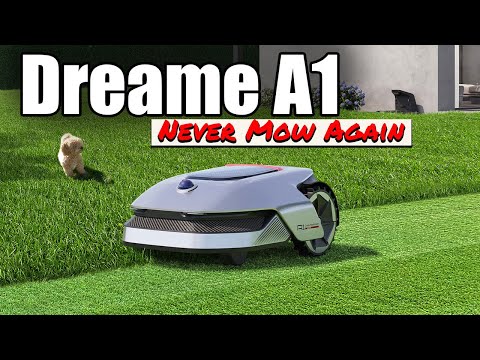
2.1 360° LiDAR Mapping and 3D Point Cloud Navigation
If you’ve ever used a robot vacuum that builds a map of your home, you already understand the core idea here. The Dreame A1 takes that same concept outdoors—but cranks it up.
At the heart of the system is a 360° LiDAR sensor (think: a spinning laser scanner) that constantly measures distances in every direction. Instead of just creating a flat map, it builds a real-time 3D “point cloud”—a digital model of your entire yard. According to technical specifications, this system can achieve centimeter-level positioning accuracy, which is what allows the mower to move in clean, systematic lines instead of random zig-zags.
- No wires.
- No GPS towers.
- No beacons.
That’s the big deal.
Traditional robot mowers feel like setting up an invisible fence for a pet—you bury wires, tweak boundaries, and hope nothing breaks. The A1 skips all of that. It behaves more like a self-driving car that understands its surroundings in real time.
And when it works, it feels almost magical. The mower doesn’t just move—it navigates.
2.2 Real-World Mapping: Setup Speed, Multi-Zone Control, and App Experience
Now let’s talk about what setup actually feels like—because this is where most robot mowers lose people.
With the Dreame A1, the initial mapping process is surprisingly quick. Most setups take around 15 minutes for the first full scan. But here’s the catch: it’s not fully automatic. You’ll need to manually “drive” the mower around your lawn using your phone, like a remote-control car, to define the boundaries.
Once that’s done, the app unlocks real flexibility:
- Create multiple zones for front and backyard
- Set no-go areas around flower beds or pools
- Customize mowing schedules and patterns per zone
Over time, the map gets smarter and more refined as the mower runs.
2.3 Obstacle Detection: Where LiDAR Works—and Where It Struggles
Here’s where things get interesting—and a bit frustrating.
On paper, the OmniSense system sounds incredibly smart. It can identify multiple types of obstacles and react in real time. And in practice, it does perform well… with the right kind of objects.
Large, obvious obstacles? No problem.
- Trees
- Garden furniture
- Flower beds
- Walls and fences
But real lawns aren’t that clean. What about a garden hose left on the grass, kids’ toys, or a fallen branch?
Pros
- Great at “seeing” the big picture
Cons
- Not great at spotting the small stuff
3. Real-World Mowing Performance: Precision, Coverage, and Terrain Handling
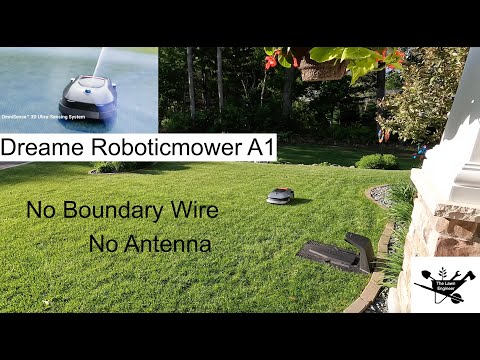
3.1 Cutting Quality and Lawn Coverage Consistency
Let’s be honest—none of this fancy navigation matters if the lawn ends up looking patchy. The good news? The Dreame A1 delivers where it counts.
Instead of wandering randomly like older robot mowers, it follows a structured U-shaped mowing pattern—think neat, parallel lines across your lawn. The result is a clean, consistent cut with very few missed spots. It doesn’t just trim your grass. It methodically covers it.
Edge cutting is still a weak spot—just like almost every robot mower. Since the blades sit slightly inside the chassis, you’ll often end up with a thin strip of uncut grass along borders or fences. Expect to do occasional manual touch-ups.
3.2 Handling Slopes, Complex Layouts, and Multi-Zone Lawns
Real yards aren’t flat rectangles—and this is where many robot mowers struggle. The Dreame A1 handles complexity surprisingly well.
It’s rated for slopes up to 45%, and real-world testing shows it can navigate uneven terrain, dips, and moderately challenging inclines without getting stuck.
Where it really shines is layout flexibility. The multi-zone system allows the mower to:
- Move between separate lawn areas
- Follow defined paths between zones
- Apply different mowing settings per zone
3.3 Battery Life, Charging, and Daily Coverage Expectations
The Dreame A1 is designed for lawns up to about 2,000 m², which puts it firmly in the “medium to large yard” category. But it doesn’t do that in one go.
Instead, it works in cycles:
- Mows for a few hours
- Returns to charge automatically
- Resumes where it left off
Charging takes a little over an hour in typical conditions, and the mower can operate continuously across multiple sessions to complete the full area.
This is the kind of device you schedule and forget. It quietly chips away at the job while you’re inside doing literally anything else.Check Price on Amazon
4. Pros and Cons: Is the Dreame A1 Actually Worth Buying?
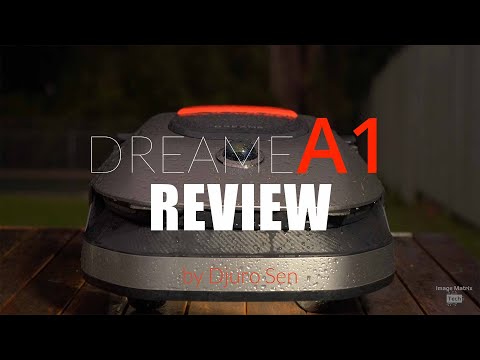
4.1 Biggest Strength: Truly Wire-Free, Hassle-Free Setup
Let’s start with the part that genuinely feels like a breakthrough.
If you’ve ever installed a traditional robot mower, you know the pain: digging trenches, laying boundary wires, adjusting loops when something inevitably breaks. It’s not “smart home.” It’s weekend labor.
The Dreame A1 eliminates all of that.
You place the charging station, connect the app, and guide the mower once around your yard. That’s it. Compared to older systems, this feels less like installation and more like onboarding a new gadget.
Even better, the flexibility is night and day. Want to adjust your lawn layout? Add a no-go zone around a new flower bed? You’re doing it in the app—not digging up your yard again.
This infrastructure-free approach isn’t just convenient—it fundamentally changes who can realistically own a robot mower. For busy homeowners, this is the difference between “I’ll deal with it someday” and “done in an afternoon.”
It’s not perfect (manual boundary driving still takes some patience), but once it’s set, the payoff is huge.
No wires. No headaches. Just mowing.
4.2 Where It Falls Short: Small Object Detection and Reliability Risks
Now for the uncomfortable truth—because this is the dealbreaker for some people.
The Dreame A1 struggles with low-profile obstacles. And not in a minor way.
Why does this happen?
LiDAR is excellent at detecting structure and height. But anything flat, thin, or close to the ground can fall into its blind spot. That includes exactly the kind of everyday clutter most lawns have.
And this isn’t just theoretical:
- Garden hoses get run over
- Small toys are ignored
- Thin branches are treated like grass
You can tweak the obstacle sensitivity in the app, but even at higher settings, the limitation doesn’t fully go away.
So what does that mean in real life?
It means this isn’t a true “set it and forget it” robot—at least not yet. You still need to do a quick scan of your lawn before each run.
If your expectation is full autonomy, this will frustrate you.
If you treat it more like a smart tool that still needs a clean environment, it becomes much easier to live with.
4.3 Who Should Buy It—and Who Should Avoid It
So… who is the Dreame A1 actually for?
If your lawn is relatively clean, open, and predictable, this mower feels like a glimpse into the future. You’ll spend less time installing, less time maintaining, and barely think about mowing again.
Pros
- You hate the idea of installing boundary wires
- Your yard has multiple zones or complex layouts
- You want a low-effort, app-controlled setup
Cons
- Kids’ toys scattered around
- Garden hoses or tools left out
- Small debris from trees or pets
This mower will create more stress than it removes.
There’s also a mindset factor here. If you expect perfection—every obstacle avoided, zero supervision—you’ll be disappointed. This isn’t that level of autonomy yet.
But if you’re willing to trade a quick pre-check of your lawn for never pushing a mower again?
5. LiDAR vs RTK vs Camera: Is Dreame A1’s Approach the Best Choice?
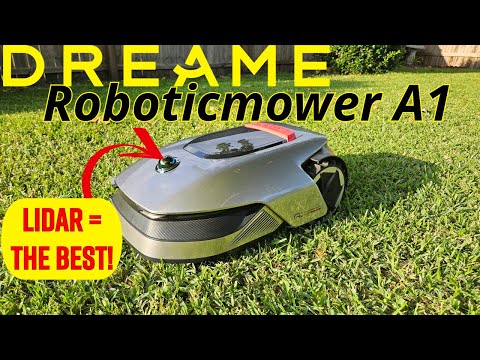
5.1 LiDAR vs RTK-GPS: Infrastructure-Free vs Satellite Precision
At a glance, both LiDAR and RTK systems promise the same thing: wire-free mowing. But how they get there couldn’t be more different.
RTK-GPS mowers rely on satellite signals and a base station to achieve high positioning accuracy. In wide-open lawns, this works beautifully. You get clean, precise mowing lines across large areas.
But here’s the catch: RTK systems depend heavily on signal quality.
Trees, buildings, even bad weather can interfere. If your yard has shade, obstacles, or irregular layouts, that precision starts to fall apart.
The Dreame A1 takes the opposite approach.
Instead of looking to the sky, it reads the environment around it using LiDAR. That means:
- No base stations
- No satellite dependency
- No signal dropouts under trees
In real-world residential yards—where trees, fences, and structures are everywhere—this is a huge advantage.
| Technology | Main Strength | Main Weakness |
|---|---|---|
| RTK-GPS | High precision in open spaces | Signal blocked by trees/buildings |
| LiDAR (Dreame A1) | Consistent navigation everywhere | Struggles with small objects |
5.2 LiDAR vs Camera Systems: Reliability in Real Outdoor Conditions
Camera-based systems sound smart—and they are. They can recognize objects visually, classify them, and make more “human-like” decisions.
But they come with a hidden dependency: light.
Early morning? Dusk? Overcast days? Shadows from trees? Performance can drop quickly.
LiDAR doesn’t care about any of that.
Because it uses laser measurements instead of images, the Dreame A1 works the same:
- In bright sunlight
- In shade
- Even in near-dark conditions
That consistency is underrated. You don’t have to think about when to schedule mowing—it just works.
That said, cameras do have one big advantage: they’re better at identifying small or flat objects. Which, ironically, is exactly where the A1 struggles.
So you’re choosing between:
- LiDAR → consistency and reliability
- Cameras → better object recognition (in good conditions)
5.3 The Future: Sensor Fusion and What Dreame A1 Is Missing
If you’re wondering, “Why not combine both?”—you’re thinking exactly where the industry is heading.
The next generation of robot mowers is moving toward sensor fusion: combining LiDAR, cameras, and sometimes RTK into one system.
Why does this matter?
Because each technology covers the others’ weaknesses:
- LiDAR handles mapping and navigation
- Cameras identify small or tricky objects
- RTK provides large-scale positional accuracy
Together, they create a system that’s far closer to true autonomy.
And this is where the Dreame A1 shows its biggest limitation.
By relying primarily on LiDAR, it nails navigation and mapping—but leaves a gap in obstacle detection. That’s not a flaw in execution; it’s a limitation of the approach itself.
The good news? Some of this can improve with software updates. The bad news? Hardware limits can’t be fully patched.
So when you buy the A1, you’re buying into a very smart—but still evolving—generation of robotic mowing.
6. Conclusion: A Smart but Imperfect Step Toward Fully Autonomous Lawn Care
The Dreame A1 feels like the future—right up until it doesn’t.
On one hand, it solves one of the biggest pain points in robotic mowing: setup. No wires, no antennas, no complicated infrastructure. Just map your lawn and let it work. The navigation is precise, the cutting is clean, and the day-to-day convenience is genuinely freeing.
But then there’s the catch.
That same LiDAR system that makes everything so easy also limits its ability to detect small, low-profile objects. And in real-world lawns, those are everywhere.
So the decision comes down to a simple trade-off: convenience vs. true autonomy.
If your lawn is clean and you value hassle-free setup, the Dreame A1 is an easy recommendation. If you want a mower that handles every possible scenario without supervision, it’s not quite there yet.
It’s smart. It’s capable. It’s just not perfect.
FAQ
Q: Does the Dreame A1 require a boundary wire for installation?
A: No, the Dreame A1 uses OmniSense 3D LiDAR technology to map and navigate your yard. This eliminates the need for physical boundary wires or external RTK-GPS antennas, making the initial setup process significantly faster than traditional models.
Q: How well does the Dreame A1 handle slopes and hills?
A: The Dreame A1 is specified to handle inclines up to 45%. Data shows it maintains traction well on uneven terrain, though performance may decrease on particularly slippery or muddy grass during wet weather conditions.
Q: Can the Dreame A1 detect small objects like toys or hoses?
A: While the 360-degree LiDAR is excellent for large structures, it has a blind spot for low-profile items. Analysis of user feedback suggests that small toys and garden hoses may not be detected, requiring a clear lawn for safe operation.
Q: Does the Dreame A1 work in the dark?
A: Yes, because LiDAR uses laser pulses rather than visual cameras to navigate, the Dreame A1 performs consistently in various lighting conditions, including bright sunlight, heavy shade, and near-total darkness without losing positioning accuracy.
Q: What is the maximum lawn size the Dreame A1 can manage?
A: The Dreame A1 is designed for properties up to 2,000 square meters. It utilizes an automatic recharge and resume function, meaning it will return to its base to power up and then continue mowing exactly where it left off.