
Dreame A1 vs. Segway Navimow: LiDAR vs. Vision+RTK Analysis for Real Yards
Aaron Cooper1. Introduction: Choosing the Right Navigation Tech for Your Lawn
Shopping for a robot lawn mower sounds simple—until you realize the real decision isn’t brand or price. It’s navigation.
LiDAR vs. Vision+RTK isn’t just a spec-sheet debate. It’s the difference between a mower that quietly handles your yard… and one you’re constantly rescuing from a corner, a tree, or a lost GPS signal.
In this guide, we’ll break down how the Dreame A1 and Segway Navimow actually behave in real yards: under trees, near buildings, around obstacles, and during everyday use. Because the right choice isn’t about features—it’s about what happens on your lawn, every single day.
2. Dreame A1 vs. Segway Navimow: Core Differences That Actually Matter

2.1 LiDAR vs. Vision+RTK: Two Completely Different Navigation Philosophies
At first glance, both mowers promise the same thing: wire-free, autonomous mowing. But underneath? They think in completely different ways.
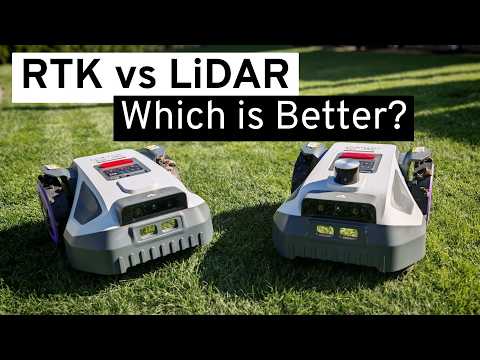
The Dreame A1 uses LiDAR—basically a spinning laser system that constantly scans your yard, measuring distances and building a live 3D map. Think of it like walking around your house in the dark with your hands out, instantly understanding where everything is by touch. It doesn’t need GPS. It doesn’t care about satellites. It just “sees” space.
The Navimow, on the other hand, relies on RTK (Real-Time Kinematic GPS) combined with cameras. This system figures out its exact position on Earth using satellite correction signals—often with centimeter-level global positioning accuracy—then uses vision to recognize obstacles and boundaries.
- LiDAR (Dreame A1) = “I know where everything is around me.”
- Vision+RTK (Navimow) = “I know exactly where I am on the planet.”
Sounds subtle. It’s not.
Because one works anywhere—even under trees or next to buildings—while the other depends heavily on sky visibility. One builds a local map. The other follows global coordinates.
And that single difference? It shapes everything else you’re about to read.
2.2 Real-World Performance: Reliability, Speed, Noise, and Coverage
Specs are one thing. Watching these machines actually handle a lawn is another.
Let’s start with speed and efficiency. The Dreame A1 moves aggressively and covers ground fast—around 200 m² per hour—making it feel more like a “get it done now” machine. In contrast, Navimow models take a slower, more methodical approach, trading speed for longer runtime and quieter operation.
Speaking of quiet… this is where Navimow shines. At around 54 dB versus the A1’s 64 dB, the difference isn’t just noticeable—it’s the difference between “background hum” and “you know it’s working.” If you care about mowing at night or during Zoom calls, that matters.
| Feature | Dreame A1 | Segway Navimow |
|---|---|---|
| Navigation | LiDAR (no GPS) | RTK + Vision |
| Noise Level | 64 dB | 54 dB (quieter) |
| Coverage | Up to 2000 m² | ~600–1000 m² |
| Slope Handling | Up to 45% | Around 30% |
| Speed | Faster (≈200 m²/h) | Slower but steady |
| Runtime | Shorter sessions | Longer per charge |
So what does that feel like in real life?
- Dreame A1: Faster, more aggressive, better for large or complex lawns
- Navimow: Quieter, more relaxed, better for smaller, simpler yards
2.3 Obstacle Avoidance and Edge Cutting: Which One Feels Smarter?
This is where expectations meet reality—and sometimes get humbled.
LiDAR systems like the Dreame A1 are incredibly precise at detecting distance. They know exactly how far away an object is, instantly. That translates into smooth navigation around trees, furniture, and fixed obstacles.
But here’s the catch: LiDAR detects shapes, not meaning. It knows something is there—but not whether it’s your dog’s toy or a flower bed. Navimow flips that. Its camera-based vision system can recognize objects—pets, toys, furniture—and react more intelligently.
Dreame A1
- More precise distance detection
- Consistent around fixed obstacles
Segway Navimow
- Better object recognition (Vision)
- Understands scene context
2.4 Setup Experience: Plug-and-Play vs Signal Tuning
The Dreame A1 is refreshingly simple. No antenna. No satellite calibration. You drop the dock, map your lawn, and it builds its own 3D understanding. It’s closer to setting up a robot vacuum than a piece of outdoor equipment.
Navimow? RTK systems often require careful placement of an antenna or ensuring strong satellite coverage. Real-world feedback consistently highlights this frustration. In yards with trees or nearby buildings, users report spending hours repositioning setups—sometimes unsuccessfully.
"If your yard has trees, walls, or weird layouts... that 'easy setup' can quickly turn into trial and error."
3. LiDAR vs. Vision+RTK Explained: What Happens in Your Yard Every Day
3.1 Accuracy: Global Precision vs Local Mapping
On paper, RTK systems sound unbeatable. They can pinpoint position down to 1–2 cm using satellite correction data. That’s why Navimow can draw those perfectly straight mowing lines across open lawns.
But here’s the twist: that precision is global, not local. LiDAR flips that completely. It builds a hyper-detailed local map of your yard with every pass—measuring distances in real time with roughly 2–5 cm accuracy.
- RTK (Navimow): Cleaner, straighter lines in open spaces
- LiDAR (Dreame A1): More consistent navigation in complex or changing environments
3.2 Signal Dependency: Why Trees and Buildings Break Some Robots
RTK systems depend on a constant connection to satellites. That means clear sky visibility isn’t optional—it’s essential. Dense trees, tall buildings, even certain yard layouts can block or reflect signals.
3.3 Lighting, Weather, and Night Operation
LiDAR systems like the Dreame A1 don’t rely on light. They use laser pulses, so they work just as well at night as they do during the day. Shade, clouds, even low visibility—none of it really matters.
Vision-based systems are different. Since Navimow uses cameras for obstacle detection, it needs sufficient lighting to “see” properly. Low light or heavy shadows can reduce its ability to detect objects accurately.
3.4 Autonomy vs Intervention: Which System Needs More Babysitting?
RTK-based mowers like Navimow can be incredibly autonomous… when conditions are perfect. But introduce real-world chaos—trees, patchy signal, obstacles—and intervention increases. LiDAR systems tend to be more self-reliant since they continuously map their surroundings.
4. Which One Fits Your Lawn? Matching Technology to Real Use Cases

4.1 Tree-Covered, Shaded, or Urban Yards
This is where expectations often collide with reality.
You picture a robot quietly mowing under your trees… but instead, it pauses, recalculates, or worse—just stops. That’s the hidden cost of signal-dependent navigation.
LiDAR-based systems like the Dreame A1 don’t even notice these conditions.
Because they build a real-time 3D map using laser measurements, they operate the same whether your yard is wide open or surrounded by obstacles. Shade, low light, urban “signal noise”—none of it matters.
And this isn’t theoretical. Across independent testing and real-world usage, LiDAR consistently performs in environments where GPS-based systems degrade or fail entirely.
So if your lawn looks anything like this:
- Heavy tree canopy
- Surrounded by buildings or fences
- Lots of shaded or low-light areas
Then LiDAR isn’t just better—it’s the difference between a mower that works… and one that constantly needs help.
4.2 Open Suburban Lawns with Clear Sky
Now flip the scenario.
Wide lawn. Clear sky. Minimal trees. Clean edges.
This is where RTK-based systems like Segway Navimow shine.
Because when satellite visibility is strong, RTK delivers extremely precise positioning—often within centimeters—resulting in those clean, straight mowing lines that look almost too perfect to be real. In fact, it’s this centimeter-level positioning precision that allows Navimow to maintain consistent coverage across open spaces.
And in these ideal conditions, something interesting happens: the complexity disappears.
Setup becomes easier. Navigation becomes predictable. And the mower can operate for long, quiet sessions without interruption.
So if your lawn is:
- Flat and open
- Free of dense trees or tall obstructions
- Medium-sized and straightforward
Navimow feels effortless. It just follows its coordinates and gets the job done.
The catch? Step outside those ideal conditions—even slightly—and that reliability can start to slip.
4.3 Complex Layouts, Obstacles, and Multi-Zone Yards
Let’s be honest—most real yards aren’t perfect rectangles.
They have narrow passages, flower beds, patio furniture, random trees, and awkward transitions between zones. And this is where navigation intelligence really gets tested.
LiDAR systems thrive in complexity.
Because they continuously map the environment in real time, they adapt naturally to irregular layouts. The Dreame A1, for example, can navigate around obstacles, adjust paths dynamically, and maintain consistent coverage even when the layout isn’t predictable.
RTK systems approach this differently.
They rely on predefined virtual boundaries and global positioning. That works beautifully in simple layouts—but in more complex yards, accuracy depends on signal stability and how well the system can reconcile GPS data with visual input.
And here’s the subtle frustration: when things go wrong, it’s rarely obvious why.
Was it signal drift? A mapping issue? A visual misread?
So in practical terms:
| Model | Layout Suitability |
|---|---|
| Dreame A1 | Better at adapting to complexity and irregular layouts |
| Navimow | Works well—but prefers predictable, structured spaces |
If your yard has multiple zones, tight paths, or constantly changing obstacles, you want something that reacts—not something that depends on perfect conditions.
4.4 Terrain Risks: Slopes, Sand, and Real-World Frustrations
This is the part most buyers don’t think about—until the mower gets stuck.
Because your lawn isn’t just a map. It’s terrain.
Uneven ground, sandy patches, twigs, slopes… these are the small details that turn “autonomous mowing” into “go rescue the robot.”
The Dreame A1 handles steeper slopes better on paper and moves efficiently across large areas. But it can struggle with loose surfaces like sand or small debris, where traction becomes an issue.
Navimow, while less capable on steep inclines, tends to be more stable on standard suburban terrain—especially when the ground is firm and predictable.
But here’s the reality check: neither system is immune.
Across real-world testing, common issues include:
- Getting stuck on twigs or small obstacles
- Struggling in sandy or uneven patches
- Losing traction on certain surfaces
And when that happens? The mower stops. And you’re back outside, fixing it.
Choose Dreame A1 for steeper, more complex terrain—but expect occasional hiccups on rough ground. Choose Navimow for stable, predictable lawns—but only if signal conditions are solid.
No robot mower today is truly “set and forget” in challenging terrain. But choosing the right one dramatically reduces how often you’ll have to step in.
5. Honest Limitations: Where Each System Still Falls Short
5.1 LiDAR Weaknesses: Edges, Terrain, and Cost
LiDAR feels like magic—until you look closely at the edges of your lawn.
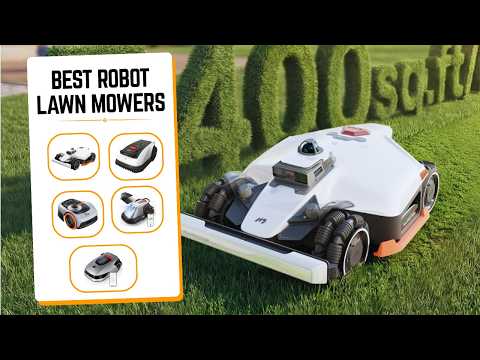
Because no matter how advanced the navigation is, the physical design still limits how close the blades can get to borders. That means along fences, walls, and garden edges, you’ll consistently see a strip of uncut grass.
And once you notice it… you can’t unsee it.
Terrain is another weak spot.
While systems like the Dreame A1 handle navigation brilliantly, traction can become an issue on loose or uneven surfaces. Sand, small twigs, or rough patches can interrupt operation or cause the mower to get stuck.
Then there’s cost.
LiDAR hardware is expensive. And that premium shows up in the price tag. You’re paying for independence from GPS—but not everyone needs that level of capability.
Pros
- Excellent navigation in shaded areas
- Strong in complex layouts
Cons
- Imperfect edge cutting
- Weaker on rough terrain
- Premium price for premium tech
It’s powerful. Just not flawless.
5.2 RTK + Vision Weaknesses: Signal Loss and Inconsistency
RTK systems promise precision—but only under the right conditions.
The biggest issue? Signal dependency.
If your mower loses access to stable satellite signals—even briefly—accuracy drops. And when accuracy drops, everything else follows: missed areas, navigation errors, or complete توقف in operation.
Real-world experiences highlight this clearly. In yards with trees or buildings, users often spend hours trying to position antennas or optimize signal conditions—sometimes without success.
And even when setup works, inconsistency can creep in:
- Sudden positioning errors
- Difficulty navigating edges or returning to dock
- Performance changes depending on time of day or environment
Vision helps—but it doesn’t fix everything.
Cameras improve obstacle recognition, but they introduce new variables like lighting and visibility. Low light or heavy shadows can reduce reliability.
So while Navimow can feel incredibly smooth in ideal conditions… it can also feel unpredictable when those conditions aren’t met.
5.3 The Bigger Reality: Robot Mowers Still Need Ideal Conditions
Here’s the part most marketing skips.
Robot lawn mowers are not fully autonomous yet.
They don’t replace all lawn care. They maintain it.
That means:
- You still need to clear debris (twigs, toys, clutter)
- You’ll still need edge trimming
- You may still need to rescue the mower occasionally
In fact, broader real-world testing shows that in challenging yards—think sand, heavy tree cover, or clutter—robots can fail surprisingly often, sometimes requiring frequent intervention.
And that’s the key mindset shift:
These machines aren’t “install once and forget forever.”
They’re “reduce your workload dramatically—if your lawn cooperates.”
So before choosing between LiDAR and RTK, ask yourself:
Is your yard robot-friendly?
Because the best navigation system in the world still can’t fix a lawn that fights back.
6. Conclusion: Dreame A1 or Segway Navimow—Which Should You Choose?
If you take one thing away from this entire comparison, it’s this: don’t choose based on brand—choose based on your yard.
If your lawn is complex, shaded, or full of obstacles, the Dreame A1’s LiDAR system offers something incredibly valuable: consistency. It works where GPS struggles, and that translates directly into fewer interruptions and less frustration.
If your yard is open, simple, and has a clear view of the sky, the Segway Navimow delivers a quieter, more affordable, and highly precise mowing experience.
Neither is universally better. Each is optimized for a different reality.
So the real question isn’t “Which mower is best?”
It’s “Which one will actually work in my yard—every single day?”
Answer that honestly, and the decision becomes easy.
Q: Which one is better for heavy shade?
A: The Dreame A1's LiDAR system is superior for shaded areas because it doesn't rely on satellite signals.
FAQ
Q: What is the main difference between LiDAR and RTK navigation?
A: LiDAR, used by the Dreame A1, creates a local 3D map using lasers and operates independently of satellites. RTK, used by Segway Navimow, relies on GPS signals for global positioning accuracy. LiDAR is generally more reliable in yards with heavy tree cover or tall buildings.
Q: Can the Segway Navimow operate under dense tree canopies?
A: Real-world data suggests RTK-based systems like Navimow often struggle under dense foliage because they require a clear line of sight to satellites. If the GPS signal is blocked or reflected by trees, the mower may lose its position or stop entirely.
Q: Does the Dreame A1 support nighttime mowing?
A: Yes, the Dreame A1 uses LiDAR technology which does not require ambient light to navigate. Unlike camera-based systems that may struggle in low light, the A1's laser pulses allow it to maintain consistent navigation and obstacle avoidance during the night.
Q: Do these robot mowers require a perimeter wire?
A: No, both the Dreame A1 and Segway Navimow are wire-free robot mowers. The A1 uses laser mapping to establish boundaries, while the Navimow uses a combination of GPS coordinates and visual data to stay within the designated mowing area.
Q: Will these mowers cut the grass right up to the fence?
A: Based on physical design analysis, both mowers have blades inset from the chassis edge. This means they will leave a narrow strip of uncut grass along walls and fences, requiring occasional manual trimming with a string trimmer or edger.