
EcoFlow Blade Sweeping Robot Mower: Spec & Feedback Breakdown (Real Performance, Pros, Cons & Worth It?)
Aaron Cooper1. Introduction
If you’ve ever spent a Saturday wrestling a mower in the heat—or worse, raking leaves right after—you already understand the promise behind the EcoFlow Blade. This isn’t just another robot mower. It’s a wire‑free, RTK-powered machine that also claims to sweep your lawn.
But here’s the real question: does it actually replace your weekend chores… or just add a new kind of headache?
In this breakdown, we’ll decode the specs, translate what they really mean in your yard, and confront the big concerns—RTK reliability, edge gaps, terrain limits, and whether that sweeper is genius… or gimmick.
2. EcoFlow Blade Specs Breakdown: What the Hardware Really Tells You
2.1 RTK Navigation + X-Vision: Wire-Free Mapping Explained
Let’s start with the feature that sounds magical: no boundary wires.
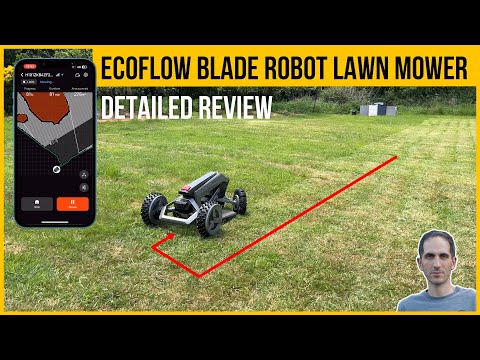
Traditional robot mowers force you to bury cables around your lawn—hours of setup, and a nightmare if one breaks. The EcoFlow Blade skips all of that using RTK (Real-Time Kinematic GPS). In simple terms, it uses a base station in your yard to “correct” satellite positioning, bringing accuracy down to centimeter-level precision.
What does that mean in real life? Instead of wandering randomly, the Blade moves in clean, straight lines—almost like a human pushing a mower with purpose. You literally drive it around your lawn once via the app, like a remote-control car, and it remembers everything: boundaries, no-go zones, even multiple lawn sections.
Now layer in X-Vision—EcoFlow’s combo of LiDAR (laser-based distance sensing, like how a robot “feels” the room) and a camera. This isn’t the old-school “bump and turn” system. It actually sees objects and routes around them smoothly.
2.2 Cutting System, Range & Terrain Capability
Specs are easy to ignore—until you translate them into what your lawn actually looks like.
| Feature | Specification |
|---|---|
| Cutting Width | 260 mm (10-inch) |
| Height Adjustment | 20 mm to 76 mm |
| Max Slope | 27° |
| Navigation | RTK + LiDAR + Visual |
Height adjustment is controlled directly in the app. That means no bending down, no knobs—just tap and adjust depending on the season.
In practice, reviewers consistently note strong traction, helped by those unusual omni-directional front wheels and aggressive rear tread. It’s surprisingly capable on uneven ground.
Pros
- Straight-line cutting patterns
- App-controlled height adjustment
- Excellent traction on slopes
Cons
- Performance drops on wet grass
- Struggles with very bumpy terrain
- Not suitable for overgrown lawns
2.3 Battery, Runtime & Coverage: Can It Handle 0.75 Acre?
Battery anxiety is real with robot mowers. Nobody wants a half-cut lawn and a dead robot.
The EcoFlow Blade packs a ~298Wh battery with a rated runtime of around 240 minutes per charge. On paper, that supports lawns up to about 0.75 acres.
But here’s where most people misunderstand robot mowers: they’re not designed to finish everything in one heroic session. Instead, they work like a Roomba for your yard—short, frequent runs.
- Medium lawns: Easily maintained with daily or every-other-day schedules.
- Larger lawns: Handled through multiple cycles and recharges.
- Recharge time: ~130 minutes—fast enough to keep momentum going.
The key mindset shift? You’re not mowing anymore. You’re maintaining. Once you get that, the system clicks—and suddenly your weekends feel empty in a good way.
2.4 The Sweeper Attachment: Unique Feature or Niche Add-On?
This is the headline feature—and honestly, the most polarizing one.
The optional sweeper kit turns the EcoFlow Blade into something no other mainstream robot mower offers: a lawn-cleaning machine. It uses a rotating brush to collect leaves, clippings, and small debris into a ~30L container.
Best For
- Light debris and dry leaves
- Small twigs
- Daily "showroom" maintenance
Struggles With
- Heavy fall leaf dumps
- Wet, clumped debris
- Large sticks or dense piles
Review consensus is clear: it’s not a replacement for a full fall cleanup—but it does reduce how often you need to do one. Think of it like a robot vacuum vs. deep cleaning. It won’t eliminate chores entirely, but it dramatically cuts them down.
Check Price on Amazon3. Real-World Performance: Does EcoFlow Blade Live Up to the Hype?

3.1 Cut Quality, Daily Maintenance Style & Grass Limitations
If you’re imagining firing up the EcoFlow Blade to tackle knee-high grass after two weeks of neglect—stop right there. That’s not what this machine is built for.
Robotic mowers like the Blade are designed for maintenance mowing. They trim a tiny amount, but they do it often. The result? A lawn that always looks freshly cut without ever going through that messy “before and after” phase.
Reviewers consistently describe the cut quality as clean and even. The straight-line pattern adds a subtle striped effect—enough to give your lawn that “intentional” look. It’s also quiet enough that you can run it early morning or evening without feeling like the neighborhood villain.
4. Is EcoFlow Blade Worth It? Comparison, Alternatives & Ideal Use Cases
4.1 Where EcoFlow Blade Stands Among RTK Robot Mowers
Let’s be honest—at this price level, the EcoFlow Blade isn’t competing with basic robot mowers. It’s going head-to-head with some of the most advanced RTK machines on the market.
So where does it actually stand?
The short answer: it’s one of the most feature-packed options—but also one of the most condition-dependent.
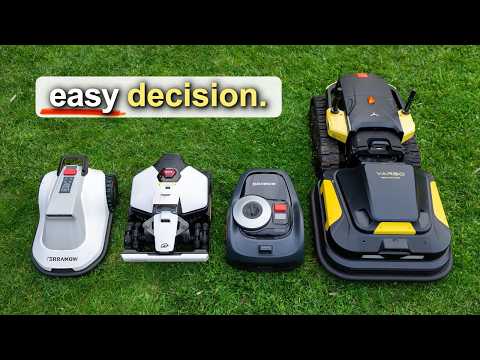
Here’s how it stacks up against key competitors:
| Model | Navigation | Max Area | Key Strength | Key Weakness |
|---|---|---|---|---|
| EcoFlow Blade | RTK + LiDAR + Camera | ~0.75 acre | Sweeper + wire-free + smart obstacle avoidance | RTK sensitivity, edge gaps |
| Mammotion Luba 2 | RTK + Vision | Up to 2.5 acres | Extreme slope handling, AWD traction | No sweeper, larger footprint |
| Husqvarna Automower | Wire + GPS assist | Up to 1.25 acres | Proven reliability, mature ecosystem | Complex installation |
| Worx Landroid Vision | Camera-only | ~0.5 acre | No RTK needed, better in shaded yards | Less precise patterns |
What makes the Blade stand out is obvious: the hybrid navigation system and the sweeper attachment. Most RTK mowers focus purely on cutting. The Blade tries to replace two tools at once.
And when conditions are right—open sky, moderate terrain—it delivers those clean, parallel mowing lines that RTK systems are known for.
But here’s the trade-off: RTK isn’t magic. It’s powerful, but fragile. Compared to camera-based systems, it’s more dependent on environment stability.
So yes, the Blade is innovative. But it’s not universally better—it’s situationally excellent.
4.2 Best Fit Scenarios: Lawns Where Blade Shines
If your lawn matches the Blade’s “sweet spot,” the experience feels almost unfair—in a good way.
Picture this: you wake up, grab your coffee, glance outside… and your lawn looks freshly cut. Again. No noise. No effort. No planning.
That’s the magic when everything aligns.
The EcoFlow Blade performs best in:
- Medium to large lawns (up to ~0.75 acre)
- Open areas with clear sky visibility (minimal tree canopy or tall walls)
- Moderate slopes and relatively firm ground
- Homes with consistent light debris (leaves, twigs, clippings)
In these environments, the wire-free setup alone feels like a breakthrough. No digging trenches. No fixing broken wires months later. Just map once, tweak in the app, and you’re done.
And then there’s the lifestyle shift. Instead of dedicating hours every weekend to mowing and cleanup, the Blade quietly handles it in the background.
Especially with the sweeper attached, it turns your lawn into something closer to a self-maintaining surface. Not perfect—but consistently clean enough that you stop thinking about it.
4.3 When to Skip It: Better Alternatives for Complex or Small Yards
Now for the part most reviews gloss over: when the EcoFlow Blade is not the right choice.
Because if your yard doesn’t fit its ideal conditions, the experience can quickly shift from “wow” to “why is this happening?”
You should think twice if your lawn has:
- Heavy tree coverage or poor sky visibility
- Tight corridors or narrow passages between zones
- Very small lawn size (overkill for the price)
- Soft, sandy, or frequently muddy ground
- A need for perfect edge-to-edge cutting
Why? Because RTK relies on stable satellite signals. When that signal gets blocked or reflected, performance becomes inconsistent. That’s not a defect—it’s a limitation of the technology itself.
And then there’s the edge issue. Multiple real-world tests show the Blade leaves a noticeable border—sometimes up to 18–24 inches of uncut grass along walls and fences. That means trimming isn’t optional. It’s part of the routine.
If your yard is complex, shaded, or full of tight spaces, a camera-based mower (like Worx Vision) or even a traditional boundary-wire system may actually deliver a smoother, more predictable experience.
5. Long-Term Ownership: Maintenance, Reliability & Hidden Workload

5.1 Maintenance Reality: Cleaning, Blade Replacement & Upkeep
Here’s the uncomfortable truth: robot mowers don’t eliminate work—they change it.
Instead of one big sweaty mowing session, you get small, frequent maintenance tasks. Less exhausting. More consistent. But still necessary.
With the EcoFlow Blade, that includes:
- Cleaning the underside (grass buildup happens fast)
- Wiping sensors and camera lenses
- Checking and replacing small razor blades
- Emptying and cleaning the sweeper bin (if attached)
Those tiny cutting blades? They’re efficient, but they wear out. In tougher conditions—like sandy soil or debris-heavy lawns—you’ll be swapping them more often. Ignore it, and your lawn starts looking shredded instead of neatly trimmed.
The sweeper adds another layer. It’s helpful, but it’s also another moving system that can clog, jam, or just demand attention—especially during heavy leaf seasons.
5.2 Reliability Over Time: RTK, Firmware Updates & Common Issues
Long-term reliability with the Blade comes down to two things: environment and software.
On the hardware side, early user feedback suggests the mower itself is fairly solid—wheels, motors, and cutting system hold up well over the first 1–2 seasons. Most problems aren’t mechanical failures.
They’re behavioral.
And that usually points back to RTK.
If your base station placement is perfect and your yard has clear sky visibility, the system feels stable. If not? You may see:
- Position drift
- Mapping inconsistencies
- Occasional pauses or errors
This is why setup matters so much. It’s not just “plug and play”—it’s more like “place and optimize.”
The good news? Firmware updates have been frequent, and multiple sources note that performance has improved over time. Bugs get fixed. Navigation gets smoother. Features evolve.
5.3 Seasonal Use: How the Sweeper Performs Throughout the Year
The sweeper sounds like a year-round miracle. In reality, it’s more like a seasonal assistant.
Pros
- Genuinely useful in Spring and Summer for grass clippings.
- Maintains a clean lawn look with minimal daily effort.
- Great for picking up light debris like small twigs and thin leaves.
Cons
- Overwhelmed by peak autumn leaf fall.
- Wet conditions cause sticking and mechanism jams.
- Bin requires frequent manual emptying during heavy seasons.
So think of it this way:
- Great for maintenance cleaning
- Not built for seasonal heavy lifting
Used correctly, it reduces your workload. Used with the wrong expectations, it becomes frustrating.
6. Conclusion
The EcoFlow Blade is one of the most ambitious robot mowers on the market—and that ambition is both its biggest strength and its biggest limitation.
When everything lines up—open lawn, strong RTK signal, moderate terrain—it delivers a genuinely impressive, almost hands-off lawn care experience. Clean stripes, consistent maintenance, and even light debris cleanup without lifting a finger.
But it’s not a universal solution. Edge trimming is still required. Setup takes patience. And performance depends heavily on your yard’s layout and conditions.
If your lawn fits its strengths, the Blade can feel like a glimpse into the future of home maintenance. If not, it can feel like a very expensive compromise.
FAQ
Q: Does the EcoFlow Blade require a perimeter wire?
A: No, the EcoFlow Blade uses RTK-GPS and LiDAR technology for navigation. This allows for wire-free mapping, where users simply drive the mower via a smartphone app to define boundaries and no-go zones during the initial setup process.
Q: How does the lawn sweeper attachment perform with wet leaves?
A: Based on technical specifications and user feedback, the sweeper is optimized for dry debris. Wet leaves and heavy grass clippings tend to clump and may cause the mechanism to clog, requiring manual intervention and more frequent bin emptying.
Q: Can the EcoFlow Blade handle steep slopes?
A: The mower is designed to manage inclines up to 27 degrees. Its omni-directional front wheels and aggressive rear treads provide strong traction, though performance and navigation precision may decrease on soft or muddy terrain during ascent.
Q: Does the mower cut all the way to the edge of walls?
A: Aggregated performance data indicates that the Blade typically leaves a border of uncut grass, often between 18 to 24 inches, when navigating near walls or fences. Supplementary manual trimming is usually required for a completely finished look.
Q: What happens if the RTK signal is blocked by trees?
A: RTK technology requires a clear line of sight to satellites. In yards with dense tree cover or tall buildings, the signal may drift or drop, leading to navigation errors or the mower pausing until a stable connection is re-established.