
Husqvarna Automower 315X vs. Worx Landroid M: Which Robot Lawn Mower Is Best for Your Yard?
Aaron Cooper1. Introduction
If mowing the lawn feels like a never-ending weekend chore, you’re not alone. Robot lawn mowers have quietly become the “set it and forget it” solution—trimming your grass daily while you reclaim your time. But choosing the right one? That’s where things get tricky.
The Husqvarna Automower 315X and Worx Landroid M sit at two very different ends of the same promise: hands-free lawn care. One leans into premium automation and smart control, the other into practical value and simplicity. In this guide, we’ll break down the specs that actually matter, how they perform in real yards, and which one truly fits your lifestyle—not just your lawn.
2. Husqvarna Automower 315X vs Worx Landroid M: Core Specs That Actually Matter
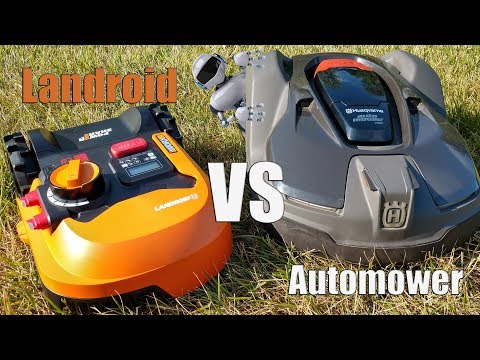
2.1 Lawn Size Capacity and Coverage Efficiency
Let’s start with the question that quietly determines everything: Will it actually keep up with your yard?
The Husqvarna Automower 315X is designed for lawns up to 1,600 m², placing it firmly in the “comfortable suburban yard” category. That means it’s not just cutting—it’s maintaining, day after day, without falling behind. In practice, this kind of capacity translates to consistent, even trimming rather than patchy, catch-up mowing sessions.
By contrast, detailed capacity data for the Worx Landroid M is less clearly defined in available sources. However, across comparisons and positioning, Worx models in the M range are typically aimed at smaller or more budget-conscious lawns. Think compact yards where efficiency matters—but absolute coverage power isn’t the top priority.
Bottom line? One is built to keep up. The other is built to get it done—without overpaying for capacity you don’t need.
2.2 Slope Handling and Terrain Adaptability
Flat lawns are easy. The real test? Slopes, bumps, and সেই awkward incline that turns mowing into a workout.
This is where the Husqvarna Automower 315X clearly flexes its engineering. It’s built to handle up to 40% slopes, thanks to its large, coarse-tread wheels and traction-focused design. In practical terms, that means it doesn’t hesitate when your yard tilts—it just keeps moving, gripping, and cutting.
For the Worx Landroid M, exact slope specs are less consistently documented, but comparisons suggest a slightly lower capability (around the mid-30% range in similar models). That difference might sound small on paper—but on uneven terrain, it’s the difference between smooth operation and occasional hesitation.
Instead of watching your mower struggle, spin its wheels, or avoid certain zones entirely, the Husqvarna climbs, adjusts, and keeps the cut consistent across elevations.
That said, if your lawn is mostly flat or gently sloped, the Worx still performs perfectly fine—and you’re not paying extra for terrain capability you may never use.
2.3 Cutting Performance: Width, Height, and Lawn Finish
Here’s where things get surprisingly personal—because “cutting performance” isn’t just about numbers. It’s about how your lawn looks and feels when you walk barefoot across it.
The Husqvarna Automower 315X uses a 22 cm cutting width with a system of three pivoting razor blades. Combined with its automatic spiral cutting pattern, it actively targets uneven patches—like that slightly taller spot near your patio—and evens everything out over time. The result? A lawn that looks consistently smooth, almost like it’s been professionally maintained.
The Worx Landroid M, with a slightly narrower cutting width (around 18–20 cm depending on the model), takes a different approach. Its standout feature is the offset blade design, which allows it to cut closer to edges—something many robot mowers struggle with.
Pros
- Husqvarna: More uniform, “carpet-like” finish across the entire lawn
- Worx: Better edge performance, less cleanup afterward
Cons
- Neither is perfect; they solve different frustrations.
2.4 Smart Features and Connectivity
This is where the two mowers stop feeling like similar tools—and start feeling like completely different experiences.
The Husqvarna Automower 315X is packed with premium smart features. Through the Automower Connect app, you get full remote control, GPS tracking, and even voice integration with Alexa or Google Assistant. It also uses GPS-assisted navigation to map your lawn and optimize its mowing patterns over time.
What does that actually mean for you?
- Adjust schedules from your phone
- Track the mower’s real-time location
- Set up specific mowing zones without stepping outside
The Worx Landroid M takes a more straightforward approach. While detailed specs are limited, it does support app connectivity and Wi-Fi, and widely observed user feedback highlights its intuitive, easy-to-use app experience. Features like flexible scheduling and simple controls make it feel approachable rather than overwhelming.
3. Real-World Performance: What It’s Actually Like to Live With These Mowers

3.1 Installation and Boundary Wire Setup
Let’s be honest—this is the part most people dread. The idea of installing a boundary wire sounds like a weekend-killing project. Trenches, tools, frustration. But in reality? It’s much simpler than most expect.
For both the Husqvarna Automower 315X and Worx Landroid M, installation typically involves laying a wire around your lawn and securing it with pegs. No digging required. At first, the wire sits visibly on the grass—but within a few weeks, it naturally disappears as the lawn grows over it.
| Feature | Husqvarna 315X | Worx Landroid M |
|---|---|---|
| Navigation System | Guide Wire + Boundary | Boundary Wire Only |
| Setup Complexity | Higher (Extra Guide Wire) | Lower (Simpler Loop) |
| Return to Base | Highly Reliable (Precision) | Direct (Follows Boundary) |
3.2 Navigation in Narrow Spaces and Around Obstacles
Now imagine this: garden beds, trees, patio furniture, maybe even a narrow side passage between fences. This is where robotic mowers either feel magical—or mildly annoying.
The Husqvarna 315X uses a combination of guide wires and intelligent navigation to move through tight areas. It can detect narrow passages and adjust its path, which helps it systematically cover more complex layouts without getting lost.
The Worx Landroid M, however, has built a reputation for handling tight spaces surprisingly well. It’s particularly effective in narrow corridors and tricky sections where other mowers might bounce around inefficiently.
- Husqvarna: Feels methodical and controlled
- Worx: Feels nimble and adaptable
3.3 Edge Cutting and the Reality of Manual Trimming
But the difference between these two mowers is how much work they leave behind. The Worx Landroid M has a clear advantage here. Its offset cutting disc sits closer to the edge of the chassis, allowing it to trim nearer to boundaries than most competitors. In everyday use, that means thinner strips of leftover grass—and fewer cleanup sessions.
The Husqvarna 315X, with its more centered cutting system, tends to leave a slightly wider uncut margin. It prioritizes safety and consistency over edge reach.
3.4 Maintenance, Reliability, and Daily Use Habits
Once everything is set up, the real magic of robot mowers kicks in: they don’t mow once a week—they mow constantly. Instead of long weekend sessions, your lawn gets trimmed a little every day. The result? Healthier grass, finer clippings, and that always-neat look.
But there’s a catch. Robot mowers demand a tidy environment. Toys, branches, random debris—anything left on the lawn becomes an obstacle (or worse, something that gets chewed up).
Routine Maintenance Checklist:
- Blades need occasional replacement (small razor-style blades)
- The underside needs cleaning from time to time
- The lawn needs to stay clear of clutter
Reliability-wise, both Husqvarna and Worx benefit from years of refinement in this category. The experience isn’t about perfection—it’s about consistency over time. And when it clicks? You stop thinking about mowing altogether.
4. Feature Trade-Offs: Premium Automation vs Practical Simplicity

4.1 Smart Mapping vs Easy Setup
Here’s where things start to feel very different—not in what these mowers do, but in how they feel to live with.
The Husqvarna Automower 315X leans heavily into advanced automation. Its app-based control system allows you to create zones, adjust schedules, and even manage different mowing areas with precision. It’s not just remote control—it’s a full lawn management system. If your yard has multiple sections, tricky layouts, or specific “stay-out” areas, this level of control can feel incredibly powerful.
The Worx Landroid M goes in the opposite direction. Its app is widely recognized for being simple, intuitive, and quick to set up. You open it, schedule your mowing, maybe toggle a few settings—and you’re done. No deep learning curve. No overthinking.
So ask yourself: Do you want to fine-tune every detail… or just press start and move on with your life?
Because one gives you control. The other gives you speed. And depending on your personality, that difference matters more than any spec sheet.
4.2 Integrated System vs Removable Battery Convenience
This is one of those differences you won’t think about—until something goes wrong.
The Husqvarna Automower 315X uses a fully integrated battery system. It’s seamless: the mower handles charging automatically, returns to its dock, and keeps everything self-contained. From a daily-use perspective, it feels effortless. You don’t touch the battery. You don’t think about it.
Imagine this: Instead of your mower being “out of commission,” you just slide in a fresh battery and keep going.
It’s not flashy. It’s not high-tech. But it’s incredibly convenient.
So the trade-off is simple:
- Husqvarna: seamless, hands-off system
- Worx: flexible, user-friendly battery management
And if you value long-term ownership convenience? That removable battery starts to look very appealing.
4.3 Rain Handling, Noise, and Everyday Comfort
This is the stuff you notice after week one—when the novelty wears off and the mower just becomes part of your routine.
The Husqvarna 315X is designed to operate quietly—around 60 dB, which is roughly the level of a normal conversation. You can run it early in the morning or late in the evening without feeling like you’re disturbing the neighborhood. Combined with its weather timer, it can adjust mowing based on grass growth conditions rather than just blindly following a schedule.
The Worx Landroid M takes a more direct approach to weather. It uses a rain sensor, meaning it can detect moisture and stop mowing when conditions aren’t ideal. In practice, this feels very straightforward—you don’t have to think about whether it should be mowing. It just reacts.
Daily Life Comparison
- Husqvarna: Quieter, more automated environmental adjustments
- Worx: Reactive, practical weather handling with simple controls
Neither is perfect. But both are a massive upgrade from dragging a mower around in the heat.
5. Which One Should You Choose? Real-World Scenarios That Make the Decision Easy
5.1 Choose Husqvarna Automower 315X If You Want a Premium, Hands-Off Experience
If your goal is simple—never think about mowing again—this is where the Husqvarna Automower 315X really earns its reputation.
It’s built for lawns that aren’t just flat, open rectangles. Think multiple zones, slopes, awkward sections, or areas you want to control individually. With GPS-assisted navigation, app-based zone control, and smart scheduling, it behaves less like a tool and more like a system quietly managing your yard in the background.
But let’s be honest: you’re paying for that experience. This is the premium option—for people who value time, convenience, and control over upfront cost.
Set it. Trust it. Forget it.
Check Price on Amazon5.2 Choose Worx Landroid M If You Want Value, Simplicity, and Flexibility
What if you don’t need a hyper-advanced system? What if you just want your lawn… handled?
That’s exactly where the Worx Landroid M shines. It focuses on the things that actually reduce your workload—like better edge cutting (less trimming) and a simple, intuitive app that doesn’t feel like a tech project.
The removable battery, straightforward controls, and modular approach mean you’re not locked into a complex ecosystem. You’re buying a tool—not a system you have to manage.
Why Choose Worx Landroid M
- More budget-friendly entry point
- Better edge cutting reach
- Removable/Shareable battery system
If your lawn is smaller, simpler, or you just prefer things that “work without fuss,” the Landroid M is often the smarter, more relaxed choice.
Check Price on Amazon5.3 When Neither Is Perfect: Situations Where Robot Mowers Struggle
Let’s ground this for a second—because no robot mower is magic.
There’s also the reality of edges. Even with the Worx’s better edge reach, you’ll still need occasional trimming. That “perfect finish” along fences and garden beds? It doesn’t happen automatically.
Boundary wires are easier than they sound—but they’re still a commitment. If the wire gets damaged or your lawn layout changes, adjustments take time. Finally, robot mowers don’t do “big cleanups.” They maintain. If your grass is overgrown, you’ll still need a traditional mower to reset things before the robot takes over.
They don’t replace lawn care entirely. They replace the repetitive, time-consuming part of it. And honestly? That’s the part most people are happy to give up.
6. Conclusion
Choosing between the Husqvarna Automower 315X and the Worx Landroid M isn’t about which one is “better”—it’s about which one fits your life.
| Profile | Best Match |
|---|---|
| The Tech Enthusiast | Husqvarna Automower 315X |
| The Value Seeker | Worx Landroid M |
The Husqvarna is the premium, fully automated experience for complex lawns and smart home integration. The Worx Landroid M takes a more practical route, offering simplicity, affordability, and day-to-day flexibility.
Either way, the real win is the same: You’re no longer spending your weekends mowing. And once you experience that shift—even with a few small compromises—it’s very hard to go back.
FAQ
Q: Which mower handles steep slopes better?
A: Based on technical specifications, the Husqvarna Automower 315X is superior for hilly terrain, managing inclines up to 40%. The Worx Landroid M is better suited for flatter yards or gentle slopes, typically handling gradients in the mid-30% range depending on the specific model configuration.
Q: Does the Worx Landroid M really cut closer to edges?
A: Yes, data indicates the Worx Landroid M features an offset blade design. This allows the cutting disc to reach closer to the edge of the chassis compared to the Husqvarna 315X, significantly reducing the amount of manual string trimming required around fences and walls.
Q: What is the main difference in navigation systems?
A: The Husqvarna 315X utilizes a sophisticated GPS-assisted system and guide wires to navigate complex layouts and narrow passages. The Worx Landroid M uses a more simplified boundary wire approach, which is easier to install but may be less methodical in highly intricate yard shapes.
Q: Are the batteries user-replaceable?
A: The Worx Landroid M features a removable battery system compatible with other Worx PowerShare tools, offering high flexibility. The Husqvarna 315X uses an integrated battery system which is designed for seamless automated charging but requires a more technical process for eventual replacement.
Q: Can these mowers operate in the rain?
A: Both mowers are weather-resistant. The Husqvarna 315X uses a weather timer to adjust mowing frequency based on growth, while the Worx Landroid M typically includes a rain sensor that signals the unit to return to its dock until the grass is dry to prevent clumping.