
Husqvarna Automower 415X Review: Premium Reliability Breakdown, Real-World Performance & Hidden Trade-Offs
Aaron Cooper1. Introduction: Is the Husqvarna Automower 415X Still a Reliable Premium Choice?
There was a time when “lawn care” meant sweating through your Saturday, dragging a noisy gas mower across uneven grass while the sun punished every inch of your patience. That’s exactly the problem robotic mowers set out to solve—and the Husqvarna Automower 415X sits right in the sweet spot of that promise: premium, but not ultra-flagship.
Positioned for medium-sized lawns, the 415X blends GPS-assisted navigation, app control, and a proven boundary-wire system. But here’s the real question in 2026: does “proven” still beat “cutting-edge”? With wire-free RTK models gaining traction, buyers now care less about specs—and more about real-world reliability, setup friction, and whether this machine actually delivers stress-free ownership.
2. Real-World Performance & Reliability: How Well Does the 415X Actually Work?
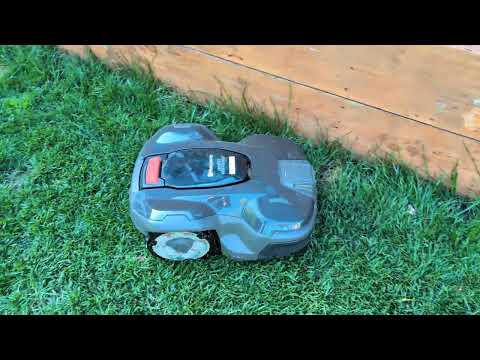
2.1 GPS-Assisted Navigation vs Boundary Wire: Precision or Limitation?
On paper, the 415X sounds like it should behave like a fully autonomous robot. In reality, it’s a hybrid—and that distinction matters.
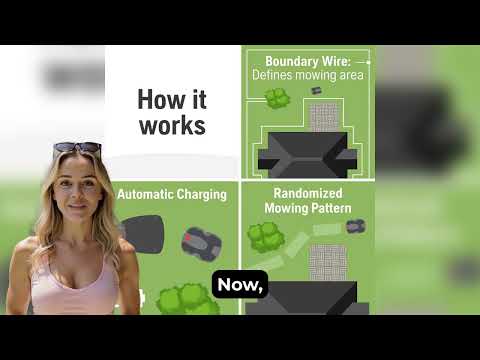
It combines a physical boundary wire (an invisible fence around your yard) with GPS-assisted navigation. Think of the wire as the guardrails, and GPS as the brain trying to mow efficiently inside them. Over time, the mower builds a virtual understanding of your lawn and adjusts where it goes next, avoiding overcutting one area while neglecting another.
But here’s the trade-off: it’s not truly wire-free. You still need to install that boundary. And in 2026, that feels… a bit old-school.
So the reality looks like this:
Pros
- stable navigation
- strong coverage consistency
- works well in shaded or complex yards
Cons
- setup complexity
- less flexibility vs newer RTK models
If your priority is “it just works every day without surprises,” this hybrid system still holds up. If your priority is “no installation hassle whatsoever,” it’s already behind the curve.
2.2 Slope Handling, Terrain Challenges & Traction Issues
Now let’s talk about what actually breaks most robot mowers: real yards.
Uneven ground. Slopes. Wet grass. That one patch that never grows right.
The 415X is officially rated to handle slopes up to 40% gradients in real-world mowing conditions, which puts it comfortably above many mid-range competitors. And in controlled scenarios, it does climb and descend confidently.
Some recurring patterns show up:
- It may struggle on wet slopes after rain
- It can get stuck near edges where terrain changes abruptly
- Uneven patches or thin grass areas reduce grip
This doesn’t make it unreliable—but it does mean it’s not “set and forget” in challenging yards right out of the box. Expect some tweaking.
2.3 Obstacle Handling & Edge Cases: Where It Struggles
Here’s a question most buyers don’t ask upfront—but absolutely should: What happens when the mower hits something unexpected?
The 415X uses a bumper-based collision system. That means it physically bumps into objects, then redirects. It’s simple, durable, and gets the job done—but it’s not “intelligent” obstacle avoidance like newer AI vision systems.
In everyday use, that translates to:
- It handles solid objects (trees, furniture, play equipment) just fine
- It slows down and redirects after contact
- It won’t “plan ahead” to avoid obstacles before touching them
Where things get messy is around edges and edge cases (literally):
- Tight corners may be missed or require manual trimming
- Lawn edges often need a follow-up with a string trimmer
- Poor wire placement can lead to occasional boundary escapes
There are even reports of rare but dramatic moments—like slipping past the wire on a slope and ending up outside the mowing area. Not common, but not impossible either.
2.4 Lawn Quality & Consistency Over Time
This is where the 415X quietly shines—and honestly, where it justifies its existence.
Instead of hacking off large chunks of grass once a week, it trims tiny amounts continuously using a three-blade micro-cutting system. The result? Grass clippings are so fine they fall back into the soil and act as natural fertilizer.
Over time, something interesting happens. Your lawn doesn’t just stay short—it gets thicker. Greener. More even.
You start noticing:
- Fewer visible clumps of clippings
- A softer, more uniform lawn underfoot
- Less need for fertilizing
3. Installation & Ownership Experience: What Living With the 415X Feels Like
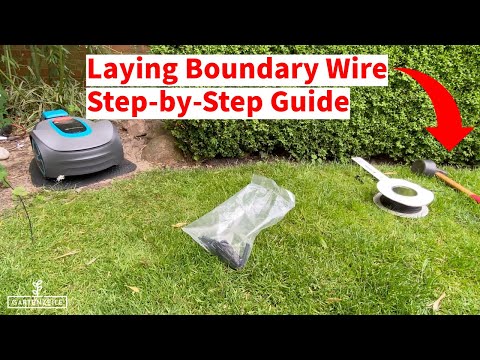
3.1 Boundary Wire Setup: The Biggest Barrier to Entry
Let’s not sugarcoat this—installation is the moment where most people either commit… or quit.
Setting up the 415X means laying a boundary wire around your entire lawn, plus at least one guide wire to help it navigate home. This isn’t a quick plug-and-play job. For most homes, you’re looking at several hours of work, often in the 4–8 hour range depending on complexity.
And it’s not just time—it’s precision.
- You need to measure distances from edges correctly
- You’ll likely re-adjust sections after the first few runs
- Slopes, corners, and narrow passages require extra care
DIY is absolutely doable, but expect trial and error. Some homeowners opt for professional installation just to avoid the frustration.
3.2 Learning Curve & Daily Use: App, Scheduling, and Trial-and-Error
Once installed, you might expect instant perfection. That’s… optimistic.
The Automower Connect app gives you full control—scheduling, height adjustment, zone management, and real-time status. On the surface, it’s powerful and flexible. But the first couple of weeks? They’re all about calibration.
You’ll likely:
- Adjust mowing schedules to match growth rates
- Fine-tune boundary wire placement
- Experiment with settings like “drive past wire” distance
- Tweak zones to avoid problem areas
It’s less “set it and forget it” and more “teach it how your yard behaves.” After that learning phase, though, things click. You go from babysitting it… to barely thinking about it.
3.3 Maintenance & Upkeep: Low Effort but Not Zero
Here’s the good news: compared to a gas mower, this is a massive upgrade in convenience. No oil. No fuel. No engine headaches.
But “low maintenance” doesn’t mean “no maintenance.” You’ll still need to:
- Replace blades every 1–3 months depending on usage
- Rinse off grass buildup periodically
- Check for debris or minor blockages
- Store it properly during winter in colder climates
| Maintenance Task | Effort Level |
|---|---|
| Blade Replacement | Low (minimal complexity) |
| Cleaning | Ongoing frequency |
| Winter Storage | Seasonal requirement |
It’s not zero effort—but it’s about as close as lawn care gets.
4. Is the 415X Worth It in 2026? Price vs Modern Wire-Free Alternatives
4.1 Premium Features Breakdown: What You’re Paying For
At first glance, the Husqvarna Automower 415X doesn’t feel like a “basic” robot mower—and that’s because it isn’t. This is part of Husqvarna’s X-Line, which means you’re paying for a bundle of features designed to remove friction from daily use, not just cut grass.
Take the GPS-assisted navigation. It doesn’t replace the boundary wire, but it layers intelligence on top—tracking where it’s been and actively balancing coverage. Over time, your lawn stops looking patchy and starts looking… intentional.
Then there’s the Automower Connect app. You’re not just scheduling mowing—you’re controlling it from anywhere, getting alerts, adjusting settings, even integrating with Alexa or Google Home. Add in GPS theft tracking and geofencing, and suddenly this isn’t just a mower sitting in your yard—it’s a connected device you can monitor like a security system.
But here’s the uncomfortable truth: in 2026, many of these features are no longer “premium”—they’re expected. App control, scheduling, even smart home integration have trickled down into mid-range models.
So what are you really paying for?
- A mature, stable ecosystem
- Proven GPS + wire hybrid reliability
- Security features that still hold real value
Not cutting-edge innovation. Not anymore.
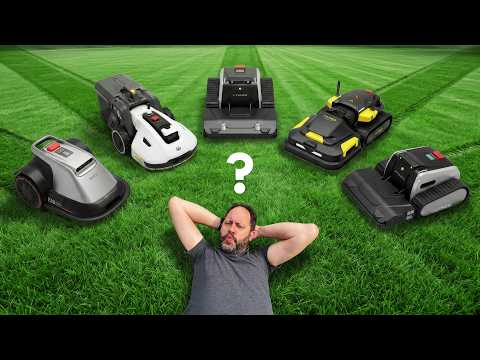
4.2 Wire-Free RTK Competitors: A New Standard?
Now let’s talk about the elephant in the yard: wire-free robotic mowers.
If the idea of spending your weekend laying boundary wire already made you hesitate earlier… this is where things get interesting.
Newer models use RTK (Real-Time Kinematic GPS) or AI vision systems to navigate without any physical wire. In simple terms, they act more like a self-driving car than a guided robot—mapping your lawn digitally and staying within virtual boundaries.
And the difference in experience? It’s night and day.
| Feature | Husqvarna 415X | Wire-Free RTK Models (2026) |
|---|---|---|
| Installation | Manual boundary wire (hours) | App-based virtual setup (minutes) |
| Navigation Type | GPS-assisted + wire | RTK GPS / AI vision |
| Flexibility | Fixed after install | Easily adjustable zones |
| Setup Friction | High | Low |
| Reliability in Complex Yards | Strong (wire stability) | Improving, but varies |
So why would anyone still choose the 415X? Because wire-free isn’t perfect yet.
Still, the direction of the industry is clear. Even Husqvarna is shifting toward AI vision-based wire-free robotic mowing systems, signaling that boundary wires are becoming legacy tech.
4.3 Who Should Buy the 415X (and Who Should Skip It)
Let’s cut through the noise. The Husqvarna Automower 415X absolutely still makes sense—but only for a specific type of buyer.
Who Should Buy It
- Users prioritizing reliability over the latest tech
- Yards with trees, slopes, or complex layouts
- Those who don't mind a one-time setup effort
- Anyone wanting a "set it and forget it" stable system
Who Should Skip It
- Those wanting a wire-free, zero-installation experience
- Users who enjoy frequent zone and layout tweaks
- Wide open yards ideal for RTK systems
- Buyers looking for 5+ year future-proof tech
"The 415X isn’t outdated—it’s just no longer leading. It’s the safe choice. Not the exciting one."
5. Long-Term Reliability: Known Issues, Limitations, and Unknowns
5.1 Common Reported Issues: Traction, Software, and Setup Sensitivity
Let’s talk about what happens after the honeymoon phase. At first, the 415X feels like magic. Then reality creeps in—not in the form of catastrophic failures, but small, recurring annoyances that depend heavily on your yard.
Traction is the most consistent issue. On paper, it handles slopes well. In practice, wet grass or uneven terrain can turn a smooth mowing session into a stuck notification on your phone. Wheels spin. The mower digs slightly into soft ground. You step in.
Then there’s setup sensitivity. This machine is only as good as your boundary wire placement. A few centimeters off? You might see edge misses… or worse, the occasional escape attempt.
5.2 Durability & Wear: Blades, Battery Cycles, and Outdoor Exposure
Here’s where robotic mowers quietly differ from traditional ones: they trade heavy-duty components for continuous operation.
The 415X uses small razor-style blades instead of a single large cutting deck. That’s great for precision—but it also means regular replacement. Expect to swap blades every 1–3 months depending on usage. It’s quick, but it’s ongoing.
Battery behavior follows a similar pattern. The mower runs in cycles—mow, recharge, repeat. Over time, that means many charge cycles, though long-term degradation data beyond a few months of testing is still limited.
On the plus side, the unit is built to live outdoors. It’s weatherproof, designed to handle rain, heat, and daily exposure without needing to be babied.
- Small, frequent maintenance (blades)
- Gradual wear over time (battery, wheels)
- Environmental exposure handled well
5.3 The Big Unknown: Multi-Season Reliability vs Newer Tech
Most available data on the 415X covers the first few months of use. And in that window, reliability is generally solid—consistent mowing, stable navigation, predictable behavior. But what about year two? Year three?
There’s limited long-term, multi-season data showing how it performs across:
- Changing weather conditions
- Soil shifts affecting boundary wires
- Battery aging over multiple seasons
So you’re choosing between two types of risk:
- 415X: Proven short-term reliability, unknown long-term wear patterns.
- Wire-free models: Cutting-edge convenience, but less field-proven consistency.
If you’re risk-averse, the 415X still feels like the safer bet today.
6. Conclusion: A Reliable Classic, but No Longer the Future-Proof Choice
The Husqvarna Automower 415X delivers exactly what it promises—quiet, consistent, hands-off lawn maintenance that genuinely transforms how your yard looks and how you spend your time. Once it’s properly set up, it fades into the background and just… works.
But getting there isn’t frictionless. The boundary wire installation, the early adjustments, and the occasional terrain-related hiccups remind you this isn’t a fully “modern” experience anymore.
FAQ
Q: Does the Husqvarna 415X require a boundary wire?
A: Yes, the 415X utilizes a physical boundary wire system to define mowing areas. While it features GPS-assisted navigation to optimize its mowing pattern, the physical wire remains the primary safety and boundary guardrail for the machine.
Q: How steep of a slope can the Automower 415X handle?
A: The unit is rated to handle gradients of up to 40%. However, aggregated user data suggests that real-world traction may decrease on wet grass or uneven terrain, potentially requiring minor yard modifications for optimal performance.
Q: Is the Husqvarna 415X waterproof?
A: The 415X is designed to be weatherproof and can operate in the rain. It is built to withstand standard outdoor exposure, though it is recommended to store the unit indoors during extreme winter conditions.
Q: How often do the blades need to be replaced?
A: For the best cutting results and lawn health, the small carbon steel blades should be replaced every 1 to 3 months. This frequency depends on the lawn size, grass type, and presence of debris like twigs.
Q: Can I control the 415X from my smartphone?
A: Yes, the 415X includes Automower Connect, allowing for full smartphone control. Users can adjust schedules, cutting heights, and track the mower's GPS location remotely, and it also integrates with major smart home platforms.