
Husqvarna Automower 450X EPOS Review: Is This Commercial-Grade Robot Mower Worth It for Your Home Lawn?
Aaron Cooper1. Introduction
Robot lawn mowers used to feel like a gimmick—until weekends started disappearing into endless mowing sessions. Now, models like the Husqvarna Automower 450X EPOS promise something different: fully automated, wire-free lawn care powered by satellite navigation instead of buried boundary cables.
But here’s the real question: does it actually deliver “commercial-grade” performance at home—or is that just marketing hype?
In this review, we’ll break down what really matters: how well it cuts, how precise the EPOS navigation is, how it handles real yards (not perfect ones), and whether it truly earns its premium price tag.
2. Real-World Performance: Does the 450X EPOS Deliver ‘Commercial-Grade’ Results?

2.1 Mowing Efficiency: From First Cut to Maintenance Mode
Let’s be honest—no robot mower is magic the first time you throw it onto an overgrown lawn. And the Husqvarna Automower 450X EPOS is no exception.
But here’s where things flip.
Once your lawn reaches the target height, the mower shifts into what feels like “maintenance mode.” It runs frequently, shaving just the top layer of grass. The result? Your lawn never looks overgrown again. Ever. It just… stays perfect.
Under the hood, it’s designed for consistency:
- Covers about 2,240 sq ft per hour
- Runs for roughly 210 minutes per charge
- Automatically recharges in about an hour
2.2 EPOS Navigation Accuracy: Wire-Free but Not Flawless
The headline feature here is EPOS—Husqvarna’s satellite-based navigation system. No boundary wires. No digging trenches. Just virtual zones mapped in an app.
And yes, it’s impressively precise. We’re talking about centimeter-level positioning accuracy—tight enough to create clean edges, detailed no-go zones, and even structured mowing patterns like stripes or checkerboards.
Sounds perfect, right? Not quite. Because GPS, no matter how advanced, has enemies:
- Dense tree canopies
- Buildings blocking signal
- Tight corridors between structures
In open yards, the system feels almost futuristic. The mower glides in clean, intentional lines—something older robotic mowers struggled with. But in more complex yards? Things get messy.
So yes—wire-free is liberating. But it comes with a trade-off: your yard layout matters more than ever.
2.3 Obstacle Handling and Terrain: Slopes, Trees, and Everyday Yard Challenges
Now picture your actual yard—not the perfect showroom lawn. There are trees. Maybe a trampoline. A forgotten toy. Uneven patches. Slopes that make you hesitate with a push mower.
This is where the “commercial-grade” claim starts to get tested. The 450X EPOS handles larger obstacles reasonably well. It uses onboard sensors to detect objects like fences or big yard features, slowing down and gently redirecting. No dramatic crashes. No chaos.
But smaller objects? That’s another story. Things like:
- Garden toys
- Low branches
- Random debris
These can still get bumped. Not aggressively—but enough to remind you this isn’t full AI-level awareness. Terrain-wise, it performs solidly on typical residential challenges. Slopes and uneven ground are manageable, and it adjusts speed intelligently when going uphill or downhill.
Pros
- Clean, open lawns → smooth sailing
- Handles large obstacles gently with sensors
Cons
- Busy, obstacle-heavy yards → occasional babysitting required
- Smaller objects (toys/debris) may still be bumped
2.4 All-Weather Reliability: Can It Really Run in Rain?
Here’s a moment every homeowner has: dark clouds roll in, and you think, “Well… guess mowing isn’t happening today.” The Automower doesn’t care.
This thing is built to work in real outdoor conditions—not just sunny demo days. It’s fully weather-resistant and designed to keep mowing through rain. And not just light drizzle. Real-world usage shows it continuing operation even during heavy downpours.
Instead of planning your life around weather windows, the mower adapts to your schedule automatically. Rain delays? Gone. Wet grass worries? Irrelevant. The only caveat: extreme conditions (like storms or severe weather) still aren’t ideal—but for everyday unpredictability, it’s remarkably reliable.
3. Is Your Yard EPOS-Ready? Installation and Property Compatibility

3.1 Reference Station Placement: Why Sky Visibility Matters
Here’s the part most people underestimate—and where things can go wrong fast. The EPOS system relies on a reference station, which acts like a local GPS anchor for ultra-precise positioning.
Install it correctly—on a pole, fence post, or open area—and everything clicks. Mapping becomes precise. Navigation feels seamless. This isn’t optional. It’s foundational. If your yard can’t support proper placement, the entire EPOS experience suffers.
3.2 Tree Coverage and Signal Loss: The Biggest Hidden Limitation
Now let’s talk about the elephant in the yard: trees. They look great. They provide shade. They also happen to be one of the biggest enemies of satellite-based navigation. Dense tree coverage can:
- Block satellite signals
- Reduce positioning accuracy
- Cause the mower to pause or lose track
Some users report sections of their lawn becoming completely unusable due to signal issues, especially when combined with poor reference station placement. Software updates have improved performance in partially covered areas, but physics still wins. If the sky is heavily obstructed, performance will degrade.
So before you buy, ask yourself: Can your lawn “see the sky”? Because if it can’t, EPOS might not reach its full potential.
3.3 Mapping and Boundary Setup: Easier Than Wires, Still Time-Consuming
No wires sounds amazing—and it is. But don’t confuse “wire-free” with “effort-free.” Setting up the 450X EPOS involves manually mapping your yard using the app. You essentially drive the mower around your property to define:
- Boundaries
- No-go zones
- Work areas
And here’s the honest truth: it can feel tedious. There’s slight delay when controlling the mower through the app, which makes precise boundary creation a bit frustrating—especially when navigating tight spaces like around trees or garden features.
So yes, it’s easier than burying wires. But it still demands patience upfront. And if you get it right, the payoff is huge: a lawn that maintains itself, day after day, without you lifting a finger.
4. $5,900 Price Tag: Is the 450X EPOS Worth the Investment?
4.1 Upfront Cost vs. Lawn Service: The Long-Term Math
Let’s not sugarcoat it—dropping nearly $5,900 on a lawn mower feels… aggressive.
That initial hit stings. Especially when you know a basic push mower costs a fraction of that. But the real comparison isn’t against a push mower—it’s against your time, and potentially, a recurring lawn service.
| Factor | Traditional Lawn Service | Husqvarna 450X EPOS |
|---|---|---|
| Weekly Cost | ~$40 | $0 |
| Annual Cost (6 Months) | ~$960 | Electricity & Blades Only |
| Break-even Point | Ongoing Expense | ~6 Years |
Take a common scenario: hiring a mowing service at around $40 per week. Over a typical six-month mowing season, that adds up to roughly $960 per year. Stretch that out, and suddenly the math becomes clearer—the Automower’s price is roughly equivalent to about six years of professional mowing.
So what’s the trade-off?
- Pay less upfront, but keep paying forever
- Pay once, and automate the chore entirely
There’s also a hidden layer here. Traditional mowing comes with fuel, maintenance, and eventual equipment replacement. The 450X EPOS? It quietly returns to its dock, recharges itself, and keeps going.
But if you’re thinking in terms of years—not months—the equation starts to shift.
4.2 Time Savings and Lifestyle Value: The Real ROI
Now let’s talk about what actually matters—because it’s not just dollars.
It’s your Saturday morning. It’s that sweaty hour (or two) under the sun. The noise. The setup. The constant “I’ll do it later” procrastination. Lawn care isn’t just work—it’s recurring mental load.
And this is where the Husqvarna Automower 450X EPOS completely flips the script.
Once it’s set up, mowing just… disappears.
You don’t schedule it. You don’t think about it. You don’t even notice it happening—until you look outside and your lawn looks like it’s been professionally maintained every single day.
That’s the real ROI.
For busy professionals, parents, or anyone physically limited, this isn’t a luxury—it’s a lifestyle upgrade. As one long-term user experience suggests, the biggest win isn’t just a better lawn, but getting back hours every week that used to be spent pushing a mower.
And it’s not just time—it’s consistency.
Instead of occasional, uneven cuts, your lawn is always at the ideal height. Always tidy. Always “done.”
4.3 What You Still Have to Do: The Hidden Trade-Offs
Here’s the part most glossy reviews skip. This is not a zero-effort solution.
Yes, the Automower handles the bulk of mowing—but there are still a few realities you can’t ignore.
First, edges.
Like most robotic mowers, it won’t cut right up against borders, fences, or tight corners. That means you’ll still need a string trimmer to clean up the perimeter. And once you notice those slightly overgrown edges… you can’t unsee them.
Second, occasional intervention.
If your yard has tricky zones—trees, signal drop areas, or complex layouts—you may find yourself stepping in:
- Repositioning the mower
- Adjusting boundaries
- Restarting after a signal loss
It’s not frequent, but it happens.
Third, ongoing maintenance.
Those small razor blades? They wear out. Based on real-world usage patterns, they need periodic replacement to keep cuts clean. It’s not difficult—but it’s another thing to stay on top of.
5. Final Verdict: Commercial-Grade or Just Premium Residential?
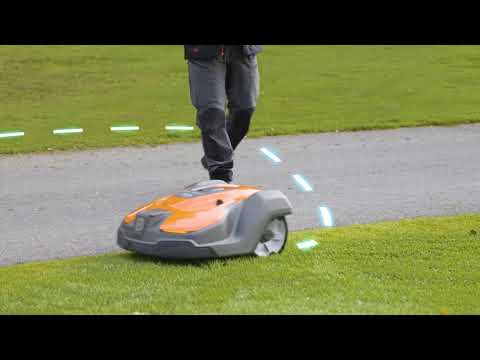
So, is the Husqvarna Automower 450X EPOS truly “commercial-grade”?
Short answer: not really—and that’s not a bad thing.
Despite its advanced tech, this machine is still designed for residential properties. Its coverage limits, runtime cycles, and single-property focus make that clear. True commercial equipment is built for multi-acre, all-day operation across multiple sites.
What the 450X EPOS delivers instead is something more practical: premium residential performance powered by commercial-inspired technology.
Pros
- Ultra-precise navigation with 2–5 cm positioning accuracy
- Systematic mowing patterns instead of random wandering
- Fully autonomous daily maintenance
Cons
- GPS limitations in complex/shaded yards
- Occasional manual intervention required
- A setup that demands the “right” property conditions
In the right environment—open sky, moderate layout, within its coverage range—it feels incredibly close to a “set-it-and-forget-it” system. In the wrong one? It can feel like an expensive experiment.
So think of it this way: This isn’t commercial-grade muscle. It’s precision-engineered convenience.
Check Price on Amazon6. Conclusion
The Husqvarna Automower 450X EPOS is one of the most advanced robot mowers you can put in a residential yard—but it’s not for everyone.
Q: Who is this mower for?
A: If you have a relatively open lawn, value your time, and want a truly hands-off mowing routine, it delivers a level of convenience that’s hard to go back from. Your lawn stays consistently trimmed, your weekends open up, and mowing becomes something you simply stop thinking about.
Q: What are the main limitations?
A: If your yard is heavily shaded, complex, or you expect perfection with zero effort, this isn’t magic. It still requires setup, occasional intervention, and realistic expectations.
In the end, the decision comes down to this: Are you buying a mower—or buying your time back?
If it’s the latter, the 450X EPOS starts to make a lot more sense.
FAQ
Q: Does the Husqvarna 450X EPOS require a boundary wire?
A: No, the 450X EPOS utilizes satellite-based navigation for virtual boundaries. This eliminates the need for buried wires, though it requires a reference station with a clear view of the sky to maintain centimeter-level positioning accuracy.
Q: Can the 450X EPOS operate in the rain?
A: Yes, the Automower is designed to be fully weather-resistant and can continue mowing during rain. However, extreme weather conditions or severe storms may still require the machine to be docked for safety.
Q: How does the mower handle tall grass?
A: The mower is designed for maintenance rather than reclaiming overgrown lawns. Based on technical specifications, it may require multiple passes over several days to bring long grass down to the desired height initially.
Q: Does it cut right up to the edges of the lawn?
A: Like most robotic mowers, it typically leaves a small strip of uncut grass near fences and walls. Most users will still need to perform occasional string trimming to maintain perfectly clean edges.
Q: What happens if the GPS signal is blocked by trees?
A: If the satellite signal is obstructed by dense foliage or tall buildings, the mower may pause or drift. Performance accuracy is highly dependent on having an unobstructed line of sight to the sky.