
Are Robot Mop Combos Worth It? A Data-Driven Cost Analysis of Real Value, Performance & Long-Term Costs
Aaron Cooper1. Introduction
Are robot vacuum–mop combos actually worth the extra money—or are they just another overhyped smart home gadget?
If you’ve ever spent your Saturday vacuuming, then immediately switching to a mop (and still feeling like the floor isn’t that clean), you already understand the appeal. These machines promise to vacuum and mop in one pass, on autopilot. But here’s the reality: they’re not miracle workers. As most expert testing consistently emphasizes, they’re best thought of as daily maintenance tools, not full replacements for deep cleaning.
In this guide, we’ll break it all down—cost vs value, real-world performance, and long-term ROI—so you can decide if they actually earn their place (and price) in your home.
2. Cost vs Value: Do Robot Mop Combos Actually Pay Off?
2.1 Upfront Price Comparison: Combo vs Vacuum-Only vs Manual Cleaning
Let’s address the uncomfortable truth first: robot mop combos are not cheap. And that’s exactly why this decision feels heavy.
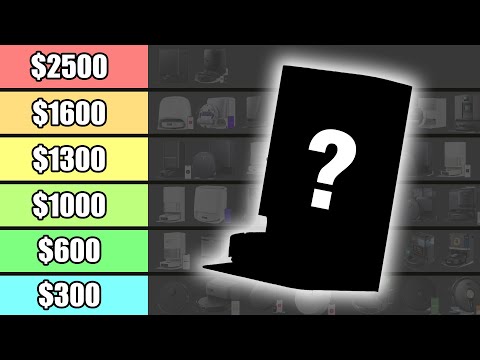
A basic manual setup—vacuum plus mop—can cost as little as $100–$350. Even a solid robot vacuum lands around $300–$600. But once you step into combo territory, especially models with self-cleaning docks, you’re looking at a very different tier.
Here’s how the landscape typically breaks down:
| Cleaning Option | Typical Price Range | What You’re Really Getting |
|---|---|---|
| Manual vacuum + mop | $100–$350 | Lowest cost, highest effort |
| Robot vacuum only | $300–$600 | Automates vacuuming only |
| Basic combo (drag mop) | $300–$500 | Light mopping, limited automation |
| Mid-range combo (self-wash) | $600–$900 | Real mopping + partial automation |
| Premium combo (full dock) | $900–$1,600+ | Near hands-free cleaning |
The real question isn’t “how much does it cost?”—it’s what are you paying extra for?
- Compared to manual cleaning: you’re investing roughly $550–$950 more upfront
- Compared to a robot vacuum: about $300–$600 extra for automated mopping
2.2 Time Savings Breakdown: How Many Hours Do You Actually Save?
This is where things get interesting—and where most people underestimate the value.
Think about your current routine. Vacuuming. Then mopping. Then dealing with dirty water, tangled hair, and that faint “did I actually clean this right?” feeling.
For most homes, that adds up to:
- Small apartments: ~1–1.5 hours/week
- Average homes: ~2–3 hours/week
- Larger homes with pets/kids: ~3–5 hours/week
Now replace that with a robot combo.
Instead of scrubbing floors, you’re:
- Refilling water tanks
- Emptying dirty water
- Occasionally cleaning brushes
That means:
- Saving ~1 to 2.5 hours every single week
- Or ~50 to 130 hours per year
Pause for a second. That’s not just “convenience.” That’s entire weekends back.
Even upgrading from a robot vacuum to a combo still matters. If you’re currently vacuuming automatically but still mopping manually, the combo can reclaim another 40–65 hours per year—assuming you actually mop regularly.
2.3 ROI Formula Explained: Turning Time Into Real Dollar Value
Now let’s translate all of this into something concrete: return on investment.
The simplest way to evaluate a robot mop combo is:
- ΔC (extra upfront cost)
- ΔM (extra yearly maintenance cost)
- Time saved per year
- Your hourly time value
From there:
- Annual Benefit = (Time Saved × Hourly Value) − ΔM
- Payback Period = ΔC ÷ Annual Benefit
Here’s what that looks like in real life.
- You spend ~3 hours/week cleaning floors
- A combo reduces that to ~30 minutes
- You save ~130 hours/year
Even if you value your time at just $10/hour:
- That’s $1,300 worth of time saved annually
Against:
- ~$650 extra upfront cost
- ~$70 extra yearly maintenance
Result? The robot pays for itself in well under a year.
Even in more conservative scenarios—like upgrading from a robot vacuum—you’re still looking at payback periods of roughly 1–2 years if you mop regularly.
And considering most mid-to-high-end robots last around 5–7 years, that’s a lot of “free time” after break-even.
4. Total Cost of Ownership (TCO): The Hidden Long-Term Costs
4.1 Consumables and Maintenance: What You’ll Spend Every Year
Here’s where the “set it and forget it” dream meets reality.
You’re not just buying a robot—you’re signing up for a small ecosystem of ongoing costs. And while none of them are individually painful, they add up quietly in the background.
Think about it: dust bags filling up, filters clogging, mop pads wearing down, that bottle of cleaning solution you keep refilling. It’s the digital version of constantly buying paper towels—you don’t notice until you add it all up.
For a typical robot mop combo used several times a week, annual costs usually fall into this range:
- Dust bags: $15–$40
- Filters + brushes: $25–$50
- Mop pads: $15–$40
- Cleaning solution: $10–$30
- Electricity & water: $10–$25
Total: roughly $75–$185 per year
Of not dealing with sour-smelling cloths sitting in a bucket. Of walking into a kitchen floor that just… stays clean.
And honestly? Once you experience that consistency, going back feels primitive.
4.2 Repairs, Battery Life, and Lifespan Expectations
Now let’s talk about the part nobody loves thinking about: what happens when things break.
Robot mop combos are more complex than vacuum-only models. You’re not just dealing with motors and wheels—you’ve got pumps, water lines, heating elements, and docking systems that wash and dry mop pads automatically.
More convenience. More moving parts.
Based on long-term usage patterns and aggregated user feedback:
- Expected lifespan: ~5–7 years for mid-to-high-end models
- Battery replacement: typically needed after 3–5 years
- Battery cost: roughly $60–$150
- Dock repairs (if needed): can range $150–$300+
So here’s the honest trade-off:
Simpler Robots
- Fewer things to break
- Lower upfront cost
Advanced Combos
- Higher repair risk over time
- More maintenance complexity
If you maintain it—clean filters, avoid clogs, don’t let water systems sit dirty—most units comfortably reach that 5+ year mark. Neglect it? You’ll feel it.
4.3 5-Year Cost Comparison: Robot Combo vs Manual Cleaning
Let’s zoom out and look at the full picture. Because the real question isn’t “Is this expensive?” It’s: Compared to what?
Here’s a simplified 5-year comparison:
| Cleaning Method | 5-Year Cash Cost | Time Spent Cleaning | Real Trade-Off |
|---|---|---|---|
| Manual vacuum + mop | ~$600–$800 | ~260 hours | Cheapest, but most labor |
| Robot vacuum only | ~$1,000–$1,400 | ~130–180 hours | Saves vacuuming, not mopping |
| Robot mop combo | ~$1,500–$2,000 | ~60–80 hours | Highest cost, lowest effort |
Now here’s the kicker: If you assign any value to your time—even modestly—the math flips fast.
We’re talking about saving dozens to hundreds of hours over 5 years. That’s where the real ROI comes from.
And this is why so many households stick with these machines once they start. Not because they’re perfect—but because going back to manual cleaning feels like downgrading your life.
5. Choosing the Right Robot Mop Combo: Features That Actually Matter
5.1 Mop Types Explained: Flat Pads vs Spinning vs Roller Systems
Not all “mopping” is created equal—and this is where a lot of buyers get burned.
At a glance, every robot claims it mops. But in reality, there’s a huge difference between lightly dragging a damp cloth and actually scrubbing your floor.
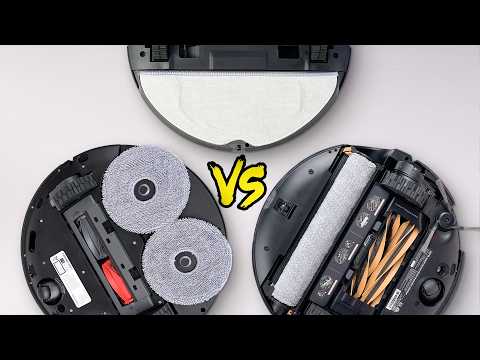
Here’s how the main systems compare:
| Mop Type | How It Works | Real-World Performance |
|---|---|---|
| Flat pad (drag) | Pulls a damp cloth | Weak on stains, mostly wipes dust |
| Dual spinning pads | Rotating discs scrub | Strong everyday cleaning, good balance |
| Roller systems | Continuous rolling + rinsing | Best for liquid handling, most complex |
Across independent testing, one pattern is clear: flat mop systems consistently rank lowest in stain removal, while spinning and roller systems perform significantly better.
So what should you actually choose?
- Budget option → fine for light maintenance
- Real cleaning upgrade → go spinning
- Premium convenience → consider roller (but expect higher cost and complexity)
Because the last thing you want is realizing your “mop” is basically a glorified wet paper towel.
5.2 Self-Cleaning Docks and Automation: Convenience vs Cost
This is where robot mop combos go from “cool gadget” to “life upgrade.”
Without a self-cleaning dock, you’re still:
- Washing mop pads by hand
- Emptying dustbins frequently
- Managing dirty water manually
In other words… still doing chores. With a full-service dock?
- Dust gets auto-emptied
- Mop pads get washed and dried
- Water tanks get managed automatically
The difference feels like upgrading from hand-washing dishes to using a dishwasher. Same result. Completely different experience.
If you hate maintenance? Worth it. If you don’t mind hands-on upkeep? You can save hundreds by skipping it.
5.3 Best Value by Price Tier: Budget, Mid-Range, and Premium
So where’s the sweet spot? Not where you might think.
| Tier | Price Range | Best For | Reality Check |
|---|---|---|---|
| Budget | $250–$450 | Small homes, light cleaning | Mopping is minimal |
| Mid-range | $400–$700 | Most households | Best value overall |
| Premium | $900+ | Large homes, maximum automation | Paying for convenience |
The surprising takeaway?
- Mid-range robots now deliver performance close to older flagships
- Premium models mainly add automation, not dramatically better cleaning
In fact, many modern mid-range models already include features that used to be exclusive to high-end systems—mapping, decent mopping, even partial automation.
So unless you really want that hands-off experience, mid-range is often the smartest buy. But if your home is large, busy, and constantly messy? That premium “set it and forget it” experience hits differently.
6. Conclusion: Are Robot Mop Combos Worth It for You?
So—are robot mop combos actually worth it?
For many households, yes. But not for the reason most people think. They don’t replace cleaning entirely. They replace how often you have to think about cleaning.
If you have a medium-to-large home, lots of hard floors, pets, kids—or just a busy schedule—the time savings alone can justify the cost surprisingly fast. We’re talking dozens, even hundreds of hours reclaimed over a few years.
But if your space is small, mostly carpeted, or you barely mop anyway? The math weakens. In that case, a robot vacuum (or even manual cleaning) might make more sense.
FAQ
Q: Are robot mop combos as effective as manual mopping?
A: Robot mop combos are best viewed as daily maintenance tools rather than a full replacement for deep cleaning. While they excel at picking up dust and fresh spills, they may struggle with heavy, dried-on stains compared to manual scrubbing with high pressure.
Q: How much time can I actually save with a robot mop combo?
A: For an average home, a robot combo can save between 2 to 3 hours per week. Over a year, this adds up to approximately 50 to 130 hours, significantly reducing your manual labor and reclaiming your weekends.
Q: What are the hidden costs of owning a robot mop combo?
A: Beyond the upfront price, expect to spend $75 to $185 annually on consumables. This includes dust bags, replacement filters, brushes, mop pads, and specialized cleaning solutions, along with minor increases in electricity and water usage.
Q: How long do robot mop combo units typically last?
A: Mid-to-high-end models generally have an expected lifespan of 5 to 7 years. You will likely need to replace the battery every 3 to 5 years, which typically costs between $60 and $150 depending on the model.
Q: Which mopping system is best: flat pads or spinning pads?
A: Data-driven analysis shows that dual spinning pads offer the best balance of performance and reliability. Flat pads are often only suitable for light dusting, while spinning systems provide much better agitation for removing everyday household stains.