
Best Budget Robot Vacuums Under $300 (Specs Compared): Top Picks Ranked by Real Cleaning Performance
Aaron Cooper1. Introduction
Think a $300 budget means weak suction, random bumping, and floors that still feel gritty under your feet? That used to be true. Not anymore.
After digging through independent lab-style tests, real-world comparisons, and long-term user feedback, one thing is clear: you can absolutely get serious cleaning performance under $300—if you choose wisely. The trick isn’t chasing flashy specs. It’s understanding what actually impacts your day-to-day cleaning: carpet performance, navigation efficiency, and how well a robot handles pet hair and mixed floors.
2. 真实清洁表现对比:谁才是$300内最能“打”数据?
2.1 地毯深度清洁与嵌入灰尘:为什么测试比分比Pa更重要
Let’s be honest—most people buying a robot vacuum aren’t worried about crumbs. They’re worried about what they can’t see: the dust, dander, and grit buried deep in carpet fibers.
Here’s where things get interesting. Across independent testing, one pattern shows up again and again: Pa numbers don’t tell the full story. You’ll see robots bragging about high suction, but still leaving behind embedded dirt.
A standout example comes from standardized testing data where one model achieved a 90% carpet deep-clean score compared to a 77% average. That gap isn’t small—it’s the difference between “looks clean” and “actually clean.”
In practical terms, this means:
- Less dust trapped in rugs
- Fewer allergens lingering underfoot
- And carpets that feel noticeably fresher over time
The takeaway? Ignore marketing numbers for a second. If a robot consistently pulls dirt out of carpet—not just off the surface—that’s where real value lives. Especially if you’ve got pets or high-traffic areas.
2.2 硬地清洁表现:为什么多数预算机型都“够用”
Now here’s the good news: if your home is mostly hardwood, tile, or laminate, you’re in luck.
Across multiple controlled tests, budget robot vacuums consistently hit near-perfect pickup rates on hard floors—often clearing the vast majority of debris in a single run. In other words, the difference between a $200 robot and a $900 one? Much smaller than you’d expect.
So where do they actually differ?
- Edge cleaning: Some robots leave a thin line of dust along baseboards
- Corner reach: Fixed side brushes vs smarter edge strategies
- Path efficiency: Random bots may take longer to cover the same space
Imagine dropping coffee grounds in your kitchen. Most budget robots will pick them up just fine. But the better ones? They’ll do it faster, cleaner along edges, and without missing that annoying strip near the cabinets.
Bottom line: for hard floors, you don’t need to overspend. Even entry-level models are “good enough.” The upgrade is in efficiency and polish, not raw cleaning ability.
2.3 宠物毛发处理能力:刷头结构比吸力更关键
Here’s the reality: most robot vacuums under $300 can pick up pet hair. The difference is what happens after.
- Some designs pull hair in cleanly and keep the brush relatively clear
- Others wrap hair tightly around the roller, turning your weekend into a cleanup session
This is where brush design matters more than suction.
For example:
- Roomba-style systems are known for strong agitation, especially on carpet
- Simpler single-brush designs (common in budget models like Eufy) can struggle with tangling
- Newer designs aim to balance pickup with easier maintenance
In real-world use, that means:
- Less time cutting hair off rollers
- More consistent performance over time
- Fewer “why is it suddenly worse?” moments
So if you’ve got shedding pets, don’t just look at power. Look at how the robot handles hair after it’s picked up. Because the best vacuum isn’t the one that cleans once—it’s the one that keeps cleaning without becoming a chore itself.
2.4 拖地能力现实预期:从“擦灰”到“轻度清洁”
Let’s clear this up quickly: no robot under $300 replaces a real mop.
What you’re getting here is best described as maintenance cleaning. Think of it like wiping your floors with a damp cloth—not scrubbing dried spills or sticky messes.
Most budget robots use a drag-style mop pad:
- No pressure
- No scrubbing motion
- Just a damp pad pulled across the floor
That’s enough for:
- Fine dust
- Light footprints
- Keeping floors looking fresh between deep cleans
Some models do slightly better. In standardized stain tests, certain units scored **just above the industry average (e.g., 115 vs 110)**—a small but noticeable edge in removing light residue.
3. Specs Compared:关键参数如何影响真实体验
3.1 吸力Pa vs 实际表现:为什么高参数≠更干净
It’s tempting to compare robot vacuums like smartphones—bigger number = better, right? Not here.
Most budget robots advertise suction in the 3,500–5,000Pa range, while premium models go far beyond that. But real-world testing shows something surprising: higher Pa doesn’t guarantee better cleaning.
Why? Because suction alone doesn’t clean your floors. What really matters is:
- Airflow efficiency
- Brush design
- How well debris is actually lifted and transported
In controlled tests—even in higher price brackets—robots with wildly different Pa ratings often perform similarly on carpet. Some lower-rated models even outperform higher-rated ones when airflow and brush systems are better optimized.
3.2 导航系统:随机、陀螺仪到LiDAR的差距
Navigation is where budget robots either feel “smart”… or incredibly frustrating.
| Navigation Type | How it Works | Experience |
|---|---|---|
| Random | Bounces like a ping-pong ball | Inefficient; may miss spots |
| Gyro | Moves in straight lines | Organized but lacks true mapping |
| LiDAR | Spinning laser "sees" the room | Neat rows, fast, supports No-Go zones |
With LiDAR:
- Rooms are cleaned in neat rows
- You can set no-go zones (no more tangled cables)
- Cleaning is faster and more predictable
3.3 续航与电池效率:不仅是时间,更是覆盖能力
Most robots in this price range claim 90–150 minutes of runtime. That’s enough for many homes. But runtime alone doesn’t tell you how much space actually gets cleaned.
In independent testing, one standout metric showed a robot delivering 2.8 minutes of cleaning per 1% battery, compared to an average closer to half that. That’s not just better battery—it’s smarter use of it.
3.4 附加功能:自动集尘、避障、地图功能值不值?
This is where things get tricky—because this is also where brands love to upsell.
Auto-empty docks
- Super convenient (especially with pets)
- Rare under $300 unless on sale
- Often means sacrificing navigation or cleaning performance
Obstacle avoidance
- Under $300, it’s mostly basic bump sensors
- Don’t expect it to avoid cables, socks, or pet accidents
- You’ll still need to “prep” your floors
Mapping & no-go zones
- This one is worth it
- Lets you block off problem areas
- Saves time and frustration every single day
The Priorities
- LiDAR + Mapping for best experience
- No-go zones to prevent headaches
The Trade-offs
- Auto-empty usually costs performance elsewhere
- Cheap obstacle avoidance is unreliable
If you’re trying to stay under $300, you can’t have everything. But if you choose the right features, you can absolutely get something that feels… surprisingly close to premium.
4. 预算内的真实妥协:哪些功能你必须放弃?哪些值得优先?

4.1 你几乎得不到的功能:AI避障、自清洗拖布等
Let’s get this out of the way—$300 won’t buy you a “set it and forget it forever” cleaning robot. Not even close.
If you’ve seen those dreamy flagship demos where a robot glides around socks, avoids pet accidents, washes its own mop with hot water, and dries it like a mini dishwasher… yeah, that’s not happening here.
- True AI obstacle avoidance (no camera-based object recognition)
- Self-cleaning or self-drying mop systems
- Advanced dock automation (most don’t even auto-empty)
What does that mean in real life? It means you’ll still need to:
- Pick up cables before cleaning
- Rescue the robot occasionally
- Rinse the mop pad yourself
And if you skip that prep? Expect the robot to happily eat a charging cable or smear something across your floor.
That said, this isn’t a dealbreaker—it’s just the reality of budget automation. You’re trading full autonomy for massive time savings at a fraction of the price. And honestly? For most homes, that’s still a win.
4.2 最值得优先的三大核心:清洁力、导航、可靠性
Here’s where most people go wrong: they chase features instead of results.
A robot with flashy extras but weak cleaning is just… an expensive toy.
So what should you actually prioritize?
- Real cleaning performance: If it can’t pull dirt out of carpet or handle daily debris, nothing else matters. This is where models like the MOVA S10 stand out—independent testing shows performance that punches far above its price, especially on carpets and pet hair.
- Navigation (preferably LiDAR): LiDAR—think of it as giving your robot a “map of your home”—is the difference between methodical, efficient cleaning and chaotic, time-wasting wandering. Once you’ve used mapping + no-go zones, going back feels painful.
- Reliability & ecosystem: This is where brands like Roomba and Eufy still matter. They may not top every performance chart, but replacement parts are easy to find, apps are stable, and long-term ownership is smoother.
Go for Performance
- Strongest cleaning per dollar (e.g., MOVA S10)
- Deep carpet cleaning
Go for Brand
- Predictability and support (e.g., Roomba, Eufy)
- Easy-to-find spare parts
Everything else? Secondary.
4.3 不同家庭场景怎么选:公寓、宠物家庭、混合地面
Let’s make this real. Because specs don’t clean your house—the right match does.
Small apartments (mostly hard floors)
You don’t need complexity here. A simple robot like a Eufy 11S-type model:
- Quiet
- Slim enough to slide under furniture
- “Good enough” cleaning
Perfect for low-maintenance living. No overthinking required.
Pet owners (especially with carpet)
This is where things get serious. Hair gets embedded. Dust builds up fast. And weak robots just… give up.
Mixed flooring (hardwood + rugs)
Now you need balance. You want strong vacuuming for carpets, decent mopping for hard floors, and ideally, smart navigation to manage both.
Some budget models now even include features like automatic mop lifting, letting the robot transition between surfaces without soaking your rugs. That’s a small detail—but a huge quality-of-life upgrade.
5. 快速选购指南:按需求匹配最适合你的预算机器人
5.1 按家庭类型推荐(宠物/大户型/小公寓)
Choosing a robot vacuum isn’t about picking “the best one.” It’s about picking the one that fits your home.
| Home Type | Priority Feature | Best Strategy |
|---|---|---|
| Small Apartment | Compact size | Keep it simple (Eufy/Roomba 600) |
| Medium/Large Home | Efficiency | Prioritize LiDAR Navigation |
| Pet Owners | Raw Suction | High-performance airflow models |
If your home has multiple rooms, LiDAR navigation isn’t a luxury—it’s a sanity saver.
5.2 按功能优先级推荐(清洁力 vs 智能功能)
This is the trade-off that trips people up. You’re standing there thinking: “Do I want better cleaning… or more features?”
Prioritize Cleaning
- Reduces allergens
- Keeps carpets fresher longer
- Fewer repeat runs needed
Prioritize Convenience
- Mapping & no-go zones
- App scheduling
- Auto-empty capability
If your floors are already frustrating you? Go performance. If your routine is the problem? Go features.
5.3 一眼看懂:哪一款最适合你
Still unsure? Let’s simplify it brutally.
- Want the best raw cleaning under $300? → Go with MOVA S10. It’s the kind of robot that makes you notice the difference barefoot.
- Want a reliable, no-drama option? → Roomba 694. Not flashy, but dependable and backed by a strong ecosystem.
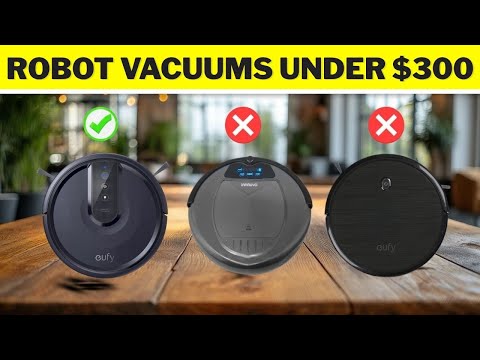
- Want something quiet and perfect for hard floors? → Eufy 11S. Slim, simple, and surprisingly effective for apartments.
- Want smart mapping and app control on a budget? → Look at LiDAR models (Wyze, Roborock, Dreame).
Conclusion
A $300 budget used to mean compromise. Today? It means choice.
You can get strong carpet cleaning, reliable navigation, and even light mopping—just not all at once. That’s the key. The best robot vacuum in this range isn’t the one with the most features. It’s the one that nails your priorities.
If your floors are your biggest pain point, go all-in on cleaning performance. If your routine is the problem, lean toward smarter navigation and convenience features.
Either way, the upgrade is real. Less time cleaning. More time living. And honestly? That’s the whole point.
FAQ
Q: Is 5,000Pa suction enough for deep carpet cleaning?
A: While Pa ratings indicate raw power, data-driven analysis shows that airflow efficiency and brush design are more critical. A well-designed robot with lower suction can often outperform a high-Pa model if its brush system agitates carpet fibers more effectively to lift embedded dirt.
Q: What is the difference between LiDAR and random navigation?
A: LiDAR uses lasers to create a precise map of your home, allowing for methodical row-by-row cleaning and no-go zones. Random navigation relies on physical bumpers and infrared sensors, bouncing off obstacles until the area is covered, which is less efficient for larger or complex floor plans.
Q: Can budget robot vacuums under $300 handle pet hair?
A: Yes, many budget models can pick up pet hair, but maintenance varies. Models with specialized brush rolls or high airflow prevent hair tangles better than basic designs. Users should prioritize brush design over suction specs to ensure the robot doesn't require constant manual cleaning.
Q: Do budget robot vacuums support mopping?
A: Many models in this price range include a hybrid mopping function. However, these typically use a gravity-fed water tank and a drag-style cloth. They are effective for removing fine dust and light footprints but are not designed to scrub away stubborn or dried-on stains.
Q: Are no-go zones available on budget models?
A: No-go zones are generally exclusive to robots with LiDAR or camera-based mapping. If a budget robot uses random or gyroscope navigation, you typically have to use physical magnetic strips or close doors to prevent the vacuum from entering specific areas of your home.