
Best Robot Vacuums for Thick High-Pile Carpets: Top Picks That Actually Deep Clean
Aaron Cooper1. Introduction
If you’ve ever tried vacuuming a thick, plush carpet, you know the struggle. What looks clean on the surface is often hiding dust, grit, and pet hair buried deep in the fibers. Standard robot vacuums? They glide over the top… and leave the real mess behind.
But here’s the good news: a new generation of robot vacuums is actually built for this challenge. In this guide, you’ll discover which models truly work on high-pile carpets, what features matter most, and how to get results that feel as good as they look under your feet.
2. What Makes a Robot Vacuum Good for Thick High-Pile Carpets?
2.1 Why High-Pile Carpets Are So Hard to Clean
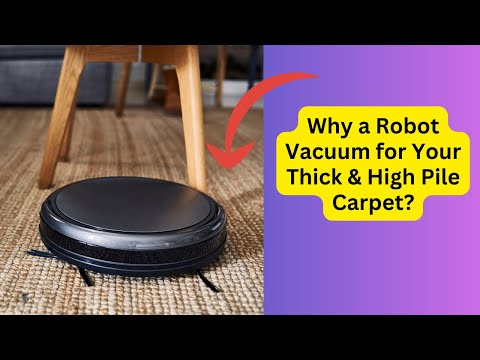
High-pile carpets are cozy under your feet—but they’re basically a trap for everything else. Dust, crumbs, pet hair… they don’t sit on top. They sink deep into the fibers like sand in a beach towel.
You end up with that frustrating result: carpets that look clean but still feel gritty when you walk barefoot.
It gets worse with pets. Hair wraps around brushes, clumps inside fibers, and turns weekend cleaning into a maintenance nightmare. Add fringe or thick edges, and some robots don’t even climb onto the rug properly.
This is why cheap or entry-level models struggle—they simply aren’t designed to dig deep. High-pile carpets demand stronger suction, smarter navigation, and brushes that can actually agitate the fibers instead of just sweeping over them.
2.2 Suction Power: The Minimum You Actually Need
Let’s be real—on thick carpet, suction isn’t just important. It’s everything.
For basic floors, even low suction can get the job done. But high-pile carpets are a different beast. The deeper the fibers, the more power you need to pull dirt out from below the surface.
- Around 15,000 Pa is the minimum where robot vacuums start performing effectively on thick carpets
- The sweet spot for real deep cleaning is closer to 20,000–30,000 Pa
Anything below that? You’re mostly doing surface maintenance.
Think of it like this: weak suction is like shaking crumbs off a blanket. High suction is like pulling sand out from inside it.
And the difference is noticeable. With stronger suction, you don’t just see cleaner carpets—you feel it. No more hidden grit. No more that “why does this still feel dirty?” moment.
Some flagship models push this even further. For example, certain Dreame models are built with 30,000 Pa-class suction systems designed for lifting heavy debris, specifically targeting deep carpet fibers where dirt tends to settle.
Bottom line? If you’re serious about high-pile carpets, don’t compromise here. This is the feature that separates “nice to have” from “actually works.”
2.3 Why Dual Rubber Rollers Beat Traditional Brushes
Here’s something most people overlook—brush design matters just as much as suction.
Traditional bristle brushes? They look aggressive, but on thick carpets, they’re surprisingly ineffective. Hair wraps around them. Fibers get tangled. And instead of lifting debris, they often just push it deeper.
Now compare that to dual rubber rollers.
Pros of Dual Rubber Rollers
- Noticeably deeper cleaning by agitating fibers
- Zero tangles with long hair
- Way less maintenance for the user
Cons of Traditional Brushes
- Hair wraps and clogs easily
- Often push debris deeper into pile
- Requires frequent manual cleaning
These rollers don’t just spin—they grip and flex. As they rotate, they dig into the carpet fibers, agitating them just enough to loosen embedded dust and pet hair. At the same time, they resist tangling, which means you’re not spending your Sunday afternoon cutting hair out of a brush.
Pros of Dual Rubber Rollers
- Noticeably deeper cleaning by agitating fibers
- Zero tangles with long hair
- Way less maintenance for the user
Cons of Traditional Brushes
- Hair wraps and clogs easily
- Often push debris deeper into pile
- Requires frequent manual cleaning
2.4 Smart Features That Actually Matter (Carpet Boost, Detection, Lift)
Specs are great—but smart features are what make robot vacuums actually usable on thick carpets.
- Carpet Boost: This is non-negotiable. The moment the robot detects carpet, it automatically ramps up suction.
- Carpet Detection + Multi-pass Logic: Smarter robots recognize heavily soiled areas and go over them again. Some advanced models even identify heavily soiled carpet areas and automatically perform extra cleaning passes.
- Mop Lifting: Critical for hybrid models. Premium robots lift the mop automatically when they hit carpet, keeping everything dry.
- Body Height Adjustments: Helps the robot climb onto thick rugs without getting stuck.
3. Best Robot Vacuums for Thick High-Pile Carpets (Real-World Comparison)
3.1 Best Overall: Roborock S8 MaxV Ultra
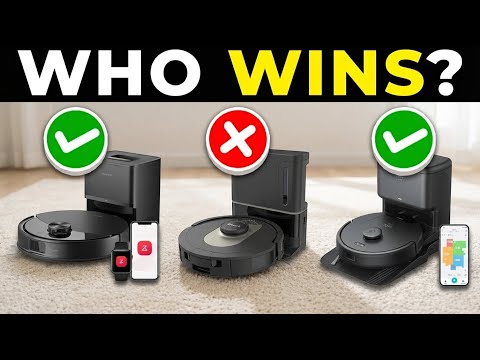
If you want the closest thing to “just works” on thick carpets, the Roborock S8 MaxV Ultra is where most experts—and real users—end up landing.
- Dual rubber roller system for active agitation
- Intelligent carpet detection and automatic suction boost
- Fully automated dock for zero daily effort
Are there downsides? Sure. It’s expensive. And like any robot, it still won’t fully replace a deep-clean upright vacuum for extreme plush carpets. But for day-to-day life? This is about as close as it gets.
Check Price on Amazon3.2 Best for Maximum Suction: Dreame & Ecovacs Flagships
If your main problem is deep, stubborn debris—think sand, pet hair, or high-traffic dirt—then suction becomes your top priority.
| Brand | Strength | Best For | Trade-Off |
|---|---|---|---|
| Dreame | Ultra-high suction (30,000 Pa) | Deep debris, thick carpets | Can be louder |
| Ecovacs | Balanced suction + smart features | Mixed floors, carpet + hard floor | Slightly less raw power |
If your carpets feel like they’re holding onto everything—go Dreame. If you want strong performance and smarter automation—Ecovacs is the safer bet.
3.3 Best for Pet Owners: iRobot & Ecovacs
Pet hair on thick carpet is a special kind of chaos. It doesn’t just sit there—it weaves itself into fibers. iRobot’s approach is simple but effective: strong carpet detection and brush systems designed to reduce tangling. Ecovacs leans into high suction and advanced anti-tangle systems with self-empty docks.
3.4 Best Value Picks for Medium-to-High Pile Homes
Not everyone wants to spend flagship-level money. There are solid mid-range options that handle medium-to-high pile carpets surprisingly well for regular maintenance.
| Model | Strength | Ideal Use Case | Limitation |
|---|---|---|---|
| Roborock Q Revo | Smart features + solid suction | Mixed flooring, routine cleaning | Less powerful on very thick pile |
| Roomba i3+ EVO | Strong carpet boost + self-empty | Pet hair + budget setups | Fewer advanced features |
If your goal is to stay ahead of dirt—keeping carpets consistently clean instead of letting buildup happen—they deliver excellent value.
4. How to Optimize Robot Vacuum Performance on Thick Carpets

4.1 Best Settings: Carpet Boost, Max Mode, and Multi-Pass Cleaning
Here’s the truth most people learn the hard way: even the best robot vacuum will underperform on thick carpet if you leave it on default settings.
You press “clean,” walk away, and come back to… a carpet that looks okay but still feels gritty underfoot. Sound familiar?
That’s because high-pile carpets demand more time, more power, and more passes.
Next, go all-in on Max or Max+ suction for carpet zones. Yes, it’s louder. But that deeper hum? That’s the sound of dust being pulled from below the pile, not just brushed off the top.
Then comes the game-changer: multi-pass cleaning. A single pass rarely cuts it. Running two overlapping passes—or scheduling back-to-back cleans—dramatically improves pickup, especially for embedded dust and pet hair.
In fact, industry testing shows that enabling carpet boost alone can increase debris pickup by a significant margin on high-pile surfaces.
If you’re using something like the Roborock S8 MaxV Ultra, combining Carpet Boost + Max suction + multi-pass turns it from “pretty good” into seriously impressive.
4.2 Smart Mapping, No-Go Zones, and Carpet-Specific Routines
Let’s talk about the feature most people ignore—and then regret ignoring: mapping.
Because without it, your robot is basically wandering around your expensive carpets like a confused Roomba from 2015.
Modern systems use LiDAR (laser-based mapping that scans your home like a tiny self-driving car) to build precise floor plans. And once you have that map? That’s where the magic starts.
You can create carpet-specific routines:
- Living room rug → Max suction + 2 passes
- Bedroom carpet → Standard suction, single pass
- Hallway runner → Daily quick clean
Suddenly, your robot isn’t just cleaning—it’s targeting problems.
Then there are no-go zones. Got a shag rug that turns into a hair-eating monster? Or tassels that wrap around brushes like spaghetti? Draw a boundary and forget about it.
You can even prioritize cleaning order—hard floors first, carpets last—to avoid tracking debris back onto freshly cleaned areas.
This is where premium models like the Roborock S8 MaxV Ultra or Ecovacs flagships really shine. Their apps let you fine-tune every room, every surface, every pass.
Set it once. Let it run forever.
4.3 Avoiding Common Problems: Tangling, Stuck Wheels, and Fringe Rugs
Now let’s address the stuff that drives people crazy.
You wake up, check your app, and your robot is… stuck. Again. This time tangled in a rug fringe like it’s fighting for survival.
High-pile carpets come with real-world headaches:
- Hair wrapping around brushes
- Wheels sinking into soft pile
- Tassels turning into instant jams
The fix isn’t complicated—but it is essential.
Second, check your brush regularly, especially if you have pets. Even anti-tangle systems need occasional cleanup. A clogged brush = weaker suction = worse results.
Third, watch how your robot climbs rugs. Thick edges can act like mini walls. If it struggles, reposition the rug so there’s a gentler entry point.
And finally, don’t ignore maintenance. Full dustbins, clogged filters, and dirty sensors quietly kill performance—especially on carpets where airflow matters most.
Do these small things, and suddenly your robot stops feeling like a high-tech babysitting project…
…and starts doing what you actually bought it for.
5. What Robot Vacuums Can (and Can’t) Do on High-Pile Carpets
5.1 Surface Cleaning vs Deep Cleaning: The Reality Check
Let’s clear this up—because marketing won’t.
Robot vacuums are amazing at maintenance. They are not magic.
On thick carpets, they excel at removing surface debris: crumbs, visible dust, pet hair. Run them daily, and your carpets will look consistently clean and feel noticeably fresher.
But deep down? That’s a different story.
In fact, testing consistently shows that even high-end robots achieve strong—but not perfect—deep-clean results, with performance that still falls short of traditional vacuums.
So what does this mean for you?
Use your robot vacuum like a daily housekeeper. Let it handle the constant mess, the pet hair, the crumbs you don’t have time to deal with.
Then, occasionally, bring in the heavy artillery.
Because the goal isn’t perfection every day. It’s never letting things get out of control.
5.2 Carpet Types That Still Need Manual Cleaning
Some carpets just… don’t play nice.
No matter how advanced your robot is, there are certain types where performance drops fast—or the robot refuses to cooperate entirely.
Challenging Surfaces
- Long-pile shag rugs: Fibers are so long and loose that wheels sink and brushes drag.
- Fringe-heavy decorative rugs: Tassels wrap around brushes almost instantly.
- Ultra-dense plush carpets: Airflow can’t penetrate deeply through thick padding.
In these cases, forcing your robot to clean them often leads to frustration—or worse, damage.
The smarter move? Accept the limitation. Let your robot handle everything it’s good at, and manually clean the problem areas when needed. It’s just using the right tool for the job.
5.3 How to Combine Robot Vacuums with Deep Cleaning Tools
Here’s where things click—and your cleaning routine actually becomes effortless.
Instead of expecting one machine to do everything, you build a hybrid system:
- Robot vacuum: Daily or every-other-day cleaning to prevent surface buildup.
- Upright/canister: Periodic deep cleaning (every few weeks) to reach the base of the fibers.
Run your robot frequently to prevent buildup. This keeps dust and debris from settling deep into carpet fibers in the first place.
The result?
- Your carpets never reach that “gross” stage
- Deep cleaning becomes faster and easier
- You spend less total time cleaning overall
This is exactly why so many households swear by robot vacuums once they get the setup right. Not because they replace everything. But because they eliminate 90% of the effort.
6. Conclusion: Choosing the Right Robot Vacuum for Your Carpet
Thick, high-pile carpets don’t have to be a constant battle—but they do require the right approach.
Focus on what actually matters: strong suction, dual rubber rollers, and smart features like Carpet Boost and multi-pass cleaning. Models like the Roborock S8 MaxV Ultra stand out because they combine all three, delivering consistent results where cheaper robots fall short.
But just as important? Set realistic expectations.
Robot vacuums are incredible for daily maintenance—keeping carpets looking and feeling clean without effort. Pair that with occasional deep cleaning, and you get the best of both worlds.
FAQ
Q: What is the minimum suction power needed for high-pile carpets?
A: For effective cleaning on thick carpets, data suggests a minimum of 15,000 Pa. However, for true deep cleaning of embedded debris, flagship models offering between 20,000 and 30,000 Pa provide significantly better results by pulling airflow from deep within the dense carpet fibers.
Q: Why are dual rubber rollers better than bristle brushes for carpets?
A: Dual rubber rollers are designed to grip and flex, allowing them to agitate carpet fibers more effectively than traditional bristles. Furthermore, they are highly resistant to pet hair tangles, ensuring consistent suction and reducing the manual maintenance required after cleaning sessions.
Q: Can a robot vacuum replace a traditional upright vacuum for thick rugs?
A: While premium robot vacuums excel at daily maintenance and surface debris removal, they are best used in a hybrid system. Aggregated performance data shows that traditional upright vacuums still provide superior deep-extraction power for fine dust buried at the base of very plush carpets.
Q: What should I do if my robot vacuum gets stuck on rug fringes?
A: Rug fringes or tassels are common navigation hazards. To prevent the robot from getting stuck or damaging the rug, it is recommended to either tuck the fringes underneath the rug or use the app to set a precise 'No-Go Zone' around the decorative edges.
Q: How does Carpet Boost technology improve cleaning results?
A: Carpet Boost uses internal sensors to detect a change in floor texture. Once identified, the robot automatically increases its suction to the maximum setting, compensating for the increased resistance of the carpet and ensuring more power is applied exactly where dirt hides deepest.