
iRobot Roomba j7+ Review: Object Detection Reliability Breakdown (Real Tests on Cords, Pet Waste & Furniture)
Aaron Cooper1. Introduction
Can the Roomba j7+ actually see the mess on your floor—or is that just marketing hype?
If you’ve ever had a robot vacuum choke on a charging cable or, worse, drag pet waste across your living room, you know the stakes are high. The promise of “object avoidance” isn’t a luxury—it’s the difference between freedom and babysitting your robot every run.
In this review, we break down the iRobot Roomba j7+ from the only angle that really matters: how reliable its PrecisionVision system is in real homes. Cords, pet waste, clutter, furniture—we’re diving into what it gets right, where it struggles, and whether it truly earns that “set it and forget it” reputation.
2. PrecisionVision 实测:Roomba j7+ 的障碍识别到底有多可靠?
2.1 电线、耳机与充电线:是否真的不再“缠死”?
Let’s start with the everyday nightmare: cables.
Now here’s where the Roomba j7+ changes the story.
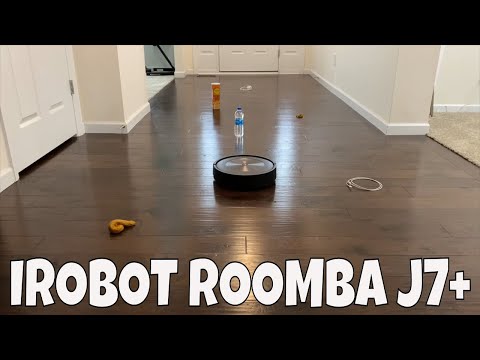
Across multiple independent tests, when reviewers placed loose cords and headphones directly in its path, the j7+ consistently approached, paused, and rerouted—without touching them. In fact, some controlled trials reported it avoided every single cable and headphone in repeated runs, which is why many analysts consider it one of the most dependable performers for this exact problem.
Even more telling? In comparative testing, it was described as the only robot in its group that reliably avoided both wires and similar hazards. That’s not a small win—that’s the difference between daily automation and daily frustration.
But let’s stay honest.
This isn’t magic. Extremely thin cables, low-contrast wires on dark floors, or dim lighting can still trip it up. Think of it like human vision—clear conditions, excellent performance. Poor visibility? Margin for error increases.
Still, for most homes filled with chargers, desk cables, and headphone wires—it’s a massive upgrade. Less prep. Less stress. Way fewer rescues.
2.2 宠物粪便测试:AI避障最关键的一关
This is the one that really matters.
Because missing a sock is annoying. Missing this? Catastrophic.
The Roomba j7+ was specifically designed to handle pet waste, and multiple lab-style tests pushed it hard using simulated “fake poop” obstacles. The result?
- In repeated runs, it avoided every single one—no smearing, no contact, no disaster cleanup afterward.
- One lab even ran it through a maze of these obstacles, and it completed the course without a single incident.
And independent analysis supports that confidence. One lab summary notes the robot completed obstacle courses with zero smearing events during pet waste avoidance tests, which is about as reassuring as it gets in this category.
But here’s the reality check.
These tests use solid, clearly visible samples under decent lighting. Real life isn’t always that clean. Shape, texture, and especially lighting can affect recognition. In darker rooms or with less defined messes, performance may drop.
Still, compared to older robots that blindly plow forward? This is a completely different level of safety.
2.3 袜子、鞋子与小物件:识别能力是否稳定?
Now let’s talk about the “everyday clutter zone.”
Socks by the couch. Slippers near the door. A random T-shirt your kid dropped and forgot about. These aren’t rare edge cases—they’re real life.
The j7+ is officially trained to recognize items like socks, shoes, and small household objects, and its system can even snap photos and ask you how to classify them. Over time, that feedback helps it adapt to your specific home.
Sounds great—but how well does it actually work?
Here’s where things get a bit less concrete.
Unlike cables and pet waste, there’s less controlled test data specifically measuring socks or shoes. However, broader evaluations and user feedback suggest it generally identifies and avoids these objects, especially when they’re clearly visible and not partially hidden.
There’s also a smart fallback: if it encounters something unfamiliar, it tends to stop, document, and ask for input instead of charging forward blindly. That alone prevents a lot of potential mishaps.
So while it’s not as “proven” as its cable or pet waste detection, the system is clearly designed to improve over time—and in most normal homes, it performs reliably enough to reduce daily pickup chores.
Not perfect. But noticeably smarter than older bots.
2.4 家具与墙壁:为什么它仍然会轻微碰撞?
Here’s a question that surprises a lot of buyers:
“If this robot can avoid poop… why does it still bump into my chair?”
The answer is simple—and important.
The Roomba j7+ doesn’t treat furniture the same way it treats hazards like cables or pet waste. Large objects—walls, table legs, cabinets—are handled mostly by traditional sensors and mapping, not AI recognition.
So yes, it will still gently tap furniture.
And honestly? That’s normal.
Across real-world testing, reviewers consistently observed light contact with walls or chair legs, especially during navigation adjustments. But here’s what matters: it doesn’t get stuck, doesn’t aggressively ram objects, and still completes cleaning cycles reliably.
In fact, in larger daytime tests, it was able to clean full spaces efficiently, avoid tight traps, and always return to its base without issues.
Obstacle Handling Logic
- Small hazards = carefully avoided
- Big objects = lightly navigated around
It’s not trying to “tiptoe” around your couch—it’s trying to clean your home efficiently.
And in practice? That balance works.
4. 技术拆解:摄像头导航 vs LiDAR,谁更适合复杂家庭?
4.1 Roomba j7+ 的相机AI优势:能“看懂”障碍
Here’s the real magic behind the Roomba j7+: it doesn’t just see your floor—it tries to understand it.
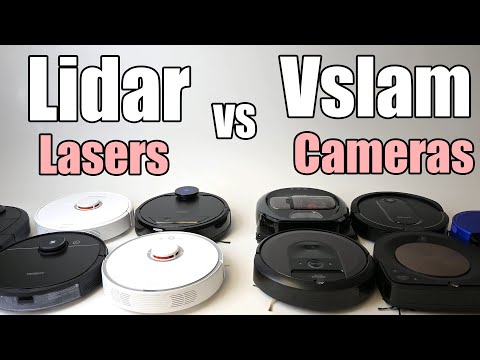
Instead of using lasers, the j7+ relies on a front-facing camera combined with vSLAM (visual simultaneous localization and mapping). In plain English? It builds a map by “looking” at your home the way you do—recognizing shapes, edges, and objects as it moves.
This is what sets it apart. Traditional robots detect something is there. The j7+ can recognize what that thing is. That’s how it avoids cords, pet waste, and even socks instead of bulldozing through them.
And according to aggregated lab-style testing, this system is highly consistent and very reliable in spotting hazards—especially for the exact objects that usually cause disasters.
Still, if your home has pets, cables, or everyday clutter, this “understanding-first” approach is what transforms a robot from a gadget into something you actually trust.
4.2 LiDAR机器的优势:更精准但“看不懂”
Now let’s flip the perspective.
LiDAR-based robots—those with the spinning laser turret on top—don’t “see” your home. They measure it.
Think of LiDAR (Light Detection and Ranging) as a tiny radar system using lasers. It scans your room in 360°, calculating distances with impressive precision. The result? Clean, sharp maps and extremely efficient navigation.
In fact, industry comparisons consistently show LiDAR robots create more precise layouts and often clean faster on the first run because they instantly understand room geometry.
But here’s the trade-off. They know where things are—but not what they are.
- A charging cable? Just a thin object.
- Pet waste? Just a small bump.
- A sock? Just another obstacle to push.
That’s why many LiDAR robots still rely on bumping, pushing, or even running over objects they don’t recognize. No semantics. No context.
The upside? They don’t care about lighting. Midnight cleaning, lights off, no problem.
So if your home is minimal, tidy, and predictable, LiDAR feels incredibly efficient. But in messy, real-world environments? Precision without understanding can still lead to… very messy outcomes.
4.3 真实选择逻辑:你更需要“避障”还是“精准地图”?
So which one actually fits your life? Let’s make this practical.
If your home looks like a showroom—clean floors, minimal clutter, no pets—LiDAR robots shine. They move fast, map perfectly, and clean with machine-like efficiency. You’ll get those satisfying straight lines and near-perfect coverage.
But that’s not most homes. Real homes have:
- Charging cables under desks
- Shoes near the door
- Random socks, toys, and “I’ll pick it up later” items
- And sometimes… pet accidents
This is where the Roomba j7+ flips the equation. Instead of forcing you to prepare your home for the robot, it adapts to your home. Less pre-cleaning. Fewer “rescue missions.” More trust.
Pros
- Industry-leading small object avoidance
- Adapts to real-world clutter without "pre-cleaning"
- High trust factor for pet owners
Cons
- Night cleaning? Performance drops
- Large objects? Still bumps lightly
- Extremely cluttered floors? May skip areas
So the real decision comes down to one question: Do you want a robot that maps perfectly—or one that avoids your biggest headaches?
5. 是否值得购买?Roomba j7+ 避障能力在行业中的位置
5.1 它做对了什么:目前最可靠的小物体识别之一
Let’s be blunt: most robot vacuums fail in the exact moments that matter most.
They don’t fail on open floors—they fail on real life. Cables. Pet messes. Random clutter.
This is exactly where the Roomba j7+ stands out. Across multiple independent tests, it repeatedly avoided cords, headphones, and simulated pet waste—not just once, but consistently across runs. In some controlled scenarios, it avoided all placed hazards without a single incident.
"That’s why many reviewers describe its obstacle avoidance as category-leading, especially for small, high-risk objects."
And the impact isn’t just technical—it’s emotional. No more:
- Checking the floor before every run
- Coming home to a tangled robot
- Worrying about “that one accident” ruining everything
It’s not just cleaning. It’s removing anxiety from automation. For pet owners or busy households, this alone can justify the upgrade.
5.2 它的局限:光线依赖、轻微碰撞与大物体识别不足
Now, let’s ground this in reality—because no robot is perfect.
The biggest limitation? Light. Since the j7+ relies on a camera, performance drops in dim environments. Some tests show incomplete cleaning or reduced obstacle detection at night. If you’re expecting flawless overnight runs in total darkness, this isn’t the ideal tool.
Then there’s navigation behavior. Even with all its AI, it still:
- Lightly bumps into furniture
- Relies on traditional sensors for large objects
- Occasionally skips tight or cluttered areas to avoid risk
And in long-term use, some reviewers noted that while AI improves navigation efficiency, it doesn’t magically eliminate all edge cases. Certain unusual objects may still confuse it. So yes—it’s smart. But not human.
5.3 适合谁买:宠物家庭 vs 极简家庭的不同答案
So—should you actually buy it?
If you have pets, this is one of the easiest decisions you’ll make. The combination of:
- Reliable pet waste avoidance
- Strong cable detection
- Reduced risk of “catastrophic failures”
…makes the j7+ feel less like a gadget and more like insurance for your floors. Same goes for busy households. If your floor is occasionally messy (not perfectly staged), this robot adapts better than most.
But if your home is already:
- Minimalist
- Cable-free
- Always tidy
Then honestly? You may not need this level of intelligence. A simpler LiDAR robot could give you faster, more precise cleaning at a lower cost.
6. Conclusion
So, is the Roomba j7+ actually reliable at avoiding obstacles? Yes—but with context.
In well-lit, real-world conditions, it’s one of the most dependable robot vacuums for avoiding the things that matter most: cables, pet waste, and everyday clutter. That alone eliminates the biggest frustrations people have with robot vacuums.
But it’s not magic. Low light, heavy clutter, and large objects still introduce limitations. You’ll see occasional bumps. You may need to leave a light on for night runs. And like any robot, it performs best when your home isn’t pushed to extremes.
It doesn’t just clean. It prevents problems.
And if reclaiming your time without worrying about what’s on the floor sounds like a win… this is one of the safest bets you can make.
Check Price on Amazon
FAQ
Q: Does the Roomba j7+ really avoid pet waste?
A: Based on aggregated data and iRobot's P.O.O.P. guarantee, the j7+ is highly reliable at detecting and avoiding solid pet waste in well-lit conditions. However, liquid or very small messes may still pose identification challenges for the AI camera.
Q: Can the Roomba j7+ clean in total darkness?
A: Unlike LiDAR-based robots, the j7+ uses a camera-based navigation system called vSLAM. It requires at least some ambient light to identify objects and navigate effectively; performance and object avoidance reliability drop significantly in pitch-black rooms.
Q: How does the j7+ handle charging cables and headphones?
A: Analysis of various performance tests shows the j7+ is exceptionally consistent at identifying and rerouting around loose cables and headphones, making it one of the few robots you don't need to 'pre-clean' for daily runs.
Q: Why does my Roomba j7+ still bump into my furniture?
A: The PrecisionVision AI is primarily tuned to recognize smaller 'hazards' like socks or cords. For large structures like walls and chair legs, the robot still utilizes traditional proximity sensors and light touch to map the room boundary.
Q: Is the Roomba j7+ better than a LiDAR robot?
A: It depends on your environment. LiDAR robots often map faster and work better in the dark, but the j7+ camera system is superior at 'understanding' specific objects like waste and cords that LiDAR often ignores.