
iRobot Roomba s9+ vs. j7+: Analyzing Suction vs. Navigation—Which One Actually Cleans Better for Your Home?
Aaron Cooper1. Introduction
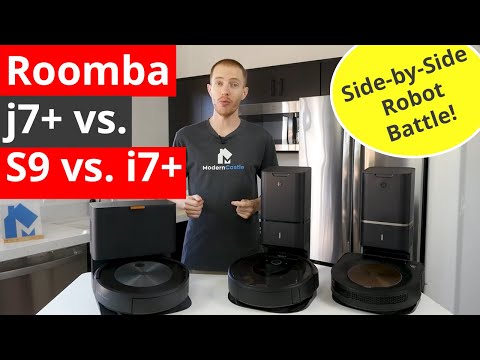
Choosing between the Roomba s9+ and j7+ isn’t just about specs—it’s about how you actually live. Do you want raw, aggressive cleaning power that digs deep into carpets? Or a smarter robot that gracefully dodges cables, toys, and… unexpected pet surprises?
Here’s the real tension: the s9+ is built like a cleaning powerhouse, while the j7+ is designed to survive real homes—the messy, unpredictable kind. In this guide, we’ll break down how suction vs navigation plays out in everyday life—so you can pick the one that actually works for your space, not just on paper.
2. Roomba s9+ vs j7+: Suction Power vs Navigation Intelligence Explained

2.1 Cleaning Performance: How Much Stronger Is the s9+ Really?
Let’s start with the moment most people care about: that first barefoot step across your carpet. Does it feel clean… or slightly gritty?
This is where the Roomba s9+ flexes hard.
On paper, iRobot positions it as delivering 40× the suction power compared to its 600 series baseline, while the j7+ sits at 10×. But numbers aside, what does that actually feel like in your home?
Picture this: thick carpet that traps pet hair, dust, and that fine sand-like debris you don’t see—but definitely feel. The s9+ doesn’t just skim the surface. Its wider rubber brushes (about 30% wider) and front-loaded design act more like a traditional upright vacuum, digging into fibers and pulling stuff out that lighter robots tend to leave behind.
And then there’s the shape. The D-shaped front isn’t just for looks—it hugs baseboards and reaches into corners where round robots usually leave that annoying “dust halo.” You know the one.
- On hard floors? Both are excellent.
- On carpets? The s9+ pulls ahead—especially with pet hair and embedded debris.
- Along edges? It’s not even close.
The trade-off? It’s louder. More aggressive. A bit like swapping a quiet electric toothbrush for a full-on power drill.
But if your weekends currently involve re-vacuuming carpets your robot “already cleaned”… this is where the s9+ earns its keep.
2.2 Navigation & AI: Why the j7+ Is Smarter in Real Homes
Now flip the situation.
You hit “clean” before leaving the house… and come back to find your robot tangled in a phone charger, dragging a sock, or worse—smearing something you really didn’t want smeared.
This is exactly the problem the Roomba j7+ was built to solve.
Instead of brute force, it leads with vision—literally. Its PrecisionVision Navigation system uses a front-facing camera to recognize objects like cords, shoes, socks, and even pet waste. Not just detect. Actually identify and avoid them.
Meanwhile, the s9+ uses a more traditional system. It maps your home well and moves in neat rows, but when it comes to small, low-profile hazards? It’s basically guessing. Cables, pet messes, loose items—they’re all fair game.
| Model | Daily Routine Requirement |
|---|---|
| j7+ | You press clean… and forget about it |
| s9+ | You press clean… then do a quick “floor scan” first |
And here’s the kicker: the j7+ can even log obstacles it encounters, letting you review and mark them as permanent no-go zones. Over time, it actually learns your mess.
If that sounds like a small feature, try dealing with a robot that spreads pet accidents across your living room just once. That’s the kind of problem this was designed to eliminate.
2.3 Side-by-Side Verdict: Cleaning Depth vs Daily Reliability
So which one actually “cleans better”?
Here’s the honest answer: it depends on what you mean by clean.
If we’re talking about pure cleaning performance per pass, the s9+ wins. But if we’re talking about real-world cleaning over time—how often the robot actually finishes a job—the j7+ often comes out ahead.
Roomba s9+ (Deep-Clean Specialist)
- Noticeably more thorough clean on carpets.
- Superior edge cleaning via D-shape design.
- Maximum extraction of pet hair.
Roomba j7+ (Reliability Machine)
- Actually completes more runs without interruption.
- Superior obstacle avoidance (PrecisionVision).
- Set-it-and-forget-it convenience.
A robot that cleans slightly better but gets stuck twice a week? Or one that cleans consistently well every single day without you lifting a finger?
3. Which Roomba Fits Your Home? Real-World Buying Scenarios
3.1 Carpet-Heavy Homes with Pets: Why s9+ Still Leads
Let’s be real—pet owners don’t just deal with “a bit of hair.” It’s everywhere. Woven into carpets, clinging to edges, packed into corners like it pays rent.
And this is where weaker robot vacuums quietly fail.
The Roomba s9+ is built for exactly this scenario.
Its stronger suction combined with wider rollers means more contact with the carpet in a single pass. Less back-and-forth. More actual extraction. Over time, that translates into noticeably cleaner carpets—and less need to pull out your upright vacuum for a “real clean.”
And for pet owners, there’s another hidden win: consistency. The rubber brush design resists tangling, so you’re not constantly cutting hair out of the roller every weekend.
3.2 Cluttered Spaces & Busy Households: Why j7+ Is Safer
Now imagine a different home. Phone chargers snaking behind the couch. Kids’ toys under the coffee table. Shoes by the door. Maybe a pet that’s… not always predictable.
In this kind of environment, cleaning power takes a back seat to something more important: damage control.
This is where the Roomba j7+ feels like a completely different generation. Its object recognition isn’t just a feature—it’s a safety net. It actively avoids the things that typically cause robot vacuums to fail. That means:
- Fewer rescue missions
- Fewer interrupted cleaning cycles
- Way less stress hitting “clean” when you’re not home
And over time, that changes how you use it. It becomes something you trust, not something you supervise. If your current cleaning routine involves a quick “tidy the floor before the robot runs,” the j7+ removes that step entirely.
Set it. Forget it. Done.
3.3 Small Apartments & Mixed Floors: The Practical Middle Ground
Not every home is extreme. Maybe you’ve got mostly hard floors, a few rugs, and moderate clutter. No shedding apocalypse. No wall-to-wall carpet.
In this case, going all-in on maximum suction can actually feel like overkill. On hard floors, both robots perform similarly well. Crumbs, dust, everyday debris—it’s not a difficult job. The difference in suction becomes far less noticeable.
What does matter more? Navigation.
In tighter spaces—apartments, condos, smaller layouts—the ability to move smoothly around furniture, avoid obstacles, and complete runs without getting stuck becomes the bigger quality-of-life factor.
- Strong enough cleaning for daily maintenance
- Much better at handling real-world clutter
- Less need for intervention
The s9+ still makes sense if you’re picky about deep carpet cleaning. But for most smaller or mixed spaces? The j7+ just fits better into everyday life.
4. Why the Newer j7+ Is Smarter but Less Powerful
4.1 s9+: The Hardware-First ‘Deep Cleaning’ Flagship
The Roomba s9+ feels like it was built with one mission: clean as deeply as possible—no compromises.
If you’ve ever vacuumed a thick carpet and watched fine dust keep coming out pass after pass, you already understand the problem it’s trying to solve. Surface cleaning is easy. Deep extraction is not.
That’s why everything about the s9+ is hardware-driven. The D-shaped design isn’t just aesthetic—it lets the vacuum sit flush against walls, pulling debris out of corners that round robots tend to miss. Pair that with wider brushes positioned right at the front, and you get more contact with the floor in every pass.
Then there’s the raw power. With its significantly higher suction class, the s9+ doesn’t just glide over carpet—it digs in. Independent testing consistently shows it delivers stronger cleaning performance across all floor types, especially where debris is embedded deep in fibers.
This is a machine built for performance first. Treat it like a high-end vacuum. It rewards you.
4.2 j7+: The AI-First ‘Live-With-Your-Mess’ Robot
Now flip the philosophy completely.
The Roomba j7+ wasn’t designed for perfect homes. It was designed for real ones.
You know the kind—where a charging cable lives permanently under the couch, where shoes somehow multiply near the door, where something always ends up on the floor five minutes after you tidy up.
Instead of overpowering dirt, the j7+ focuses on avoiding problems.
Its PrecisionVision Navigation system uses a front-facing camera (think of it like eyes at floor level) to identify obstacles before it hits them. Not just walls or furniture—but the small, annoying stuff: cords, socks, pet accidents.
And this changes everything.
Instead of bumping, getting stuck, and sending you a notification mid-workday, it simply… goes around. Quietly. Reliably.
Over time, it even logs what it sees. That means your robot starts to “understand” your home—where clutter tends to live, what to avoid, and how to clean around it without intervention.
But here’s the real win: it actually finishes the job. Every time.
4.3 Does Newer Mean Better? Not Always
It’s tempting to assume the newer model automatically wins. In this case? Not quite.
The j7+ is smarter. No question. It represents a shift toward autonomy—robots that adapt to your lifestyle instead of forcing you to adapt to them.
But “smarter” doesn’t mean “stronger.”
The s9+ still dominates when it comes to raw cleaning performance. If your biggest frustration is dirt buried deep in carpets, the newer model doesn’t magically fix that—it actually gives up some power to gain intelligence.
So the real question isn’t “Which is newer?” It’s “What kind of problem are you trying to solve?”
- Struggling with stubborn dirt, pet hair, and carpet buildup? → s9+
- Tired of rescuing your robot or dealing with mess disasters? → j7+
5. Suction vs Navigation: A Simple Decision Framework That Actually Works
5.1 What Matters More: Cleaning Power or Coverage?
Here’s the simplest way to think about it:
Suction is how well the robot cleans each time it passes. Navigation is whether it actually passes everywhere it should.
Imagine two cleaners:
- One is incredibly strong—but occasionally skips areas or gets stuck
- The other is slightly less powerful—but never misses a spot
Which one leaves your home cleaner after a week?
That’s the real trade-off between the s9+ and j7+.
| Model | Core Focus | Best For |
|---|---|---|
| Roomba s9+ | Cleaning Intensity | Deep carpet cleaning & maximum extraction |
| Roomba j7+ | Cleaning Consistency | Hands-free operation in busy/cluttered homes |
The s9+ is like a high-powered vacuum you’d use for a deep weekend clean. When it runs, it removes more dirt per pass—especially from carpets. The j7+ is like a reliable daily cleaner that quietly covers your entire home without drama.
5.2 Real-Life Impact: Missed Dirt, Time Saved, and Robot Babysitting
Specs don’t matter. Outcomes do.
So what actually changes in your day-to-day life?
Missed dirt: On hard floors, the difference is minimal—both clean extremely well. But on carpets, the s9+ pulls out more embedded debris. You’ll notice it over time, especially with pets.
Time saved: This is where things flip. The j7+ avoids obstacles, meaning fewer interrupted runs. No mid-day alerts. No coming home to a robot stuck under a chair.
Robot babysitting: This is the hidden cost most people underestimate. With the s9+, you often do a quick “pre-clean”:
- Move cables
- Pick up socks
- Check for hazards
With the j7+? You skip all that. Press clean. Walk away.
And for many households, that convenience gap is bigger than the cleaning gap.
5.3 Quick Scoring Rule: Decide in 30 Seconds
Still stuck? Use this quick mental shortcut.
Choose Roomba s9+ if:
- Lots of carpet
- Pets that shed heavily
- Floors usually kept tidy
Choose Roomba j7+ if:
- Cables, toys, or everyday clutter
- Busy schedule, minimal prep time
- You want true “set-and-forget” cleaning
And if you’re right in the middle? Ask yourself one honest question:
“What annoys me more—dirty carpets, or dealing with my robot getting stuck?”
Your answer tells you everything.
6. Conclusion
At the end of the day, this isn’t a battle of “better” vs “worse”—it’s a choice between two completely different priorities.
The Roomba s9+ is still the king of deep cleaning. If your home is full of carpets and pet hair, it delivers that satisfying, truly clean feeling you notice under your feet. It’s powerful, aggressive, and built to replace more of your manual vacuuming.
The Roomba j7+, on the other hand, is built for real life. It avoids the chaos—cords, clutter, unexpected messes—and quietly gets the job done without needing your help.
So don’t just ask which one cleans better on paper. Ask which one fits your daily routine.
Because the best robot vacuum isn’t the strongest. It’s the one you never have to think about.
FAQ
Q: Which Roomba is better for homes with lots of carpets and pets?
A: Based on technical specifications and aggregated performance data, the Roomba s9+ is superior for carpet-heavy homes. Its 40x suction power and wider rubber brushes are designed to extract deeply embedded pet hair and fine debris that lower-suction models might leave behind.
Q: Does the Roomba j7+ actually avoid pet waste?
A: Yes, the Roomba j7+ utilizes PrecisionVision Navigation with a front-facing camera. Data-driven analysis shows it can identify and avoid solid pet waste, a feature specifically designed to prevent the messy 'pooptastrophe' scenarios often associated with older or less intelligent robotic navigation systems.
Q: Is the Roomba s9+ louder than the j7+?
A: Generally, yes. Because the s9+ utilizes a much more aggressive motor to achieve its high suction ratings, it generates higher decibel levels during operation compared to the j7+. It is often described as having a sound profile similar to a traditional upright vacuum.
Q: Can the j7+ detect and avoid charging cables?
A: The j7+ is specifically engineered to recognize and navigate around common household clutter, including phone chargers and power cords. Aggregated user feedback suggests this significantly reduces the need for 'pre-cleaning' the floors compared to the navigation system found in the s9+.
Q: Do both models come with an automatic dirt disposal base?
A: Both the s9+ and j7+ models (indicated by the '+' designation) include the Clean Base Automatic Dirt Disposal. This system allows the robots to empty their own bins into a sealed bag for up to 60 days, offering a hands-off maintenance experience.