
Gardena SILENO City Review: Best for Small Urban Lawns?
Aaron Cooper1. Introduction
If your lawn is small, oddly shaped, and surrounded by neighbors who can hear everything—you already know the pain. Dragging out a mower for a 20-minute job feels ridiculous… yet skipping it for a week makes your yard look like a jungle.
That’s exactly where the Gardena SILENO City comes in. It’s built for compact urban gardens, promising quiet, hands-off mowing without turning your weekend into yard work.
Let’s break it down—real-world performance, everyday usability, and the trade-offs nobody tells you upfront.
2. Real-World Performance: How Well Does SILENO City Handle Small Urban Lawns?
2.1 Cutting Quality and Lawn Health: Does It Deliver a Clean Finish?
Let’s be honest—most people don’t care about “cutting systems.” They care about one thing: Does the lawn actually look good?
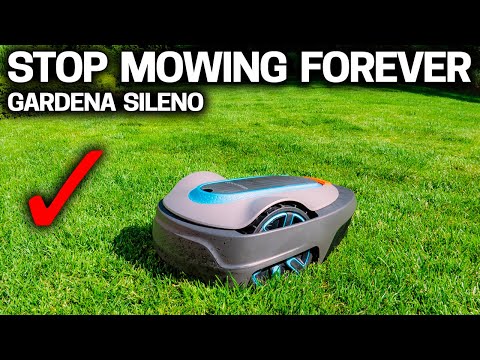
The SILENO City quietly nails this part. Its SensorCut system avoids that old-school striped look and instead delivers a consistently even finish. Over time, the lawn just… looks healthier. Not freshly scalped. Not patchy. Just smooth and uniform.
Independent reviews consistently describe the outcome as a neat, stripe-free lawn that stays evenly maintained over time. And that’s exactly what you notice after a couple of weeks—it doesn’t just mow. It maintains.
2.2 Ultra-Quiet Operation: Ideal for Close Neighbors?
Now let’s talk about something most buyers underestimate—noise.
If you live in a city or a townhouse, your lawn isn’t just yours. Every sound echoes into someone else’s space. That loud gas mower on a Sunday morning? Yeah… not popular.
This is where the SILENO City genuinely stands out. It runs at just 57 dB—widely described as one of the quietest in its class.
What does that actually feel like? Think background noise, not machinery. You can sit outside, have a conversation, even forget it’s running.
- Schedule it whenever you want: Early morning. Late evening. Even overnight.
- No awkward neighbor interactions: No planning your life around mowing hours.
- Reclaim your schedule: Quiet operation means 24/7 flexibility.
2.3 Navigation in Tight Spaces: CorridorCut and Compact Design
Small urban lawns aren’t simple rectangles. They’re full of weird corners, narrow side paths, and tight transitions between areas.
This is where many robotic mowers struggle—and where the SILENO City feels purpose-built.
Its CorridorCut feature allows it to pass through spaces as narrow as 60 cm. That’s the difference between “gets stuck constantly” and “just handles it.” Side yards, narrow passages between fences, awkward gaps—it moves through them with surprising confidence.
The compact body and swivel rear wheels also help it pivot in tight spots without awkward three-point turns. Instead of clunky movements, it feels… nimble.
There’s also a practical benefit here: coverage consistency. Even in irregular layouts, it keeps finding its way back to those tricky areas instead of ignoring them.
2.4 Ease of Use and Daily Operation
Here’s the dream: you set it up once… and forget it exists.
The SILENO City gets pretty close to that. After installation, daily use is refreshingly simple. The Bluetooth app lets you schedule mowing sessions, adjust settings, and check status—nothing overwhelming, just the basics done cleanly.
- Set your preferred mowing schedule via the app.
- The mower runs automatically at designated times.
- It returns to its charging station when battery is low.
- It resumes work without any manual intervention.
3. The Trade-Offs: Limitations You Should Know Before Buying

Pros
- Quiet 57 dB operation
- Handles narrow 60cm corridors
- Healthy mulch-based lawn care
- Reliable boundary wire system
Cons
- Cannot cut right to the edge
- Requires manual setup of wire
- No AI obstacle avoidance
- Limited Bluetooth range
3.1 Edge Cutting and Obstacle Handling Limitations
Here’s the uncomfortable truth: no robotic mower fully replaces manual lawn care—and the SILENO City is no exception.
The biggest gap? Edges. Because the cutting blades sit slightly inside the body, it physically can’t reach right up against walls, fences, or borders. You’ll almost always be left with a thin strip of uncut grass around the edges. Not a dealbreaker—but yes, you’ll still need a string trimmer for that clean finish.
Obstacle handling is another reality check. While it has basic collision sensors that stop it on contact, it doesn’t “see” objects in advance. That means garden toys, furniture, or random obstacles need to be cleared beforehand.
3.2 Random Navigation vs. Efficiency
If you watch it for the first time, you might think: “Is this thing lost?” That’s because the SILENO City uses a random mowing pattern instead of a planned, systematic path.
Here’s how it works: it moves in seemingly unpredictable directions, gradually covering the entire lawn over time. It doesn’t mow in straight lines. It doesn’t “finish” in one clean pass.
At first, that feels inefficient. And honestly? It is—compared to modern AI or LiDAR-based mowers that map and optimize routes. But here’s the trade-off: Instead of finishing everything in one session, it maintains the lawn continuously. Over a few days, everything evens out.
3.3 Setup Effort: Boundary Wire Reality Check
Let’s talk about the part most marketing glosses over: installation.
Before the magic happens, you’ll need to lay a boundary wire around your lawn. That means outlining edges, circling obstacles, and securing everything with pegs.
- Simple Lawns: Expect about an hour of setup.
- Complex Layouts: Easily longer, requiring crouching and testing.
- Long-term reliability: Once done, the wire is invisible and GPS-independent.
Still, compared to newer wire-free robots, this step feels… old-school. But also? Rock solid.
4. Value for Money: Is SILENO City Still Worth Buying?
4.1 What You Get: Core Features vs Missing Smart Tech
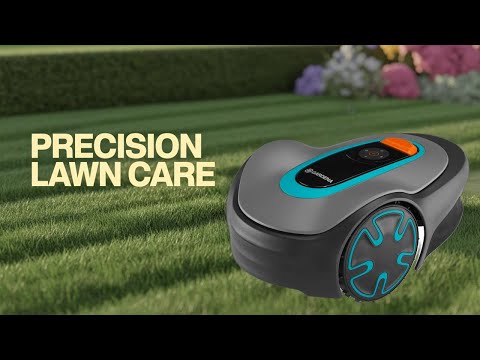
Here’s the honest reality: the Gardena SILENO City doesn’t try to be flashy—and that’s both its strength and its weakness.
On one hand, you’re getting the essentials done really well. Quiet operation, reliable cutting, simple Bluetooth scheduling, and a system that just keeps your lawn under control without constant babysitting. It’s the kind of product that fades into the background—in a good way.
That’s a big contrast to newer models that offer full remote control and mapping.
So what does that mean in real life?
If you want a mower that quietly handles your lawn while you’re home, this is perfect. If you want a “smart home gadget” you can control from anywhere, it will feel limited.
It’s not trying to be futuristic. It’s trying to be dependable. And for a lot of homeowners, that trade-off actually makes sense.
4.2 Price vs Competitors in the Same Range
This is where things get interesting—and a little tricky.
The SILENO City sits in that mid-range sweet spot. It’s often positioned as one of the more affordable robotic mowers from a trusted brand, but it’s no longer the most feature-packed option at that price.
Here’s how it stacks up against typical competitors:
| Model | Navigation | Connectivity | Key Strength | Weakness |
|---|---|---|---|---|
| Gardena SILENO City | Boundary wire (random) | Bluetooth only | Ultra-quiet, reliable | Limited smart features |
| Worx Landroid | Boundary wire + smarter routing | Wi-Fi / app | More features, remote control | Slightly noisier |
| Entry AI / RTK mowers | GPS / AI navigation | Full app/cloud | No wire, advanced mapping | Higher price |
So what’s the catch?
Competitors like Worx Landroid often offer Wi-Fi and app control from anywhere. Meanwhile, newer AI-driven mowers eliminate boundary wires entirely.
But here’s the flip side: those “smart” features usually come with a higher price—or more complexity.
The SILENO City keeps things simple and affordable. No subscriptions. No signal headaches. No overcomplicated setup.
If your priority is quiet, predictable performance at a reasonable cost, it still holds strong value.
If you’re chasing cutting-edge tech? You’ll notice the gap.
4.3 Long-Term Usability and Running Costs
Let’s talk about the part most people forget: what happens after the purchase.
Because the real magic of a robotic mower isn’t day one—it’s month six, when you realize you haven’t touched your lawn in weeks.
The SILENO City is designed for that kind of long-term, low-effort ownership.
Energy usage is minimal. Based on manufacturer data, it operates on very low monthly power consumption, which translates to negligible electricity costs over time. You’re not going to notice it on your bill.
Maintenance is also refreshingly simple:
- Replace blades occasionally
- Check boundary wire if it gets damaged
- Clean it off now and then
That’s about it.
The only long-term downside? Flexibility.
If you ever redesign your garden, add new zones, or change layouts, you’ll need to adjust or re-lay the boundary wire. That’s not hard—but it’s not instant either.
Still, for a stable, small urban lawn, the ownership experience is about as hands-off as it gets.
5. Boundary Wire vs Wire-Free Mowers: Which Is Better for Urban Gardens?

5.1 Why Boundary Wire Systems Still Work Reliably
Let’s address the elephant in the yard: boundary wires feel outdated… but they still work incredibly well.
Once installed, the SILENO City follows that wire like an invisible fence. No guessing. No drifting. No signal dropouts. It knows exactly where your lawn starts and ends—every single time.
And that reliability matters more than you might think.
Urban gardens are tricky environments. Walls, fences, narrow passages, and neighboring houses can interfere with wireless signals. A wired system simply doesn’t care. Rain, clouds, nearby buildings—none of it affects performance.
That’s why many long-time users stick with this approach. It’s predictable. Stable. Proven.
Yes, installation takes effort. But after that? It just works.
No recalibration. No “lost signal” notifications. No surprises.
5.2 The Promise (and Problems) of GPS/RTK and AI Navigation
Now let’s talk about the shiny new alternative: wire-free robotic mowers.
On paper, they sound perfect. No cables. Smart mapping. AI navigation. You just set boundaries in an app and let the robot handle the rest.
And in ideal conditions? They can be impressive.
But real-world urban environments are rarely ideal.
Testing and user feedback reveal a consistent pattern: signal reliability can become a serious issue. In dense areas with buildings, trees, or narrow spaces, GPS signals can bounce, weaken, or drop entirely. In some cases, even advanced RTK systems struggle to maintain accurate positioning, especially when the mower loses clear visibility of the sky.
That’s not just theory. It’s why some users report mowers getting lost, stopping mid-job, or failing to return to the dock.
Even in controlled evaluations, it’s clear that RTK-based navigation depends heavily on stable satellite and internet connectivity, which isn’t always guaranteed in compact urban gardens.
So while wire-free sounds like the future, it’s not always the most reliable choice—yet.
5.3 Which Technology Fits Your Garden Layout?
So which one should you actually choose?
It comes down to your yard—not the marketing.
If your garden is small, enclosed, and surrounded by buildings (which most urban lawns are), the SILENO City’s wired system is often the safer bet. It doesn’t care about signal strength. It doesn’t get confused by walls or shadows. It just follows its boundaries and gets the job done.
If your lawn is more open, with clear sky visibility and fewer obstacles, a wire-free mower can offer more flexibility and faster setup.
But here’s the key question:
For many urban homeowners, consistency wins.
6. Conclusion: Who Should Buy the Gardena SILENO City?
So, is the Gardena SILENO City still the best for small urban lawns?
Yes—but with clear boundaries.
Who It's For
- Homeowners with compact, simple urban lawns.
- Those who value quiet operation and reliability.
- Users looking for low-maintenance, set-and-forget tools.
Who It's Not For
- Users wanting full remote app control or smart mapping.
- Early adopters seeking the latest AI/Wire-free tech.
- Gardens that undergo frequent layout changes.
Think of it this way:
The SILENO City isn’t trying to be the smartest mower. It’s trying to be the least annoying one to live with.
And for the right homeowner, that’s exactly why it still makes sense.
FAQ
Q: How quiet is the Gardena SILENO City during operation?
A: This mower operates at approximately 57 dB, which is exceptionally quiet for its class. Most users find it resembles background noise, making it suitable for night-time mowing or use in high-density urban areas without disturbing neighbors.
Q: Can the SILENO City handle narrow passages in my garden?
A: Yes, it features CorridorCut technology specifically designed to navigate tight spaces. It can effectively maneuver through passages as narrow as 60 centimeters, ensuring coverage in side yards and awkward transitions between lawn sections.
Q: Does this mower require a boundary wire for installation?
A: Yes, it utilizes a traditional boundary wire system. While this requires more initial physical setup compared to wire-free models, it provides a stable and reliable signal that is unaffected by GPS dropouts or tall buildings.
Q: Will the SILENO City cut the grass right up to the edges?
A: Due to the internal placement of the blades for safety, it cannot reach the very edge of walls or fences. Most owners will still need a small string trimmer for occasional perimeter maintenance.
Q: Does it have Wi-Fi connectivity for remote control?
A: No, the standard SILENO City model typically uses Bluetooth connectivity. This means you must be within range of the mower to adjust schedules or settings via the app, rather than controlling it from elsewhere.