
How Robot Mowers Handle Pet Waste and Toys (Obstacle Avoidance 101): What They Detect, What They Miss, and How to Prevent Messes
Aaron Cooper1. Introduction: The Reality of Robot Mowers in Pet-Friendly Yards
Robot mowers promise that dream scenario: perfectly trimmed grass while you sip coffee and do literally anything else. But if you share your yard with a dog (or kids with toys everywhere), reality hits fast. One missed pile. One forgotten chew toy. Suddenly your “hands-free” mower becomes a cleanup nightmare.
So what actually happens out there? Can these machines really see and avoid poop? Why do they still run over it? And how do you prevent turning your lawn into a biohazard zone?
Here’s the honest breakdown—what today’s tech gets right, where it fails, and how to make it actually work in a pet-friendly yard.
2. Can Robot Mowers Detect Dog Poop and Toys? The Honest Answer
2.1 Why Most Robot Mowers Still Miss Dog Poop
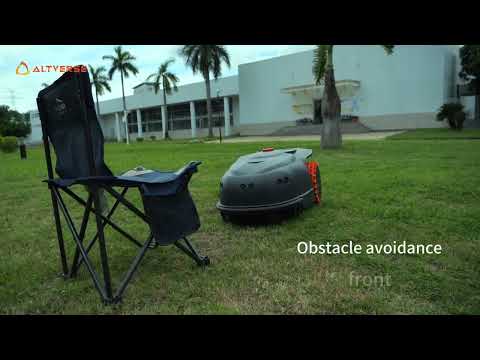
Let’s be blunt: most robot mowers are basically blind to dog poop.
That’s not a bug—it’s a limitation of how they “see” the world. Entry-level and many mid-range models rely on bump sensors, meaning they only react after hitting something. By the time the mower realizes there’s an obstacle… it’s already smeared across the blades.
Across manufacturer documentation and real-world usage, there’s a consistent takeaway: most robot mowers will simply roll over dog poop and keep going. No hesitation. No reroute.
Even newer AI-powered models only partially solve this. Some can detect larger, more visible piles under ideal conditions, but brands themselves still recommend you clean the lawn first. That tells you everything.
2.2 Small Toys, Hoses, and Low Objects: Hit or Miss Detection
Toys are a different story—but not as safe as you’d hope.
Larger objects? Usually fine. A soccer ball, a chunky dog toy, or a garden chair leg will often be detected and avoided, especially on mid-range and premium models.
But here’s where things get unpredictable:
- A tennis ball half-hidden in grass
- A flat rubber chew toy
- A garden hose lying low against the lawn
These are the troublemakers.
Obstacle detection systems rely heavily on height, shape, and contrast. If something sits too low or blends into the grass, it can effectively disappear from the mower’s perspective. Even brands like Husqvarna openly note that small or flat objects can be missed—especially in taller grass or near boundaries where avoidance may be reduced.
And when that happens? The mower doesn’t gently nudge things aside. It may:
- Push the object forward repeatedly
- Run over it
- Or drag it across the lawn like a stubborn Roomba on a sock
So yes—robot mowers are better with toys than poop. But “better” doesn’t mean reliable.
2.3 Entry-Level vs Premium Models: How Big Is the Gap?
Here’s where things get interesting. Not all robot mowers fail equally.
The difference between a basic mower and a high-end AI model is real—but it’s also easy to overestimate.
| Tier | Core Technology | What It Avoids Well | What It Still Misses |
|---|---|---|---|
| Entry-Level | Bump sensors only | Large solid objects (after hitting them) | Poop, small toys, flat objects |
| Mid-Range | Bump + ultrasonic/radar | Bigger toys, furniture, people | Poop, low-profile items |
| Premium | AI cameras + sensor fusion | Toys, pets, many small objects | Small/hidden poop, very flat items |
Premium models—like those using camera-based AI systems—are the first real step toward “seeing” your lawn. Some systems can even detect obstacles as small as around 1 cm in size under ideal conditions, which is a huge leap forward.
But here’s the catch: detection depends heavily on lighting, grass height, and visibility. A clearly visible object on short grass? Likely avoided. A small, partially hidden mess in uneven turf? Still a gamble.
So yes, high-end models are smarter. Noticeably smarter. But they’re not foolproof. Not even close.
4. The Tech Behind Obstacle Avoidance (and Its Limits)
4.1 Bump Sensors, Ultrasonic, and Why They’re Not Enough
Let’s start with the “old school” systems—because most mowers on the market still rely on them.
Bump sensors are exactly what they sound like. The mower drives forward until it physically hits something, then backs up and changes direction. It’s simple. It’s cheap. And for trees or patio furniture, it works fine.
But here’s the problem: by the time it reacts… the damage is already done.
Ultrasonic and radar sensors sound more advanced, but they’re not magic. They send out waves to detect objects ahead—but only if those objects stand out clearly from the ground. According to manufacturer guidance, these systems struggle with small, flat, or low-profile items, especially in taller grass or near edges where avoidance may even be disabled.
So while these sensors help avoid a chair leg or a person walking by, they’re practically blind to the exact things pet owners care about most.
Which explains the frustration. You expected “smart.” What you got… was reactive.
4.2 AI Cameras and Vision Systems: The Current Frontier
Now this is where things actually get exciting.
Modern premium mowers are starting to “see” your lawn using cameras and AI—basically teaching the machine to recognize objects the way your phone recognizes faces. These systems analyze shapes, colors, and movement in real time, then decide whether to stop, slow down, or reroute.
Under ideal conditions, the results are impressive. Industry data shows some systems can detect objects as small as around 0.4 inches (1 cm), including things like garden hoses, toys, and even moving pets. That’s a massive leap compared to older tech.
So yes—finally, a mower that doesn’t just bump into your dog’s toy and chew it up.
But here’s the reality check. AI vision depends heavily on what it can see clearly. That means:
- Bright daylight works better than dusk
- Short grass works better than thick patches
- Clear shapes work better than messy, irregular ones
If a toy is partially hidden? Detection drops. If lighting is uneven? Accuracy drops. If something blends into the lawn? You guessed it—missed again.
So while AI vision is the biggest step forward we’ve seen, it’s still not “set it and forget it” in a messy, real-world yard.
It’s smart. Just not perfect.
4.3 Why Pet Waste Is So Hard to Detect
If you’re wondering why this one problem refuses to be solved, it comes down to physics—and a bit of bad luck. Dog poop is basically the worst-case scenario for detection systems.
| Challenge Factor | Why It Fails |
|---|---|
| Profile | Small and low to the ground; disappears below minimum height thresholds. |
| Texture | Soft and irregular; lacks clear edges for AI or ultrasonic reflection. |
| Visibility | Often partially hidden by grass blades or uneven terrain. |
| Contrast | Brown-on-green or brown-on-soil color blending hides it from cameras. |
Even advanced systems that can detect small objects still struggle here. Some manufacturers note detection works only when waste is clearly visible and raised above the grass—and even then, it’s not guaranteed.
So if it feels like your mower avoids everything except the one thing you care about most… You’re not imagining it.
5. Best Practices for Pet Owners: How to Avoid Messes and Maximize Automation
5.1 Pre-Mow Routine: The 2-Minute Yard Check That Saves Hours
Here’s the uncomfortable truth: the most powerful “feature” your robot mower has… is you.
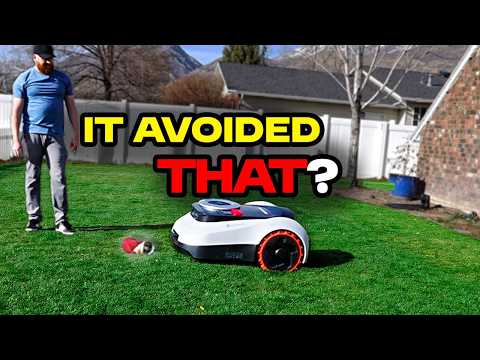
Because no matter how advanced the tech gets, nothing beats a quick walk around your yard before a mowing cycle. And we’re not talking about a full inspection—just a fast scan.
- Spot the obvious: Scan for large debris or new obstacles.
- Scoop the waste: Remove pet waste before the mower starts.
- Clear the path: Kick a toy aside or move garden tools.
It takes two minutes. But skipping it? That’s how you end up flipping your mower upside down, scrubbing wheels, dealing with smells, and wondering why you ever bought the thing in the first place.
5.2 Use No-Go Zones and Smart Scheduling to Your Advantage
If your yard has “problem areas,” don’t fight them—design around them. Most modern robot mowers (especially wire-free models) let you create virtual boundaries or no-go zones directly in the app.
Got a corner your dog always uses? Block it off. Kids leave toys in one section of the lawn? Exclude it. It’s one of the easiest ways to reduce risk without changing your entire routine.
Scheduling matters just as much. Instead of running the mower randomly, align it with your real life:
- After your dog’s usual bathroom break
- When pets are indoors
- When the yard is naturally clear
This combination—smart zoning + smart timing—turns a chaotic yard into something predictable. And predictability is what robot mowers need to perform well. Without it, even the smartest AI system is guessing.
5.3 Choosing the Right Mower for a Pet-Friendly Lawn
If you’re buying a mower specifically for a pet-friendly yard, your priorities should be very different from a “perfect lawn” shopper.
Essential Features for Pet Owners
- AI Vision: Camera-based systems for small object detection.
- Precision Specs: Look for claims of detecting items down to 1 cm.
- App Control: Robust support for virtual no-go zones and flexible scheduling.
Avoid These Pitfalls
- Bump-Only Navigation: High risk of "poop-pocalypse."
- Collection Boxes: Harder to clean than mulching decks if an accident occurs.
- Rigid Timers: Inability to adjust for real-time yard usage.
6. Conclusion: Smart Mowers Help—But Clean Lawns Still Start With You
Robot mowers have come a long way. They can map your yard, avoid toys, detect pets, and navigate like tiny autonomous vehicles. But when it comes to pet waste and small clutter, they’re still not fully independent.
The core limitation hasn’t changed: soft, low, irregular objects are hard to detect—even for advanced AI systems. That doesn’t mean robot mowing isn’t worth it. It just means the best results come from combining smart technology with simple routines.
A quick yard check, thoughtful scheduling, and well-placed no-go zones turn a frustrating experience into a genuinely hands-free one. So yes—these machines can save you hours every week. Just don’t expect them to clean up after your dog. Not yet.
FAQ
Q: Can robot mowers detect and avoid dog poop?
A: Most current robot mowers cannot reliably detect dog poop. Entry-level models with bump sensors only react after contact, while ultrasonic sensors often miss soft, low-profile objects. Even advanced AI vision systems struggle with waste due to its irregular shape, small size, and tendency to blend into the grass.
Q: Will a robot lawn mower damage my pet's toys?
A: While larger toys like soccer balls are usually detected by mid-range and premium models, smaller items like tennis balls or flat chew toys are often missed. If the mower's sensors don't recognize the object's height or contrast, it may run over or drag the toy, potentially damaging the blades.
Q: How does AI camera technology improve obstacle avoidance?
A: AI-powered mowers use cameras to recognize objects by shape and color. Under ideal lighting and short grass conditions, some premium systems can detect objects as small as 1 cm. However, their accuracy decreases in low light, tall grass, or when objects are partially hidden or lack clear edges.
Q: What happens if a robot mower runs over an obstacle?
A: If a mower hits a solid object it doesn't recognize, it may repeatedly push it or attempt to drive over it. In the case of pet waste, the blades will likely smear the material across the mower's underside and the lawn, requiring extensive manual cleaning and blade maintenance.
Q: How can I prevent my robot mower from hitting pet waste?
A: The most effective method is a quick 2-minute yard check before a scheduled mow. Additionally, you can use your mower's app to set 'No-Go Zones' in areas your pet frequent and schedule mowing cycles to occur only after you have had a chance to clear the lawn.