
Mammotion LUBA 2 AWD vs. Segway Navimow H-Series: Full Spec Breakdown + Which Robot Mower Wins for Your Lawn?
Aaron Cooper1. Introduction
Tired of spending your weekends pushing a mower under the sun, only to watch your lawn grow back in days? You’re not alone—and that’s exactly why wire-free robotic mowers are exploding in popularity. No buried cables. No complicated installs. Just set it, map it, and let it handle the grind.
Two models dominate this conversation right now: the Mammotion LUBA 2 AWD and the Segway Navimow H-Series. Both promise hands-off mowing using RTK (Real-Time Kinematic—think centimeter-level GPS precision) and smart navigation. But under the hood, they’re built for very different types of yards.
2. Core Spec Breakdown: LUBA 2 AWD vs. Navimow H-Series Side-by-Side

Before you fall for marketing buzzwords, let’s get brutally practical: how do these machines actually compare where it counts?
Here’s a clean side-by-side snapshot of the core specs that will directly impact your day-to-day experience:
| Feature | Mammotion LUBA 2 AWD | Segway Navimow H-Series |
|---|---|---|
| Drive System | All-Wheel Drive (AWD) | Rear-Wheel Drive (RWD) |
| Max Slope | 38° (80%) | 24° (45%) |
| Cutting Width | 400mm (dual plates) | 210mm (single plate) |
| Mowing Efficiency | ~350 m²/h | ~200 m²/h |
| Noise Level | ~60 dB | ~54 dB |
| Price Range | $2,000–$4,000 | $1,800–$2,900 |
On paper, it looks like a simple trade-off: power vs. simplicity. But specs don’t live on paper—they live in your yard. Let’s break down what these numbers actually feel like when the mower is out there doing the work.
2.1 Drive System & Slope Capability: AWD vs RWD Explained
Here’s the uncomfortable truth: most robot mowers look great… until they hit a slope.
This is where the LUBA 2 AWD immediately separates itself. With four powered wheels, it can handle slopes up to 38°, which is closer to a steep hill than a gentle lawn. That’s not just a spec—it’s the difference between confidently mowing embankments and watching your mower fail halfway through the job. In fact, multiple comparisons highlight its ability to climb slopes up to 38° as a defining advantage for complex terrain.
The Navimow H-Series, on the other hand, uses a rear-wheel-drive setup and tops out around 24°. That’s perfectly fine for typical suburban lawns—but once you introduce uneven ground, dips, or aggressive slopes, it starts to show its limits.
In real life?
- Flat yard → both work fine
- Slight slopes → Navimow holds up
- Steep or uneven terrain → LUBA pulls ahead, no contest
2.2 Cutting Width & Efficiency: Why 400mm vs 210mm Matters
Let’s talk about something people underestimate—time.
Because here’s what happens: your mower doesn’t just run once. It runs multiple times per week. And suddenly, efficiency isn’t a spec—it’s your electricity bill, your noise exposure, and how long your lawn looks freshly cut.
The LUBA 2 AWD uses dual cutting discs with a massive 400mm cutting width. The Navimow H-Series sticks with a single 210mm disc. That might not sound dramatic—until you realize it translates to nearly double the coverage speed.
Independent comparisons consistently show a working capacity difference of roughly 350 m²/h vs 200 m²/h, which means the LUBA can finish the same lawn significantly faster.
It’s like using a 42-inch riding mower vs. a small push mower. Both cut grass. One just gets your Saturday back.
What does that feel like in real life?
- Large lawn: LUBA finishes in one session; Navimow may need multiple cycles
- Busy household: less runtime = less background noise
- Tight schedule: lawn gets done before you even notice
That said, the Navimow’s slower pace isn’t a dealbreaker—it’s designed for consistency, not speed. If your lawn is modest in size, you may never feel the difference.
2.3 Noise, Battery & Coverage: Daily Usability Differences
Now let’s shift from raw performance to something more personal: living with the machine.
Because specs don’t matter if the mower annoys you—or your neighbors—every single day.
The first thing you’ll notice? Sound. The Navimow runs at around 54 dB, while the LUBA sits closer to 60 dB. That gap might seem small, but acoustically, it’s noticeable. The Navimow fades into the background. The LUBA is still quiet—but you’ll hear it.
What does that mean in practice?
- Early morning mowing → both fine
- Late-night mowing → Navimow wins
- Noise-sensitive neighborhoods → Navimow feels safer
Then there’s coverage. LUBA models scale up to massive properties (up to 10,000 m²), while Navimow’s lineup tops out lower. If you’ve got a sprawling yard or multiple zones, LUBA gives you more headroom to grow.
Battery behavior also plays differently. The Navimow tends to run longer per session, while the LUBA compensates with faster cutting speed—so the total job time often balances out.
Choose Navimow H-Series If
- You want quiet, set-it-and-forget-it operation.
- Noise sensitivity is a major concern.
Choose LUBA 2 AWD If
- You want to finish faster, especially on big lawns.
- You have complex, large-scale terrain.
3. Navigation & Smart Features: RTK, Vision, and Obstacle Avoidance

If cutting power is the muscle, navigation is the brain.
And this is where robotic mowers have quietly evolved from “random bump-and-turn toys” into something that feels almost surgical.
Both the Mammotion LUBA 2 AWD and Segway Navimow H-Series ditch perimeter wires entirely. Instead, they rely on RTK (Real-Time Kinematic positioning)—a system that uses satellite corrections to achieve near centimeter-level accuracy. In plain English? Your mower knows exactly where it is, all the time.
But here’s the twist: they don’t use that intelligence the same way.
3.1 RTK + Vision Systems: How Each Robot Finds Its Way
Imagine your mower navigating your yard like a self-driving car.
RTK acts like GPS on steroids—guiding the mower in straight, efficient lines instead of chaotic wandering. But what happens when that signal drops? Trees, walls, and even your house can interfere.
This is where the two brands split philosophies.
The LUBA 2 AWD combines RTK with a dual-camera 3D vision system. Those cameras don’t just detect obstacles—they actively help the mower understand where it is. So when satellite signal weakens (like under dense trees), it can “see” its surroundings and keep going without losing its place.
The Navimow H-Series also uses RTK, but its VisionFence system plays a different role. Here, the camera is primarily focused on obstacle detection rather than positioning.
What does that mean for you?
- Open yard, clear sky → both perform flawlessly
- Tree-heavy yard → LUBA holds position more reliably
- Simple layouts → Navimow is more than enough
It’s basically redundancy vs. specialization. LUBA builds a backup brain. Navimow focuses on doing one thing cleanly and efficiently.
3.2 Obstacle Detection: Precision vs Sensitivity
Let’s be honest—your lawn isn’t a showroom.
There are toys, hoses, fallen branches, maybe even the occasional forgotten tool. And the last thing you want is your mower chewing through them like it’s on a mission.
Both models use a mix of vision and ultrasonic sensors, plus physical bumpers. But their personalities are different.
The LUBA 2 AWD leans heavily on its binocular (dual-camera) vision system. It’s highly sensitive and capable of detecting a wide range of objects, even irregular ones. Think of it as cautious—it prefers to avoid rather than risk contact.
The Navimow, meanwhile, combines ultrasonic sensors with a refined vision system that many comparisons describe as particularly reliable for small objects like toys or garden hoses.
So how does this play out?
- Cluttered yard with lots of small items → Navimow feels more precise
- Irregular terrain + mixed obstacles → LUBA’s broader detection shines
- Minimal obstacles → both perform similarly
3.3 App Experience & Smart Controls: Power vs Simplicity
Here’s something people don’t think about enough: you don’t just buy the mower—you buy the app.
Because every boundary, every schedule, every tweak… happens there.
Segway clearly leans into simplicity. The Navimow app is widely described as polished, intuitive, and stable. You map your lawn, set your schedule, and forget about it. It’s the “it just works” experience.
Mammotion takes a different route. The LUBA 2 AWD app is powerful—almost too powerful for some users. You can customize mowing patterns, adjust path spacing, even create visual mowing designs. It’s incredibly flexible, but comes with a learning curve.
So which is better?
- Want plug-and-play, minimal friction → Navimow
- Want full control and customization → LUBA
- Tech-savvy users → LUBA feels like a playground
- Busy homeowners → Navimow feels effortless
It’s the classic trade-off: simplicity vs. control. And honestly? This might be the most underrated decision in the entire buying process.
4. Real-World Performance: Which Mower Fits Your Yard?
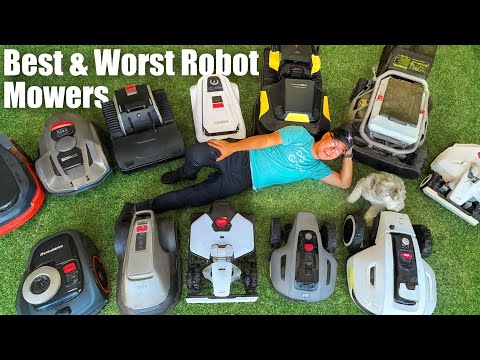
Specs are one thing. But your yard? It’s messy, uneven, unpredictable—and that’s where the real differences show up.
Because the truth is, the “best” robot mower doesn’t exist. The best one is the one that doesn’t struggle on your lawn.
Let’s break it down by what your yard actually looks like.
4.1 Steep Hills & Rough Terrain: Why LUBA 2 AWD Dominates
If your lawn has slopes, dips, tree roots, or that one annoying patch where every mower gets stuck… this is where things get frustrating fast.
This is exactly where the Mammotion LUBA 2 AWD feels like a completely different category of machine.
Its all-wheel-drive system isn’t just a spec—it’s what allows it to maintain traction where other mowers lose control. Combined with its ability to handle slopes approaching 38°, it can confidently tackle embankments, uneven ground, and rough terrain that would stop most robot mowers cold.
Add in its suspension and rugged tires, and you get something that behaves less like a delicate gadget… and more like a small off-road vehicle for your lawn.
- Hills over ~25° → LUBA isn’t just better—it’s necessary
- Uneven terrain → fewer interruptions, fewer rescues
- Wet or thick grass → maintains grip where others slip
The trade-off? It’s bigger, more powerful, and yes—more expensive.
But if your yard is challenging, the alternative isn’t saving money. It’s constant frustration.
4.2 Flat Suburban Lawns: Where Navimow H-Series Shines
Now let’s flip the script.
If your lawn is relatively flat, clean, and predictable, something interesting happens: all that extra power from the LUBA becomes… overkill.
This is where the Segway Navimow H-Series quietly becomes the smarter choice.
Because what’s actually annoying in a simple yard isn’t lack of power—it’s noise, complexity, and unnecessary cost.
Pros in real-world use
- Quiet enough for early mornings or evenings
- Simple app = less time fiddling with settings
- Lower upfront cost for similar results on easy terrain
Limitations
- Struggles on aggressive slopes
- Slower mowing speed on larger properties
And here’s the part people underestimate: consistency.
On a flat lawn, you don’t need brute force—you need a mower that shows up every day, does its job cleanly, and disappears into the background. That’s where Navimow excels.
It’s the difference between driving a rugged off-road truck… and a smooth, reliable sedan.
4.3 Tree Coverage & Complex Layouts: Signal Reliability Compared
Here’s something most buyers don’t think about—until their mower suddenly “gets lost.”
RTK navigation relies on satellite signals. And those signals don’t love:
- Dense tree canopies
- Tall walls or fences
- Houses blocking line-of-sight
So what happens when your mower loses signal mid-job?
This is where the LUBA 2 AWD has a noticeable edge. Its dual-camera vision system doesn’t just detect obstacles—it helps with positioning. So when GPS weakens, it can rely on visual data to stay on track. In yards with heavy tree cover, that extra layer of intelligence makes a real difference.
The Navimow H-Series, while still highly capable, leans more heavily on RTK for positioning. Its VisionFence system is excellent for avoiding obstacles—but less focused on maintaining precise positioning during signal loss.
- Open yard: both perform flawlessly
- Light tree coverage: minor differences
- Dense trees / complex layouts: LUBA is more stable
If your backyard looks like a park with scattered trees, both will work. If it looks like a forest? LUBA starts to feel like the safer bet.
5. Price vs Value: Is the Extra Cost Worth It?
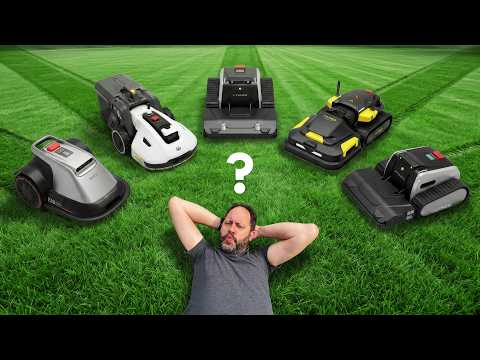
Let’s talk about the question everyone eventually asks:
“Is the LUBA actually worth the extra money?”
The answer isn’t yes or no. It’s depends on what problems you’re trying to eliminate.
5.1 Price Ranges Across Models
At a glance, the pricing difference looks straightforward—but what you’re really paying for is capability.
| Category | Mammotion LUBA 2 AWD | Segway Navimow H-Series |
|---|---|---|
| Entry Models | ~$2,000–$2,200 | ~$1,800–$2,100 |
| Mid-Range | ~$2,400–$2,700 | ~$2,200–$2,500 |
| Premium | ~$3,000–$3,500 | ~$2,500–$2,900 |
| Top Tier | ~$3,800–$4,200 | Not available |
At every tier, the LUBA sits higher. Sometimes by a few hundred dollars, sometimes by a lot.
5.2 Performance per Dollar: When Each Option Makes Sense
Here’s where things get real.
If your lawn is flat, under an acre, and relatively simple… buying a LUBA 2 AWD is like buying a lifted off-road truck to commute in city traffic. It works. But you’re not using what you paid for.
In that scenario, the Navimow delivers better value per dollar. You get:
- Clean, consistent mowing
- Lower noise
- Less upfront cost
But flip the situation: If your yard has slopes, uneven terrain, or large coverage needs, the equation changes completely. Now the LUBA isn’t a luxury—it’s a problem-solver.
- Simple lawn → Navimow = smarter buy
- Complex lawn → LUBA = fewer headaches
- Large property → LUBA saves time long-term
- Noise-sensitive area → Navimow wins daily comfort
6. Conclusion: Which Robot Mower Should You Choose?
If you strip away all the specs, charts, and marketing—this decision comes down to one simple question: What does your yard actually demand?
If you’re dealing with steep slopes, uneven ground, or a large, complex layout, the Mammotion LUBA 2 AWD is the machine that removes friction. It’s built for terrain that would frustrate most robotic mowers—and that alone can justify the higher price.
But if your lawn is flat, manageable, and you just want something quiet, reliable, and easy to live with, the Segway Navimow H-Series is the smarter, more balanced choice.
It’s not about buying the most powerful mower. It’s about buying the one that won’t struggle where you live.
Match the mower to your lawn—and you’ll finally get your weekends back.
FAQ
Q: Which mower is better for steep hills?
A: Based on technical specifications, the Mammotion LUBA 2 AWD is superior for steep terrain, supporting slopes up to 38 degrees thanks to its all-wheel-drive system, whereas the Segway Navimow H-Series is rated for slopes up to 24 degrees.
Q: Do these robot mowers require a perimeter wire?
A: No, both the LUBA 2 AWD and Navimow H-Series utilize RTK (Real-Time Kinematic) satellite navigation and vision systems to map and navigate your lawn without the need for physical boundary wires buried in the ground.
Q: Which model is quieter during operation?
A: Data indicates the Segway Navimow H-Series operates at approximately 54 dB, making it noticeably quieter than the Mammotion LUBA 2 AWD, which operates at around 60 dB. This makes the Navimow ideal for noise-sensitive neighborhoods.
Q: How do they handle satellite signal loss under trees?
A: The LUBA 2 AWD uses a dual-camera 3D vision system to assist with positioning when GPS signals are weak. The Navimow H-Series uses its VisionFence primarily for obstacle avoidance, making the LUBA generally more reliable in heavily wooded areas.
Q: Which mower finishes the job faster?
A: The LUBA 2 AWD features a dual-cutting plate design with a 400mm width, allowing it to cover approximately 350 m²/h. This is significantly faster than the Navimow H-Series, which has a 210mm cutting width and covers roughly 200 m²/h.