
Robomow RK4000 Pro Analysis: Specs & Common Owner Feedback Explained
Aaron Cooper1. Introduction
If you’ve ever stood in your backyard staring at a sprawling, uneven lawn and thought, “This is going to eat my entire weekend… again,” you’re exactly who the Robomow RK4000 Pro is built for. This is not a casual robot mower—it’s a heavy-duty, premium machine designed for large, complex properties up to 4,000 m².
But specs on paper don’t always translate to real-world relief. In this breakdown, we’ll unpack what the RK4000 Pro actually delivers: its cutting system, battery performance, slope handling, and how it behaves on challenging terrain—plus what real-world feedback (and gaps in it) means before you invest.
2. Core Specifications Breakdown: What the RK4000 Pro Offers on Paper
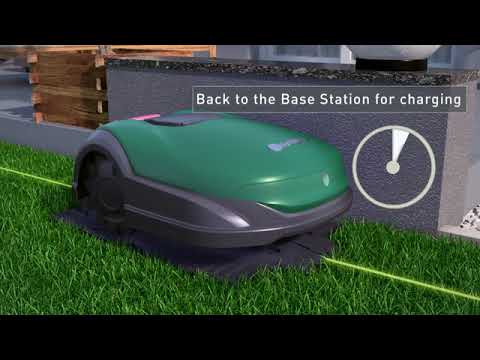
2.1 Cutting System & Coverage: 42 cm Deck and Floating Design Explained
Let’s start with the part that actually touches your lawn—and determines whether you get that “golf-course clean” look or a patchy mess.
The Robomow RK4000 Pro uses a dual cutting system with two 21 cm decks working side by side, creating a total 42 cm cutting width. That’s noticeably wider than many robotic mowers, and it translates into fewer passes and faster coverage. But width alone doesn’t guarantee a clean finish.
Now here’s where things get interesting: the floating (pendulum-suspended) deck. Think of it like the suspension system on a car. Instead of rigidly scraping across bumps, it adapts to dips, roots, and uneven patches. That means fewer scalped spots and fewer missed sections.
In real-world terms? You don’t get that frustrating “high spot shaved bald, low spot untouched” effect. Just consistent results. Every pass.
2.2 Battery, Runtime, and Charging: What 110–120 Minutes Really Means
On paper, the RK4000 Pro offers 110–120 minutes of runtime powered by an 18.5V 9.6Ah lithium-ion battery. Sounds solid—but what does that actually mean when your lawn isn’t perfectly flat and easy?
In ideal conditions (flat, dry, moderate grass), that runtime can cover a significant portion of a large lawn in a single session. But real lawns aren’t ideal. Slopes, thick grass, and complex layouts all demand more from the motors, which naturally reduces effective runtime.
| Feature | Specification |
|---|---|
| Runtime | 110–120 Minutes |
| Charging Time | 90–110 Minutes |
| Battery Type | 18.5V 9.6Ah Lithium-ion |
| Monthly Consumption | ~11.5 kWh |
The upside? You’re not doing the work. Once scheduled, it quietly handles the rotation in the background. Energy-wise, the system is surprisingly efficient, with an estimated monthly consumption around 11.5 kWh. That’s closer to running a small household appliance than powering traditional gas equipment.
2.3 Slope Handling & Terrain Adaptability: Built for Difficult Lawns
Here’s where many robot mowers start to struggle—and where the RK4000 Pro clearly positions itself differently.
It’s designed to handle slopes up to 45% incline capability that outperforms many comparable models. That’s not just a marketing number—it directly impacts whether your mower can handle real-world terrain like sloped backyards, uneven landscaping, or drainage dips.
- Off-Road Traction: Large, open-tread wheels with rubber studs for grip.
- Terrain Adaptation: Floating cutting deck glides over tree roots and small dips.
- Extreme Incline: Capable of managing 45% (approx. 24°) gradients.
2.4 Navigation, Zones & Smart Features: How It Manages Complex Gardens
The RK4000 Pro uses a boundary wire system to define its working area. It might sound old-school compared to newer wire-free systems, but in practice, it’s extremely reliable when installed correctly.
Where things get more advanced is zone management. You can set up 1 main zone, up to 4 sub-zones, and 2 completely separate areas. That’s a game-changer for properties with front and back lawns, side strips, or segmented landscaping.
Control-wise, you get a 4.3-inch color touchscreen right on the mower, plus app connectivity via GSM on the Pro model. That means remote scheduling, monitoring, and alerts—though some real-world feedback suggests the app experience isn’t flawless.
3. Real-World Lawn Performance: From Flat Lawns to Complex Terrain
3.1 Performance on Large Lawns (Up to 4,000 m²)
Owning a large lawn sounds great—until you’re the one maintaining it. The RK4000 Pro is specifically built for properties up to 4,000 m², but the way it handles that space depends heavily on terrain and layout.
In practice, this means your lawn transitions from “periodically cut” to “constantly maintained.” No dramatic before-and-after. Just consistently clean grass, every day.
3.2 Uneven Terrain, Tall Grass, and Edge Cutting Results
Pros
- Floating deck handles uneven bumps without "scalping" grass.
- Edge cutting blades extend beyond the wheel line for a closer finish.
- Significantly reduces the need for manual edge trimming.
Cons
- Tall, neglected grass may require multiple initial passes.
- Boundary wire setup takes time on complex perimeters.
Now, edge cutting—that’s one of its standout strengths. The blade positioning extends beyond the wheel line, allowing it to cut closer to edges than many competitors. Combined with its edge-following behavior, this significantly reduces the need for manual trimming.
3.3 Noise, Efficiency, and Daily Usability
The RK4000 Pro operates in the range of roughly 53–65 dB. That’s closer to a quiet conversation than a traditional mower. You can run it early in the morning, late in the evening, or even on weekends without feeling like you’re disturbing the entire neighborhood.
4. Common Owner Feedback: Strengths, Weaknesses, and Missing Data

4.1 What Owners Like: Cutting Quality, Power, and Reliability
Let’s start with what actually makes people stop worrying about their lawn—and start ignoring it (in the best way possible).
Across aggregated reviews and long-term usage insights from the RK platform, three themes show up again and again: cutting consistency, raw power, and “set-it-and-forget-it” reliability.
Pros
- Consistent Cutting: The floating deck ensures a visually uniform finish even on uneven lawns without bald spots.
- Raw Power: High-torque performance that handles thick grass and slightly overgrown areas without hesitation.
- Quiet Operation: Runs predictably in the background as a silent routine without needing intervention.
Cons
- Installation requires significant time and boundary wire adjustments.
- App interface can be unintuitive with buried menu structures.
- Premium price point may be overkill for simple, flat yards.
The floating deck plays a huge role here. On uneven lawns, where most robot mowers leave patchy, inconsistent results, the RK4000 Pro keeps things visually uniform. You don’t get those frustrating bald spots or missed strips. Just a smooth, even finish that holds up over time.
Then there’s the power. This thing doesn’t hesitate. Thick grass, slightly overgrown areas, even early-season lawns—it keeps moving. In extended usage observations, similar RK models handled challenging conditions without getting stuck or needing intervention.
"Once scheduled, it runs in the background like a silent routine. No drama. No babysitting. That’s the real luxury here: not thinking about your lawn anymore."
4.2 Common Complaints: App Limitations, Setup Effort, and Price
Now, let’s be real—this isn’t a plug-and-play gadget you toss on the grass and forget five minutes later.
Then there’s the app. It works—but it’s not flawless. Some real-world observations point out awkward menu structures and features that aren’t always where you expect them. For example, certain controls can feel buried, which adds friction when you just want quick adjustments.
And yes, the price. This is a premium machine. You’re paying for power, coverage, and terrain capability—but if your lawn doesn’t actually need those strengths, it can feel like overkill.
4.3 Reality Check: Why Verified Owner Feedback Is Still Limited
Here’s something most reviews don’t say clearly enough: there უბრალოდ isn’t a massive pool of verified owner feedback for the RK4000 Pro specifically.
A deeper look into available data shows that reliable, model-specific owner reviews are surprisingly scarce, making it harder to build a statistically strong picture of long-term reliability. This isn’t unusual for newer or premium robotic mower models—but it does mean you’re relying more on technical analysis and platform-wide trends than thousands of user testimonials.
So what can you trust? You can look at consistent patterns across the RK series—cutting performance, slope handling, and durability all show strong alignment. But if you’re the type who wants hundreds of detailed, long-term owner reports before buying, you may find the data a bit thin.
5. Is the RK4000 Pro Worth It? Comparison and Buying Decision Guide
5.1 RK4000 Pro vs Smaller RK Models: Who Actually Needs This Power?
At first glance, all RK models look similar. Same design language. Same core concept. But under the hood, the differences are very real.
| Model | Max Lawn Size | Cutting System | Runtime | Ideal Use Case |
|---|---|---|---|---|
| RK1000 | ~1,000 m² | Single disc | Shorter | Small, simple lawns |
| RK2000 | ~2,000 m² | Single disc | Moderate | Medium lawns |
| RK3000 Pro | ~3,000 m² | Dual disc (wider cut) | Longer | Larger, more complex lawns |
| RK4000 Pro | ~4,000 m² | Dual disc (42 cm) | 110–120 min | Large, demanding terrain |
The jump to the RK4000 Pro isn’t subtle—it’s about capacity and efficiency. That 42 cm cutting width means fewer passes. The larger battery means longer sessions. And the dual-disc system simply covers ground faster.
5.2 When the Premium Price Makes Sense (and When It Doesn’t)
This is where most people hesitate—and honestly, where they should. The RK4000 Pro shines in very specific scenarios: Large lawns, sloped terrain, and complex layouts with multiple zones.
Its ability to handle slopes up to 45% alone puts it in a different category from many competitors. If your lawn is pushing the upper limits—or has multiple zones and slopes—this upgrade makes a real difference. But if you’re mowing a clean, flat 1,000 m² yard? You won’t feel the benefit. At all.
5.3 Alternative Considerations: Efficiency vs Power Trade-offs
Not all robot mowers are built with the same philosophy. The RK4000 Pro leans heavily into power, traction, and terrain capability. It’s designed to handle difficult lawns first, and efficiency second.
- Power Priority: Brute capability for challenging yards, thick grass, and steep slopes.
- Efficiency Trade-off: Some competitors prioritize battery optimization and faster charging over raw traction.
So it comes down to this:
- Want maximum efficiency on a simple lawn? Look elsewhere.
- Need brute capability for a challenging yard? This is where the RK4000 Pro earns its place.
6. Conclusion
The Robomow RK4000 Pro isn’t trying to be everything for everyone—and that’s exactly why it works. If you’re dealing with a large, uneven, or segmented lawn, this machine solves problems that smaller robotic mowers simply can’t handle.
Strong cutting performance, excellent slope capability, and wide coverage translate into one thing: less time managing your yard, and more time ignoring it completely.
But that power comes with trade-offs. Setup takes effort. The app isn’t perfect. And verified long-term owner feedback is still somewhat limited. Choose based on your lawn—not just the specs.
Check Price on Amazon
FAQ
Q: What is the maximum slope the Robomow RK4000 Pro can handle?
A: According to technical specifications, the RK4000 Pro is designed to manage inclines of up to 45 percent. This makes it highly capable for properties with significant hills or uneven drainage areas compared to standard robotic mowers.
Q: How does the floating deck improve cutting quality?
A: The floating or pendulum-suspended deck allows the blades to adapt to the contours of the ground. This reduces scalping on high spots and ensures an even cut depth across dips and roots on less-than-perfect lawns.
Q: Can the RK4000 Pro manage multiple separate lawn areas?
A: Yes, it supports complex zone management including one main zone, up to four sub-zones, and two separate areas. This allows for automated maintenance of front and back yards that are not directly connected.
Q: Is the RK4000 Pro quiet enough to run at night?
A: With an operating noise level between 53 and 65 dB, the mower is roughly as loud as a quiet conversation. This low acoustic footprint generally allows for early morning or late evening operation without disturbing neighbors.
Q: Does the RK4000 Pro require a boundary wire?
A: Yes, it utilizes a traditional boundary wire system for navigation. While this requires more effort during the initial setup phase, it provides a reliable and consistent perimeter for the mower to follow during its cycles.