
Segway Navimow i105N vs. i110N: Is the Upgrade Worth It for Your Lawn Size and Budget?
Aaron Cooper1. Introduction
Standing in your yard, staring at uneven grass while your weekend slips away… that’s the moment this decision really hits: should you save money with the i105N, or upgrade to the i110N and buy back your time?
On paper, the difference looks simple—more battery, more coverage, higher price. But in real life, it’s about whether your mower quietly finishes the job… or keeps interrupting itself mid-cut. The twist? Both models share the exact same smart navigation and AI. So this isn’t about “better tech.” It’s about capacity, efficiency, and how much friction you’re willing to tolerate every week.
Let’s break that down properly.
2. i105N vs i110N: Core Differences That Actually Matter
2.1 Mowing Area Capacity and What It Means for Your Yard
This is the first number most people glance at—and honestly, the one that ends up mattering the most.
- i105N: 500 m² (about 1/8 acre)
- i110N: 1,000 m² (about 1/4 acre)
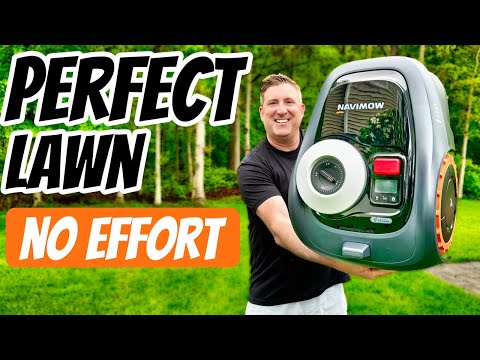
That’s not a small bump. That’s a clean 2× jump in coverage.
But what does that actually feel like in your daily life?
Picture a compact suburban lawn—front yard, a small backyard, maybe a side strip. That’s squarely i105N territory. It can handle it comfortably, often in a single run. No drama. No interruptions.
Now stretch that space just a bit—add a larger backyard, a wider layout, or multiple zones. Suddenly, you’re pushing right up against that 500 m² ceiling. And here’s where things get annoying: the mower doesn’t fail… it just keeps stopping, charging, and resuming.
With the i110N, that same yard feels “easy.” It’s operating well within its limits, not constantly playing catch-up. According to the official comparison data, the upgrade delivers double the recommended mowing area capacity, which translates directly into fewer interruptions and smoother weekly routines.
Same lawn. Completely different experience.
2.2 Battery, Runtime, and Charging Cycles Explained Simply
Let’s talk about what actually causes those interruptions: battery.
| Model | Battery Capacity | Runtime |
|---|---|---|
| i105N | 2.55 Ah | ~60 minutes |
| i110N | 5.1 Ah | ~120 minutes |
Again, it’s not subtle. It’s literally double.
Now here’s the key insight most spec sheets don’t explain clearly:
These mowers don’t get “faster”—they get more continuous.
Both models cut in the same systematic pattern. Same cutting width. Same logic. But the i105N has to stop halfway through larger jobs, drive back to the dock, recharge, and then resume.
And yes—it remembers where it left off. But that stop-start cycle adds up.
The i110N changes that rhythm. With its longer runtime, many medium-sized lawns can be handled in a single pass—or at least with far fewer interruptions. That means:
- Less waiting
- Less monitoring
- More “set it and forget it”
It’s not about speed. It’s about flow.
2.3 Price Difference vs Value: Is 20% More Cost Worth 2x Capacity?
Here’s where most people hesitate.
The i110N typically costs about $300 more—roughly a 20% increase. And at first glance, it feels like you’re paying more for… the same mower.
Because in many ways, you are.
Same navigation system. Same VisionFence camera. Same app. Same cutting hardware.
So what are you really buying?
"You aren't just buying hardware; you're buying breathing room."
When you break it down:
- +100% mowing capacity
- +100% battery size
- +100% runtime
- ~+20% price
That’s actually a rare equation in smart home tech—where the upgrade gives you disproportionately more usable performance than what you pay for.
But here’s the honest truth:
- If your lawn is well under 400 m² → you won’t feel the difference
- If you’re near or above 500 m² → you absolutely will
3. Real-World Performance: Do They Actually Mow Differently?
3.1 Navigation and Accuracy: RTK + VisionFence in Action
Here’s the part that surprises most buyers:
Both the i105N and i110N mow almost identically when it comes to intelligence.
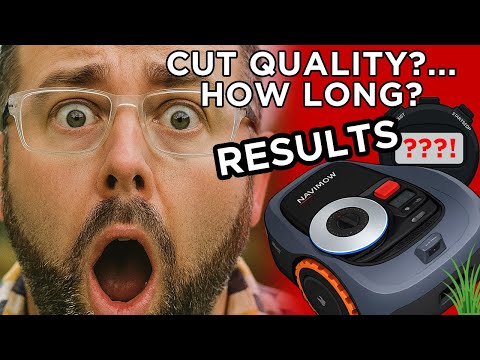
They use the same navigation system—a combination of RTK (Real-Time Kinematic GPS) and a front-facing camera (VisionFence). In plain English? Think of RTK as ultra-precise GPS (far more accurate than your phone), while the camera acts like the mower’s “eyes,” helping it recognize edges and obstacles.
Instead, you walk the mower around your lawn once (like driving an RC car), and it builds a virtual map. After that, it follows those digital boundaries with impressive consistency. Reviews consistently highlight that it tracks edges cleanly and doesn’t wander off course—even compared to more expensive models.
Even better, this dual-system approach solves a common robotic mower headache: signal issues. With both satellite positioning and visual guidance working together, the mower maintains accuracy even when conditions aren’t perfect.
Bottom line? Whether you choose the i105N or i110N, you’re getting the same brain. The upgrade doesn’t make it smarter—it just lets it work longer.
3.2 Obstacle Avoidance, Mapping, and Multi-Zone Flexibility
Now let’s talk about real-life chaos: toys on the lawn, patio furniture, random branches you forgot to pick up.
This is where VisionFence actually earns its name.
The mower uses its camera to identify common obstacles—things like trees, garden décor, or even a stray soccer ball—and adjusts its path instead of blindly bumping into them. In demonstrations and real-world usage, it’s able to navigate around everyday objects without needing physical bump sensors.
And mapping? Surprisingly intuitive.
You guide it once around each area, and the app creates a clean digital layout. From there, you can:
- Split your yard into multiple zones
- Create “channels” (like pathways or driveways)
- Schedule different mowing times per zone
So if your front yard grows faster than your backyard, you can prioritize it. If you want everything done before guests arrive? One tap.
It’s less like owning a mower… and more like assigning a task.
3.3 Terrain, Slopes, and Limitations You Should Know
Let’s be real—no robot mower is perfect, and this is where expectations need a reality check.
Terrain Capabilities
- Excellent for typical suburban lawns
- Precise digital boundary tracking
- Visual navigation backup for GPS-weak areas
Limitations
- Struggles on steeper inclines (front-wheel-drive)
- Occasional slipping on uneven ground
- Cliff detection can sometimes be inconsistent
If your yard has a dramatic slope or bumpy terrain, you might notice inconsistent movement or the mower needing to adjust its path more frequently.
The key takeaway? These are excellent for typical suburban lawns. But if your yard looks like a mini ski slope… you’ll feel the limits. And again—this applies equally to both models.
3.4 Cut Quality and Mowing Style vs Traditional Mowers
Here’s where expectations can really trip people up.
If you’re used to a traditional gas mower, the result from a robot mower will look… different. Not worse. Just different.
Instead of one powerful weekly cut, the Navimow approach is all about frequent, light trimming. Think of it like maintaining a haircut instead of waiting for it to grow out.
- No big clumps of grass
- No visible missed strips over time
- A consistently even lawn
But right after a single session? It may not look as “perfectly striped” as a traditional mower. That’s because of the smaller cutting deck and the lack of a suction effect to lift grass blades.
In fact, many users describe it as a “trimmed” look rather than a freshly “mowed” one. However, over a week or two, the lawn often ends up looking better overall—because it’s always maintained, never overgrown.
4. Which Model Fits Your Lawn? Practical Use-Case Guide
4.1 Small Lawns (Under 400 m²): Why i105N Is Often Enough
Let’s be honest—if your lawn is on the smaller side, the upgrade can feel tempting… but unnecessary.
In this range, the i105N already operates comfortably within its limits. A typical mowing session fits neatly into its ~60-minute runtime, meaning it can finish the job in a single cycle without needing to disappear mid-task to recharge. No interruptions. No waiting. Just a clean, quiet pass while you sip your coffee inside.
So what happens if you do upgrade anyway?
Nothing dramatic. You’ll just have a mower that finishes early… and then sits idle.
If your yard is well below that 500 m² threshold, the i105N already delivers the full “set it and forget it” experience. Spending extra doesn’t remove friction—because there isn’t much friction to begin with.
4.2 Medium Lawns (400–800 m²): Where the Upgrade Starts to Make Sense
This is where things get interesting—and where most buyers start to feel that subtle frustration.
On paper, the i105N still “works” here. But in practice? This is the zone where it starts breaking its workflow.
Imagine this: the mower is halfway through your lawn… then stops, heads back to charge, and only later returns to finish the job. Technically impressive. Emotionally? Slightly annoying every single time.
That’s because you’re pushing right up against its limits.
The i110N changes that experience completely. With double the runtime, it can often handle these mid-sized lawns in one continuous session—or at least with far fewer interruptions. And that difference compounds over time.
You get:
- Longer, uninterrupted mowing sessions
- More predictable schedules
- A lawn that’s just… done
Instead of:
- Multiple start-stop cycles
- Waiting for recharge windows
- Partial completion throughout the day
This is also where the value equation flips. That extra ~$300 isn’t buying specs—it’s buying consistency.
If your lawn sits anywhere near this range, the upgrade starts to feel less like a luxury… and more like a quality-of-life fix.
4.3 Larger Lawns (800–1,000 m²): When i110N Is the Only Practical Choice
At this point, let’s drop the “upgrade” conversation.
This isn’t optional anymore.
And that’s where frustration turns into regret.
Because instead of enjoying automation, you’re managing it:
- Multiple recharge interruptions
- Jobs stretching across long periods (or even multiple days)
- A system that never quite feels “done”
The i110N, on the other hand, is built for this scale. Its larger battery and longer runtime create a much more realistic workflow for bigger spaces. It still won’t finish instantly—robot mowers are about consistency, not speed—but it operates within its intended capacity.
Trying to force the i105N into a 1,000 m² lawn is like using a small suitcase for a two-week trip. You can do it—but you’ll hate the process.
If your lawn is in this range, the decision is already made.
5. Upgrade ROI: Time Savings, Convenience, and Long-Term Value
5.1 How Much Time Do You Actually Save Each Week?
Here’s the truth most spec sheets won’t tell you: Both mowers take their time. They’re not faster than each other in cutting speed. So where does the time savings actually come from?
Interruptions.
With the i105N, larger lawns trigger multiple charging cycles. That means:
- It stops mid-job
- Returns to dock (around 90 minutes to recharge)
- Then resumes later
That gap adds friction to your day—even if you’re not actively mowing.
In contrast, the i110N’s longer runtime reduces those breaks. In some scenarios, it can eliminate an entire recharge cycle per session. According to scenario-based analysis, avoiding just one mid-mow recharge can save roughly an hour of waiting time per session.
That’s the hidden win.
You’re not saving effort (both are automated).
You’re saving time-to-completion.
And over weeks and months, that smoother workflow adds up to something you actually feel: a lawn that’s always done when you expect it to be.
5.2 Battery Size vs Real Efficiency: What Bigger Actually Buys You
| Model | Battery Capacity | Workflow Style |
|---|---|---|
| i105N | 2.55 Ah | shorter work sessions, more breaks |
| i110N | 5.1 Ah | longer work sessions, fewer breaks |
It’s easy to look at “5.1 Ah vs 2.55 Ah” and assume the i110N is just more powerful. It’s not.
Both models cut grass the same way, at the same pace, using the same hardware. The bigger battery doesn’t make it mow better—it makes it mow longer without stopping.
But in real life, that difference feels huge. Because every time the mower returns to charge, it introduces a pause in your workflow. And while the system is smart enough to resume where it left off, the experience becomes fragmented.
The i110N smooths that out. It turns multiple short sessions into fewer, longer ones. Less fragmentation. Less unpredictability.
So no—you’re not buying performance. You’re buying continuity.
5.3 Hidden Value: Less Supervision, More Automation
Here’s where things get surprisingly emotional. Because the real upgrade isn’t specs—it’s how little you think about your lawn.
With either model, you’re already escaping the physical work. But with the i110N, you’re also escaping the mental overhead:
- No checking if it finished
- No wondering when it’ll resume
- No half-mowed lawn sitting there for hours
It just quietly does its job in the background. And over time, that changes how your lawn looks—and how you interact with it.
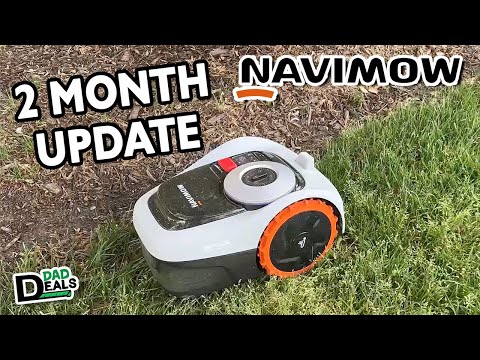
Frequent, automated trimming keeps your grass consistently healthy. Instead of hacking it down once a week, you’re maintaining it gently and regularly. The result? A lawn that looks better with less effort.
Some long-term users even describe the shift as getting their weekends back. Not because mowing was hard—but because it was always there, waiting. Now it’s not.
6. Conclusion: Should You Choose i105N or Upgrade to i110N?
This decision is simpler than it looks—once you ignore the specs and focus on your lawn.
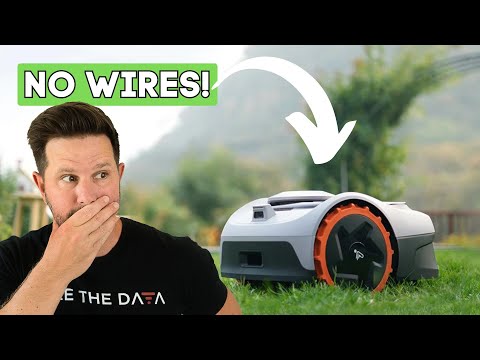
If your yard is comfortably under 400 m², the i105N is the smart buy. It delivers the full experience—quiet, automated, wire-free mowing—without wasted capacity or extra cost.
But the moment your lawn starts creeping toward that 500 m² mark, everything changes. The i110N doesn’t mow smarter—but it mows more smoothly, with fewer interruptions and a workflow that actually feels effortless. And beyond 800 m²? It’s not even a debate. The i110N is the only model that makes sense.
Same intelligence. Same features. Same cut.
The upgrade is purely about one thing: How much friction you’re willing to live with every week.
Navimow i110N
Check Price on AmazonNavimow i105N
Check Price on Amazon
FAQ
Q: What is the main difference between Navimow i105N and i110N?
A: The primary difference lies in battery capacity and coverage area. The i105N is designed for lawns up to 500 square meters with a 60-minute runtime, while the i110N handles up to 1,000 square meters with a 120-minute runtime per charge.
Q: Do both models require a boundary wire for installation?
A: No, both the i105N and i110N utilize EFLS 2.0, which combines RTK-GNSS satellite positioning with VisionFence AI technology. This allows for completely wire-free installation by mapping your yard digitally via the smartphone app.
Q: Can these mowers handle steep slopes or hills?
A: Both models are capable of climbing slopes of up to 30%. However, performance may vary on uneven terrain or slippery grass. For optimal results, it is recommended to use them on relatively flat suburban lawn environments.
Q: Does the i110N mow faster than the i105N?
A: No, both models have the same cutting speed and systematic mowing pattern. The i110N is more efficient for larger yards simply because it has a larger battery, allowing it to complete more work without returning to the dock.
Q: What happens if the mower encounters an obstacle like a toy?
A: Both models feature VisionFence technology, a built-in camera that identifies obstacles in real-time. The mower will proactively navigate around objects like toys, pets, or garden furniture rather than relying on physical impact sensors to change direction.