
Why Your Robot Mower Keeps Getting Stuck: Traction and Terrain Fixes That Actually Work
Aaron Cooper1. Introduction
Your robot mower was supposed to give you your weekends back… not turn you into a full-time rescue crew. Yet here you are—again—pulling it out of the same muddy patch or slope.
The frustrating part? These “stuck” moments aren’t random. In most cases, they come down to a few predictable culprits: traction loss, tricky terrain, or small setup mistakes. The good news is that once you understand why it’s happening—wet grass, slopes, uneven ground, or layout issues—you can fix it. And often, the fix is surprisingly simple.
2. Why Robot Mowers Get Stuck: The Core Traction & Terrain Problems
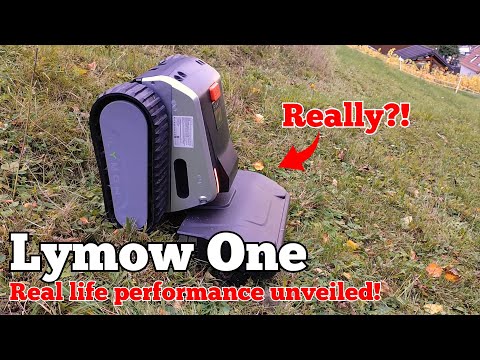
2.1 Wet Grass, Soft Soil, and Why Your Wheels Spin Instead of Grip
It usually starts the same way: the mower pauses… the wheels spin… and nothing happens.
What you’re seeing is pure physics working against you. When grass is wet or the soil is soft, friction drops dramatically. The wheels can’t “bite” into the ground, so instead of moving forward, they just spin—sometimes digging small ruts that make the problem even worse over time.
Many homeowners notice the same pattern: it gets stuck in the exact same spot after rain or early morning dew. Industry-wide support data consistently points to this as the #1 cause of failures, with wet lawns and reduced traction being the most common trigger. And once the wheels lose grip, even a small incline can feel like a wall.
"The result? Repeated stops. Torn-up grass. And that sinking feeling that your automated mower needs babysitting."
2.2 Slopes: When Your Lawn Exceeds the Mower’s Real Limits
Here’s the trap most people fall into: you check your mower’s slope rating and think, “I’m good.” But real lawns don’t behave like spec sheets.
Yes, many models claim they can handle steep inclines—sometimes up to 30%, 45%, or even more. But those numbers usually apply to straight-line climbing on dry grass. The moment your mower has to turn on a slope, everything changes.
You’ll recognize this issue instantly:
- It climbs fine… but slips when turning
- It “fishtails” sideways instead of holding a line
- It slides downhill near edges or obstacles
Why? Because turning shifts weight unevenly. One wheel loses grip, the other overcompensates, and suddenly the mower is skating instead of driving. And if the grass is even slightly damp? Game over.
2.3 Uneven Ground: Holes, Ruts, and High-Centering Traps
Your lawn might look flat. Your robot strongly disagrees. Small dips, hidden holes, or shallow ruts can completely disrupt a mower’s balance. One wheel drops into a depression, another lifts slightly, and just like that—traction is gone.
Even worse is something called “high-centering.” That’s when the mower’s body gets stuck on a bump or ridge while the wheels hang with reduced contact. The machine is technically “on the lawn”… but it’s going nowhere.
You’ll notice patterns like:
- It always stops in the same exact spot.
- You see scrape marks or mud under the chassis.
- The cut looks uneven, with “scalped” patches on bumps.
Modern mowers are designed to handle mild unevenness, but dips, roots, or ruts push them beyond their comfort zone. Once wheel contact becomes inconsistent, even the best traction system can’t compensate.
2.4 Edges, Obstacles, and Layout Mistakes That Cause Repeated Failures
Sometimes, the problem isn’t the lawn itself—it’s how the mowing area is set up. Robot mowers are constantly turning near edges, boundaries, and obstacles. If those areas are tight, uneven, or low-traction (like gravel or loose soil), you’re basically forcing the mower to struggle in the worst possible conditions.
Common Layout Troublemakers
- Boundary wires placed too close to edges or slopes
- Tight corners that require sharp pivot turns
- Gravel paths or loose borders where wheels sink
- Random clutter—hoses, toys, branches—that interrupt movement
Here’s the hidden issue: poor layout often forces the mower to turn exactly where traction is weakest. Over time, this creates “failure hotspots” where the mower gets stuck again and again. Even small adjustments can completely eliminate these problem zones.
3. How to Fix It: Practical Terrain and Traction Improvements

3.1 Fix the Lawn First: Leveling, Filling, and Smoothing Trouble Spots
Before blaming your mower, take a closer look at your lawn—because most “stuck” issues start there. The key is to focus on repeat problem areas. If your mower always stops in the same dip or rut, that’s your priority zone.
- Walk the lawn and mark spots where the mower struggles
- Fill holes and ruts with a topsoil mix
- Lightly compact the area so it doesn’t stay soft
- Reseed if needed and let it settle before mowing again
Industry guidance often recommends addressing even relatively small depressions (just a couple of inches deep) because they can disrupt wheel contact. Also pay attention to transitions—like where grass meets a path or patio. Smoothing that transition can make a bigger difference than you’d expect.
3.2 Boost Traction: Clean Wheels, Upgrade Treads, and Adjust Cutting Height
If your mower is spinning its wheels, sometimes the issue is literally stuck to the tires. Grass clippings, mud, and debris build up fast, acting like a slippery film.
Beyond cleaning, there are a few easy upgrades:
- Use manufacturer-approved terrain or traction wheels if available
- Check that tread isn’t worn down or clogged
- Avoid aggressive aftermarket spikes that could damage turf
Cutting height also plays a big role. Raising the height slightly—especially on uneven lawns—helps it glide instead of fight the ground. Think of it like this: less resistance = less slipping.
3.3 Smart Scheduling: Avoid Wet Conditions and Overgrown Grass
Timing matters more than most people realize. Running your mower early in the morning, when dew is still heavy, is basically asking it to slip.
Optimal Scheduling Strategy
- Schedule mowing for midday or early afternoon
- Skip runs right after heavy rain
- Let the ground firm up before sending the mower out
Robot mowers are designed to maintain, not recover. If grass gets too long, it creates extra resistance. The solution is the “little and often” approach: mow frequently (several times per week) and pre-cut overgrown areas manually if needed.
3.4 Optimize Setup: Boundary Placement, Dock Position, and Path Design
This is where small adjustments deliver outsized results. Poor positioning forces tight turns or awkward maneuvers.
Start with the boundaries:
- Avoid sharp corners—use smooth curves instead
- Keep boundaries away from steep slopes or drop-offs
- Don’t force the mower to turn in tricky terrain
Next, check your charging station:
- Place it on flat, stable ground
- Ensure a clear, straight approach path
- Avoid soft or muddy areas near the dock
4. Symptom-Based Troubleshooting: Match the Problem to the Fix
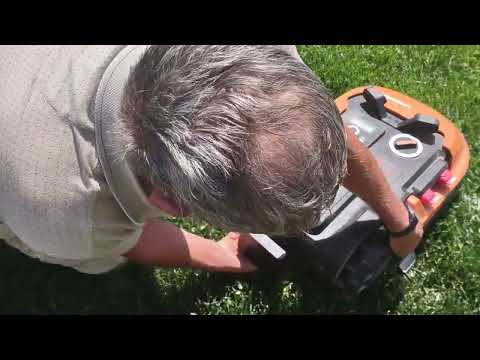
4.1 Slipping on Hills vs. Failing During Turns: What’s Really Different
At first glance, it all looks the same—your mower stops on a hill. But how it fails tells you everything.
If it slips while going straight uphill, you’re dealing with a classic traction limit: gravity vs. grip. The wheels spin, the mower stalls, and that’s it. This usually points to wet grass, soft soil, or a slope pushing the machine beyond its comfort zone.
But if it climbs fine… then fails the moment it turns? That’s a different beast entirely.
Turning on a slope shifts weight unevenly. One wheel loses pressure, the other takes the load, and suddenly the mower pivots on reduced grip. Real-world observations show that turning strategies—especially tight pivots—can trigger sudden traction loss even when straight climbing works fine.
- Climbs = okay
- Turns = slipping, sliding, or error
Fix? Reduce turning stress:
- Move boundaries so turns happen on flatter ground
- Avoid tight corners on slopes
- Let the mower approach hills more gradually
Straight-line failure = power/traction problem. Turning failure = balance and layout problem. That distinction changes everything.
4.2 Stuck at Edges or in Corners: Boundary vs. Terrain Diagnosis
If your mower keeps getting stuck near the edges, it’s tempting to blame the machine.
Edges are where everything goes wrong at once: tight turns, uneven ground, and low traction surfaces (like gravel or borders). If your boundary is too tight, the mower is forced to operate in the worst possible zone—again and again.
Here’s how to tell what’s really happening:
- Wheel spinning near edges? Likely soft soil or poor traction
- Front lifted or stuck? Probably a hard edge, curb, or height difference
- Repeats in the exact same corner? That’s a boundary layout issue
Even small misplacements matter. A boundary wire (or virtual edge) set just a few inches too close can force the mower into awkward angles where it can’t recover.
Fix it like this:
- Pull boundaries slightly inward from problematic edges
- Replace sharp corners with smooth curves
- Add small buffer zones around tricky spots (roots, gravel, raised beds)
Think of edges as “high-risk zones.” Your goal isn’t to mow every inch—it’s to keep the mower out of trouble. Because once it stops revisiting the same trap… the problem disappears.
4.3 Random Stops in Open Lawn: Hidden Terrain vs. Sensor Issues
This is the one that drives people crazy. Your mower stops in the middle of the lawn. No slope. No obstacle. Nothing obvious.
So what’s going on? In most cases, it’s not random at all—it’s invisible terrain problems.
Small dips, soft patches, or subtle bumps can cause:
- Wheels to lose consistent contact
- The chassis to lightly scrape or “bottom out”
- Sensors to misinterpret resistance as a blockage
You might not see it, but your mower feels it instantly. Clues to look for:
- It stops in the same general area.
- The ground feels softer or uneven when you walk it.
- You notice slight scalping or uneven cutting nearby.
Fix the ground first:
- Fill and level subtle depressions
- Firm up soft soil
- Raise cutting height slightly to avoid scraping
But here’s the twist—sometimes it is a system issue. If the mower throws repeated error messages, stops even on clearly solid, flat ground, or behaves inconsistently after updates or changes, then you may be dealing with sensors, dirty components, or navigation glitches. Cleaning wheels, checking sensors, and updating software often resolves this.
Hidden terrain problems feel like hardware failures. But most of the time? It’s still your lawn.
5. Is Your Robot Mower the Problem? When to Upgrade for Better Terrain Handling

5.1 Matching Slope Ratings and Drive Systems to Your Lawn
Here’s a hard truth: sometimes your mower isn’t struggling… it’s simply outmatched.
Most standard robot mowers are designed for relatively gentle terrain. Industry data shows many typical models handle around 20–45% slopes, while more advanced designs push beyond that range. The gap between “works sometimes” and “works reliably” often comes down to drive system.
| Drive Type | Strength | Weakness | Best For |
|---|---|---|---|
| 2WD | Simple, efficient | Struggles on wet/sloped terrain | Flat to mild lawns |
| RWD | Better uphill push | Less stable downhill | Moderate slopes |
| AWD | Maximum traction | Higher cost | Steep, complex terrain |
The key insight? Traction isn’t just about power—it’s about how that power is distributed. On hills, weight shifts. On turns, grip changes. AWD systems are designed to handle exactly that, keeping all wheels engaged instead of relying on just two.
So if your mower constantly slips on slopes that seem “within spec,” it’s not your imagination. It’s a mismatch between design and reality.
5.2 Signs Your Lawn Is Too Complex for Your Current Mower
You’ve cleaned the wheels. Adjusted the boundaries. Leveled the trouble spots. And it’s still getting stuck.
At this point, you need to ask a different question: is your lawn simply too demanding? Clear warning signs include:
- You’re rescuing the mower multiple times per week
- It fails in different areas, not just one hotspot
- Narrow passages or tight zones confuse navigation
- Slopes + uneven ground + obstacles are all combined
Experts consistently point out that highly complex or “wild” lawns quickly expose the limits of basic robot mowers. These machines are designed for maintained environments, not unpredictable terrain.
5.3 Key Features That Improve Traction and Terrain Performance
If you do decide to upgrade, don’t just look at brand names—look at the features that actually solve your problems. Focus on these:
- Large wheels with deep tread → Better grip on wet grass and slopes
- Traction control systems → Adjust power dynamically to prevent slipping
- Floating cutting decks → Follow uneven ground without lifting the wheels
- Higher ground clearance → Avoid getting stuck on bumps or edges
- Advanced navigation (RTK / GPS mapping) → Smarter paths, fewer risky turns
Modern designs even include systems that actively manage traction and torque to maintain stability on uneven surfaces—similar to how a car prevents wheel spin. The result? Fewer slips. Fewer stops. Far fewer rescues.
The best robot mower doesn’t just cut grass. It handles your lawn as it actually is—not as the spec sheet imagines it.
6. Conclusion
If your robot mower keeps getting stuck, it’s rarely random—and almost never unsolvable. In most cases, the issue comes down to three things: traction, terrain, or setup. Wet grass, hidden dips, tight boundaries, or poorly placed docks all create predictable failure points. Once you identify the pattern, the fix is often surprisingly simple.
Start with the lawn. Smooth the trouble spots. Improve traction. Adjust your layout. These small changes can dramatically reduce how often you need to intervene. And if you’ve done all that and the problems persist? Then it’s time to look at the mower itself—and whether it’s truly built for your yard.
FAQ
Q: Why does my robot mower slip on slopes when it is rated for them?
A: Manufacturer slope ratings usually apply to dry grass in a straight line. Real-world loss of traction often occurs during turns on inclines, which shifts weight unevenly and reduces wheel grip, especially if the grass is damp or the soil is soft.
Q: How can I prevent my robot mower from getting stuck in mud?
A: Aggregated data suggests scheduling mowing for midday when the grass is driest. Additionally, filling ruts with topsoil and cleaning mud buildup from the wheel treads weekly will significantly improve traction and prevent the mower from digging into soft patches.
Q: Does cutting height affect how often a mower gets stuck?
A: Yes. Setting the cutting height too low on uneven terrain increases resistance and the likelihood of the chassis "bottoming out" on bumps. Raising the deck slightly allows the mower to glide over minor depressions and maintains better wheel-to-ground contact.
Q: What is the best way to fix repeated boundary wire failures?
A: Avoid forcing the mower to turn in high-risk zones. Reposition boundary wires to create smooth curves rather than sharp 90-degree angles and ensure the mower isn't required to execute complex maneuvers on steep slopes or near loose gravel edges.
Q: When should I consider upgrading to an AWD robot mower?
A: If your lawn combines steep inclines with complex obstacles and you find yourself manually rescuing the mower multiple times per week despite terrain fixes, your yard likely exceeds the physical limits of 2WD or RWD drive systems.