
Worx Landroid Vision Review: Neural Network Mowing Explained (Real-World Performance & Worth It?)
Aaron Cooper1. Introduction
Robot lawn mowers used to come with a hidden catch: hours of laying boundary wire, tweaking it, fixing it, and sometimes redoing it. That “set it and forget it” dream? Not quite.
Now enter the Worx Landroid Vision—a mower that claims to ditch the wire entirely and replace it with a neural network and camera. Sounds futuristic. But does it actually make your lawn care easier… or just more complicated in a different way?
In this review, we’ll break down how this AI mowing system really works, what it’s like in everyday use, and whether it truly saves you time—or just feels smarter on paper.
2. How Neural Network Mowing Works (Camera + AI Explained Simply)
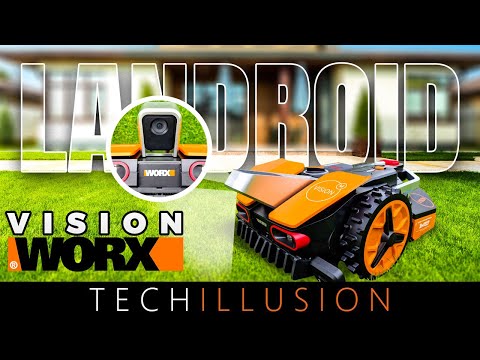
2.1 From Boundary Wires to Vision AI: How the HDR Camera Replaces Physical Limits
Let’s start with the biggest shift—and honestly, the biggest headache it removes.
The Worx Landroid Vision flips that entirely. Instead of “feeling” a boundary, it sees one.
A front-facing HDR (high dynamic range) camera constantly captures the ground ahead. Then, an onboard neural network—basically a trained AI model—analyzes each frame and classifies what it’s looking at: grass, gravel, patio, flowerbed, or something else. In real time, it decides: keep mowing… or turn away.
What makes this impressive is speed. The system processes new frames roughly every 0.05 seconds, enabling near real-time visual decision-making that feels almost reactive, not pre-programmed.
The result? Your lawn’s edge becomes a “virtual boundary” defined by appearance, not a buried cable. Move a chair, adjust landscaping, or reshape a bed—the mower adapts without you lifting a shovel. That’s not just convenient. It’s liberating.
2.2 Obstacle Detection in Practice: From Toys to Pets
Now here’s where things get interesting—and where most robot mowers fall apart.
Older models basically bump into things like a blind Roomba, then reverse. That’s fine for walls. Not great for toys, hoses, or a dog lying in the grass.
The Landroid Vision doesn’t wait for impact. It identifies obstacles before contact.
Using object detection (think bounding boxes around objects in its field of view), it can recognize common yard items—balls, garden tools, furniture, even people and pets. When something appears, it slows down, stops, and reroutes.
And honestly? That trade-off is worth it. Because the alternative is worse: a mower that plows straight through your kid’s toy or clips a garden hose. With Vision, you get peace of mind. Fewer collisions. Fewer “rescue missions.”
It doesn’t just mow. It pays attention.
2.3 Handling Shadows, Lighting, and Complex Lawns
Here’s the catch with any camera-based system: the real world isn’t a perfectly lit showroom.
You’ve got harsh sunlight, deep shade under trees, reflective surfaces, and constantly shifting shadows throughout the day. A basic camera would struggle here—and that’s where HDR makes a difference.
HDR (High Dynamic Range) allows the camera to retain detail in both bright and dark areas at the same time. So instead of seeing a shadow as a black void—or a sunlit patio as a blown-out blur—the mower still detects textures and edges.
In practice, that means:
- Shaded grass still looks like grass
- Bright paving still reads as a boundary
- Transitions stay recognizable even in tricky lighting
Most of the time, it works smoothly. The mower doesn’t suddenly wander off course when a cloud passes overhead or when half your lawn is in shadow.
That said, it does play it safe when things get visually ambiguous. Deep shadows or unusual surfaces can make it hesitate or turn earlier than expected. You might notice it being conservative around edges during certain times of day. But that cautious behavior? It’s intentional.
3. Real-World Performance: Cutting Quality, Navigation, and Accuracy

3.1 Cutting Quality and Lawn Finish (Including Edge Performance)
Let’s be honest—none of this AI magic matters if your lawn ends up looking patchy.
The good news: cutting performance is consistently reported as solid. Not flashy. Not revolutionary. Just reliably good—which is exactly what you want from something running multiple times per week.
The floating cutting deck is a quiet hero here. Instead of rigidly skimming the surface, it adjusts to uneven ground, reducing scalping and helping maintain a more even finish across bumps and dips. Over time, that translates into a lawn that feels smoother underfoot and looks more uniform.
Then there’s Worx’s “Cut-to-Edge” design. The blade disc sits offset, allowing it to trim closer to borders than many competitors. In real use, that means less time with a string trimmer cleaning up edges afterward.
3.2 Navigation Style: Random Patterns vs Smart Coverage
If you’re expecting those Instagram-perfect lawn stripes… you might be surprised.
Standard Worx Landroid Vision models don’t mow in neat, straight lines. Instead, they use a semi-random navigation pattern—very similar to a robotic vacuum. At first glance, it can look inefficient, even chaotic.
Pros
- Simpler navigation
- No mapping required
- Adapts easily to yard changes
Cons
- More overlap between passes
- Less visually “efficient” than striped patterns
It’s less about speed, more about persistence. So if you’re the type who wants to watch perfect stripes form in real time, this might feel underwhelming. But if your goal is a lawn that always looks freshly maintained without thinking about it? It gets the job done. Quietly. Continuously.
3.3 Obstacle Avoidance Accuracy (And When It’s Too Careful)
This is where the Vision system really separates itself—and also where its personality shows.
In controlled tests and real gardens alike, it consistently avoids obstacles before touching them. Tennis balls? Detected. Garden hoses? Avoided. Even small objects like leaves often trigger a cautious reroute.
That’s impressive. But it comes with a quirk: sometimes, it’s overly cautious.
There are cases where it treats harmless visual features—like a patch of dirt or a bright leaf—as obstacles. It pauses, re-evaluates, and detours. Multiply that behavior across an entire lawn, and you get slightly slower overall progress.
This isn’t a flaw. It’s a design choice. The same sensitivity that prevents collisions with pets, toys, or wildlife is what causes those false positives. In real-world use, that trade-off pays off in fewer interruptions and far less babysitting.
4. Efficiency: Does AI Actually Save Time (or Just Feel Smarter)?
4.1 Setup Efficiency: The Real Game-Changer (No Wire, No Hassle)
Let’s start with the moment that usually kills the excitement: installation.
Traditional robot mowers promise automation… right after you spend an entire weekend laying boundary wire, testing it, fixing breaks, and second-guessing every corner. It’s the kind of setup that makes you wonder if you should’ve just kept mowing manually.
The Landroid Vision skips all of that. No trenching. No wires. No debugging invisible loops.
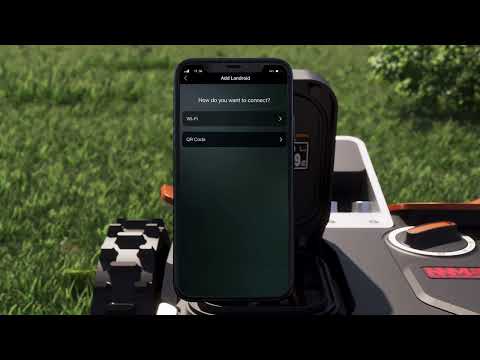
You place the charging base, connect it in the app, and let the mower start exploring. That’s it. For multi-zone lawns, you can drop RFID tags or use app-based zone management—still dramatically simpler than running separate wire loops.
And that’s why so many reviews call this the biggest upgrade: not smarter mowing patterns, not faster cutting—but frictionless setup.
4.2 Mowing Efficiency: Coverage vs Overlap Trade-Off
Now here’s where things get a bit less magical.
Watch the Landroid Vision in action, and you might think: Is this actually efficient? It doesn’t mow in clean rows. It overlaps. It revisits areas. Sometimes it feels like it’s wandering.
And that’s because—it kind of is.
Independent observations show that each pass doesn’t fully utilize the mower’s cutting width. Instead, it overlaps significantly, meaning it may only cover a portion of new ground with each sweep. The result? More passes. More time.
But here’s the twist.
Despite this seemingly inefficient behavior, broader testing suggests it can still handle surprisingly large areas on a single charge—like when a real-world test showed it covering roughly twice its rated lawn size under certain conditions.
So what’s going on?
- Energy efficiency: surprisingly solid
- Path efficiency: not always optimal
- End result: consistent, but not fast
This mower doesn’t rush. It persists.
If you expect instant results, it might feel slow. But if it runs regularly, quietly maintaining your lawn in the background, the overlap becomes invisible—and the results speak for themselves.
4.3 Daylight Limitations vs 24/7 Traditional Mowers
Here’s a trade-off most buyers don’t think about—until it matters.
That creates a subtle but important limitation.
- Traditional mowers: can run overnight, maximizing total daily runtime
- Vision models: typically operate during daylight (and often restrict night use for safety, like wildlife protection modes)
So what does that mean in practice?
If you have a large lawn, a simpler robot that runs 24/7 might keep up just by brute force—more hours, more coverage. The Vision, by contrast, trades those extra hours for smarter behavior and safer navigation.
There are workarounds (like optional lighting systems on some setups), but the core reality remains: this is a daytime-first mower.
Still, for most suburban lawns, this isn’t a dealbreaker. Because the real win isn’t squeezing every hour out of the day—it’s not having to think about mowing at all.
5. Is Worx Landroid Vision Worth It? Models, Pricing, and Best Use Cases
5.1 Model Differences and Lawn Size Matching
Choosing the right Landroid Vision isn’t about features—it’s about fit.
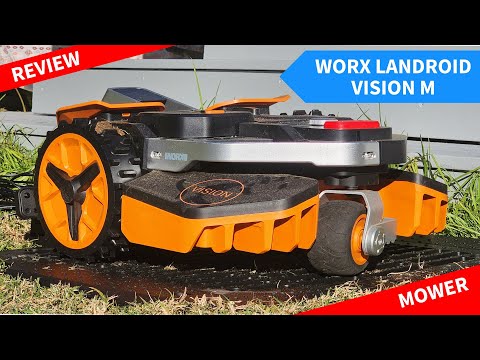
Across the lineup, the core experience stays the same: same camera-based AI, same no-wire setup, same obstacle avoidance. What changes is capacity—how much lawn it can realistically maintain without falling behind.
Here’s how the main models stack up:
| Model | Recommended Lawn Size | Key Difference |
|---|---|---|
| M600 (WR206E) | ~600 m² | Compact, lighter workload |
| M800 (WR208E) | ~800 m² | Slightly larger deck & runtime |
| L1300 (WR213E) | ~1300 m² | More coverage, faster operation |
| L1600 (WR216E) | ~1600 m² | Longest runtime, fastest charging |
The mistake most people make? Going too small.
Because of the overlap-heavy mowing style, it’s smarter to size up if your lawn is anywhere near the upper limit. That buffer ensures the mower can keep up without constantly chasing unfinished patches.
If your yard has slopes, obstacles, or multiple zones, that extra capacity becomes even more valuable.
Bottom line: don’t just match your lawn size—future-proof it.
5.2 App Control, Battery Ecosystem, and Smart Features
This is where the Vision starts to feel less like a mower—and more like part of a smart home system.
Through the app, you control everything:
- Scheduling and auto-adjusted mowing times
- Zone management (including multiple lawn areas)
- Cutting height adjustments
- Rain delays and behavior settings
You can literally tweak your lawn care from your couch.
But the real sleeper feature? The PowerShare battery system.
If you already own Worx tools, you can swap batteries between devices. That means:
- Extra runtime without buying proprietary add-ons
- Shared charging ecosystem
- Lower long-term cost
It’s one of those things you don’t think about—until you realize how convenient it is.
But once dialed in? It’s hands-off.
5.3 Who Should Buy It (and Who Probably Shouldn’t)
So… is it actually worth it?
Let’s be real. This isn’t a one-size-fits-all upgrade.
Pros
- You refuse to deal with boundary wires (this is the biggest win)
- Your lawn has irregular shapes, edges, or obstacles
- You have pets, kids, or clutter—and want safer mowing
- You value convenience over absolute mowing speed
Cons
- Your lawn is a simple rectangle with minimal obstacles
- You’re budget-focused and don’t mind installing a wire
- You want maximum coverage speed or overnight mowing
This is where Vision shines: complex, real-life yards where traditional robots struggle.
In those cases, a simpler mower can deliver similar results for less money—just with more effort upfront.
So no, the Vision isn’t universally “better.” But in the right yard? It feels like cheating.
6. Conclusion: Is Neural Network Mowing the Future or Just a Convenience Upgrade?
The Worx Landroid Vision doesn’t reinvent mowing performance—it reinvents the experience of owning a mower.
Cut quality? Solid. Obstacle avoidance? Genuinely impressive. Navigation? Reliable, even if it looks a bit chaotic. But the real story isn’t raw performance—it’s everything you don’t have to do anymore.
No wires. No constant rescues. No worrying about toys, pets, or changing yard layouts.
That’s the upgrade.
Efficiency gains are mixed depending on how you measure them. It’s not always faster per pass, and it won’t run all night like simpler bots. But zoom out, and the time you save on setup, maintenance, and supervision adds up fast.
So is neural network mowing the future? Maybe. But right now, it’s something even more practical: a smarter, lower-effort way to keep your lawn looking like you actually care—without spending your weekends proving it.
FAQ
Q: Does the Worx Landroid Vision require a boundary wire?
A: No, the Landroid Vision uses a front-facing HDR camera and a trained neural network to identify grass and boundaries visually, completely eliminating the need for traditional buried perimeter wires.
Q: Can the Landroid Vision mow at night?
A: Because the system relies on visual data, it performs best during daylight. While it can operate in lower light, its navigation efficiency and obstacle detection are most reliable when visibility is clear.
Q: How does it handle obstacles like toys or pets?
A: The AI-driven vision system identifies objects in real-time. Unlike older mowers that must bump into an object to turn, the Vision recognizes them and reroutes before contact occurs.
Q: Is the battery compatible with other tools?
A: Yes, it uses the Worx PowerShare battery platform, allowing you to swap batteries between the mower and other 20V or 40V Worx garden and power tools.
Q: How does it handle different lawn zones?
A: You can manage multiple zones via the app. For physical transitions between separated lawn areas, the mower uses RFID tags or visual markers to navigate the path.