
Worx Landroid Vision vs Traditional Wire Landroid: Which Robot Mower Is Better for Your Lawn?
Aaron Cooper1. Introduction
Robot lawn mowers used to come with a catch: before you could enjoy that “hands-free lawn,” you had to spend hours crawling around your yard, laying boundary wires like you were installing an invisible fence.
Now? That’s changing—fast.
The new Worx Landroid Vision flips the script by replacing wires with AI-powered cameras that literally “see” your lawn. No digging. No planning cable routes. Just drop it on the grass and go.
So here’s the real question: do you go for the cutting-edge convenience of Vision, or stick with the proven reliability of traditional wire-based Landroid models?
2. Core Technology: Vision AI vs Boundary Wire Systems Explained

2.1 How Landroid Vision Uses AI Cameras Instead of Wires
Picture this: instead of defining your lawn with a physical wire, your mower simply looks around and understands where grass ends and obstacles begin.
That’s exactly what Worx Landroid Vision does.
At its core is a camera-driven AI system paired with V-SLAM (Visual Simultaneous Localization and Mapping)—think of it like the mower building a mental map of your yard as it moves, similar to how a robot vacuum “learns” your home. It continuously processes visual data, recognizes objects, and adjusts its path in real time.
And it’s not just “seeing”—it’s understanding. Toys, garden furniture, pets—it identifies and reacts to them intelligently instead of just bumping into them.
There’s also optional RTK cloud positioning layered on top, giving it highly precise location tracking without needing a physical antenna in your yard. Translation? Clean, structured mowing patterns that look more like careful lines than chaotic zigzags.
The result feels almost unfair compared to older systems. No wires. No guesswork. Just drop it down, and it starts learning.
2.2 How Traditional Wire-Based Landroid Defines Your Lawn
Now let’s rewind to the classic approach.
Traditional Worx Landroid models rely on a boundary wire—literally a cable you install around the perimeter of your lawn. This wire emits a low-level electromagnetic signal, and the mower uses that signal as a “fence” it won’t cross.
It works. And it works reliably.
That means measuring your yard, routing wire around flower beds, looping around trees, securing it with stakes, and making sure everything is positioned just right. Miss a corner? The mower might skip it—or worse, wander into places it shouldn’t.
Once installed, though, the system is stable. The mower always knows its limits because those limits are physically defined. That’s why wired Landroid models are often described as “predictable” and “consistent.”
The downside? It’s rigid.
Your lawn doesn’t change unless you physically change the wire. Add a new garden bed? Move a patio? You’re back outside, pulling up and relaying cable.
Reliable, yes. Flexible, not so much.
2.3 Key Differences That Actually Impact Daily Use
On paper, both systems cut grass. In real life, they feel completely different.
With Vision, everything revolves around adaptability. The mower learns your lawn over time, adjusts to obstacles on the fly, and improves its routes with each cycle. Coverage feels more intentional—less “bounce around until everything is cut,” more “methodically handle the space.”
With wire-based models, the experience is more structured but less dynamic. The mower follows predefined boundaries and often relies on semi-random movement patterns to ensure full coverage. It gets the job done—but sometimes requires multiple passes to catch missed strips.
Here’s the simplest way to think about it:
- Vision = flexible, intelligent, evolving
- Wire-based = fixed, predictable, manual
And that difference shows up everywhere—from how the mower handles a forgotten soccer ball to how it reacts when your landscaping changes.
If your yard is static and simple, wires can feel perfectly fine.
But if your outdoor space is… well, real life—kids, pets, new furniture, constant tweaks—Vision starts to feel less like a luxury and more like a sanity-saver.
3. Setup & Installation: 30 Minutes vs a Full Weekend Project
3.1 Vision Models: True ‘Drop-and-Mow’ Simplicity
Let’s be honest—setup is where most robot mowers lose people.
Not here.
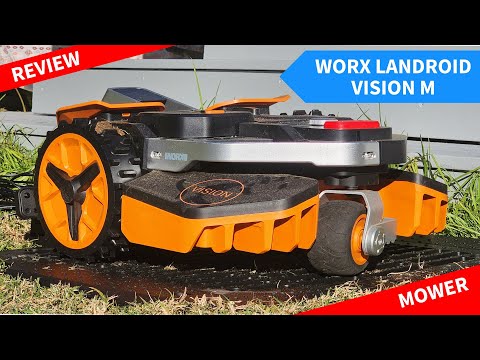
With Worx Landroid Vision, the process is almost suspiciously simple. You place the charging dock, power it on, connect it through the app, and let it go. That’s it. No trenching wires. No measuring boundaries. No second-guessing whether you placed cables too close—or too far—from the edge.
Most users are up and running in about 15–30 minutes, and the mower begins auto-mapping during its first runs. It explores, learns, and refines its understanding of your yard over time.
It feels a lot like setting up a robot vacuum. You’re not “installing a system”—you’re just introducing a device to your lawn.
And the real magic? It keeps learning. Each mowing cycle improves coverage, obstacle handling, and efficiency.
3.2 Wire-Based Models: Installation Effort and Planning
Now picture the opposite experience.
You open the box of a traditional Landroid—and instead of “ready to mow,” you’re staring at a coil of wire, stakes, connectors, and a multi-step setup process.
Installation typically takes several hours, sometimes stretching into a full weekend depending on lawn size and complexity. You’ll need to:
- Lay wire around the entire perimeter
- Route it carefully around obstacles
- Secure it with stakes
- Fine-tune placement for edges and corners
And even after all that? You’re not quite done.
Real-world feedback shows it often takes additional tweaks over time—adjusting wire placement, fixing breaks, or refining zones to get consistent coverage.
To be fair, once everything is dialed in, it works well. But getting there requires patience—and a willingness to troubleshoot.
This isn’t “plug and play.” It’s more like “install, test, adjust… repeat.”
3.3 What Happens When Your Lawn Changes?
Here’s where the difference becomes painfully obvious.
With Vision: Easy Adaptation
- Add a new flower bed? The mower adapts during its next run.
- Move outdoor furniture? It sees the new layout and updates its map.
- Expand your lawn? No tools, no digging, no frustration.
With Wired: Manual Re-installation
- Small changes can turn into a project.
- Layout changes mean physically modifying or rerouting the wire.
- Wire damage from pets or yard work requires troubleshooting and repair.
So ask yourself: is your yard truly “finished”?
If the answer is no (and for most people, it is), a system that adapts automatically doesn’t just save time—it saves headaches you didn’t even know were coming.
4. Real-World Performance: Navigation, Obstacles, and Coverage

4.1 Obstacle Avoidance: AI Recognition vs Basic Sensors
Here’s where things get very real—because your lawn is never as “clean” as you think it is.
A forgotten soccer ball. A dog toy. Patio furniture that got moved last night.
Traditional wire-based Landroid models handle this the old-school way: they bump into objects, stop, and change direction. It works… but it’s reactive. You’ll hear that little “tap,” and over time, it can mean missed patches or repeated passes.
Now compare that to Landroid Vision.
Instead of reacting, it anticipates. Its camera-based AI can recognize common objects—like toys or garden furniture—and steer around them smoothly. In many cases, it even reroutes and comes back later to finish the missed strip instead of just abandoning it.
Still, the experience feels completely different. Less “bumper car,” more “intentional movement.”
And if your yard is anything like real life—messy, unpredictable, constantly changing—that shift alone is a game-changer.
4.2 Navigation Patterns: Systematic vs Random Mowing
Ever watched an older robot mower and thought… “Is it just wandering?”
That’s basically how traditional wire-based models operate. They use random or semi-random patterns to eventually cover the entire lawn. Given enough time, they get there—but it’s not always efficient.
You might notice:
- Certain areas getting cut multiple times
- Others needing a few cycles to look even
- A general lack of that “clean, striped” finish
Now step into the Vision world.
Because it builds a map of your lawn and understands where it’s been, the mowing pattern feels far more structured. Lines look intentional. Coverage feels faster. And visually? It starts to resemble the kind of neat finish you’d expect from a professional service.
This isn’t just a cosmetic upgrade—it’s a time upgrade.
Instead of relying on repetition to fix missed spots, Vision reduces the chances of missing them in the first place. That means fewer cycles, less wear, and a lawn that looks consistently maintained instead of “eventually trimmed.”
Random mowing works. Planned mowing feels better.
4.3 Edges, Slopes, and Missed Spots: What to Expect
Let’s address the part nobody likes to talk about: no robot mower is truly “set it and forget it.”
Edges are the classic pain point.
Even with advanced navigation, both Vision and wire-based models can leave a small strip along borders—especially against walls, fences, or raised edges. Some Vision models improve this with edge-focused features, but you’ll still likely need a quick trim pass now and then.
And then there are missed spots.
- Wire-based models may need multiple passes due to random coverage
- Vision models reduce this with mapping—but still go through a learning phase
The takeaway isn’t that one is flawless and the other isn’t. It’s that Vision reduces the friction.
Less rework. Fewer missed strips. More consistent results over time.
But if you’re expecting perfection down to the last blade of grass? Keep your string trimmer handy.
5. Which One Should You Choose? Lawn Types and User Scenarios
5.1 Choose Landroid Vision If You Want Maximum Convenience
Let’s start with the obvious question: do you want this to feel effortless?
Because that’s exactly where Landroid Vision shines.
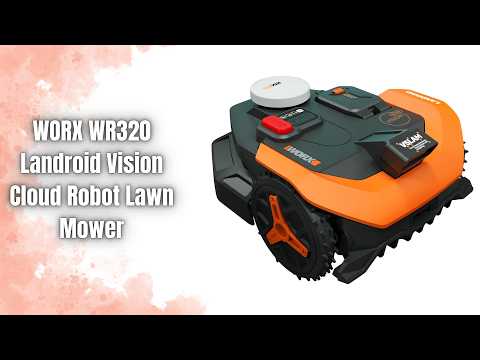
If your schedule is packed, your yard layout changes often, or you simply don’t want to spend a weekend installing wires, Vision is built for you. You drop it on the lawn, let it learn, and it improves over time—no digging, no rewiring, no ongoing adjustments.
It’s especially powerful for:
- Multi-zone lawns with paths or disconnected areas
- Yards with furniture, toys, or pets constantly moving around
- Properties with tree cover, where traditional signal-based systems can struggle
There’s also a long-term convenience factor that’s easy to overlook. No boundary wire means no repairs after weather damage, no troubleshooting breaks, and no reinstallation when your landscaping evolves.
In fact, one of the biggest hidden advantages is the lifetime-free RTK cloud positioning with no subscription fees, which removes both cost and complexity over time.
5.2 Choose Wire-Based Landroid If You Prefer Structured Reliability
Now, let’s flip the perspective.
What if your lawn is simple, predictable… and staying that way?
That’s where traditional wire-based Landroid models still make a lot of sense.
Once installed, they’re consistent. The mower knows exactly where it can and cannot go, because those boundaries are physically defined. There’s no interpretation, no learning curve—just repeatable behavior.
They’re a strong fit for:
- Small to medium rectangular lawns
- Yards with clearly defined borders
- Users who prefer a lower upfront cost
And yes, the setup is a commitment. You’ll spend hours laying wire, adjusting zones, and possibly tweaking things over time.
But once it’s dialed in? It just runs.
Vision Model
- Flexible and adaptive
- No wire installation
Wire-Based Model
- Fixed and dependable
- Predictable results
If you’re the kind of person who prefers systems that don’t change—and you don’t mind putting in the work upfront—wired models still deliver solid, predictable results.
5.3 A Simple Decision Framework Based on Your Yard
Still torn? Let’s simplify it.
Instead of comparing features, picture your yard and your lifestyle.
| Go with Landroid Vision if: | Go with Wire-based Landroid if: |
|---|---|
| Your lawn layout isn’t perfectly simple | Your lawn is flat, simple, and clearly defined |
| You have obstacles (trees, furniture, toys) | You’re comfortable with installation and maintenance |
| You expect your yard to change over time | You want the lowest initial investment |
| You value time savings more than upfront cost | You don’t mind occasional manual adjustments |
Here’s the honest truth most people realize too late:
It’s not about which mower is “better.” It’s about which one fits how you live.
If your lawn is dynamic, Vision feels like freedom. If your lawn is static, wires still get the job done.
6. Conclusion: Is It Time to Ditch Boundary Wires?
So… is it finally time to say goodbye to boundary wires?
For a lot of homeowners, yes.
Worx Landroid Vision fundamentally changes the experience. No installation headaches, no rewiring when your yard changes, and a smarter, more adaptive mowing pattern that actually feels modern.
But that doesn’t make traditional wire-based models obsolete.
They’re still reliable, still effective, and still a solid choice for simple lawns where nothing really changes. If you’re willing to trade time upfront for long-term consistency, they hold their ground.
The real decision comes down to this:
Do you want a system you set up once and manage… or one that quietly figures things out for you?
If convenience, flexibility, and “set-it-and-forget-it” living matter most, Vision is hard to beat.
If simplicity and structure win in your book, wires still have a place.
Either way—your weekends are about to get a lot quieter.
Check Price on Amazon
FAQ
Q: Does the Worx Landroid Vision require a boundary wire?
A: No, the Worx Landroid Vision utilizes a high-definition AI camera and V-SLAM technology to identify grass and boundaries, eliminating the need for physical perimeter wires or complex underground installations.
Q: How long does it take to set up the Landroid Vision compared to wired models?
A: Vision models typically offer a 'drop-and-mow' experience taking 15 to 30 minutes for initial placement. In contrast, traditional wired models often require a full weekend for manual cable routing and pegging.
Q: Can the Landroid Vision detect and avoid obstacles like toys or pets?
A: Yes, based on technical specifications, the Vision's AI processes visual data every 0.05 seconds to recognize and steer around common backyard objects, whereas wired models usually rely on physical bump sensors.
Q: What happens if I change my landscaping or add a new garden bed?
A: The Landroid Vision adapts automatically by re-mapping the area during its next cycle. Wired models would require you to physically dig up and reroute the boundary wire to accommodate any layout changes.
Q: Does the Worx Landroid Vision work well on slopes?
A: Data suggests it handles moderate inclines effectively, though like most robot mowers, performance on steep or uneven terrain near boundaries may require occasional manual trimming or traction adjustments.