
Best Robot Vacuums with Hot Water Mop Washing Technology: Do They Really Clean Better?
Aaron Cooper1. Introduction
Robot vacuums used to be simple: they picked up dust, maybe dragged a damp cloth behind them, and called it a day. Fast forward to 2026, and we’re looking at fully automated cleaning stations that wash, dry, and even “sanitize” their own mop pads—some using hot water.
Sounds impressive, right? But here’s the real question people are asking: does hot water mop washing actually make your floors cleaner, or is it just another premium feature inflating the price?
2. What Is Hot Water Mop Washing (And What It Isn’t)
2.1 Dock-Based Cleaning vs Actual Floor Mopping
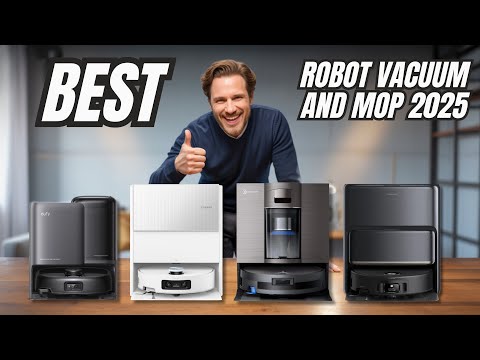
When brands say “hot water mopping,” they’re not talking about your floors being cleaned with hot water. The robot isn’t spraying steaming liquid across your tiles. Instead, the heat happens inside the dock, where the mop pads get washed after (or during) a cleaning run.
Think of it like this: washing greasy dishes in cold water versus warm water. Cold water removes surface dirt, sure—but that sticky oil film? It lingers. Warm water breaks it down faster, leaving everything actually clean. That’s exactly what these docks are trying to do for your mop pads.
In a standard system, the dock rinses pads with room-temperature water. In a heated system, it uses warmed water to better dissolve grease, loosen grime, and reduce that “used mop smell” that can build up over time. Many premium docks then follow up with hot-air drying, which is just as important for hygiene.
The key takeaway? Hot water is about cleaning the mop—not the floor. And that distinction matters more than most marketing pages admit.
2.2 Hot Water vs Steam: Common Misconceptions
Here’s where expectations can go wildly off track. A lot of people hear “hot water” and assume these robots work like steam mops. They don’t. Not even close.
Steam mops operate at extremely high temperatures, producing pressurized vapor that can break down stubborn grime and kill bacteria on contact. Robot vacuums with hot water docks? They’re working with warm-to-hot water in a controlled cleaning tray—no steam, no pressure, no deep sanitization.
Even in high-end models from brands like Roborock, Dreame, or ECOVACS, the robot still mops your floor using relatively cool water from its onboard tank. The heated part only kicks in when the robot returns to the dock.
So what does that mean in real life?
- You get cleaner mop pads between runs
- You reduce that musty smell that can develop after repeated use
- You improve consistency across large cleaning sessions
2.3 Why This Feature Became a Premium Trend
So why is every flagship robot suddenly obsessed with hot water washing? Because it solves one of the most frustrating parts of owning a robot vacuum: maintenance.
Let’s be honest—nothing ruins the “hands-free cleaning dream” faster than pulling out a soggy, dirty mop pad that smells… off. Early robot mops cleaned your floors, but left you with the mess afterward.
Hot water washing is part of a bigger shift toward fully automated cleaning ecosystems. Today’s premium docks don’t just empty dustbins—they:
- Wash mop pads with clean water
- Separate dirty water into a dedicated tank
- Dry pads with heated air to prevent mold and odor
- Sometimes even add detergent automatically
Brands like Dreame, ECOVACS, Narwal, and Roborock have all leaned heavily into this vision. According to industry buyer guides, once you move into the $1,000+ category, you’re no longer just buying cleaning performance—you’re buying convenience, automation, and time back in your day.
3. Does Hot Water Mop Washing Actually Improve Cleaning and Hygiene?
3.1 Real-World Temperature vs Marketing Claims
This is where things get interesting—and a little uncomfortable for the marketing departments.
You’ll often see bold claims like “75°C hot water washing” or even higher. On paper, that sounds like serious cleaning power. But when you look at independent measurements, the story changes.
Why the gap? Practical limitations. These docks are made of plastic, packed with pumps, seals, and electronics. Running true 70–100°C water through them consistently would create safety, durability, and cost issues. Manufacturers are quoting ideal internal heating conditions, not what reaches the mop fibers during real use.
3.2 What Warm Water Actually Improves (Grease, Odor, Maintenance)
Now for the part that actually matters: what does that “warm” water do in your daily life? Quite a lot, actually—especially if your home has a kitchen, pets, or kids.
Benefits of Warm Water Washing
- Significantly better at breaking down oils and sticky residues
- Mop pads stay cleaner between cycles
- Less streaking across your floors
- Noticeably less odor over time
What It Doesn't Solve
- Does not replace manual deep scrubbing
- Requires more power from the docking station
There’s also a compounding effect. Premium robots don’t just wash once—they can return to the dock multiple times during a cleaning session. That means the mop is refreshed repeatedly, instead of dragging yesterday’s grime across your entire house.
3.3 What It Doesn’t Do: No True Disinfection
Q: Does hot water mop washing disinfect your floors?
A: Short answer: no. Meaningful thermal disinfection typically requires temperatures above 60°C (140°F). The warm water used in these docks—usually in the 30–45°C range—simply isn’t enough to kill most bacteria.
The real hygiene benefits come from a combination of factors:
- Better removal of organic residue (less “food” for bacteria)
- Frequent washing cycles during cleaning
- Heated air drying, which removes moisture and slows microbial growth
In fact, many experts would argue that drying is just as important—if not more important—than the water temperature itself. A clean, dry mop is far less likely to develop odor or bacterial buildup than a damp one sitting for hours.
If you want a system that keeps itself cleaner, smells better, and requires less hands-on maintenance? That’s exactly what hot water mop washing delivers.
4. Best Robot Vacuums with Hot Water Mop Washing: Brand Comparison
4.1 Dreame vs ECOVACS: Innovation Leaders in Mop Automation
If you want the “set it and forget it” dream, this is where Dreame and ECOVACS really shine.
Both brands have gone all-in on fully automated docks—the kind that don’t just clean your floors, but take care of themselves afterward. We’re talking about systems that wash mop pads with heated water, separate dirty water into its own tank, and dry everything with warm air so you don’t come back to that dreaded sour smell.
Dreame tends to push harder on innovation. Their flagship systems often combine heated mop washing with automatic detergent dosing and aggressive dual spinning mop pads. That means less manual intervention and better handling of greasy, real-life messes—like kitchen floors after cooking.
ECOVACS, on the other hand, leans into ecosystem polish. Their OMNI docks are known for consistent mop washing, strong drying, and smart features like camera-based obstacle avoidance. While their hot water implementation can vary by model, the overall experience is incredibly hands-off.
The bottom line? Both brands deliver premium hygiene and automation. Dreame feels like the experimental overachiever. ECOVACS feels like the refined all-rounder.
4.2 Narwal: Mopping-First Design and Hygiene Focus
Narwal plays a slightly different game—and you feel it immediately.
Instead of treating mopping as a secondary feature, Narwal builds its entire system around it. The result? Some of the most obsessive attention to mop cleanliness and maintenance in the industry.
Their systems focus heavily on consistent pad washing, controlled water usage, and dock hygiene. In real-world use, that translates to something simple but powerful: your mop stays cleaner for longer, and your floors don’t get that “dirty water smear” effect after extended runs.
That said, there’s a trade-off.
Pros
- Industry-leading mop cleanliness and maintenance
- Superior hygiene focus with heated washing/drying
- Ideal for heavy foot traffic and frequent spills
Cons
- Prioritizes mopping over raw vacuum power
- Less effective on thick carpets compared to competitors
Still, for pure mopping hygiene—especially when paired with heated washing and drying—Narwal remains one of the most focused and specialized choices out there.
4.3 Roborock: The All-Rounder with Strong Navigation
Roborock doesn’t try to win on one feature. It wins by being consistently excellent at everything.
While other brands highlight hot water washing as a headline feature, Roborock has historically focused on navigation, reliability, and balanced performance. And honestly? That shows up in daily use more than you might expect.
Their systems use LiDAR (laser-based mapping that scans your home like a mini self-driving car) combined with smart obstacle avoidance. The result is efficient, predictable cleaning paths—and fewer “why is it stuck under a chair again?” moments.
When it comes to mopping, Roborock offers both vibrating (sonic) and spinning systems depending on the model, along with auto-washing docks and heated drying. Some newer models are starting to incorporate heated mop washing as well, but it’s not always the core differentiator.
What’s more interesting is performance consistency. In controlled comparisons across multiple brands, Roborock models regularly rank among the top overall performers—not because of one standout feature, but because they do everything well. In fact, aggregated lab-style evaluations show top-tier Roborock models competing closely with the best in both vacuuming and mopping performance across standardized multi-surface tests.
So if you’re the type who doesn’t want to overthink specs…
Roborock is the safe bet. Not flashy. Just reliably good.
5. Beyond Hot Water: What Actually Matters When Choosing a Premium Robot
5.1 Vacuum Power, Hair Handling, and Real Cleaning Performance
Let’s cut through one of the biggest myths: higher suction numbers don’t automatically mean better cleaning.
It’s tempting to compare robots based on “Pa” ratings, but real-world performance depends just as much on airflow, brush design, and how well the robot seals against the floor. In controlled tests, some robots with lower advertised suction outperform higher-rated ones simply because they manage debris more efficiently.
Now think about your actual home.
- Pet hair wrapped around brush rollers
- Crumbs stuck in carpet fibers
- Fine dust along baseboards
This is where design matters. Anti-tangle brushes, dual rollers, and smart airflow paths make a bigger difference than raw numbers—especially for pet owners. Some systems even actively guide hair into the suction channel instead of letting it wrap endlessly around the brush.
5.2 Mop Systems Compared: Spinning Pads vs Roller vs Flat
Not all mops are created equal—and this is where things get interesting.
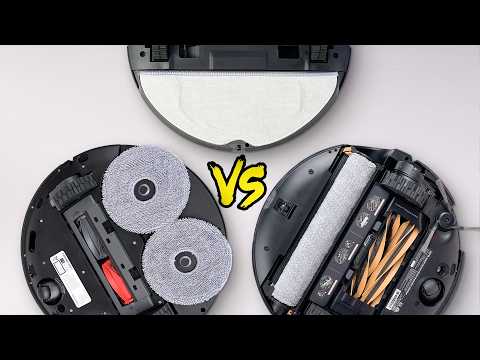
| Mop Type | Characteristics |
|---|---|
| Flat pads | Simple, low-cost, but tend to smear dirt once saturated |
| Dual spinning pads | Rotate at high speed for better scrubbing; common in premium models |
| Roller systems | Continuously refresh with clean water; squeeze out dirty water during operation |
Here’s the surprising part: despite all the engineering differences, large-scale comparison tests show that overall stain removal often depends more on the robot’s design than the mop type itself.
Spinning pads are the most common “sweet spot”—strong scrubbing, relatively simple mechanics, and good compatibility with auto-washing docks.
Rollers feel more like a traditional mop experience. They can handle wet messes better and keep the cleaning surface fresher during a run—but they’re more complex and often require more maintenance.
So which is best?
If you want reliability and balance, spinning pads win.
If you want the closest thing to a self-cleaning mop, rollers are compelling.
Either way, hot water washing benefits both—because a cleaner mop is always a better mop.
5.3 Navigation, Obstacle Avoidance, and Smart Features
Here’s something most people underestimate—until their robot gets stuck for the third time in a week.
Navigation is everything.
Modern premium robots rely on LiDAR (laser mapping) combined with AI cameras or 3D sensors. In simple terms, they build a digital map of your home and then “see” obstacles like cables, shoes, or pet toys in real time.
Why does this matter?
Because a robot that cleans perfectly—but gets stuck constantly—isn’t actually saving you time.
Advanced systems can:
- Recognize and avoid small objects like cords
- Clean efficiently in straight, overlapping paths
- Handle multi-room and multi-floor layouts
- Customize cleaning zones and routines
In independent testing frameworks, obstacle avoidance performance varies dramatically—even among expensive models. Some glide through cluttered homes effortlessly, while others still struggle with basic objects.
5.4 Maintenance Costs, Dock Complexity, and Long-Term Value
Here’s the part no one talks about enough: owning a premium robot isn’t completely hands-off.
Yes, hot water washing and self-cleaning docks reduce daily effort—but they introduce new layers of complexity.
You’ll still deal with:
- Dust bags that need replacing
- Filters and brushes that wear out
- Mop pads that eventually degrade
- Dirty water tanks that need emptying (and yes, they can smell if ignored)
Now, is it worth it?
For many households—absolutely.
Because the real value isn’t just cleaner floors. It’s reclaimed time. It’s not thinking about mopping for weeks. It’s walking barefoot across your kitchen and feeling… nothing. No crumbs. No grit.
That said, there are diminishing returns. Industry buying guides consistently point out that once you move into the premium tier, you’re paying more for convenience than raw cleaning improvement.
So the smart approach?
Don’t chase features. Choose the system that fits your lifestyle.
6. Conclusion: Is Hot Water Mop Washing Worth It?
Hot water mop washing isn’t magic—but it’s not meaningless either.
In real-world use, it’s a quality-of-life upgrade. It keeps your mop pads cleaner, reduces odors, and makes fully automated cleaning systems feel truly hands-off. That alone can be a game-changer if you run your robot frequently.
But it’s not the feature you should base your entire decision on.
Because at the end of the day, the best robot vacuum isn’t the one with the hottest water—it’s the one that fits your home. The one that navigates your layout without getting stuck. The one that handles your mix of pet hair, kitchen mess, and daily life without constant babysitting.
Think of hot water washing as the finishing touch, not the foundation. Nice to have. Definitely. Essential? Only if everything else is already right.
FAQ
Q: Does the robot mop the floor with hot water?
A: No, current technology uses hot water within the docking station to wash the mop pads after or during a cleaning cycle. The water stored in the robot's internal tank for actual floor mopping typically remains at room temperature during operation.
Q: Does hot water mop washing disinfect my floors?
A: It does not provide true sterilization. While warm water helps loosen oils and organic residues more effectively than cold water, the temperatures reached in most docks are not high enough to kill all bacteria on contact.
Q: What is the main benefit of heated mop washing?
A: The primary advantages are improved maintenance and hygiene. Heated water better dissolves kitchen grease from the fibers and prevents the buildup of musty odors, keeping the mop pads fresher for longer periods without manual intervention.
Q: Is hot water washing better than hot air drying?
A: Both are important, but many experts consider hot air drying more critical for hygiene. Drying removes the moisture necessary for mold and bacteria growth, which is the most effective way to prevent unpleasant smells.
Q: Can I use hot water if I have hard water at home?
A: Yes, but be aware that heated systems can accelerate mineral buildup from hard water within the dock's internal plumbing. Regular maintenance or using filtered water can help extend the lifespan of the heating elements.