
Robot Vacuum Buying Guide: How to Choose the Right Model for Your Home (Features, Budget & Smart Picks Explained)
Aaron Cooper1. Introduction: Why Choosing the Right Robot Vacuum Is More About Fit Than Specs
A robot vacuum sounds like magic—press a button, and your floors stay spotless forever. Reality? It’s better than that… but also a little different.
Think of it less like a replacement for your upright vacuum and more like a daily maintenance assistant. It quietly handles the crumbs, pet hair, and dust that build up every single day—so your home never feels dirty in the first place. But for deep carpet cleaning or big messes, you’ll still reach for a traditional vacuum now and then.
The real mistake most people make is chasing specs—higher suction, smarter AI, more features—without asking: Will this actually fit my home and lifestyle?
Because in practice, the best robot vacuum isn’t the most powerful one. It’s the one that:
- Navigates your layout without getting stuck
- Matches your floor types
- Fits your tolerance for maintenance (hands-on vs hands-free)
2. Core Features That Actually Matter (And What They Mean in Real Homes)
2.1 Navigation & Mapping: Why LiDAR Is Usually Worth It
Let’s start with the feature that quietly makes or breaks everything: navigation.
Because here’s the truth—no matter how strong the suction is, it doesn’t matter if your robot keeps missing spots, getting lost, or bumping into chair legs like it’s drunk.
There are three main types:
- Basic “bump and go” robots: they wander randomly
- Camera-based (vSLAM): they use visual cues to map your home
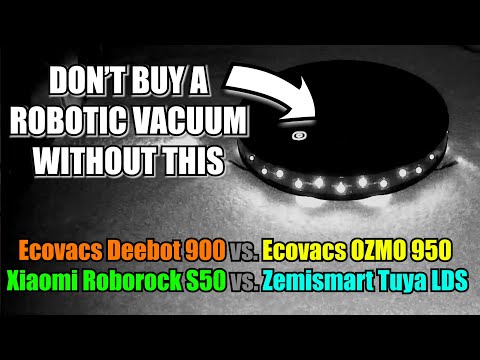
- LiDAR (laser navigation): they scan your space using laser pulses
LiDAR (short for Light Detection and Ranging) sounds complicated, but think of it like a bat using echolocation—it sends out signals, measures how long they take to bounce back, and builds a precise map of your home.
And in real-world use? The difference is night and day.
Independent testing consistently shows that LiDAR mapping can achieve around 1–2 cm precision, compared to significantly wider variation with camera-based systems. That translates into something you actually feel day to day:
- Straight, methodical cleaning lines instead of random wandering
- Faster full-home coverage
- Reliable performance even in dark rooms
So ask yourself: Do you want to occasionally “check on” your robot… or completely forget it exists?
If it’s the latter, LiDAR is usually the upgrade that makes that possible.
2.2 Suction Power & Brush Design: What Actually Cleans Your Floors
This is where marketing gets loud—and confusing.
You’ll see big suction numbers everywhere (measured in Pascals, or Pa), but here’s what most people don’t realize: Higher numbers don’t automatically mean cleaner floors.
What actually matters is how suction works together with the brush system.
| Scenario | Requirement |
|---|---|
| Hard Floors | Moderate suction + good edge cleaning |
| Mixed Floors | Balanced suction + adaptable brush |
| Pets + Carpets | Strong suction + anti-tangle rubber rollers |
If you have pets? This is where things get painfully real. Long hair wraps around traditional bristle brushes like spaghetti on a fork. That means:
- Constant detangling
- Reduced cleaning performance
- Weekend maintenance you didn’t sign up for
Rubber roller brushes (common in newer models) are a game-changer here. They resist tangles and are dramatically easier to clean.
Because the goal isn’t just cleaning. It’s cleaning without creating more work for yourself later.
2.3 Mopping Systems: From Light Wiping to Real Scrubbing
Now let’s talk about one of the most misunderstood features: mopping. Most robot vacuums are designed for maintenance mopping, not deep cleaning.
There are three main types:
- Passive mop (drag pad): A damp cloth dragged across the floor. Good for light dust and footprints. Not much scrubbing power.
- Vibrating or sonic mop: Adds rapid movement to loosen dirt. Better—but still limited on tougher messes.
- Spinning dual pads: These actually scrub, rotating against the floor. When paired with a cleaning station, they can keep high-traffic areas consistently fresh.
Now here’s the feature most people overlook—and regret later: Liftable mops.
Without it? You’ll either babysit every cleaning run… or stop using the mopping feature entirely.
2.4 Docking Stations & Automation: How Hands-Free Do You Want?
This is where robot vacuums go from “cool gadget” to “I can’t live without this.” Because the biggest hidden pain point isn’t cleaning—it’s maintenance.
There are three levels of docking stations:
- Basic charging dock: Just charges the robot. You do everything else manually.
- Self-empty dock: Automatically empties the dustbin into a larger bag.
- Full-service station: Handles dustbin emptying, mop washing, water refilling, and mop drying.
Pros
- Weeks of hands-free operation
- Reduces exposure to dust and allergens
- Prevents smelly mop pads via drying
Cons
- Larger footprint (not small)
- Higher upfront cost
- Ongoing consumables (dust bags)
If your goal is to reclaim time—not just automate a chore halfway—this is the feature that delivers it.
3. Match the Robot Vacuum to Your Home (Real-Life Scenarios)
3.1 Pet Owners: Hair, Mess, and Why Automation Matters More
If you have pets, you already know: cleaning isn’t occasional—it’s constant.
The biggest pain points in pet homes:
- Hair everywhere (especially on carpets)
- Tangled brushes
- Constantly full dustbins
- Random “surprises” on the floor
This is why three features matter more than anything else: Consistent pickup, Anti-tangle brush design, and a Self-empty dock. And then there’s the overlooked one: Obstacle avoidance.
The end result when you get it right? You stop thinking about pet hair entirely. Your floors just stay clean—like someone quietly tidies up behind your pets all day.
3.2 Carpets vs Hard Floors: Choosing the Right Cleaning Priority
Not all floors demand the same kind of cleaning.
Mostly hard floors (tile, wood, laminate): Cleaning is about coverage, not brute force. Debris sits on the surface, so even moderate suction works well. What matters more is good navigation, edge cleaning, and mopping capability.
Carpet-heavy homes: Now it’s a different game. Dust, crumbs, and pet hair settle deep into fibers. This requires stronger suction, better brush agitation, and features like carpet boost.
Mixed flooring (most homes): This is where features like auto-adjustment and mop lifting become essential. The robot transitions seamlessly between surfaces, and you don’t have to think about it.
3.3 Cluttered Homes, Kids, and Multi-Room Layouts
Let’s be honest—most homes aren’t minimalist showrooms. In a cluttered home, cleaning performance is about navigation intelligence.
Here’s what makes the difference:
- Smart mapping + no-go zones: Draw invisible boundaries for cable clusters or pet bowls.
- Reliable obstacle handling: Detect and navigate around obstacles before hitting them.
3.4 Small Apartments vs Large Homes: Scale Changes Everything
| Home Size | Essential Features |
|---|---|
| Small Apartment | Basic mapping, shorter runtime, compact dock |
| Medium/Large Home | LiDAR mapping, room-based cleaning, recharge-and-resume |
| Multi-floor Home | Multi-floor mapping, self-emptying, strong navigation |
In a small apartment, premium features feel like overkill. In a large home, they feel like freedom.
The “best” robot vacuum doesn’t exist in isolation. It only exists in relation to your home.
4. Budget vs Performance: What You Gain (and Lose) at Each Price Tier
4.1 Budget Models: Affordable but Hands-On
Let’s start with the tempting option: the cheap robot that promises to “do it all.”
On paper, it sounds great. In reality? This is where expectations matter most.
Budget models typically rely on basic or semi-random navigation. Instead of moving in clean, logical lines, they bounce around—covering the same area twice while missing another entirely. You’ll notice it immediately: longer cleaning times, inconsistent results, and that lingering feeling that something was skipped.
That said, they’re not useless.
If you live in a small, simple space with mostly hard floors—and you don’t mind a bit of babysitting—they can absolutely keep dust under control. Think of them as a daily sweeper, not a full cleaning system.
Pros
- Low upfront cost
- Compact size for small apartments
- Good for basic daily maintenance
Cons
- Higher time commitment later
- Random navigation misses spots
- Frequent manual bin emptying
4.2 Mid-Range Sweet Spot: Best Value for Most Homes
This is where things start to feel… right.
Mid-range robot vacuums are the point where convenience and performance finally balance out—and for most households, this is the sweet spot.
The biggest upgrade? Mapping.
Instead of wandering randomly, these robots clean in structured paths, understand room layouts, and let you control exactly where they go. Kitchen only? Done. Skip the cable corner? Easy.
And then comes the real quality-of-life leap: self-emptying.
Many models in this tier offer docks that can hold weeks’ worth of dust and debris, meaning you’re no longer dealing with the bin after every run. It’s the difference between “I should check the robot” and completely forgetting it ran.
Cleaning performance also improves across the board:
- Better suction consistency on carpets
- More refined brush systems (often with anti-tangle designs)
- More reliable coverage in multi-room homes
But for most people, this tier hits the perfect balance:
- Minimal babysitting
- Strong daily cleaning
- A price that still feels reasonable
4.3 Premium Models: Maximum Automation, Minimum Effort
Now we’re in “set it and forget it” territory.
Premium robot vacuums aren’t just about cleaning better—they’re about removing you from the process almost entirely.
The robot finishes cleaning, returns to its dock, empties its bin, washes its mop pads, refills its water, and dries everything so it doesn’t smell. And you? You didn’t do anything.
This level of automation is why high-end models feel less like gadgets and more like appliances that quietly run your home.
They also bring smarter navigation into the mix:
- Advanced obstacle avoidance that recognizes cables, shoes, and clutter
- More precise mapping for complex layouts
- Better handling of busy homes with kids or pets
What you’re really paying for is convenience. Less maintenance. Less intervention. Less thinking.
5. A Simple Step-by-Step Framework to Choose the Right Robot Vacuum
5.1 Step 1–3: Define Budget, Home Size, and Floor Type
If all these features feel overwhelming, here’s the shortcut: start by eliminating what doesn’t fit.
First, your budget. This instantly narrows your options into three realistic paths:
- Tight budget: expect more manual work
- Mid-range: balanced performance and convenience
- Premium: maximum automation
Next, your home size and layout. Small, simple spaces can get away with basic or camera-based navigation. But once you move into multi-room or larger homes, mapping becomes essential.
Then comes flooring—the factor most people underestimate:
- Mostly hard floors? You can prioritize navigation and even mopping over raw suction
- Mixed floors? You need balance (and ideally mop-lifting)
- Carpet-heavy? Strong suction + good brush design becomes critical
5.2 Step 4–6: Pets, Clutter, and Maintenance Tolerance
Now we refine the decision based on how you actually live.
Start with pets. If you have shedding animals, everything changes:
- Bins fill faster → self-empty becomes high value
- Hair tangles → brush design matters more than suction
- Messes happen → obstacle avoidance becomes critical
Then think about clutter. Be honest here. Are your floors usually tidy… or realistically “lived in”? If you’ve got cables, toys, and daily chaos, you’ll benefit from better mapping, no-go zones, and stronger obstacle avoidance.
Finally—and this is the big one—how hands-off do you want this to be? Because every robot vacuum sits somewhere on this spectrum:
- “I don’t mind emptying and cleaning it often”
- “I want to barely think about it”
5.3 Final Shortcut: Quick ‘If This, Then That’ Recommendations
| Scenario | Recommended Features |
|---|---|
| Small apartment, hard floors, no pets | Basic or mid-range mapped robot; skip expensive extras. |
| Medium home, mixed floors | Mid-range with LiDAR mapping and self-emptying. |
| Pet household (especially with carpets) | Strong suction, anti-tangle brushes, and self-empty dock. |
| Large or multi-room home | LiDAR navigation, room-based cleaning, and recharge/resume. |
| Busy home with kids or clutter | Better obstacle avoidance and app features like no-go zones. |
| Hate maintenance with a passion | Premium model with a full-service dock. |
6. Conclusion: Focus on Fit, Not Just Features
Choosing a robot vacuum isn’t about chasing the highest suction or the fanciest features—it’s about finding the one that fits your home and your tolerance for effort.
Because the real win isn’t cleaner floors. It’s walking into your home and realizing… you didn’t have to think about cleaning at all.
Focus on what actually impacts daily life:
- Reliable navigation (so it just works)
- The right balance of suction and brush design for your floors
- An automation level that matches how hands-off you want to be
And remember—robot vacuums aren’t here to replace every cleaning tool. They’re here to handle the daily grind so you don’t have to.
FAQ
Q: Is LiDAR navigation better than camera-based mapping?
A: Yes, LiDAR is generally superior as it uses laser pulses to create precise maps. Data-driven analysis shows it achieves 1–2 cm precision, allowing for methodical cleaning paths and reliable performance even in dark rooms, whereas camera systems often struggle in low-light conditions.
Q: Does suction power (Pa) determine cleaning performance?
A: Not entirely. While higher Pascal (Pa) ratings indicate stronger suction, real-world efficiency depends on the brush design. For example, rubber rollers are more effective than high suction alone for pet hair, as they prevent tangles that reduce airflow and performance.
Q: Can robot vacuums replace traditional mopping?
A: Most models are designed for maintenance mopping rather than deep scrubbing. While spinning dual pads offer better agitation, these systems are best for keeping floors consistently fresh and removing light footprints rather than tackling heavy, dried-on kitchen messes.
Q: What is the benefit of a self-empty docking station?
A: A self-empty dock significantly reduces manual maintenance by automatically transferring debris from the robot's small internal bin to a larger bag. This allows the system to operate for several weeks without intervention, which is particularly beneficial for high-shedding pet households.
Q: Are robot vacuums effective for homes with many carpets?
A: They are effective if they feature high suction and carpet-boost technology. However, the brush design is critical for agitating carpet fibers. Users with very thick or high-pile rugs may find that even advanced robots struggle to navigate or deep clean those specific surfaces.